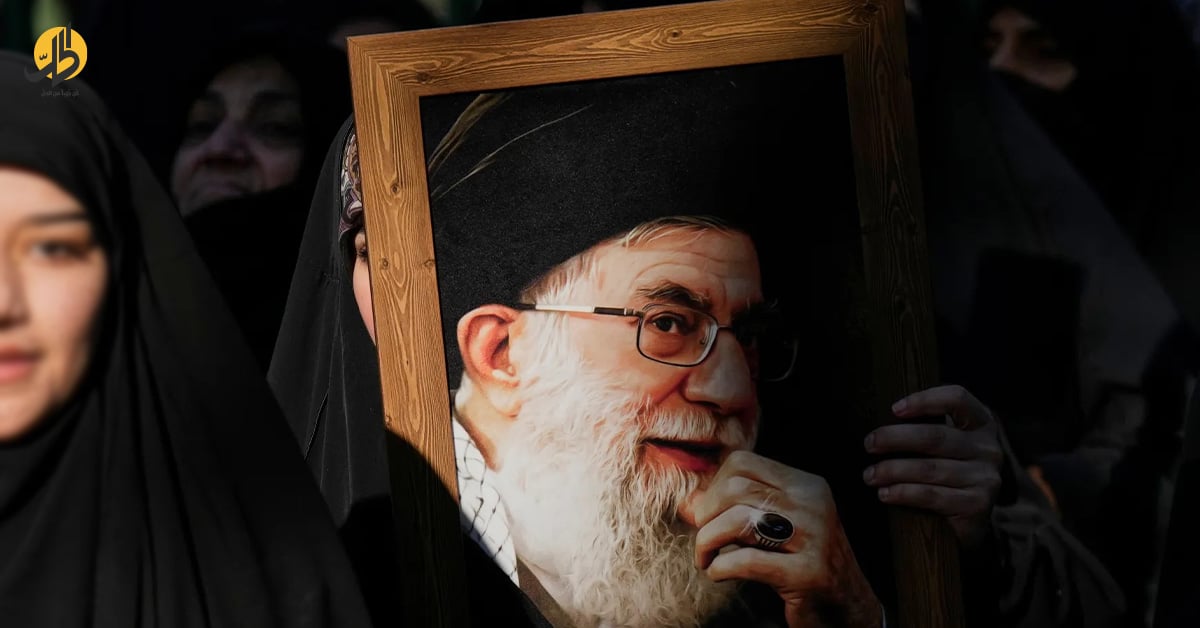
There is a current and recurring dilemma revealed by the context of the region’s troubled condition, especially since the outbreak of the Gaza war and the incidents that accompanied it, most recently the killing of Iranian Supreme Leader Ali Khamenei.
For lining up behind what is known as the “Axis of Resistance” and falling into the trap of fabricated rhetoric, with its mobilizing propositions that mix the religious with the political and the sacred with the worldly, reveals the historical condition of elite sectors that still suffer from wishful thinking—specifically leftist and nationalist ones—while remaining under the weight of a sense of defeat or victimhood and failing to break free from backward-looking ideological discourses.
Wishful Thinking and Ideological Polarization
The hidden and dominant discourse has long remained the search for the “golden age” of the “nation,” and a view of the world through the binary of “self” and “other,” “us” and “them.”
The attempt to glorify—or rather mythologize—the Iranian Supreme Leader, like others in the “resistance” camp, appears to be an attempt to manufacture an imagined and selective memory that lays the foundation for a new path that is not only struggle-oriented or resistant, but also puritanical and salvationist. This makes the Arab self more receptive to scenes of destruction and sabotage affecting civilians in safe and stable cities, as in the Gulf, and to displacement in Lebanon in areas under Hezbollah’s control.
Attraction to a suicidal vision thus plays a dual functional role: either absolving Iran of responsibility for the situation in which it holds the region hostage to its sectarian and security interests, or constructing a degree of extreme nihilism toward its adversaries in order to obscure its pragmatic objectives.
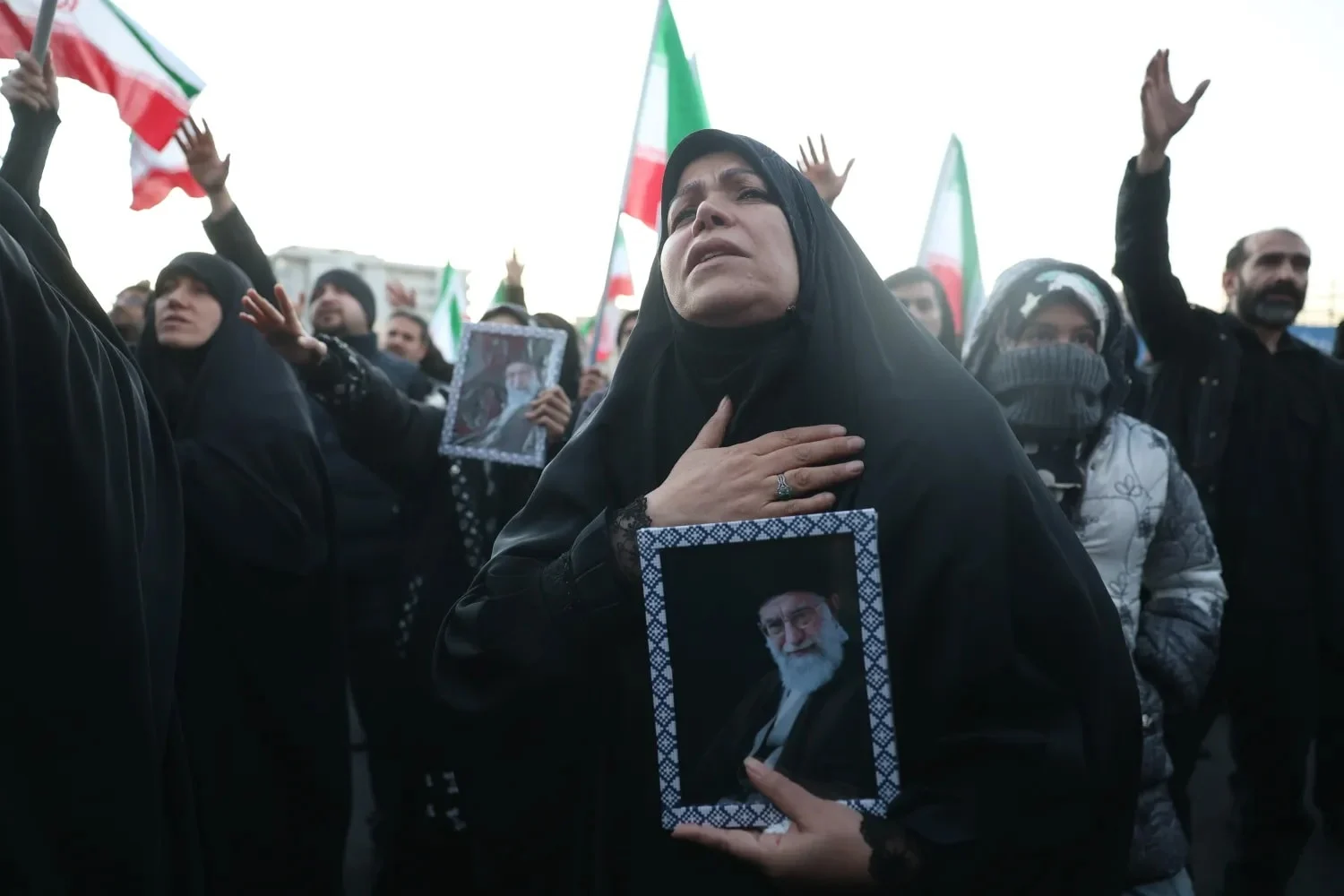
For this reason, Manichaean binaries have seemed the most prevalent since the killing of the Iranian Supreme Leader. They are divided between polarizing currents inclined to cast him as a “martyr” and to magnify his alleged heroic role in resisting the “forces of global arrogance.” This is what makes deconstructing the figure, evaluating it, or questioning its real roles something deliberately ruled out; indeed, it is blurred and blacked out, with the aim of generalizing an easy, one-dimensional hypothetical vision that does not engage the mind or invite thought and critique. The substance of this vision is the production of a coercive heroism equivalent to notions of absolute truth that are not subject to doubt or scrutiny.
The killing of Khamenei is more than just a political event, or a point in the history of confrontation and conflict between Iran and the United States. Rather, it is a necessary and urgent opportunity to reread a crisis-ridden mentality that dominates Arab reality and its political and ideological elites, one that responds instinctively through narrow binary frames: good and evil. These simple and direct binaries, on the surface, grant a false sense of certainty and suppress contradictions.
Sanctifying the Supreme Leader and Building Selective Memory
The binary conception that places the Iranian Supreme Leader beyond accountability and rejects criticism deliberately paralyzes the possibility—and necessity—of discussing the nature of rule in Iran, how to characterize it, and its position—or rather its structural and organic connection—with the forces of political Islam and various forms of instrumental cooperation. Indeed, the political Islam represented by Iran since 1979, in its Khomeinist version, contributed to rejecting and excluding reformist religious and seminary forces, while standing in hostility to other religious authorities in Iran as well as in Iraq (the Najaf marja‘iyya) and Lebanon (Jabal Amel), which rejected the politicization and ideologization of religion for the sake of constructing sectarian enclosures and militarizing the Shiites within the orbit of the “Guardian Jurist” and his regional interests.
Thus, the binaries that generate symbolic violence proceed within a bitterly polarized condition by excluding any discussion of what the Iranian Supreme Leader undertook while at the head of power in Iran, and of the trail of shattered bodies he left behind in Syria, Iraq, Yemen, and Gaza, as well as among Iran’s peoples (Kurds, Baloch, Arabs, Sunnis, Azeri Turks, Sabeans, Mandaeans, and Baha’is), in addition to his pragmatism in providing safe havens for al-Qaeda after the September 2001 attacks. He then abandoned them when his interests and calculations of profit and loss required it.
Here the true nature of the defeated and crisis-ridden mind appears. Its selective, reductionist, truncated vision and its conciliatory, patchwork philosophy become clear as they serve false outcomes and truths that do not correspond to reality, but are instead propagandistic and functional, temporary and transitional in nature.
Accordingly, this is the mind that reconstructs binaries: us/them, good/evil, Tehran/Washington or Tel Aviv, faith/unbelief, so as to become at once a prohibitive and takfiri mind. In that state, it shields itself from confronting critical, deconstructive reason in favor of reason—or rather “Mahdist time”—which sees history as merely a revolutionary, or rather destructive, path for manufacturing “sacred history” and the inevitability of the victory of the “caravan of martyrs.”
Thus, major errors and political crimes become necessary justifications for the continuation of the political self. Khamenei’s death also turns into a utopian symbol laden with the weight of sacred violence, opening bitter voids in search of possible bearers and imagined dead within the framework of a resounding desire for killing and self-sacrifice under the pretext of protecting political sectarianism/religious doctrine.
In this manner, the Arab mindset and culture of prohibition has prevailed, built on rejecting/excommunicating everything outside the circle of the dominant ideology and considering it an outcast.
Ideological Intersections Between Islamism and the Left
So, the Iranian Supreme Leader was neither distant from nor disconnected from the forces of political Islam; rather, he identified with their vision and was one of the forces foundational to its literature and to the production of a distorted image of the self, the world, and the other.
Hence, Khamenei’s translation of Sayyid Qutb’s book Milestones during the second half of the 1960s, under the title “A Manifesto Against Western Civilization,” was not accidental. Rather, it was a continuation of the mullahs’ Islamist approach at both the political and ideological levels, beginning with rupture and a truncated view of the West and the world, which was classified within the “forces of global arrogance.”
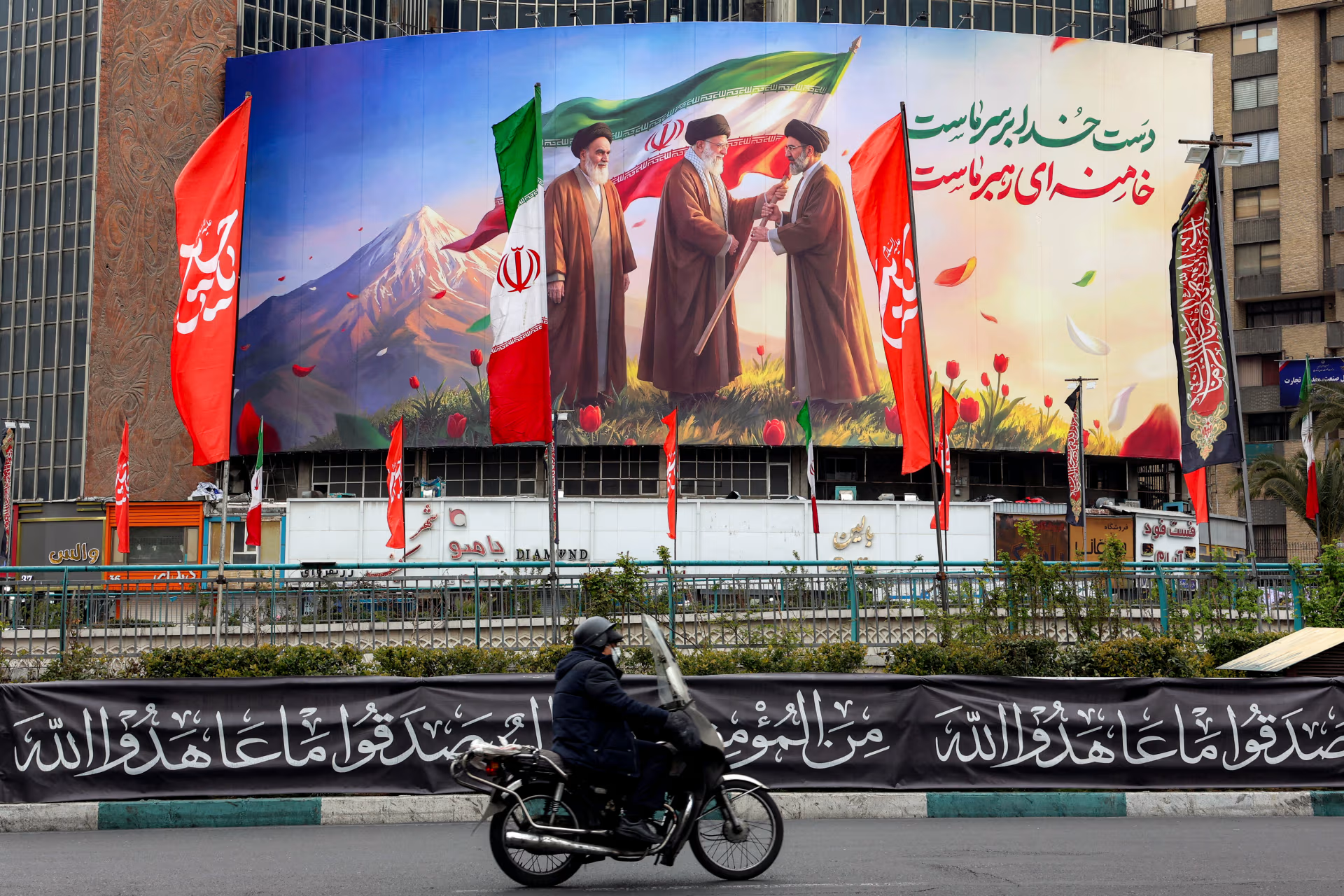
Accordingly, it is the same exclusionary vision that has impact and resonance in the literature of the left, both Marxist and nationalist, especially the official versions, even if it appears in theoretically different formulations.
For this reason, the pragmatic alignment that brought together these Islamist parties—in both their Sunni and Shiite versions—with the left in its varying wings and differing positions, despite the apparent disparity or hostility and enmity between them, within what is known as the “resistance camp,” does not seem incidental or new.
The Ideological Structure and the Discourse of Existential Threat
The conceptual apparatus of all these forces has never departed from a sense of existential and identity threat. Their structural foundation has remained rooted in mobilizing ideas under the pretext of defending identity and national and doctrinal belonging by stirring up religious heritage, reviving feelings of victimhood, expanding the circle of conflict, and seeking its historical entitlements.
Whether the search was, at one time, for ethnic purity or class purity in leftist literature, or for religious purity among fundamentalist and Salafi religious currents, the tasks of those backward-looking forces remained the construction of political programs and plans with revolutionary ideological missions in search of social carriers—“the vanguard/the revolutionary youth” at one time, or “the believing band” and “the Qur’anic generation” at others.
This is no different from the concepts of “hakimiyya” and “jahiliyya” that Qutb formulated in his book, which Khamenei echoed in his theoretical interpretations in the Persian version, where he said: “The Islamic government and the Guardianship of the Jurist created by Imam Khomeini and presented to the world is that Islamic government which means the sovereignty of Islam, religion, and sharia, and this meaning must be well understood.”
The invocation of these takfiri Islamist values and ideas, in both their Sunni and Shiite versions, from the religious sphere into the political public sphere contributed to institutionalizing and managing the ideas of the ideologized and politicized religious elite that rose to power in Iran with Khomeini’s arrival in the late 1970s. The literature of the Islamic Revolution seeks to generalize radical religious conceptions that confine groups within the sphere of influence of the “Guardian Jurist,” leading to the isolation of individuals from any groups outside this framework.
The Iranian constitution expressed this vision with the phrase: “Every day is Ashura and every land is Karbala,” encapsulating the use of historical and religious victimhood in political rhetoric to rebuild or inaugurate a selective memory that supports the ideologized and sectarian political project of the “Guardian Jurist.”
It can be said that the manufacture of a discourse of victimhood and the reliance on mobilizing ideas have been among Iran’s tactics since 1979 to create radical divisions and ruptures vis-à-vis the world from the standpoint of an ideological vision.
Empowerment Through Utopian Discourse and Victimhood
This tactic is hardly different from what Islamist forces and broad leftist and nationalist sectors adopt. In the wake of the Iranian Revolution, Khomeini declared: “Jerusalem Day is a global day,” while never ceasing in his discourse to inaugurate a violent propagandistic political rhetoric, framing it in a worldview divided into “the arrogant powers” and “the oppressed.”
Meanwhile, the regime in Iran continues to exploit all its political and economic crises and its regional conflicts, through which it has exacerbated tensions in the region and intensified the militarization of many areas, from Syria to Yemen via Iraq and even Lebanon, causing its international isolation—all in pursuit of imagined sanctity and ideological loyalty, even as it accumulates field and strategic losses.
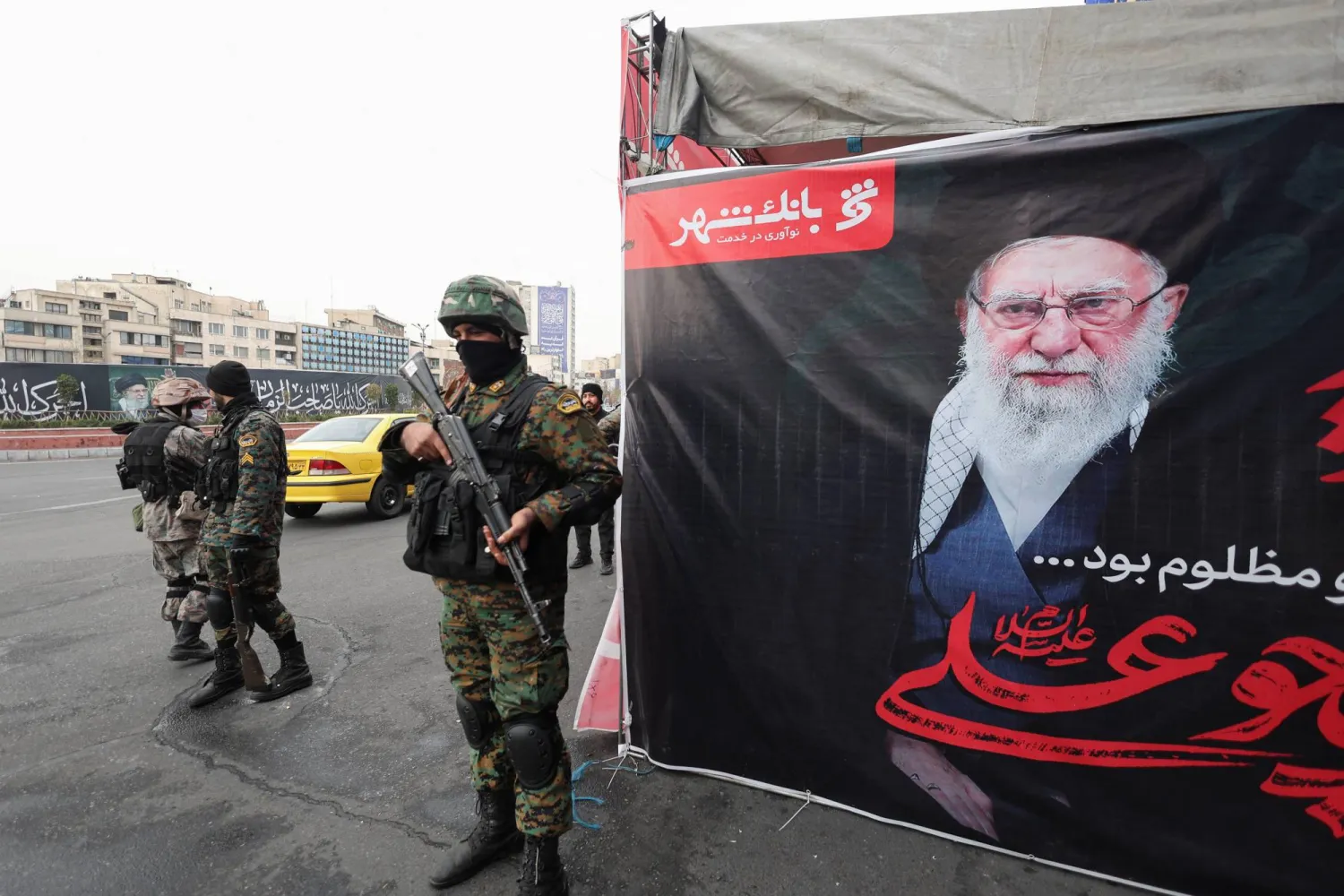
Accordingly, Khamenei had previously stated in a speech marking the anniversary of the birth of Imam Hussein on September 21, 2002, that Iran would remain committed to its “principles” despite U.S. and Israeli sanctions.
His desire to militarize the “Islamic Republic” and the levers of power emerged early on, as shown through his support for President Mahmoud Ahmadinejad over former president Hashemi Rafsanjani, affirming that the “ideal president” must be “faithful to the principles of the revolution and our Islamic system, and seek to establish justice and fight corruption.” He also praised graduates of engineering and technology, considering them the most talented and active students, in a reference to Ahmadinejad’s academic background.
In sum, Khamenei shaped his vision according to the logic of absolute correctness and the binary struggle between good and evil, while constructing a comprehensive, pragmatic, and revolutionary vision grounded in religion—or rather in religious heritage in its ideologized theoretical framing—as a source of legitimacy and rule. This resulted in the exclusion of any other ideas and in the investment of the Shiite doctrinal reservoir to generate mobilizing energy employed in rallying society under slogans of inevitable confrontation against the values of the West and Washington, on the grounds that they represent an existential threat to the “nation” and “religion.”
And although the Islamic revivalist thesis at its height was distinguished by its focus on the primacy of political action—which required the presence of a “believing vanguard” proceeding on the path of the new Islamic resurrection, as Sayyid Qutb mentioned, all the way to a complete rupture with jahili society, without any conciliation, participation, or accommodation of any element of the existing social order, something the Iranian Supreme Leader adopted—the violent polarizing climate, haunted by anxieties of identity conspiracy and the dilemma of intellectual invasion and cultural penetration, has a similar resonance in Baathist nationalist and Marxist ideologies, and in classifying European civilization as “colonialist” and “imperialist,” revealing the nature of these choices, their directions, and their unannounced realities.
- How the Houthis Are Choking Yemen’s Peace Efforts with a Broad Escalation on the Ground
- Economy in the Wind: How Yemenis Are Paying the Price of Disrupted Shipping Routes
- Houthi Summer Centers: Factories for Indoctrination and Raising a “Scream” Generation
- The “Coalition of Necessity”: What Costa Rica’s Terrorism Designation of the Houthis Signifies
- Mojtaba Khamenei Runs Iran from His Bed as Photos Vanish and the Supreme Leader Makes a “Voice-Only” Appearance