The International Monetary Fund’s Executive Board has approved the results of its Article IV consultations with Yemen’s internationally recognized government for the first time since 2015, after an interruption that lasted nearly a decade, in a move that reopens channels of communication with one of the most important international financial institutions.
This return comes amid a complex economic situation, as the Yemeni government sees it as an indicator of the restoration of some international confidence and the gradual return of the state’s official financial presence after years of decline and division.
Renewed engagement
According to the IMF statement, the resumption of consultations points to improved institutional capacity, especially in data production and economic policy management, despite the continuing repercussions of the war.
It also praised the measures taken by the government, which helped achieve a degree of economic stability and limit the effects of the suspension of oil exports in 2022, while recording early signs of a gradual recovery from recession.
At the same time, it warned that regional tensions in the Middle East could affect the Yemeni economy in the coming period, with risks remaining high.
Conditional signs of support
This step does not mean immediate funding will flow, but it opens the door to possible technical and financial support at a later stage, especially given the need for deep structural reforms.
This year’s Ramadan has arrived for millions of Yemenis in areas controlled by the Houthi group, amid harsh conditions, after the rituals of the holy month turned into a daily burden on families.
The IMF stressed the importance of continuing revenue mobilization, strengthening fiscal governance, and adopting more flexible exchange-rate policies, alongside reforms in the energy sector and the business environment.
It also noted that continued external financing and dialogue with creditors are two essential elements for maintaining economic stability.
For his part, the governor of the Central Bank of Yemen, Ahmed Ghaleb, described the move as an “important return to institutional engagement,” stressing that it reveals the efforts being made to preserve the minimum level of stability despite exceptional circumstances.
He explained that the resumption of consultations opens the way to expanding technical and financial support, while the bank continues to follow “disciplined and flexible” monetary policies to maintain exchange-rate stability and confront pressures linked to supply chains and energy.
The Yemeni government also welcomed the move, considering it an indicator of international appreciation for the reform path, especially in the areas of fiscal discipline and strengthening transparency.
A long road to recovery
Despite these indicators, recovery does not appear close. The IMF expects the Yemeni economy to regain momentum gradually starting in 2027, as inflation eases and income levels improve.
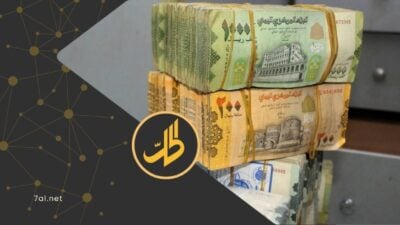
Yemeni riyal banknotes
This depends on the continuation of reforms, the expansion of non-oil revenue sources, and improvements in the political and security situation.
The return of IMF consultations represents an important step in reconnecting the Yemeni economy with international financial institutions, but it remains only the beginning of a long path whose success depends on the government’s ability to continue reforming and ease accumulated economic pressures.