
In a notable development pointing to an unprecedented escalation in the confrontation between Washington and Tehran, the US Department of Defense, the Pentagon, announced that more than 50,000 American troops are currently involved in supporting Operation “Epic Fury” in the Middle East, confirming that strikes have targeted more than 10,000 sites inside Iranian territory since the military campaign began.
Defense Department spokeswoman Kingsley Wilson said US forces continue to “dominate the air and maritime domains,” indicating that operations are ongoing against what she described as “the threats posed by the Iranian regime.”
Reinforcements and decisions under consideration
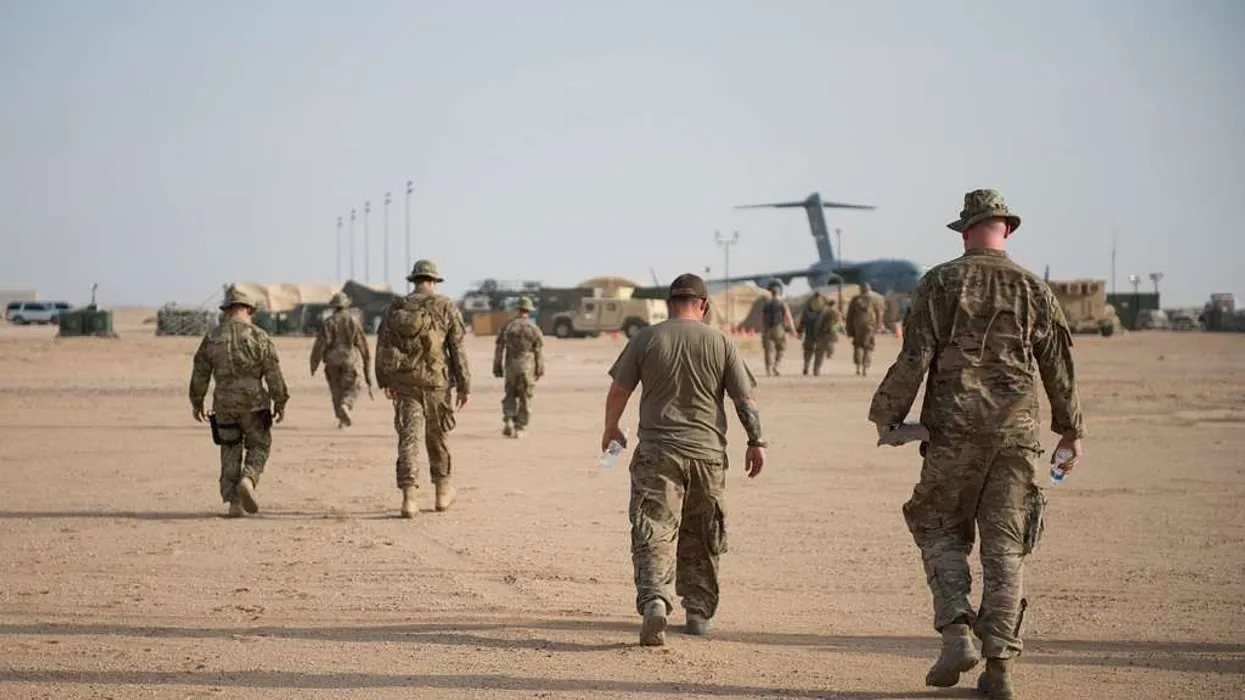
According to The New York Times, citing a US military official, the number of American forces deployed in the region has exceeded 50,000 troops, an increase of nearly 10,000 above usual levels, amid escalating tensions with Iran. The official explained that the deployment of around 2,500 Marines and 2,500 additional troops helped raise the total, at a time when President Donald Trump is considering broader military options as the war enters its second month.
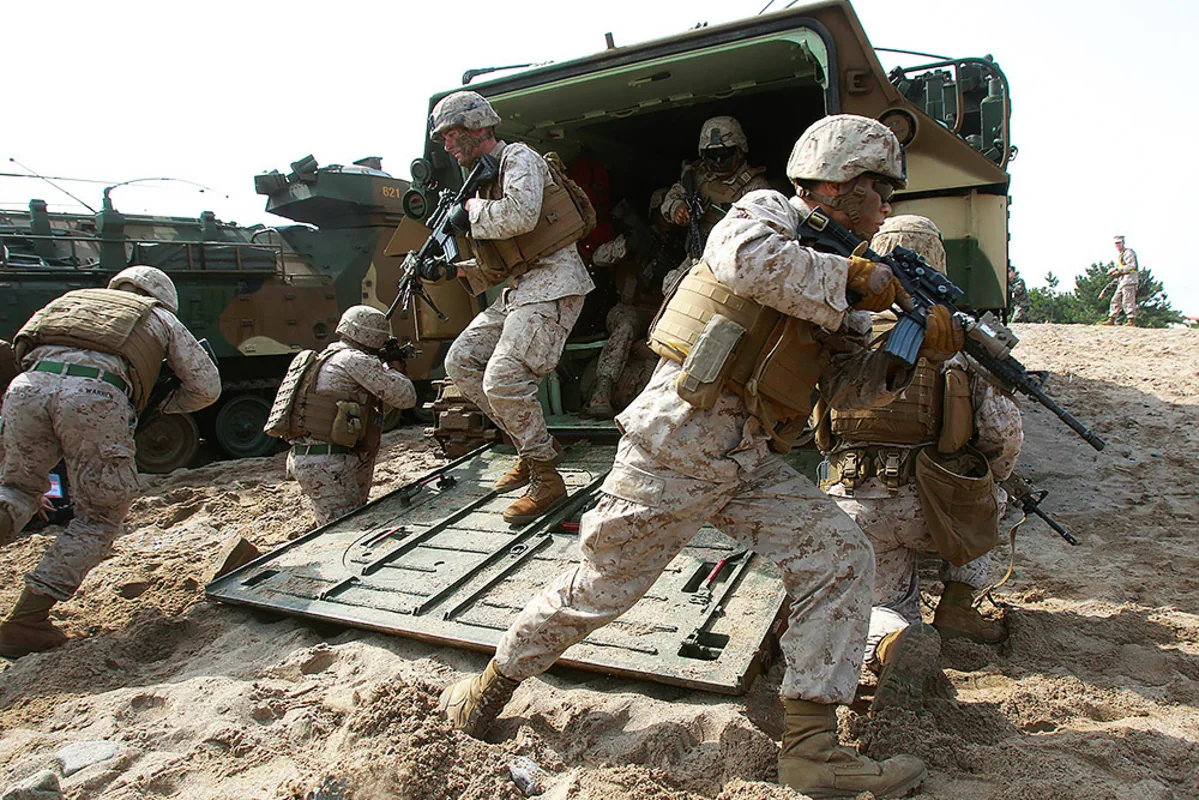
The newspaper revealed that the scenarios under discussion involve launching a broader attack and seizing an island or areas inside Iran, as part of efforts to reopen the Strait of Hormuz to maritime traffic disrupted by Iranian attacks.
Reports indicated that around 2,000 soldiers from the 82nd Airborne Division have been sent to the region, with their locations remaining undisclosed, though they are positioned within striking distance of Iran, with the possibility that they could be used to seize Khark Island, which serves as the hub of Iranian oil exports in the Gulf.
Warnings over limited force
But military experts warned, according to the newspaper, that a force of 50,000 troops, a large portion of it at sea, is far too limited for any large-scale ground operations. They noted that Israel mobilized more than 300,000 troops for its operations in the Gaza Strip since October 2023, while the US-led coalition that invaded Iraq in 2003 numbered about 250,000 troops in its initial stages.
The experts added that controlling a country the size of Iran, which covers roughly one-third the area of the contiguous United States and has a population of nearly 93 million, with a force of only 50,000 troops would be an impossible mission, especially given the difficulty of maintaining such control amid the complexities of geography, terrain, and Iran’s large military arsenal.
In the same context, the French magazine Le Point reported that Washington is preparing to deploy between 2,000 and 3,000 additional troops from the 82nd Airborne Division, along with about 5,000 Marines, with plans to send further reinforcements that could total as many as 10,000 troops.
Limited operations instead of a full-scale invasion
Estimates indicate that the total number of forces that may be used in these operations could reach around 17,000 troops, as part of field operations likely to continue for weeks, without moving toward a full-scale invasion like those seen in previous wars, but rather through concentrated strikes and special operations inside Iranian territory.
The scenarios under discussion include targeting strategic sites, most notably Khark Island, which represents a vital artery for Iranian oil exports, in addition to targets linked to the nuclear program, in an attempt to weaken Tehran’s economic and military capabilities.
Amid this escalation, positions within the US administration appear divided between signaling military decisiveness and stressing the possibility of reaching an agreement, reflecting uncertainty over the war’s ultimate course, amid warnings that the conflict could slide into a broader regional confrontation.
Iran threatens to “rain fire”
On the other side, the Iranian response was sharp and direct, as Iranian Parliament Speaker Mohammad Bagher Ghalibaf warned that his country’s forces are “waiting for the American soldiers,” stressing in a message carried by official media that Iran “will rain fire on any American forces that try to enter Iranian territory.”
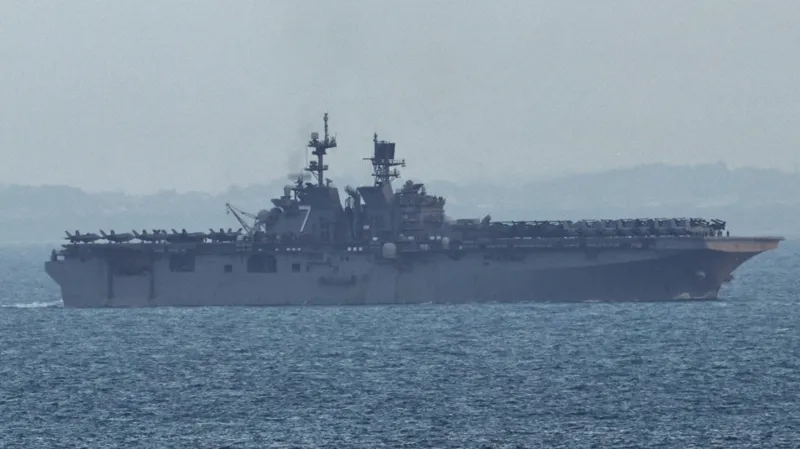
His remarks came simultaneously with the arrival of 3,500 additional American troops in the region, which US Central Command said are part of a unit led by the warship USS Tripoli, including assault and transport assets.
The arrival of these reinforcements also coincided with a report published by The Washington Post stating that the Pentagon is preparing for weeks of ground operations in Iran, at a time when US officials have not yet confirmed whether ground forces will be formally deployed.
On the brink of a regional confrontation
Ghalibaf accused the American side of “publicly signaling negotiation while secretly planning a ground attack,” referring to what he saw as duplicity in the US position, thereby affirming that Tehran is taking the military threats seriously and preparing for any possible scenario, at a time when the region is growing more tense as open confrontations between the two sides enter their first month.
All these field indicators, in terms of the scale of the military buildup and the nature of the proposed targets, reflect that the region stands on the brink of a more dangerous phase that may go beyond limited clashes and develop into a broad regional confrontation, especially as each side sticks to its hardest-line options and appears ready to test its red lines.
- How the Houthis Are Choking Yemen’s Peace Efforts with a Broad Escalation on the Ground
- Economy in the Wind: How Yemenis Are Paying the Price of Disrupted Shipping Routes
- Houthi Summer Centers: Factories for Indoctrination and Raising a “Scream” Generation
- The “Coalition of Necessity”: What Costa Rica’s Terrorism Designation of the Houthis Signifies
- Mojtaba Khamenei Runs Iran from His Bed as Photos Vanish and the Supreme Leader Makes a “Voice-Only” Appearance