
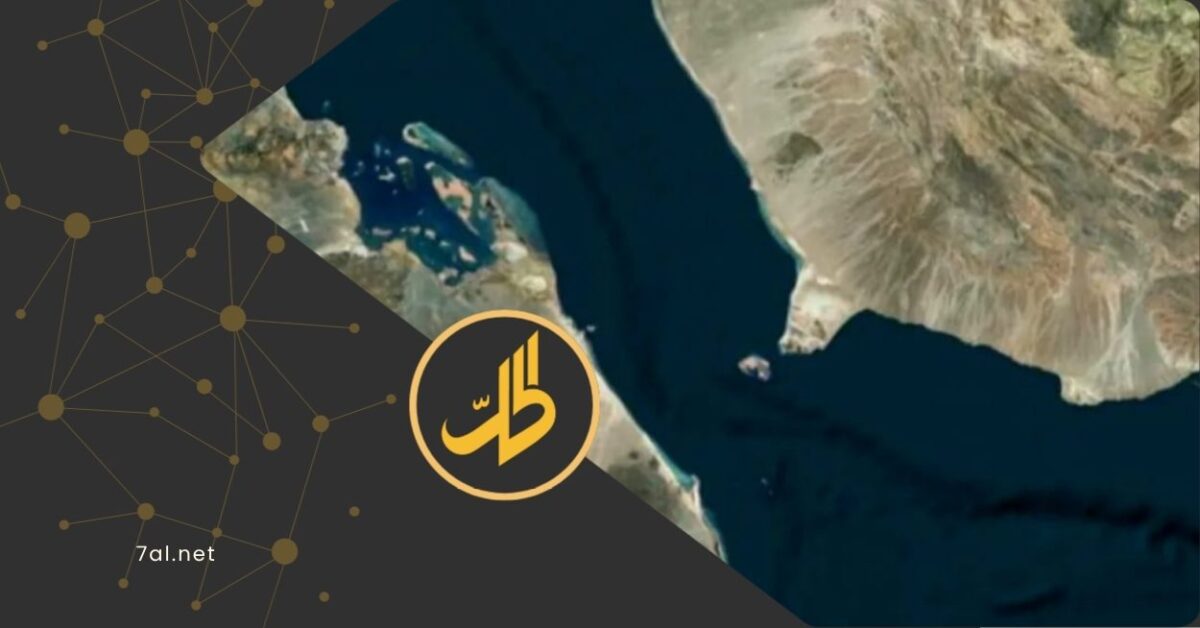
Signs of tension are rising again in the Red Sea and the Bab al-Mandab Strait, amid direct European warnings about the possibility that attacks on commercial vessels may resume, following the involvement of the Iran-aligned Houthi group in the ongoing regional escalation.
The return of the threat to commercial shipping
The European naval mission “Aspides” called on commercial vessels to exercise the utmost caution while transiting the Red Sea and the Gulf of Aden, warning that attacks could resume at any time, particularly given the military capabilities possessed by the Houthi group.

According to a statement issued by the mission today, Sunday, the threat level is considered very high for vessels linked to the United States and Israel, and medium for other ships, with a clear recommendation to avoid Yemeni territorial waters as much as possible.
This warning comes at a sensitive time, after the Houthi group announced that it had carried out missile attacks toward Israel, in a step that opens the door to expanding the scope of operations to include vital maritime corridors.
Corridors under pressure
For its part, the European Union confirmed the continuation of its naval operations to secure navigation, noting the success of its forces in escorting new groups of commercial vessels through the area of operations in an attempt to contain the escalating risks.

But this military presence, despite its breadth, does not eliminate fears of a return to attacks, especially as the Houthi group possesses capabilities that enable it to target ships using missiles and drones, a pattern that has previously caused widespread disruption to shipping traffic since late 2023.
The Bab al-Mandab Strait is one of the world’s most prominent maritime chokepoints, with a large share of oil and gas trade passing through it, making any escalation there quick to affect global supply chains.
In this context, observers believe that the Houthi group’s involvement in the regional escalation represents a clear attempt to use the sea as a pressure lever.
But this involvement, according to observers’ estimates, remains governed by careful calculations, balancing the display of support for its ally Iran with avoiding a slide into a broad confrontation that could prompt direct military responses inside Yemen.
Fragile balance
The European warnings, coinciding with rising tension in the Strait of Hormuz, heighten fears of a scenario of dual pressure on global energy and trade routes if the confrontation expands.
The region today appears to be facing an open test, where any limited Houthi escalation could be enough to disrupt one of the world’s most important arteries of trade and push it toward further turmoil.
- How the Houthis Are Choking Yemen’s Peace Efforts with a Broad Escalation on the Ground
- Economy in the Wind: How Yemenis Are Paying the Price of Disrupted Shipping Routes
- Houthi Summer Centers: Factories for Indoctrination and Raising a “Scream” Generation
- The “Coalition of Necessity”: What Costa Rica’s Terrorism Designation of the Houthis Signifies
- Mojtaba Khamenei Runs Iran from His Bed as Photos Vanish and the Supreme Leader Makes a “Voice-Only” Appearance