
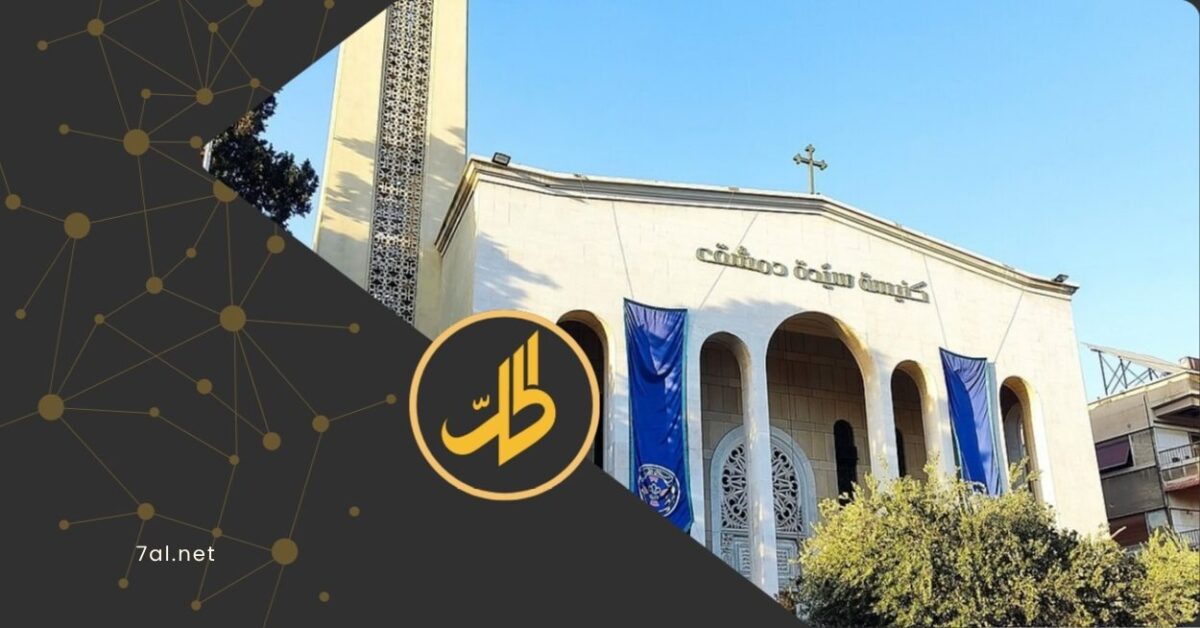
Our Lady of Damascus Church announced the cancellation of all celebrations, limiting observances to prayers داخل the church sanctuary starting from Palm Sunday, as a result of escalating security tensions that have stirred deep concern among residents over the safety of their children.
This decision reflects a state of extreme caution in Syria, following the rise in sectarian and ethnic violence, shortly after an atmosphere of fraternity embodied by the church in its recent social initiatives.
From “Tala’ al-Badru ‘Alayna” to the cancellation of “Palm Sunday” celebrations
Not much time had passed since the solemn scene presented by the Patriarchal “Mar Ephrem the Syriac” Scout Troop at Our Lady of Damascus Church, when it performed the melodies of the hymn “Tala’ al-Badru ‘Alayna” to extend Eid al-Fitr greetings to Syrian Muslims at the beginning of this March.
That initiative, which drew attention as a message of peace and openness, has now collided with a security reality that compelled the church to issue an official statement announcing the cancellation of the Palm Sunday celebration and limiting observances to prayers only.
The church explained that the cancellation of scout performances and musical performances came in response to the new circumstances, which carry palpable public fears, making the preservation of the congregation’s safety a priority over the usual displays of joy during Holy Week and Palm Sunday.
Suqaylabiyah tensions
These precautionary measures are closely linked to the security deterioration witnessed in the predominantly Christian city of Suqaylabiyah in the Hama countryside, where the events began with a local altercation and quickly developed into violence and assaults targeting shops and public property.
The matter did not stop there; rather, the situation worsened with the entry of masked gunmen from neighboring areas who carried out attacks targeting civilian neighborhoods, including the smashing of shops and assaults on civilians, in addition to gunfire in several areas, in an incident that raised fears over its repercussions for civil peace and the values of coexistence among local communities.
The following day, the city of Suqaylabiyah witnessed a protest attended by a large number of residents, denouncing the attacks it had been subjected to overnight. Protesters raised slogans including: “The Syrian media is lying” and “We demand accountability for the General Security personnel involved.”

The Syrian Observatory for Human Rights said that participants expressed their condemnation of what they described as misleading media coverage by official and pro-government media, which portrayed what happened as an incidental quarrel that security forces intervened to break up.
Residents stressed that video clips circulating on social media showed the town coming under attack by large groups, in addition to what they considered negligence or complicity by patrols affiliated with General Security while the events were unfolding.
European calls for an investigation
On the other hand, the Cypriot Foreign Ministry called for speeding up the completion of the investigation into the events in Suqaylabiyah and holding those responsible accountable.
In a statement, the ministry said that reports of sectarian-motivated attacks targeting Christians in Hama and Homs are a source of grave concern.
The ministry pointed to the need to protect the rights and security of all Syrians, regardless of their religious or ethnic backgrounds, stressing that peaceful integration and an inclusive transition are two essential elements for Syria’s unity and for cooperation with the European Union.
For its part, the Greek Foreign Ministry announced that it is following with deep concern the situation in the predominantly Greek Orthodox city of Suqaylabiyah. It called for the swift implementation of the recently announced investigations by the Syrian government regarding the latest events.
The ministry renewed its call for a peaceful transition that protects the rights of all Syrians, regardless of their religious or ethnic background.
Escalating sectarian violence
Nafeh al-Nader, a resident of Suqaylabiyah, told the American Associated Press that “young men broke the gate of his house and kicked a diesel heater, causing one of the rooms to catch fire. He added that they tried to set another room ablaze, but failed after one of the neighbors rushed to help, before being beaten with a stick by one of the attackers.”
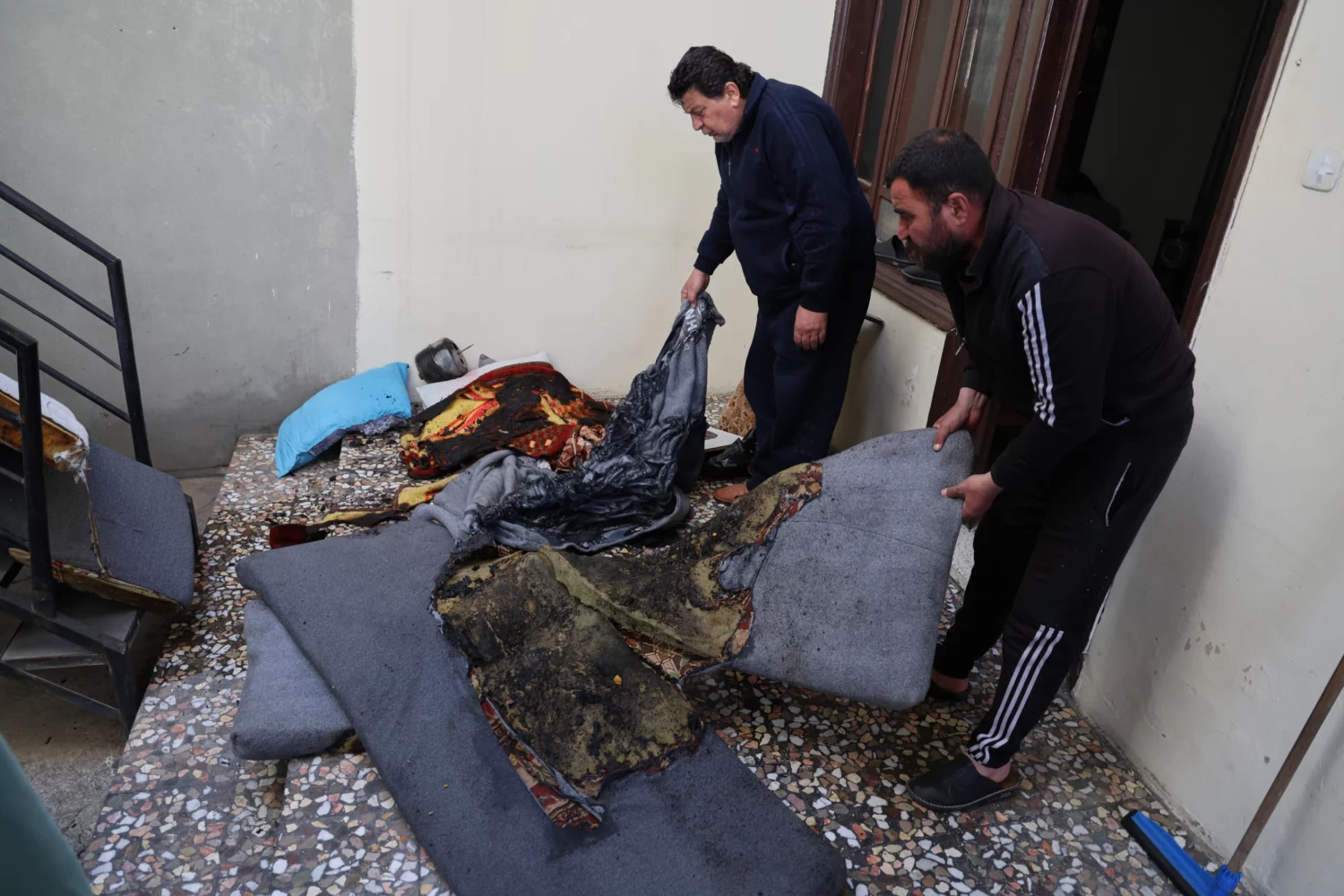
The agency said, “Since the fall of the Assad regime in December 2024, members of the Alawite, Druze, and Christian minorities have been subjected to attacks by gunmen loyal to the country’s new Islamist rulers. Hundreds of people have been killed, including Alawites on the Syrian coast in March of last year, and Druze in Sweida province in July 2025.”
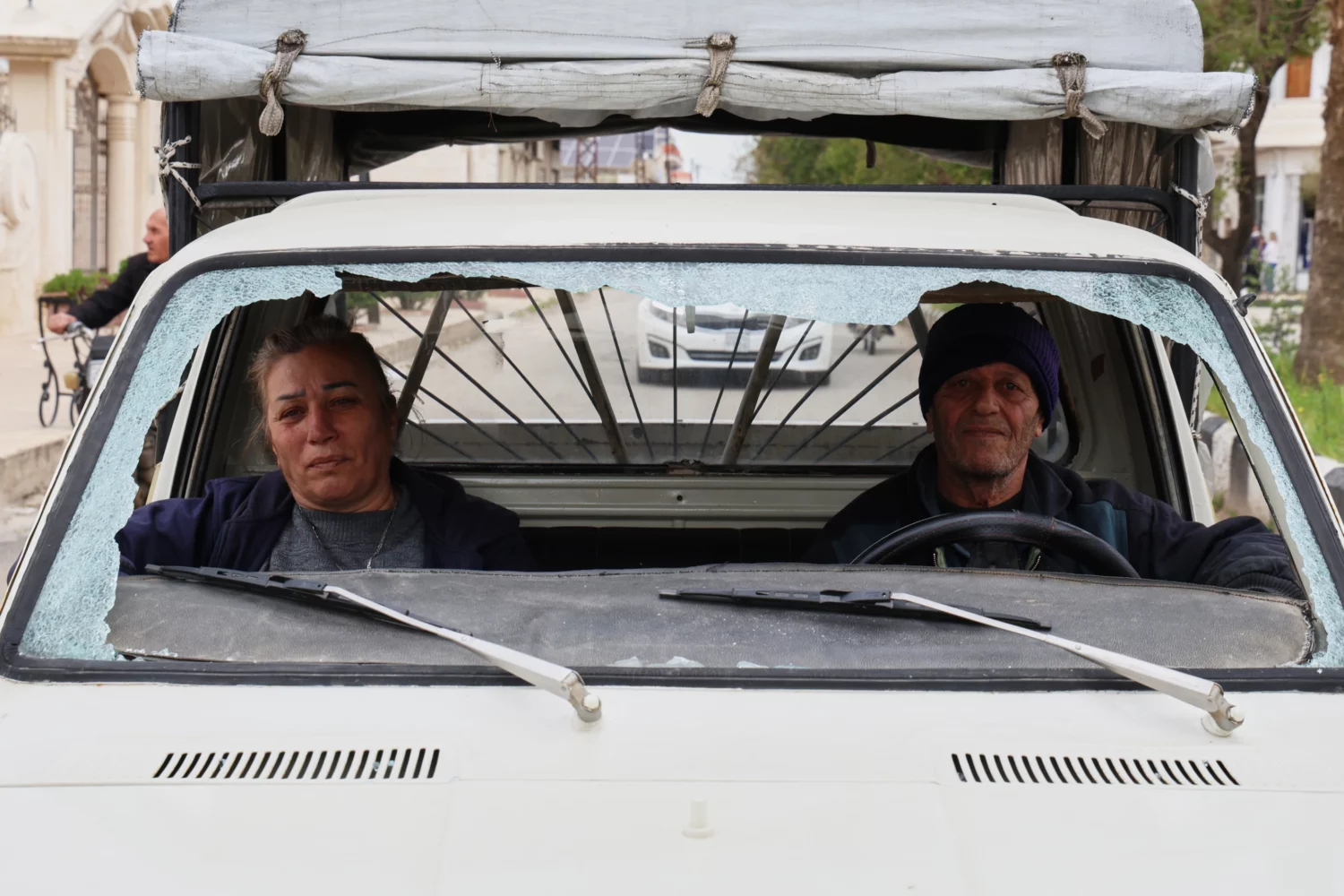

The agency added that the government of interim President Ahmed al-Sharaa condemned the attacks on minorities, but many accuse it of turning a blind eye or of being unable to control the armed groups it is trying to integrate.
Analysts believe that the sectarian and ethnic tensions in Syria, which began in March 2025 with the targeting of Alawites, then extended to the Druze in July, and later reached Aleppo and east of the Euphrates against the Kurds, reveal a structural flaw in the new authority’s approach (with its jihadist background) to the religious and ethnic diversity of Syrian society.
- How the Houthis Are Choking Yemen’s Peace Efforts with a Broad Escalation on the Ground
- Economy in the Wind: How Yemenis Are Paying the Price of Disrupted Shipping Routes
- Houthi Summer Centers: Factories for Indoctrination and Raising a “Scream” Generation
- The “Coalition of Necessity”: What Costa Rica’s Terrorism Designation of the Houthis Signifies
- Mojtaba Khamenei Runs Iran from His Bed as Photos Vanish and the Supreme Leader Makes a “Voice-Only” Appearance