“If a person wants to undergo medical tests, whether blood tests or general tests, it costs them twice their salary, or perhaps even more. Sometimes people seek advice from pharmacists or online to avoid the cost of medical tests, and this exposes some of them to relapses or harmful side effects. But if a citizen does not have the financial means to undergo medical examinations, they have no choice but to resort to these methods. In truth, people no longer care about their health in the face of this outrageous cost of living amid low salaries and incomes.”
“As the price of everything keeps rising in Syria, from foodstuffs to medical care and beyond, an employee’s salary now lasts only a few days,” Ms. Manal al-Sharifi told Al-Hal Net, describing Syrians’ suffering with the rising costs of medical tests and healthcare in general amid low wages.
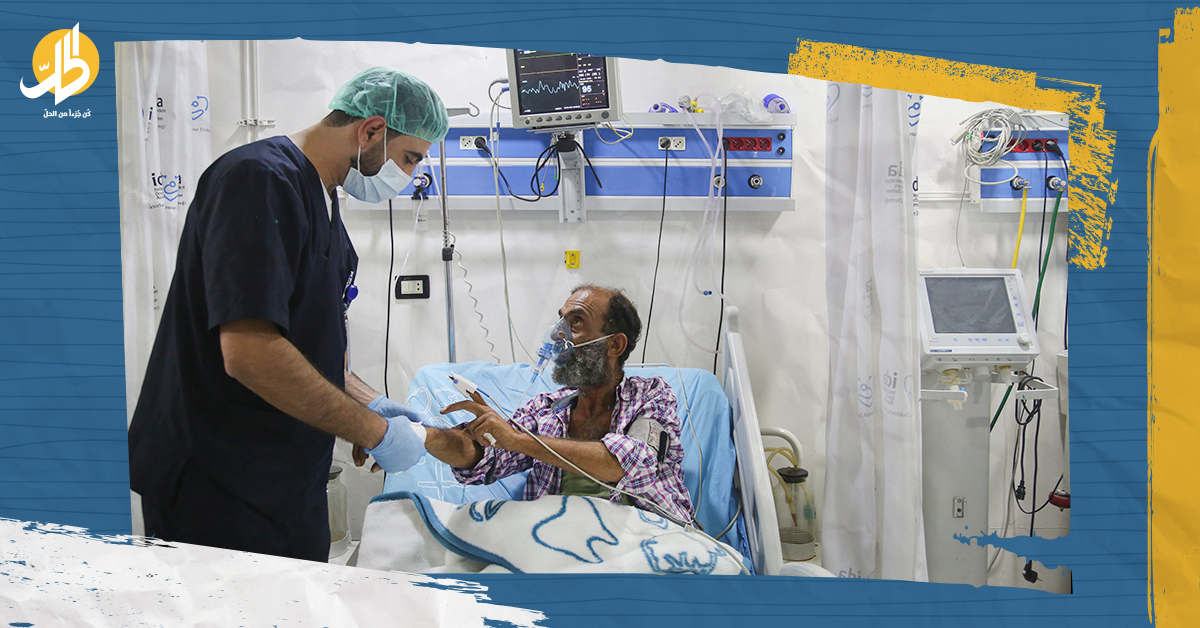
The health sector in Syria is facing the risk of collapse, with the continued decline in hospital services and the emigration of medical personnel, to the point that the quality of services in medical laboratories has also deteriorated, in addition to the sharp rise in their prices, which has led patients to avoid visiting labs.
You may also like: A $100 salary is the dream of university graduates in Syria
Available only in the private sector!
Strangely, a number of medical tests are unavailable in state hospitals that provide services for symbolic fees, while patients can get them done at private laboratories across the capital, but at very high charges and many times the official rates, according to a report by the local newspaper Al-Watan on Tuesday.
While a number of hospitals are suffering shortages of some laboratory tests, especially hormonal tests and gland-related tests, all of these are available in the private sector.
Medical test prices in Damascus have seen major increases, varying by area—whether a working-class neighborhood or upscale districts such as Al-Malki or Abu Rummaneh—and according to staffing levels, operating costs, and the supplies laboratories need at the present time.
You may also like: “Bone-breaking” before winter.. Transport fares in Syria are subject to whims
Exorbitant prices
As for medical test prices, there is no fixed rate among laboratories. On average, blood tests cost between 5,000 and 10,000 Syrian pounds, gland-related tests between 30,000 and 40,000, while hormonal tests exceed 60,000 Syrian pounds and vitamin tests exceed 200,000, with a clear rise in the cost of many tests patients must pay for, according to the local newspaper.
A number of workers also said that some laboratories have been heavily affected by the crisis, pushing many lab operators to leave the profession or raise prices because of the costs of securing supplies, amid rising labor costs, energy costs, rents, raw materials, equipment, and all other details related to laboratory work and the services they provide to patients.
One worker explained that the price increases for lab tests do not cover the actual costs, especially since a number of laboratories have closed in the recent period, and some people have considered leaving the profession because of the heavy burdens. They noted that the Ministry of Health’s pricing for medical tests has not been amended since 2011.
Accordingly, the laboratories still operating set their prices as they see fit, without adhering to the official rates, because those rates no longer match current conditions and the cost of living. According to the laboratories, the increase leaves only a small profit margin, though there are clear disparities in prices.
Ms. Manal al-Sharifi, 46, from one of Damascus’s neighborhoods and a teacher at a school, added: “Prices are sky-high and completely out of line with our salaries. Not long ago, my husband underwent some tests because he was suffering from pain in the esophagus and stomach, and the doctor requested several examinations in addition to an endoscopy. This cost us nearly two million Syrian pounds, perhaps even more.”
Al-Sharifi continued, “The cost of my husband’s tests weighed heavily on us. We can barely secure our daily bread, and the problem is that our salaries are extremely meager and do not exceed 120,000 Syrian pounds, in addition to other living expenses. So I had to borrow the money for the tests and the rest of the treatment from my relatives. Without them, we would not have been able to secure my husband’s treatment.”
Al-Sharifi concluded, “If the situation remains as it is and the Syrian government does not raise salaries, people’s conditions will deteriorate and head toward hell. In truth, this high cost of living and the overall living situation have become exhausting on all levels—financially, psychologically, and physically. In short, most Syrians today want to emigrate and flee this miserable, exhausting country.”
You may also like: Prices are rising daily.. Between the government and traders, Syrians are the victims
Profiteering off patients
A number of citizens told the local newspaper Al-Watan that there is difficulty completing all tests in government hospitals because they are not fully available, forcing patients to turn directly to private laboratories to obtain the test requested by the specialist doctor or by the hospital itself. This also pushes some doctors to ask patients to go to a specific laboratory and no other, under the pretext that its tests are more accurate.
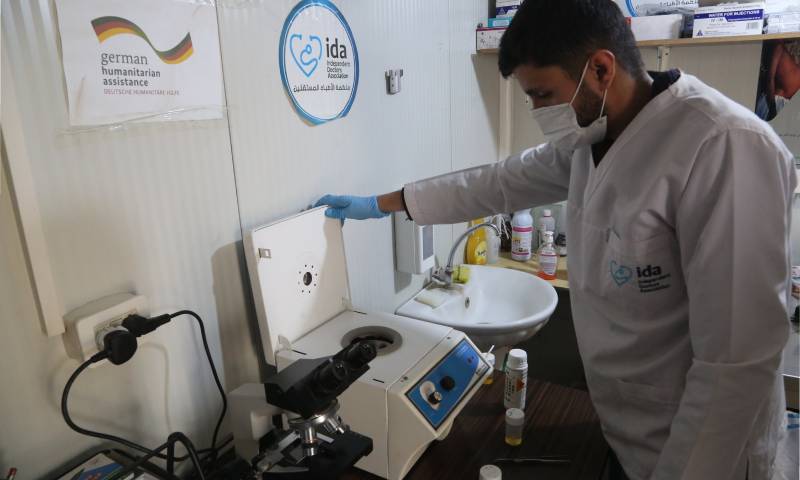
The director-general of Damascus Hospital, Al-Mujtahid, Dr. Ahmad Abbas, claimed that 90 percent of tests are available at the hospital and are carried out daily, with shortages affecting some tests—especially immunological and hormonal ones—particularly amid the economic blockade, tendering issues, and other measures, especially since the raw materials for these tests are expensive.
Abbas said that 40,000 laboratory tests are conducted monthly, noting that the cost of tests in hospitals is symbolic and ranges between 1,000 and 2,000 Syrian pounds. He added, for example, that the hospital still charges 800 pounds for a TSH test, whereas the same test costs more than 8,000 pounds in private laboratories.
For his part, the director-general of Al-Mouwasat Hospital, Dr. Issam al-Amin, also claimed that most laboratory tests are available at the hospital, though some are unavailable at times because of delayed supplies, noting that around 160 tests are conducted monthly.
Meanwhile, the head of the Doctors Syndicate in Syria, Dr. Ghassan Fandi, told the local newspaper that two years ago the Health Ministry issued a decision to dissolve the Laboratory Authority, on the basis that a replacement body would be established, but this has not happened to date, although the matter falls under the Ministry of Health. He added that since 2005 no new fee schedule has been issued for doctors, and likewise no updated pricing has been issued for laboratories during the crisis. Some laboratories have stopped conducting certain tests because of the high costs.
Fandi noted that prices are supposed to be revised every three years in line with changing conditions, especially given imported materials and the impact of the exchange rate.
Fadi Samir (a pseudonym), a doctor at one of Damascus’s hospitals, told Al-Hal Net that the price of tests is rising because everything is becoming more expensive on the one hand, and because testing supplies come from abroad and are paid for in foreign currency on the other. As for the unavailability of some tests in government hospitals, this is due to the high cost of laboratory supplies, which has led the Ministry of Health to scale back supplying hospitals with some expensive lab materials.
Samir pointed out that the prices of tests, medical consultation fees, and medicines will continue to rise if the Syrian pound keeps gradually deteriorating. Therefore, the government must either raise employees’ salaries in line with living costs or put in place solutions to curb rising prices and the decline of the Syrian pound.
You may also like: “One cylinder every hundred days”.. The gas crisis is increasing Syrians’ suffering in winter
Shortage of supplies
In a previous press statement to the local website Athr Press, the director-general of Hama National Hospital, Dr. Salim Khlouf, did not deny the shortage of sodium bicarbonate needed for dialysis, pointing out that kidney-treatment supplies are procured centrally by the ministry in accordance with instructions from the Prime Minister’s Office issued in 2018, and that the ministry had been informed of the shortage.
Regarding dialysis machines that are operating or out of service, the head of the engineering office at Hama National Hospital, Abdul Karim Jarjnazi, said there are 14 dialysis machines operating under heavy pressure from patients, whose number ranges between 70 and 80 daily. By contrast, there are 8 machines out of service, 6 of which are being repaired at very high cost, in his words.
From time to time, some dialysis supplies run out for patients in Daraa province, imposing heavy financial burdens they cannot continue to bear under the difficult living conditions facing the country as a whole.
The items currently in short supply, according to some patients and their families speaking earlier to the local newspaper Tishreen, are the tube, the filter, and the cartridge, forcing them to buy them on the market for between 70,000 and 75,000 Syrian pounds. This is a large sum, especially since the patient needs 8 regular sessions per month, excluding emergency care when needed. This means the patient must spend around 600,000 pounds per month on these missing items just to undergo dialysis sessions, a sum most patients cannot bear.
Patients called on the relevant authorities in the Syrian government to solve this problem as quickly as possible and secure all the requirements for dialysis sessions, which cannot be dispensed with or postponed, noting that there is no convincing justification for the shortages because these items are available on the market.
By contrast, Dr. Ashraf Barmo, director of health in Daraa province, told the local newspaper that securing dialysis supplies is a centralized matter, and that correspondence and follow-up are underway in this regard, in the hope of providing them in full as soon as possible. He pointed out that the Health Directorate needs between 1,500 and 1,750 sessions per month for patients undergoing dialysis in its various hospitals and at the comprehensive clinic complex in Daraa, as some patients need emergency sessions in addition to regular ones.
Meanwhile, Dr. Yahya Kiwan, director-general of Daraa National Hospital Authority, pointed out that supply is also centralized, and that the monthly need ranges between 250 and 270 dialysis sessions for kidney patients in the national hospital alone, as patients sometimes need emergency sessions in addition to regular ones. Continuous and intensive follow-up is being carried out to secure all supplies through the Ministry of Health, he said.
You may also like: The continued rise in prices in Syria.. “Only the citizen pays the price”
One million pounds for a CT scan
The local newspaper Al-Baath pointed out in a previous report that there is a kind of “market” for MRI and CT imaging, amid the scarcity of machines in government hospitals, as the cost of a scan exceeded 600,000 pounds in private centers and topped one million in some cases.
The newspaper added that government hospitals still provide the service at symbolic prices, “not exceeding 9,000 pounds, and free in some cases,” but sources told Al-Hal Net earlier that most machines are out of service and do not provide the service as required.
For his part, Khaled al-Khattab, the physician supervising the radiology department at Al-Mouwasat Hospital in Damascus, confirmed that the hospital is under heavy pressure on its MRI machines, and that this problem constitutes a burden on government hospitals and patients alike.
Al-Khattab said in remarks carried by the local newspaper: “The number of machines is small, and over the past years many hospitals’ machines have gone out of service, increasing the pressure on those that remain, including Al-Mouwasat Hospital, which has six ultrasound devices, in addition to CT scanners, mammography machines, X-ray machines, and one MRI machine. It serves between 500 and 600 patients monthly because it receives a very large number of patients from various provinces, especially those that completely lack an MRI machine, such as Latakia, where the only main machine has broken down, making hospitals in the capital the only destination for its patients.”
Al-Khattab also noted cases of corruption in the hospital: “Some patients were forced to pay 50,000 pounds to employees who exploit patients’ need to obtain CT scan services, which prompted the hospital administration to launch a platform or mobile app enabling citizens to book directly, thereby controlling the violations committed by some and keeping the matter entirely under the administration’s control.”
The spread of the black market into the health sector is a concern voiced by many patients in Latakia, some of whom suffer from chronic and malignant diseases, in addition to heart and bone problems, amid the loss by public hospitals of many medical services that are still provided by clinics and private hospitals in Syria.
Some heart patients in Syria, according to a report published in the local newspaper Al-Watan at the beginning of last September, are facing difficulties obtaining cardiac catheterization procedures at Al-Basel Hospital for Cardiology and Surgery in Latakia because the catheterization machine has been out of service for several months, while those who go to Tishreen University Hospital are asked to buy the supplies needed for the procedure from outside the hospital.
According to the information, patients are forced to go to private hospitals and pay very high prices ranging between 600,000 and 800,000 pounds for catheterization, and around 6 million pounds for the placement of a single stent, making these sums yet another source of worry for heart patients, as citizens said, while calling for solutions that would bring relief to patients as soon as possible.
The medical sector in Syria has declined greatly over the past years due to the deterioration of the Syrian government’s economy on the one hand, and the decline of the Syrian pound against foreign currencies on the other, as all supplies for the medical sector are priced in hard currency. This is in addition to the unprecedented emigration of medical personnel and the destruction of a large percentage of medical facilities and centers over the past years.
You may also like: “So we don’t go bankrupt”.. Alternative crops are a path to saving farmers in Syria