
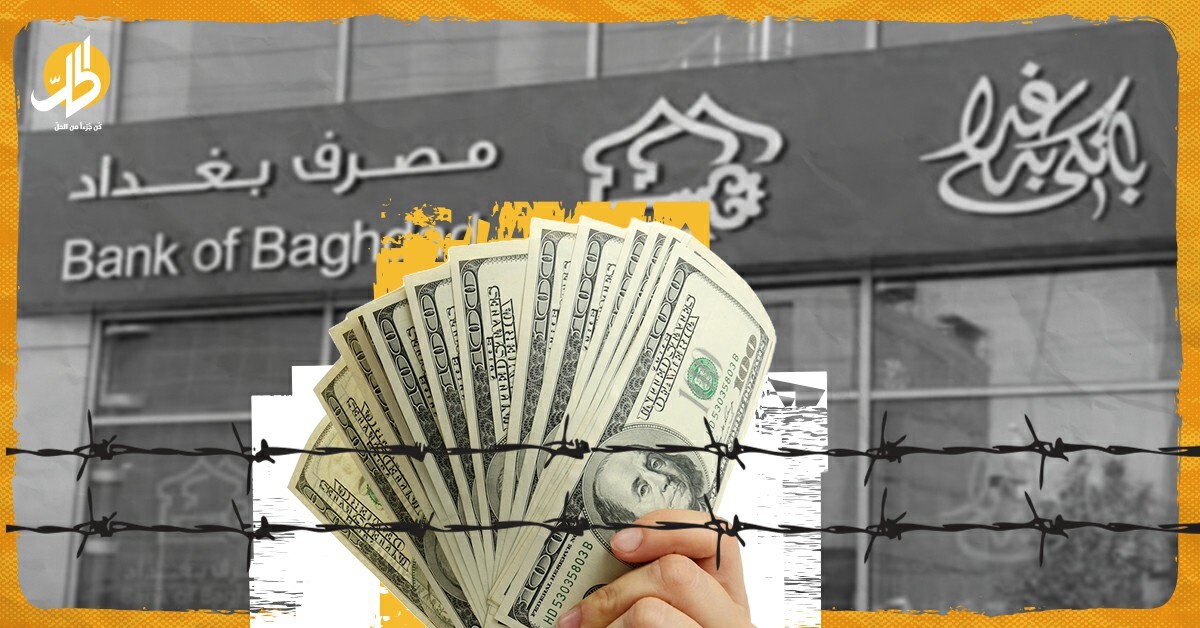
“I have not received my salary, which arrived a month and a half ago, from my personal account at Bank of Baghdad,” says Ali al-Hussein, expressing both concern and frustration at the procedures of one of Iraq’s best-known private banks.
Jamal works remotely for a foreign company, and his monthly salary is sent as a dollar transfer to his bank account at Bank of Baghdad. But the problem, he told Al-Hal Net, is the hardship and near impossibility of receiving his salary from the bank.
“Three months ago, the bank used to give me a quarter of my salary. It would split the salary up. I would go every week or two to withdraw part of the amount, and so on until I could receive it in full. And when I ask the employees at the bank, they say: we don’t have dollars anymore,” Jamal says.
For the past month and a half, the crisis has widened. After banks had been paying out transfers to their recipients in installments, they have now completely stopped paying them out in dollars. Anyone wishing to receive their transfer has no option but to withdraw it in Iraqi dinars at the official Iraqi Central Bank rate, which causes heavy losses for those receiving transfers in dollars.
Bank of Baghdad is not an isolated case; most Iraqi banks are following the same course, including the state-owned Trade Bank of Iraq (TBI), the National Bank of Iraq, and others. No dollar payouts for transfers—only dinars.
This has caused major chaos and altercations between customers and banks, as most customers receiving transfers refuse to withdraw them in Iraqi dinars, since they are paid out at the Central Bank rate, which sets 100 dollars at about 132,000 Iraqi dinars, while the parallel market rate is 160,000 dinars for every 100 dollars.
Why banks are paying out transfers in dinars
Abdullah al-Jumaili, who has a dollar savings account at TBI, says he refused to receive his monthly transfer of $2,000 at the local currency rate set by the Iraqi Central Bank. “If I receive it, I’ll lose 560,000 dinars. That means my loss will be about $300. Why should I bear all this loss?” al-Jumaili asks.
Some Iraqi banks claimed they were paying out transfers in dinars instead of dollars under instructions from the Iraqi Central Bank, but the latter issued a statement last week denying that it had given any directive to banks to prevent dollar payouts and dealings. Still, some do not trust the Iraqi Central Bank’s statement.
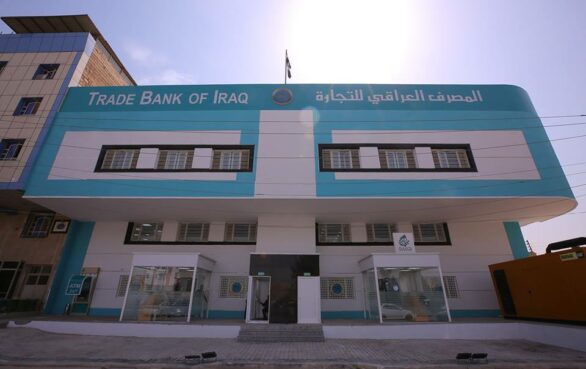
Al-Hal Net contacted one of the employees at TBI, who confirmed, on condition of anonymity, that the measures taken by the bank were not based on any decision by the Central Bank. “The bank adopted the dinar payout measure because it doesn’t have dollars. The Central Bank is not giving us dollars, and customers are pressuring us every day, lining up and demanding their money. In this situation, what can we do? We had no other choice until we are supplied with dollars.”
Indeed, the Iraqi Central Bank recently supplied banks with dollars, but dollar payouts are limited exclusively to dollar depositors. That means those who receive dollar transfers cannot withdraw them except in Iraqi dinars, and at the Central Bank rate, meaning a loss of about 30,000 dinars on every 100 dollars.
Economic expert Abdul Rahman al-Mashhadani attributes the banks’ move not to pay out transfers in dollars to two reasons. The first is that the Iraqi Central Bank has not supplied banks with their dollar deposits, and the second is that depositors have refrained for several months from depositing dollars, at a time when banks had been relying on the dollars deposited daily to carry out dollar withdrawals. As a result of these two factors, banks have come to suffer from a lack of dollars in their vaults, so they resorted to paying out in dinars.
The Iraqi Central Bank terrifies depositors!
Why is the Iraqi Central Bank not supplying banks with dollars? Because the US Federal Reserve, according to a report by The Wall Street Journal, refused the mechanism for supplying Iraq with cash dollars, as it did not approve a request by the Iraqi Central Bank to provide it with $1 billion in cash as it had previously done. This caused the current crisis in the Iraqi market by increasing demand relative to supply with regard to the dollar.
Later, the Central Bank of Iraq issued a statement denying what was stated in The Wall Street Journal report, saying it receives its dollar allotments monthly in a normal manner. But many refused to believe the Central Bank’s statement, because the reality in the market and the banks is exactly the opposite. Of course, Washington has for several months begun rationing dollar shipments to Iraq, for fear of their being smuggled to Iran, not to mention the sanctions it imposed about three months ago on 14 Iraqi banks, barring them from access to dollars because they use it in illegal ways, including smuggling it to Tehran.
Political analyst Alaa Mustafa, who has been following the severe economic crisis unfolding in Iraq, links the transfer crisis to a statement by Mazen Ahmed, Director General of Transfers and Investments at the Central Bank of Iraq, and considers it wholly misguided, saying it caused the current major crisis.
Ahmed spoke about the decline in dollar reserves in Iraqi banks, then said: “Do not talk to me about paper dollars next year,” which, according to Alaa Mustafa in his interview with Al-Hal Net, caused a state of panic among depositors, prompting them to rush to withdraw their dollar deposits from Iraqi banks, thus leaving the banks nearly devoid of dollars.
In the context of the banking crisis, and according to Abdul Rahman al-Mashhadani’s remarks to Al-Hal Net, most Iraqi banks are little more than storefronts belonging to political entities and rely on the Central Bank’s foreign currency window; they do not engage in normal lending activity like banks elsewhere in the world. Therefore, when several banks were excluded from the currency window, they collapsed and suffered major losses, and the Iraqi Central Bank’s measure will make them even weaker because they have lost the main part of the dollar funding they used to obtain through the Central Bank’s window.
What does Iran have to do with it?
Economic expert Mahmoud Dagher tells Al-Hal Net that the problem lies in the border crossings. The real crisis is the smuggling of dollars to Iran through those crossings. Tehran is under sanctions, but it has dealings with Baghdad worth about $12 billion annually, and this amounts to open smuggling of dollars to Iran, since its banking system is not linked to any global banking system as a result of the economic sanctions imposed on it.
Political economy expert Saleh al-Hamash agrees with the above argument and explains that the embarrassment facing the Iraqi government before the US Federal Reserve lies in its lack of control over money laundering and the continued smuggling/leakage of currency, which has put it in this major predicament. It is trying to find solutions through random decisions, forgetting that corruption is eating away at state institutions.
Al-Hamash explains that paying out incoming transfers from abroad in Iraqi dinars stimulates currency smuggling and affects the work of banks in the country. Therefore, the Central Bank must review its decisions and operate within the Iraqi reality, for the process of controlling foreign currency, represented by the dollar, comes through controlling money laundering and formal trade.
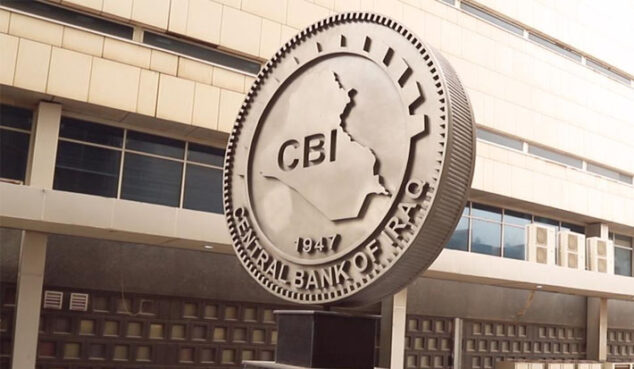
Most Iraqi traders transfer their money through offices or brokers away from the state because of bureaucracy, corruption, and administrative complexity in the country, and these are the factors that create demand for dollars inside the Iraqi market and cause the current crisis in the banks, according to al-Hamash.
The Iraqi Central Bank had issued a decision just days ago stipulating a total ban on dealing in dollars starting from the beginning of next year, which caused major controversy in the Iraqi street, especially as the dinar has been collapsing day after day and living costs have risen sharply without any radical solutions from either the Iraqi government or the Central Bank.
The “Tehranization” of Iraq?
The dinar’s exchange rate has jumped sharply, with the gap between it and the dollar reaching about 300 points. The official rate is 1,320 dinars per dollar, while the rate in the parallel market has reached 1,640 dinars per dollar. This jump is the result of the Iraqi Central Bank’s recent adoption of a policy of drying up dollars from the parallel market, which threatens to produce counterproductive results, as the exchange rate may reach 200,000 Iraqi dinars for every 100 dollars by the end of this year, according to many economists.
Here, political economy expert Nabil Jabbar al-Ali says that the Iraqi Central Bank is failing to solve the problem of transfers with Iran, and that the rise in the exchange rate is linked to pressures on the foreign currency available in the market and the continuation of black-market transfers, as there are around $30 million a day in illicit transfers crossing the border to meet trade-transfer demand with Iran, Syria, Lebanon, and Turkey.
The fluctuation in the exchange rate and the continuation of the dollar crisis will persist unless the transfer crisis with Iran is resolved first and foremost and an appropriate transfer mechanism is found for traders, even if in currencies other than the dollar, because the dollars that leave for Iran do not return to Iraq. Baghdad imports and Tehran exports, meaning Iraq does not export enough to Iran and others for dollars to flow back in.
One may ask how dollars enter Iraq and why they evaporate and come under such heavy demand. Simply put, according to economic expert al-Mashhadani, dollars come through the government’s sale of oil. It receives dollars and gives them to the Central Bank, which in turn sells them through the foreign currency window and receives dinars, which it hands over to the government so it can pay them out as salaries to state employees.
Thus, when dollars are sold through the Iraqi Central Bank’s window in order to obtain dinars to pay employee salaries, the dollars end up in the hands of those who bought them from the window, who are often major traders linked to political parties—most of them aligned with Tehran. From there, they are smuggled to Iraq’s eastern neighbor, leaving Baghdad and Iraqi banks suffering from a shortage of dollars, while the dinar keeps depreciating without limit, and raising grave fears of the “Lebanonization” and “Tehranization” of Iraq, such that its local currency may no longer retain any meaningful value.