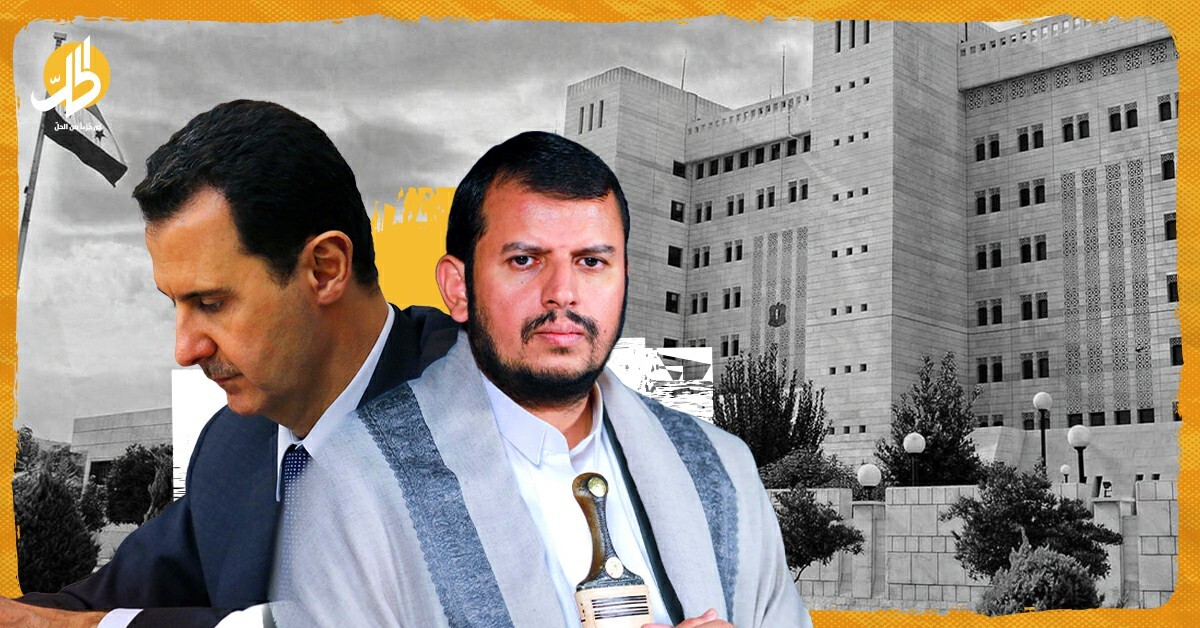
Some of the factors that may help shape the theory behind Syrian President Bashar al-Assad’s policy in choosing his allies show that he always operates in a shifting and volatile orbit. Assad may make unexpected or contradictory decisions depending on how he assesses the situations, opportunities, and challenges he faces, far from any firm alliance. For him, friendship is governed by interests, not ideology.
The “Houthis'” announcement of their failure to secure diplomatic representation in Syria reveals escalating tensions and disagreements between the two sides, and indicates that there has been a radical shift in their relationship. The question that arises is: will this shift mark the beginning of further tensions in the region, or will it leave the door open to normalizing relations between Damascus and Saudi Arabia?
What the leader of the Yemeni group, Abdul-Malik al-Houthi, may not have anticipated is that preserving power and the regime is Assad’s first and foremost objective. That is what drives him to seek allies capable of supporting him militarily, politically, and economically in the face of internal opposition and external pressure. In this context, Iran and Russia stand out as Assad’s foremost allies, in addition to Lebanon’s Hezbollah and some Arab and Islamic militias.
“This is a catastrophe”
If anyone believes that Assad’s speech at the Arab summit held in Jeddah, Saudi Arabia, last May, about the theory of “embraces and belonging” — that the former is transient while the latter is permanent, meaning that moving between embraces does not mean abandoning one’s belonging — was merely a passing message, that is incorrect. Rather, it was a very clear political signal to Arab leaders, namely that Syria is part of any system that offers it support, provided that his rule survives.
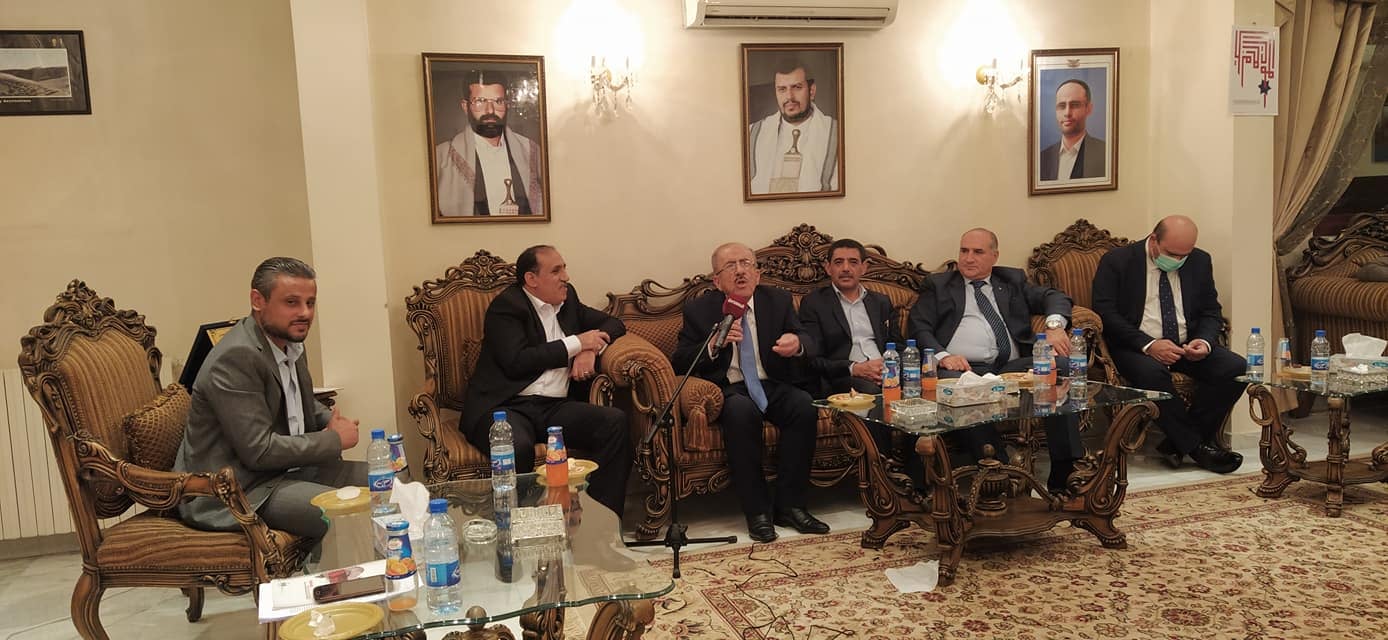
Khaled al-Arasi, director of the Finance Ministry overseen by the “Houthi” militia in Sanaa, made a striking admission yesterday, Wednesday, confirming that the Syrian authorities had informed his group to vacate the Yemeni embassy headquarters in Damascus, noting that this step represents a resounding failure for the militia in securing international diplomatic representation.
The “Houthi” militia had appointed Abdullah Sabri as its ambassador to Syria in November 2020, succeeding its former ambassador, Nayef al-Qanis, whom it had named ambassador in Damascus in March 2016 as the militia’s first ambassador to a foreign country.
A leader in the “Houthi” group said that the decision to close the Yemeni embassy in Damascus was issued by the Syrian authorities four days earlier, and was implemented after the mourning period for the victims of the Military Academy bombing in Homs had ended. He also confirmed in a post on his personal Facebook page that this decision is neither easy nor ordinary, and that it represents a tragic development because of the clear failure to achieve diplomatic representation.
Yemen’s ambassador to Morocco, Ezzedine al-Asbahi, pointed out that the Syrian authorities had demanded that those he described as the “impersonators of diplomatic status” from the “Houthi” group leave the Yemeni diplomatic building. This decision came as a result of recent communication between Yemeni Foreign Minister Ahmed bin Mubarak and his Syrian counterpart, Faisal al-Miqdad, in Cairo on September 9 on the sidelines of the Arab League Council meeting at the ministerial level. It was the first meeting between the two countries’ foreign ministers in nearly 12 years, specifically since 2011.
Envoys of the “Houthi” militia, including Yasser al-Muhalhil, Radwan al-Haymi, Moataz al-Qurashi, and Ammar Ismail, began evacuating the embassy and transferring its contents despite instructions from the Syrian authorities not to tamper with any of its equipment, diplomatic property, or vehicles.
The Alliance of Mythology and Turbans
In politics, there is no permanent ally and no permanent enemy; there are only permanent interests. This saying expresses an important truth in the world of politics: relations between states are determined by shared or conflicting interests, not by feelings or ideas. Therefore, we may see major changes in states’ positions toward one another depending on the developments and circumstances they face.
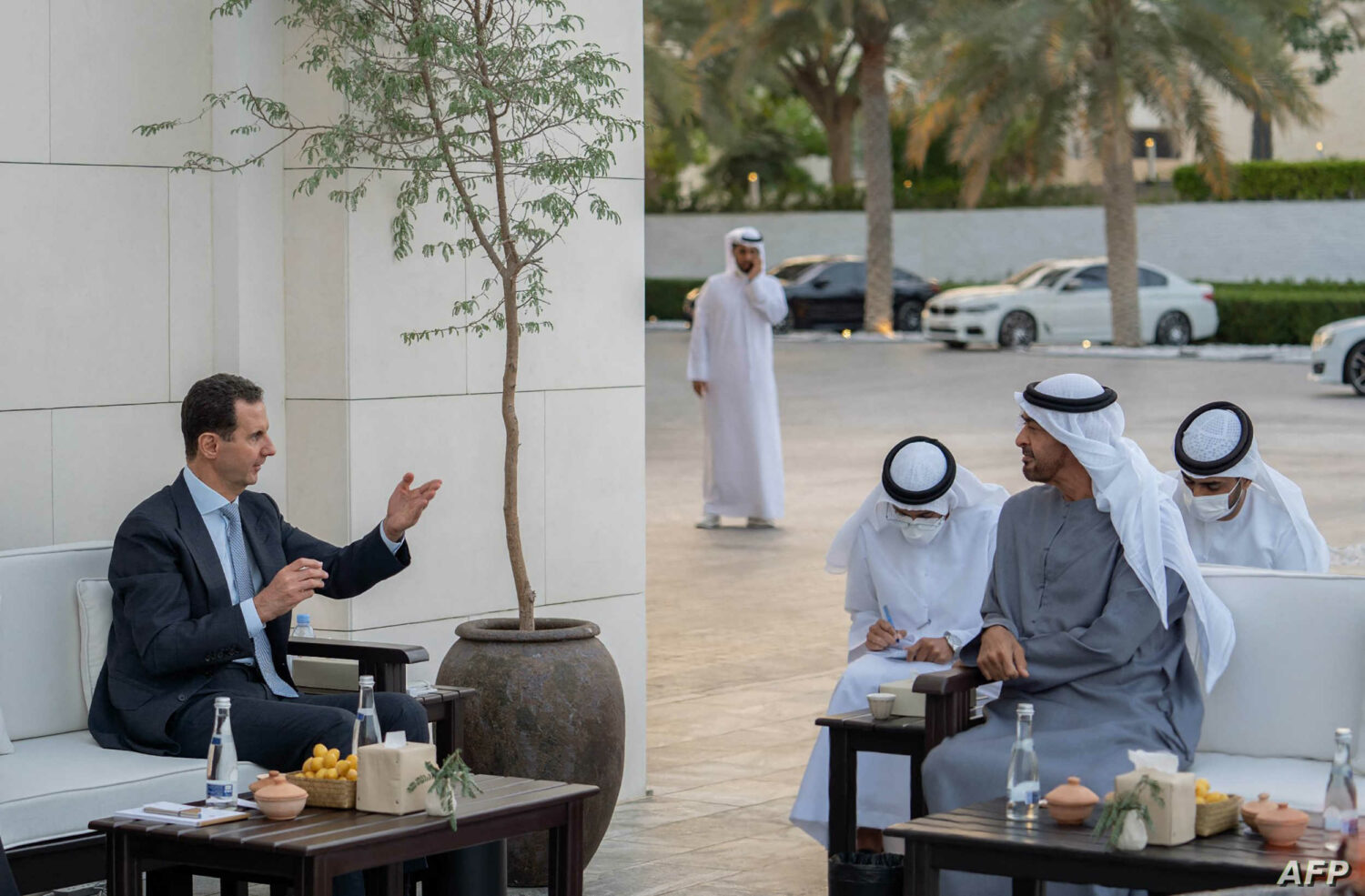
An example of this is the case of Bashar al-Assad and the “Houthi” group. Both receive support from Iran, which sees itself as the leader of the “Axis of Resistance” against Israel, the United States, and their allies in the region. Therefore, some may think that Assad and the “Houthi” group are permanent allies and that they share the same vision and goals.
But this is not entirely true. Assad does not ideologically align with the “Houthis,” nor does he see them as genuine partners in the Iranian project. Rather, his recognition of them was only meant to needle Saudi Arabia and the Gulf states in response to their support for the Syrian opposition, Syria’s expulsion from the Arab League, and also to please Iran under the banner of the “Axis of Resistance.”
In light of the changes taking place in the region, especially with the return of Arab-Syrian relations and the proposal of the “step-for-step” initiative, Assad found himself in a difficult position, forced to choose between his traditional allies and his potential adversaries. Therefore, the Syrian authorities issued a decision to close the “Houthi” militia’s embassy in Damascus and evacuate its representatives from it. This decision reflects a change in Assad’s position toward the “Houthis” and his desire to move closer to Saudi Arabia, which considers the “Houthis” an enemy to it and to its national security.
Also, according to the theory of the alliance of mythology and turbans, Assad and the “Houthi” group are at the core of a false and fraudulent alliance. They ally with Iran for reasons of expediency, yet they compete over influence in the region. They also ignore the suffering of the Palestinian people, which makes them part of the problem, not the solution.
But does this mean that Assad will betray his ally, the “Houthi,” and side with Saudi Arabia? According to Yemeni journalist Mohammed al-Damini, this cannot be stated with certainty. Assad may be playing a complex game in which he is trying to exploit the mutual interests among the different parties while keeping his options open.
According to al-Damini’s assessment, Assad knows that Saudi Arabia does not trust him and has not forgotten his role in standing against it and providing support to “Houthi” elements by establishing camps for them in Syria, and that Iran does not abandon him or allow him to break away from its axis. Therefore, Assad may be seeking to improve his relations with Saudi Arabia without losing his relations with Iran, and to ease “Houthi” pressure on him without severing ties with them.
This is the essence of politics: no permanent ally and no permanent enemy, only permanent interests. Assad is a politician skilled at manipulating interests and circumstances and adapting to change, but this does not guarantee his survival or success in the future. Politics is a shifting and volatile field, and no one can predict what will happen tomorrow, as al-Damini puts it.
Assad’s Ideological Shift
Certainly, the relationship between Assad’s ideological shift and what has happened since 2011 is not a particularly complex or sprawling subject. Assad changed his positions and policies toward some countries and issues in the region in response to the challenges and opportunities created by the Syrian crisis. This change was an attempt to preserve power and the regime in Syria and adapt to regional and international changes.
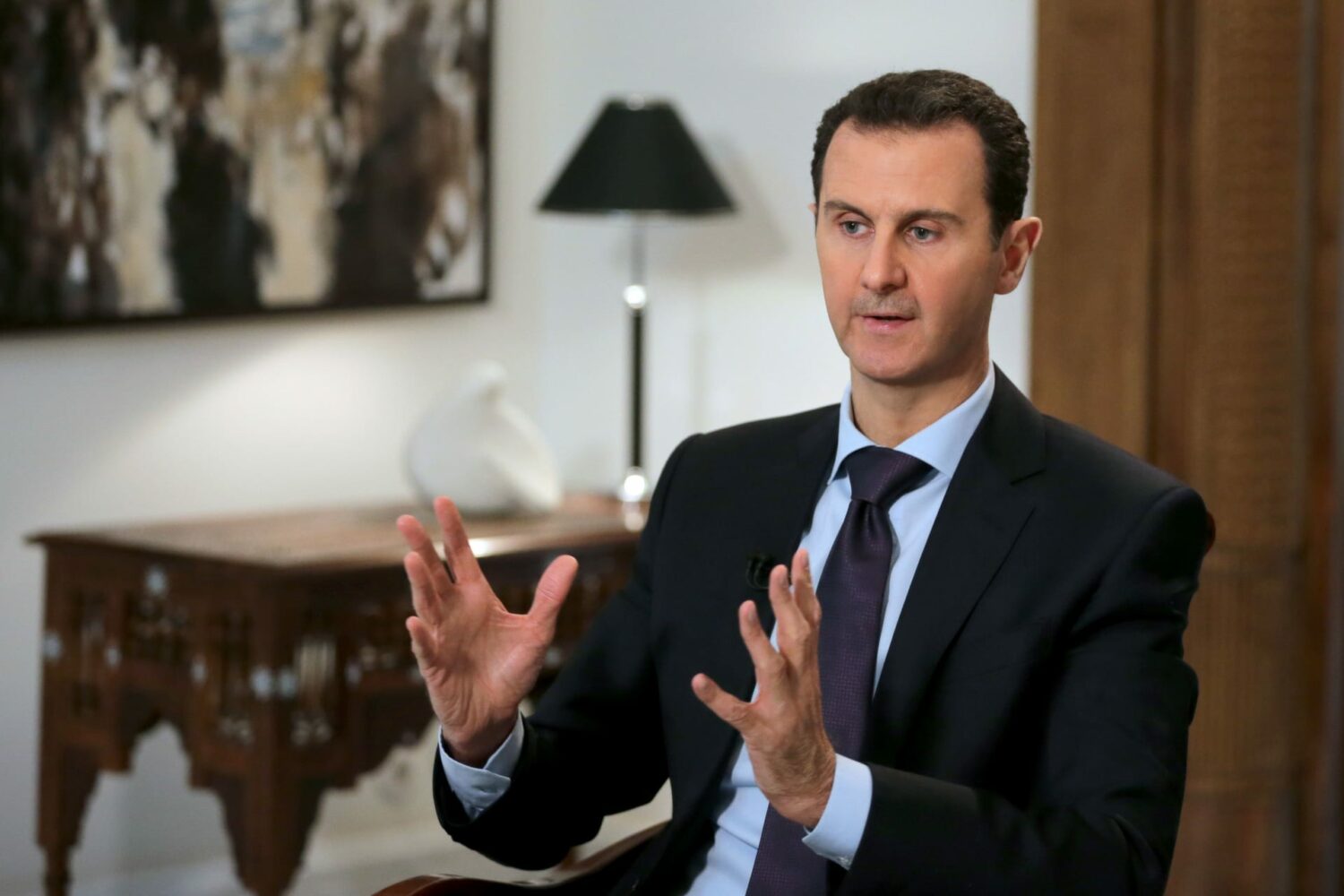
After the death of his father, Hafez al-Assad, in 2000 and his assumption of power, Bashar sought to present himself as a representative of a new generation of leaders, more educated and more open to the world. He launched what was described as the “Damascus opening,” a reform movement aimed at modernizing the Syrian regime and developing the economy and society. Among the most prominent manifestations of this shift was rapprochement with Turkey, France, Saudi Arabia, and the UAE, and a reduction in his ties with Iran and Lebanon.
At the beginning of his rule, Assad sought to improve his relations with Turkey, which represented an important economic and political partner for Syria. He also tried to reduce tension with Iran, which supported him militarily and financially, but he did not participate in its regional project.
But after the outbreak of the protests in 2011, the situation was turned upside down. Assad relied heavily on Iran, Lebanon’s Hezbollah, the “Houthi” group, and Russia to suppress the civil uprising against him, and returned to his role as part of the “Axis of Resistance,” while Arab states shifted from ally to enemy.
The change in his position on the Palestine issue was also the most striking. Before 2011, Assad claimed to be among the leaders of the “resistance” against Israel and to defend the rights of the Palestinian people. He also supported resistance movements in Lebanon and Palestine, such as Hezbollah and Hamas. But after that date, Assad began using the Palestine issue as a pretext to justify his repression of his own people and accuse his opponents of being agents of Israel and the West. He also came to belittle Palestinian sentiment regarding his massacre in Syria and reject any peace initiatives with Israel.
Today, after the foreign ministers of the Gulf Cooperation Council and their counterparts in the European Union announced support for the political process in Syria in line with international resolutions and United Nations Security Council Resolution 2254, affirming their support for the efforts of the Arab Contact Committee to reach a gradual solution, and with Saudi Arabia suspending the naming of ambassadors between the two countries, it appears that Assad has decided to play the card of dispensing with the “Houthi,” which offers him nothing except a bargaining chip in negotiations with Riyadh.
Assad’s move this week comes after the announcement of the suspension of the committee’s meetings due to Damascus’s failure to respond to the “road map” drawn up to restore Arab-Syrian “normalization.” Since Assad attended the Arab summit, and the official side meetings that followed, up to the first meeting of the “Arab Contact Committee” in Cairo last August, nothing new has occurred in the three files that formed the basis of Arab openness toward Damascus.
During the 27th joint council meeting of the Gulf Arab states and the European Union in the Omani capital, Muscat, held on October 9 and 10, the ministers affirmed their commitment to reaching a comprehensive political solution to the Syrian crisis that preserves Syria’s unity, sovereignty, and territorial integrity, meets the aspirations of its people, complies with international humanitarian law, and aligns with United Nations Security Council Resolution 2254.
In the end, it seems that Assad has taken the step of stabbing less important allies in the back because of the political deadlock in the political process, pushing him to find methods and approaches through which he can break the deadlock. The first of these was the “Houthi” card, which was a symbolic step to blackmail Saudi Arabia, especially since Assad and Abdul-Malik al-Houthi do not agree ideologically or mythologically.
- How the Houthis Are Choking Yemen’s Peace Efforts with a Broad Escalation on the Ground
- Economy in the Wind: How Yemenis Are Paying the Price of Disrupted Shipping Routes
- Houthi Summer Centers: Factories for Indoctrination and Raising a “Scream” Generation
- The “Coalition of Necessity”: What Costa Rica’s Terrorism Designation of the Houthis Signifies
- Mojtaba Khamenei Runs Iran from His Bed as Photos Vanish and the Supreme Leader Makes a “Voice-Only” Appearance