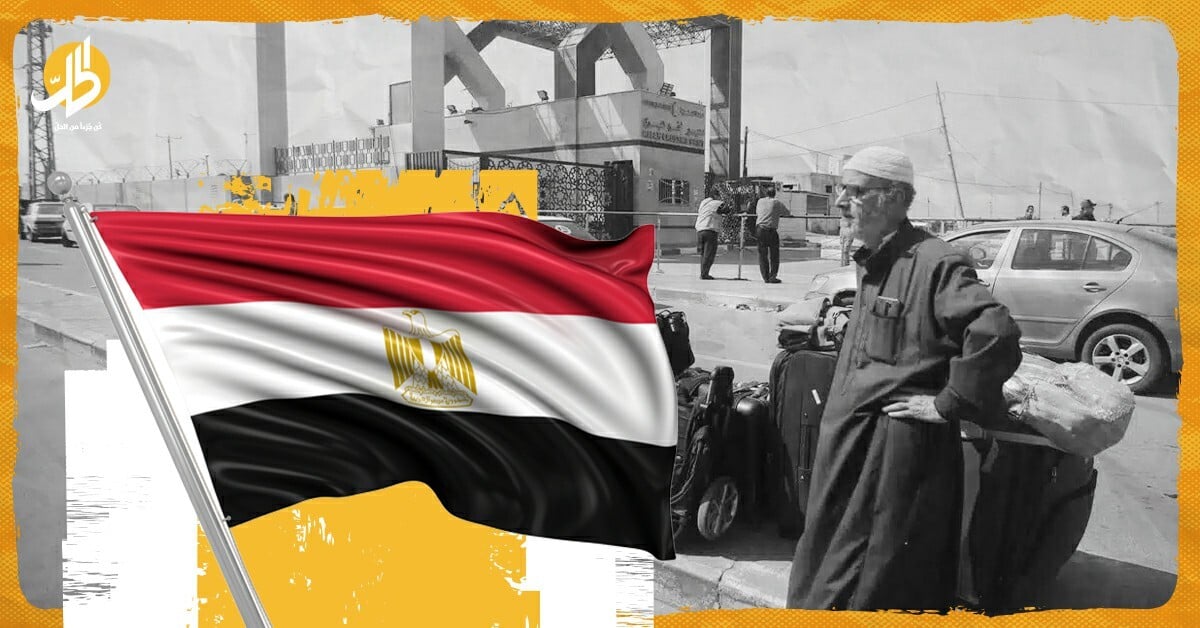
Since the attack launched by the Hamas movement on Israel, and with conditions in Gaza reaching such a difficult point on both the political and security levels, Egypt’s position on the Gaza war has been clear from day one. Cairo has intensified its efforts with all regional and international parties, focusing on securing a ceasefire, the release of civilian captives on both the Palestinian and Israeli sides, achieving de-escalation between the two parties to the conflict, and preventing any further escalation that could drag the region into a wider confrontation.
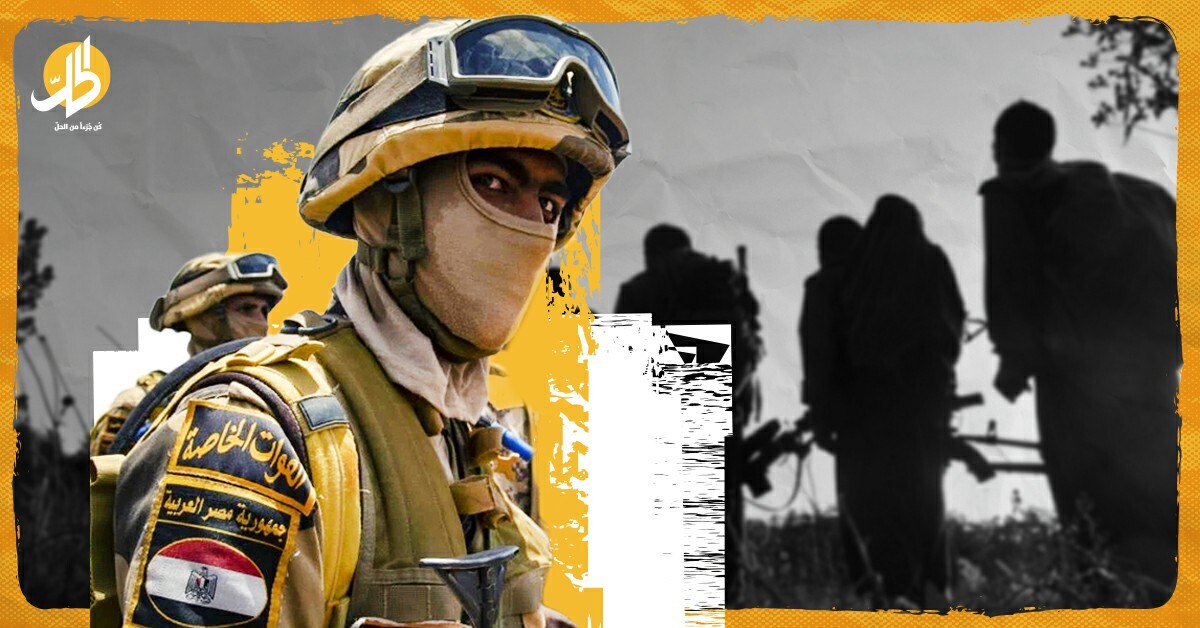
Egypt has called on all parties to exercise restraint and sit down at the negotiating table. Notably, it made the departure of foreign nationals through the Rafah crossing conditional on the entry of aid into the Strip, while stressing that Palestinians must not be forced to leave their land or be displaced to Sinai. Egyptian President Abdel Fattah el-Sisi recently reaffirmed this position, warning that displacing Palestinians from the Strip would lead to the “liquidation of the Palestinian cause.” Egypt is also concerned about the possibility of Islamist militants entering the country, as happened previously when hardline Islamist groups infiltrated the Sinai desert over the past decade.
Against this backdrop, the Egyptian president called for an international summit on the Palestinian issue in an official statement issued at the conclusion of a meeting of Egypt’s National Security Council, chaired by Sisi, shortly before the arrival of the US secretary of state in Cairo a few days ago. In this context, Egyptian diplomatic sources told Al-Hal Net that Egypt is working intensively in its contacts with all parties, including regional and international powers, in an effort to achieve de-escalation in Gaza.
The same sources added that Cairo may host the summit in the coming days, and that it is likely to produce positive results aimed at preventing further escalation. This comes in addition to the possibility of opening the Rafah crossing to allow UN aid into Gaza in exchange for the departure of foreign nationals through it.
Egypt’s role in the Gaza war
So far, Cairo has maintained its rejection of any attempts aimed at emptying the Gaza Strip of its population. Egypt is also focusing its efforts, according to diplomatic sources, on convening an international summit to reach a comprehensive solution to the Palestinian issue. For the time being, however, the immediate first step is to secure a ceasefire in Gaza.
For several days now, Egypt has been receiving calls from world leaders, including US President Joe Biden. President Sisi also received US Secretary of State Antony Blinken, French Foreign Minister Catherine Colonna, and Turkish Foreign Minister Hakan Fidan last Sunday. Hopes are pinned on the success of Egyptian efforts to achieve some form of de-escalation in the war raging in Gaza.
Discussing the chances of these Egyptian efforts succeeding, Major General Dr. Sayed Ghoneim, head of the Institute of Global Security and Defense Affairs and a visiting professor at NATO and the Military Academy in Brussels, said that Egypt has played a major mediating role in the conflict between Hamas and Israel over the past years, and that Cairo has been the most effective and reliable party for both sides, as well as for international actors.
Underscoring this, President Sisi has received several calls from presidents and world leaders aimed at stopping the escalation in Gaza. Egypt’s role at this stage is essential, Ghoneim told Al-Hal Net, spanning mediation, de-escalation, and securing the border against the possibility of displacement.
Two conditions for de-escalation
There are two conditions for de-escalation. The first is mediation between Hamas and Israel. But as long as Tel Aviv continues to reject mediation at the present time, whether wholly or even partially, one of the basic conditions remains unmet, Ghoneim said.
As for the second condition, Ghoneim told Al-Hal Net that it is the delivery of relief and humanitarian aid, including medicines, food, fuel, and everything people in the Gaza Strip need. So far, no agreement has been reached on this point either.
Therefore, until approval is granted for humanitarian aid to be delivered from the Egyptian side into Gaza, there may be limited room for de-escalation. But even if aid does arrive, as long as Israel insists on escalation and confrontation at this level of intensity, there will be no positive signs of reaching a truce in the coming days, Ghoneim said.
However, the issue of Israeli captives, whether military or civilian, will constitute one of the main sources of leverage over the Israeli side. Therefore, negotiations are likely to begin in the coming period. Egypt’s role will certainly be essential, at least at the outset, especially given its relations with all Palestinian parties, whether the factions or the Palestinian Authority. This is while taking into account the possible participation of some Arab states, such as the United Arab Emirates, in one way or another during that stage, despite the lack of alignment between it and the Palestinian Authority, as well as the Palestinian factions.
Meanwhile, press reports said that President Biden is heading to Israel tomorrow, Wednesday, on a highly sensitive visit, at a time when Egypt is preparing to hold an international summit on the situation in Gaza.
When will the Rafah crossing open?
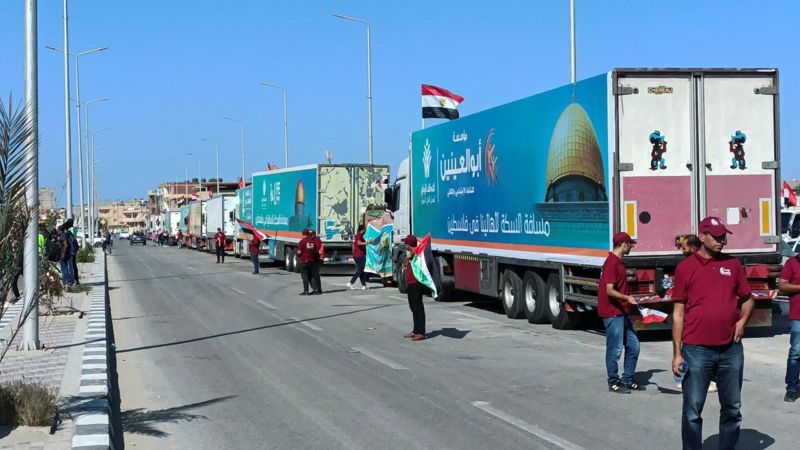
On Monday evening, aid workers said that convoys of humanitarian assistance stationed in El Arish, the capital of Egypt’s North Sinai governorate, were set to head on Tuesday to the Rafah crossing toward Gaza, which has been subjected to intermittent Israeli bombardment. Hundreds of trucks were lined up along the 40-kilometer road between El Arish and Rafah, according to relief team sources cited by the media.
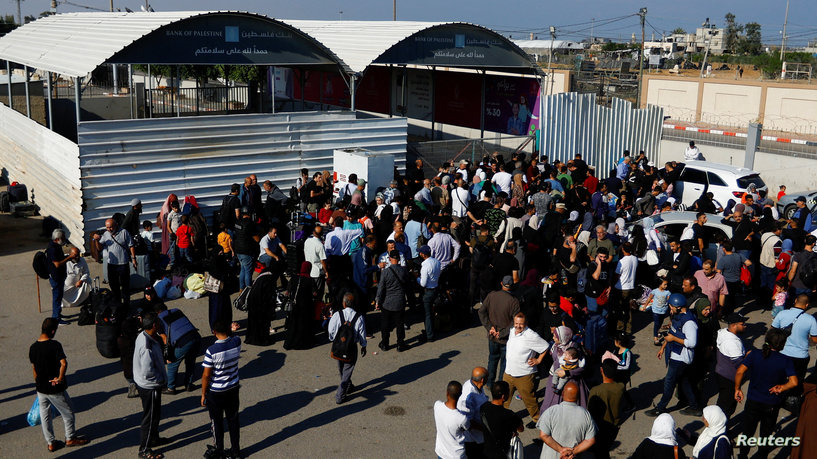
Meanwhile, the Palestinian side of the Rafah border crossing between the Gaza Strip and Egypt is witnessing a state of chaos, amid attempts by foreign nationals to flee the war between Israel and Hamas, according to The New York Times.
Dozens of people carried suitcases and garbage bags filled with whatever personal belongings they could manage to take to the Rafah crossing on Monday, only to find that the gates on the Palestinian side were closed, leaving them stranded as they waited for stalled diplomatic efforts.
The US embassy in Jerusalem sent an email to US citizens trapped inside the Strip, suggesting that they head to the border with Egypt. But diplomatic talks held over the past weekend to open the crossing for foreign nationals did not produce any tangible result.
Returning to Ghoneim, he said that the Rafah crossing is open in principle, but was effectively closed because the Egyptian condition has not yet been accepted — namely, allowing humanitarian aid to enter for Gaza’s residents in exchange for the departure of foreigners, dual nationals of Palestinian origin, and others. The crossing was shut days ago after it was hit by Israeli bombardment amid Israeli airstrikes on Gaza, following Hamas’s surprise attack from the Strip on Israel.
Egypt will insist to the very end on not accepting displaced people on a permanent basis. The problem is not temporary displacement to Egypt, but the possibility that they would remain there forever, especially Palestinians. There are Egyptian concerns that they could be received initially and then be unable to return to their land again, according to Ghoneim.
Many countries oppose the displacement of Gaza’s residents to neighboring countries such as Egypt and Jordan. In a recent statement from Berlin, Jordan’s King Abdullah II described the reception of Palestinian refugees as a red line, saying: “No refugees in Jordan and no refugees in Egypt.”
Overall, reaching a truce in Gaza currently appears unlikely, given that no party has yet shown serious readiness to sit at the negotiating table. But in the coming period, it may be possible to begin a political process, provided that Egypt continues its efforts alongside regional and international initiatives until some degree of de-escalation is achieved regarding the difficult and dangerous situation in the Gaza Strip.
- How the Houthis Are Choking Yemen’s Peace Efforts with a Broad Escalation on the Ground
- Economy in the Wind: How Yemenis Are Paying the Price of Disrupted Shipping Routes
- Houthi Summer Centers: Factories for Indoctrination and Raising a “Scream” Generation
- The “Coalition of Necessity”: What Costa Rica’s Terrorism Designation of the Houthis Signifies
- Mojtaba Khamenei Runs Iran from His Bed as Photos Vanish and the Supreme Leader Makes a “Voice-Only” Appearance