As the United Nations prepares to hold its next conference on climate change and global warming, titled “COP28,” in the United Arab Emirates, statements by relevant bodies around the world indicate that the Middle East and North Africa are among the regions most affected by climate change, amid the absence of a clear plan by the governments of these countries to mitigate its negative repercussions.
A “bleak and truly terrifying” future: with these words, international organizations are warning Middle Eastern countries, and to a lesser extent the rest of the world. The effects of climate change have already begun to appear, with many countries in the region recording unprecedented temperatures, underscoring the need for these states to act to halt, or at least reduce, the repercussions of global warming.
Researchers who study climate change agree that global temperatures have been steadily rising since the final decades of the twentieth century, causing heatwaves to become more frequent, more intense, and longer-lasting, to the point that some now extend for weeks or even months.
Unprecedented temperatures
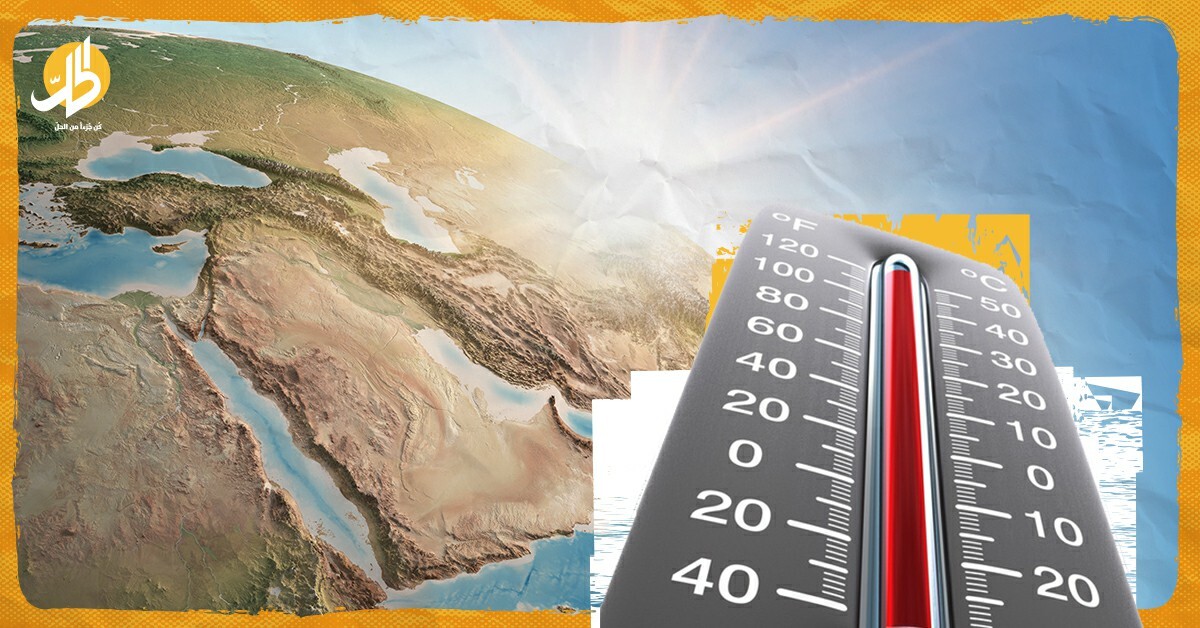
Middle Eastern countries recorded record temperatures this year, exceeding 50 degrees Celsius in some cases. What is new is that temperatures above 50 persisted for several consecutive days, something these countries are not accustomed to.
Morocco, for example, exceeded the threshold of 50 degrees Celsius over the past few days, according to the Ministry of Equipment and Water, marking the first time this has happened in its modern history. The Moroccan Ministry of Agriculture said the rise was caused by hot, dry air masses moving from the Sahara toward Morocco, resulting in a sharp increase in temperatures.
In Syria, some eastern areas recorded temperatures over the past few days reaching 53 degrees Celsius, forcing most institutions to halt work. A temperature of 70 degrees Celsius was also recorded in an area of Iran last Tuesday, an extremely severe level that threatens people’s ability to remain outdoors for more than a few hours.
Local reports also indicate that temperatures have regularly exceeded 60 degrees Celsius in the region in recent weeks.
The rise in temperatures in the Middle East has not been limited to land alone. In recent days, sea surface temperatures in the Gulf rose to 36.4 degrees Celsius, the highest level recorded in the past 20 years.
Environmental expert and head of the Jordanian Society for Human and Environmental Development, Dr. Ahmed Mahmoud Al-Shuraideh, believes that Middle Eastern countries are now more in need than ever of urgent measures to mitigate the negative effects resulting from climate change and rising temperatures, pointing to the major role played by the spread of the coronavirus in accelerating climate change.
Al-Shuraideh said in an exclusive interview with Al-Hal Net, “The rise in temperatures is certainly caused by global warming due to the excessive use of fossil fuels, and the coronavirus pandemic played a role in that. Factories stopped for a long period during the pandemic, and when they returned to work, they began operating at maximum capacity to make up for economic losses. As a result, quantities of carbon dioxide exceeding permitted levels were released, causing this warming around the world.”
It has affected countries worldwide
Global warming and climate change have affected countries worldwide, and no state has been spared. They have also had a major impact on surface and groundwater resources, forest cover, and food security, causing crop yields to decline. Some crops have even been completely destroyed as a result of rising temperatures and water scarcity.
In Al-Shuraideh’s view, “Governments must cooperate with international bodies and civil society institutions in order to mitigate the consequences of these phenomena. The most important of these measures is planting crops that do not require large quantities of water, and rationalizing consumption across the agricultural and industrial sectors.”

According to a study published in 2020 in the journal “PLOS ONE,” the Arabian Peninsula will be the region most affected by heatwaves in the future. A research team from the Massachusetts Institute of Technology indicated in 2019 that high temperatures and humidity in the future, particularly in Saudi Arabia, could disrupt the Hajj season by the middle to the end of the century, during the periods from 2047 to 2052 and from 2079 to 2086, when Hajj falls in the summer once again.
The Earth’s temperature has risen by 1.2 degrees Celsius since the late nineteenth century as a result of burning fossil fuels, making heatwaves hotter, longer, and more frequent, in addition to intensifying extreme weather events such as storms and heavy rainfall.
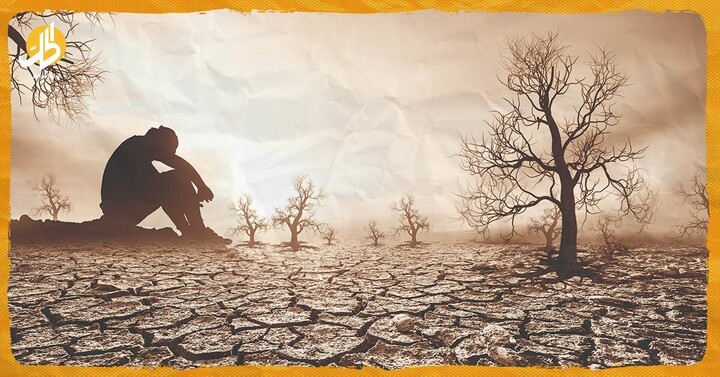
The mounting threats facing the region have led to warnings of thousands of deaths in the coming years due to continued rising temperatures, in addition to droughts that have begun striking several locations in the region, especially in North African countries, causing climate-related migration in some areas.
So far, United Nations conferences related to combating the effects of climate change have failed to produce clear mechanisms capable of ensuring concrete steps and genuine assistance for countries languishing at the mercy of global warming, especially in the Middle East and North Africa. All the aid that has been announced remains non-binding on developed countries, even though these countries bear primary responsibility for most of the planet’s emissions.
Middle Eastern countries will have to take rapid measures to limit the effects of rising temperatures in the coming years, as relevant studies indicate the need for the countries of the region to develop means other than air conditioning to protect their citizens from the dangers of extreme heat, in addition to introducing public health measures and national heat-protection plans.
Are there solutions?
As a result of ongoing climate change and its impact on the region, a program affiliated with a regional organization in East Africa warned that the severe drought afflicting the Horn of Africa is likely to worsen this year, threatening the region with a famine harsher than the one that caused hundreds of thousands of deaths a decade ago. A report by the Climate Prediction and Applications Centre also indicated that rainfall forecasts for the next few months point to a decline in precipitation, which will certainly place additional pressure on cultivated land.
Organizations concerned with climate change have warned of a humanitarian catastrophe. The effects of drought have been visible for years in the countries of the Horn, but they have recently worsened in parts of Ethiopia, Kenya, Somalia, and Uganda, which have been severely affected by drought, amid the absence of strategic plans to guide residents in dealing with these crises.
The continuation of these crises also threatens to exacerbate the phenomenon of climate migration, not only in southern Africa. Over the coming decades, specifically by 2050, estimates indicate that the number of people likely to migrate within their national borders because of climate change could reach around 216 million, including about 19 million from North Africa, according to a World Bank report.
So far, Middle Eastern countries have not announced a clear plan to confront climate change in the coming period. Rather, all that is taking place at the current stage consists of statements and preparations for conferences, while fears of a catastrophe in the coming years continue amid the absence of any readiness to deal with potential risks.
- How the Houthis Are Choking Yemen’s Peace Efforts with a Broad Escalation on the Ground
- Economy in the Wind: How Yemenis Are Paying the Price of Disrupted Shipping Routes
- Houthi Summer Centers: Factories for Indoctrination and Raising a “Scream” Generation
- The “Coalition of Necessity”: What Costa Rica’s Terrorism Designation of the Houthis Signifies
- Mojtaba Khamenei Runs Iran from His Bed as Photos Vanish and the Supreme Leader Makes a “Voice-Only” Appearance