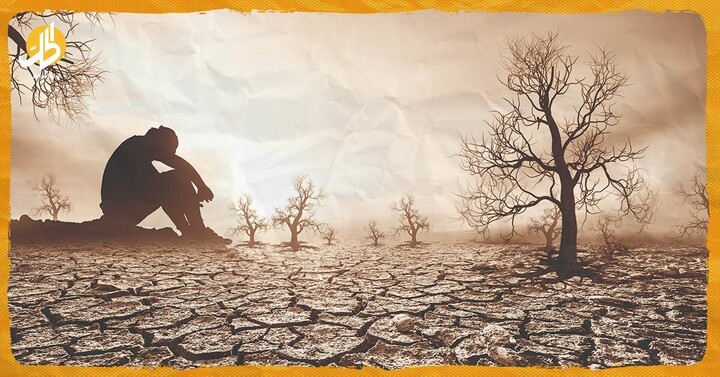

The 2025 drought was not merely a bad season in Rural Damascus; it was a severe shock that struck the backbone of agriculture and reshaped living conditions in areas long considered a breadbasket for the capital. That is the conclusion of a recent report by the Syria Community Consortium, which documented the humanitarian and economic repercussions of the drought in the areas of Nashabiya and Housh Nasri in Douma.
The report, prepared by a consortium comprising the Danish Refugee Council, the Norwegian Refugee Council, the International Rescue Committee, and Oxfam, described the situation as a compound crisis resulting from widespread crop failure, collapsing income sources, and an unprecedented worsening of food and water insecurity.
According to the assessment findings, more than 95% of farming households suffered direct crop losses, while 14% of families lost almost all of their production. Wheat and barley, two staple crops in the area, saw their yields fall by as much as 75%.
This collapse has driven a growing number of farmers to abandon agriculture altogether, amid water scarcity and rising costs for seeds, fuel, and fertilizers, making it an intolerable risk to continue farming.
Income erodes and assets are sold
The impact did not stop at the fields. The report indicated that 98% of households recorded a sharp decline in income, at a time when 92% of families depend on agriculture as their main source of livelihood, with no effective social safety nets in place.
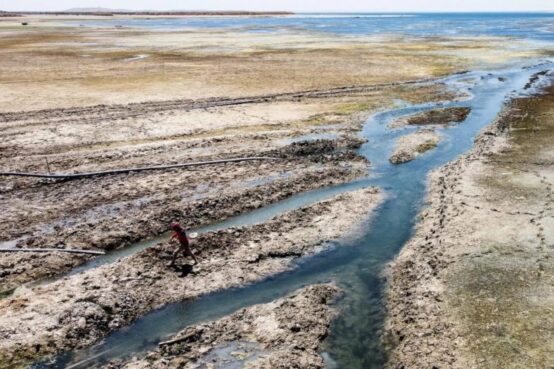
Faced with this reality, families resorted to harsh survival measures, including selling possessions and cutting spending on basic needs, in a trend that threatens a long-term erosion of their ability to recover.
Although 95% of households still meet the minimum food consumption threshold on paper, the report warned that these figures conceal an alarming reality: a decline in both quantity and quality.
Some 93% of participants in the assessment said their ability to access food had deteriorated, while 76% said the food available to them “is never enough.”
The data also showed that more than half of households reduced their spending on food, hygiene, and energy, with growing reliance on cheap foods lacking nutritional value.
A worsening water crisis
As for water, the report identified it as the most critical vulnerability. Most households rely on private wells for daily use, while drinking water is obtained through costly tanker deliveries or bottled water, amid the near shutdown of public water networks.
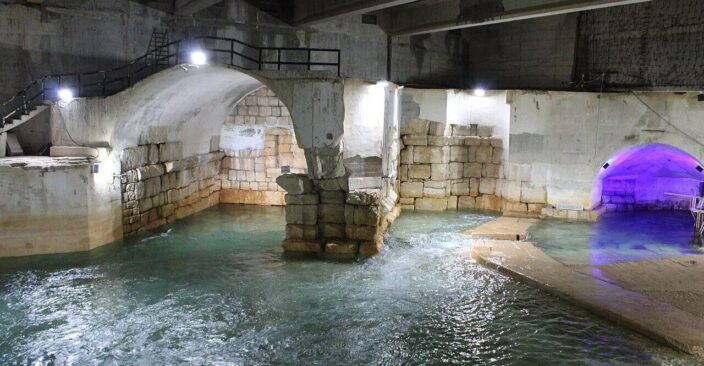
The drought has increased pressure on these sources, with groundwater depletion and rising water prices imposing additional financial burdens on residents, while water levels continue to fall with no clear prospect of a solution.
The crisis has begun to extend beyond its economic dimension, affecting the social fabric itself. More than a third of households reported rising tensions within local communities, especially over the sharing of scarce water resources.
The report also noted that a limited but notable proportion of families are considering relocation or displacement, opening the door to new waves of displacement if the drought and the deterioration of livelihoods continue.
Limited international response
At the beginning of last July, the World Food Programme announced the allocation of a $7.9 million insurance payout to respond to the drought, considered the worst in Syria in fifty years.
The website “Reinsurance” said the funding aims to support around 120,000 people by providing food assistance and basic necessities, as part of an operational plan covering the main agricultural areas, with support from the United Kingdom and Germany through the “Global Shield Financing Facility,” and in cooperation with organizations specializing in humanitarian insurance.
Officials at the programme stressed that activating financial protection tools, such as drought insurance, has become a necessity in countries affected by conflict, as it is one of the few available means of mitigating recurring climate shocks.
- How the Houthis Are Choking Yemen’s Peace Efforts with a Broad Escalation on the Ground
- Economy in the Wind: How Yemenis Are Paying the Price of Disrupted Shipping Routes
- Houthi Summer Centers: Factories for Indoctrination and Raising a “Scream” Generation
- The “Coalition of Necessity”: What Costa Rica’s Terrorism Designation of the Houthis Signifies
- Mojtaba Khamenei Runs Iran from His Bed as Photos Vanish and the Supreme Leader Makes a “Voice-Only” Appearance