
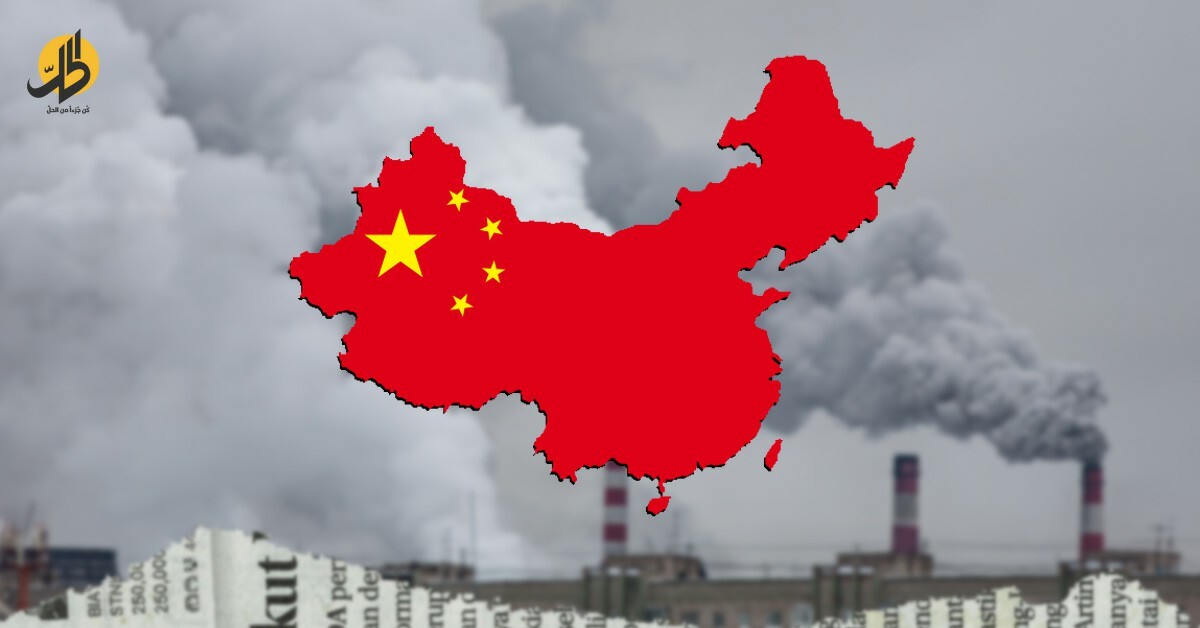
Despite ongoing calls from environmental organizations, eco-friendly governments, and environmental activists for the need to reduce pollution and move away from outdated methods of energy use in large factories—especially coal, which releases carbon dioxide when burned, a gas harmful to health—particularly given that carbon dioxide emissions are considered one of the biggest environmental problems facing the planet, such calls have not been heeded by major economic powers that rely heavily on fossil fuels in their factories, foremost among them China, which has not honored its pledges to reduce the use of fossil fuels, especially coal.
China commands the lion’s share of financing for coal projects, accounting for 76 percent of such funding—about $93 billion from the world’s second-largest economy last year. The volume of bank financing directed toward coal mining—the most polluting of all activities for the environment—also remains high, according to a report by researchers at BloombergNEF.
In practice, China is one of the world’s largest carbon dioxide emitters, producing 12.7 billion metric tons of emissions annually. It is worth noting that from 1850 to the present, China has emitted 284 billion tons of carbon dioxide.
Is the threat of pollution coming from China?
The International Energy Agency had expected coal demand to rise by 4.1 percent in 2023, surpassing 5.8 billion tons for the first time. It noted major differences between industrialized and emerging countries in energy trends overall. While a record decline of about 20 percent is expected in the United States and the European Union, demand in emerging and developing economies remains very strong, with coal use in China projected to increase by 5 percent.
The increase in coal demand in developing countries is driven by the urgent need to generate more electricity, despite the expected decline in coal use. However, experts believe coal consumption will remain above 8 billion tons per year until 2026, according to the International Energy Agency.
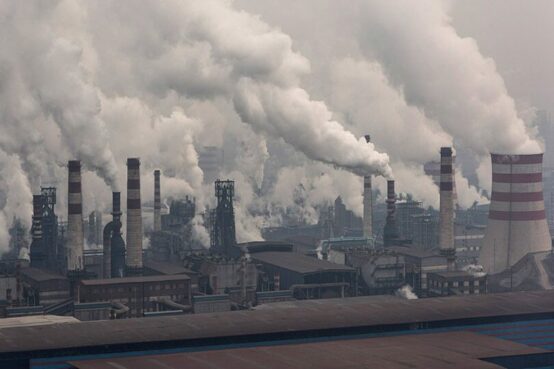
In this context, environmental expert Iqbal Latif said in an interview with Al-Hal Net that one of the main causes of global warming is the use of coal as a fuel for energy production, because burning it generates carbon dioxide, sulfur dioxide, and nitrogen dioxide. She explained that carbon dioxide is the primary driver of global warming and climate change, causing temperatures to rise and increasing the temperature of surface water in rivers and groundwater. This in turn leads to ice melt, causing an imbalance in the Earth’s thermal balance.
The use of non-clean energy causes rainfall levels to vary from one region to another: some areas experience severe drought and scarce rainfall, while others witness floods and heavy rain. Global warming also causes soil degradation, which negatively affects public health, leads to the loss of biodiversity, and causes seeds to fail to germinate, according to Latif.
Lack of alternatives and increased production
On September 17, 2023, official Chinese data revealed that China’s raw coal production reached 3.05 billion tons, up 3.4 percent year-on-year during the first eight months of 2023. Official data from the National Bureau of Statistics, cited by China’s Xinhua news agency, also showed that raw coal production rose 2 percent year-on-year in August to 380 million tons, with growth 1.9 percentage points higher than in July.
China imported 44.33 million tons of coal in August 2023, an increase of 50.5 percent over the same period in 2022, while growth in raw coal imports was 16.7 percentage points lower than in July 2023, according to Xinhua.
Environmental expert Iqbal Latif believes that countries such as China and India, along with others that have large plants and massive industries, rely on coal because they have no adequate alternative. An alternative may exist, but it is either insufficient or too costly, which drives those countries—especially China—to use large quantities of coal to cover the shortfall.
According to Latif, China has no near-term ability to transform its energy production system into one that is environmentally friendly through solar power and other clean energy sources, because doing so requires more time and high costs. This means continued coal use and, consequently, further deterioration of the global environmental situation.
Will China honor its environmental pledges?
China’s ability to achieve a 4 percent annual improvement in renewable energy efficiency remains in doubt for many, especially in light of the recent slowdown in the Chinese economy, which creates uncertainty about continued improvements in energy efficiency. Chinese bureaucracy also suggests reluctance to assume responsibility for commitments that have not been fulfilled.
Environmental activist Saadia al-Salhi told Al-Hal Net that despite Beijing’s repeated promises to reduce carbon emissions and other gases such as methane, China ultimately does not follow through on those promises. She attributed this failure to several reasons, most notably economic competition and dependence on fossil fuels such as oil, coal, and gas. She also pointed to political complications feared by the ruling Communist Party in China, especially the prospect of confrontation with major companies and rising unemployment.
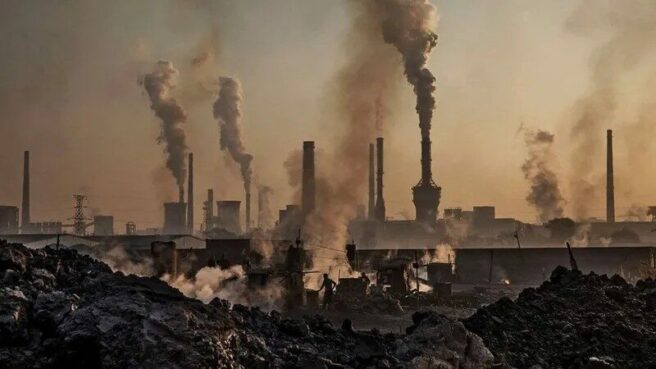
In mid-November last year, shortly before the COP28 conference in Dubai, Washington and Beijing announced an agreement to intensify joint efforts to address climate change, reviving cooperation between the two sides. The bilateral agreement came after negotiators reached a framework deal to establish a fund to help the countries most vulnerable to climate change cope with the loss and damage caused by increasingly extreme climate conditions.
The terms of the deal were announced by the US Department of Energy and China’s Ministry of Ecology and Environment. According to a joint statement, the two countries will support international efforts to triple renewable energy capacity by 2030 and accelerate the domestic buildout of green energy to replace coal- and gas-based power. The agreement also includes stronger cooperation to reduce emissions such as nitrogen oxides and methane, both of which are among the gases that contribute to global warming, according to Bloomberg.
Beijing and doubts over coal production figures
Despite the International Energy Agency’s published figures on China’s coal use, many observers and environmental experts doubt them, arguing that the Beijing government is adept at concealing data and obscuring facts, much as it did regarding data and information related to the source of the coronavirus outbreak.
In this regard, Iqbal Latif believes that China’s actual coal use is far higher than the International Energy Agency has reported, because China has expanded its industries, especially those supported by Beijing itself or invested in by China in other countries. These industries may formally bear the names of those countries, but in reality they are affiliated with China. Therefore, she says, the international community must pressure China to reduce its dependence on coal for energy production and demand compensation for countries harmed by global warming resulting from its coal use.
For her part, environmentalist Saadia al-Salhi believes there are several ways to pressure countries that rely on fossil fuels such as coal and oil, including through annual climate conferences that emphasize reducing carbon emissions. She stressed the need to balance the need to secure energy sources amid population growth with international requirements to limit the effects of climate change, noting that the transition to clean energy takes time and cannot be completed overnight.
The increase in coal use in China reflects major challenges, generating a host of environmental problems. Still, al-Salhi believes there is hope of overcoming these problems by urging China toward a fair and efficient transition to renewable energy and by intensifying investment in clean, environmentally friendly technologies.
In general, the world faces major environmental challenges, most notably global warming, drought, floods, forest fires, and the loss of biodiversity, among others. Despite all this, China continues to use coal, leading to increased carbon emissions. Hopes therefore remain pinned on the international community to pressure the Chinese government to curb coal production, in addition to ensuring countries abide by the outcomes of the COP28 climate conference. But will Beijing respond? Time will tell.