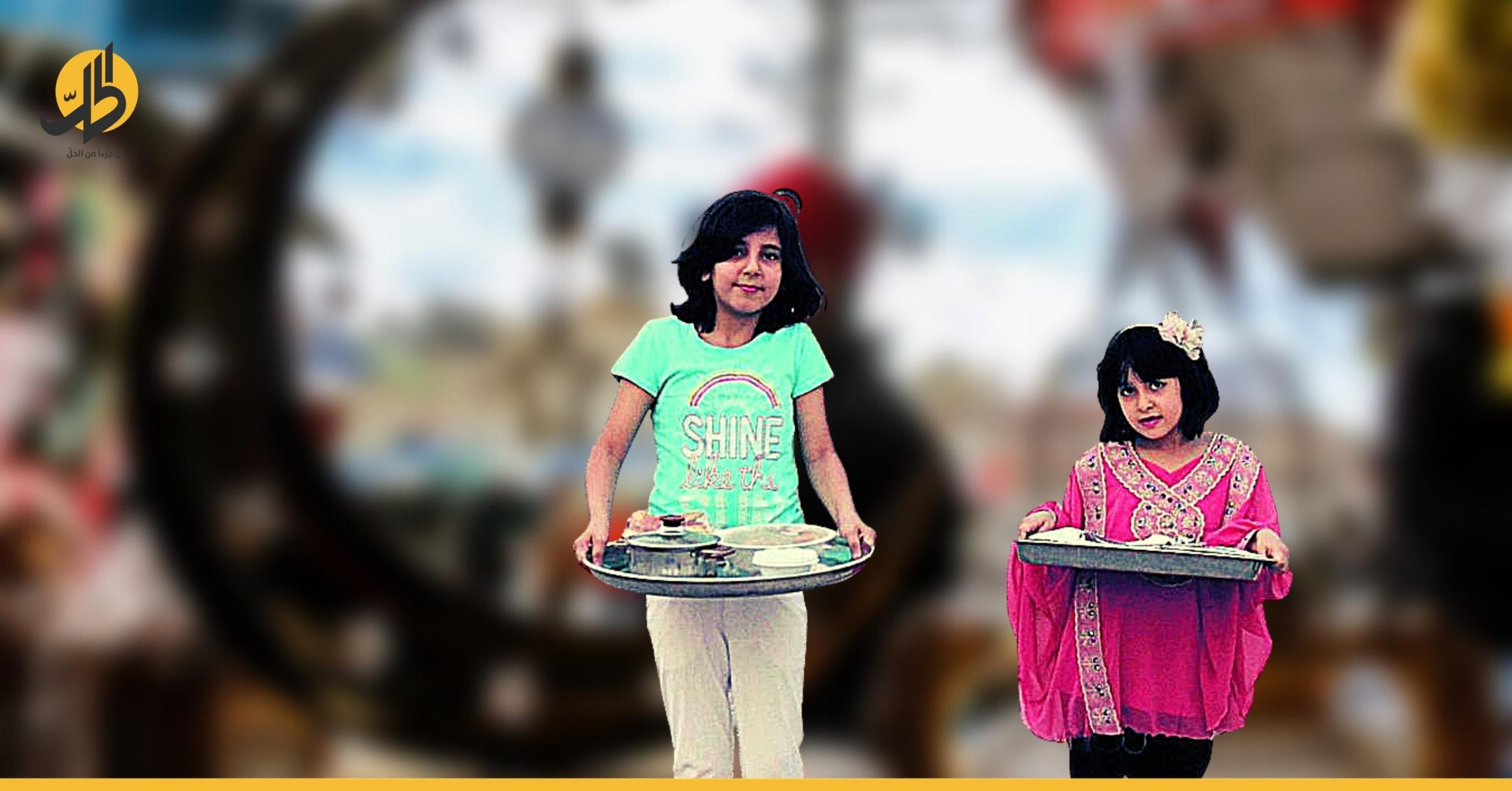
Regardless of what kind of food is on the plate, sakba, or the “Ramadan sakba” as some call it in Syria, remains a familiar Ramadan custom in which neighbors exchange a serving of the main iftar dish or a plate of sweets, leaving an indelible mark on this month. Although this custom helps resolve disputes between two families, it has recently begun to fade away.
Sakba Is a Good Omen
The prevailing feeling in Syria is that Ramadan is the month of goodness, and throughout its 30 days people try as much as they can to preserve its rituals and customs inherited from their ancestors. But in Syria, harsh living conditions have been the barrier standing in the way of the continuation of sakba.
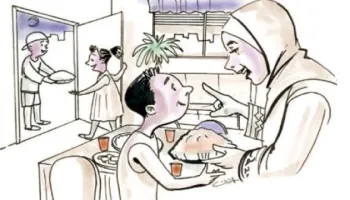
Women in Damascus point out that families and neighbors sharing iftar dishes—especially those living in the same building—is a form of charity, in addition to being a good omen for harmony and compassion. It also adds variety to a family’s iftar table.
Umm Samir, who lives in the Nahr Aisha neighborhood of Damascus, told Al-Hal Net that it has been customary for her and her sisters-in-law—the wives of her husband’s brothers—to exchange the main dish at iftar. When the food is ready, each family sends one of its children to deliver the dish to the other family, and this continues in the same way.
According to Umm Samir, the sakba plate must be full as a sign of the family’s generosity, and it should contain the tastiest thing the family cooked that day. But its disappearance from Ramadan rituals is not due to stinginess, she says. Rather, difficult economic conditions and the family’s inability to cook daily are what have halted this Ramadan tradition.
To read or listen: “Syria’s Musaharati” The Ramadan Ritual That Is Both Absent and Present
Customs Changed Because of the War
Luay Ghassan, originally from the city of Nawa, did not deny that most Syrians’ customs have changed since the war began and its effects came to dominate everyone living in the country. Perhaps, according to him, Ramadan this year also differs from last year: prices are no longer what they used to be, and social and family ties have also fallen apart.
Ghassan explained to Al-Hal Net that most Ramadan customs have changed and been stripped away from Syrians because of the machinery of war that has continued for 11 years. Yet the custom of sakba, which has almost completely disappeared, still continues in a limited way. Families no longer send sakba daily, but have settled for just one sakba a week, or once at the beginning of the month, then it fades as the days of Ramadan pass.
Ghassan, who works in a grocery store, stressed that living conditions—which he described as deteriorating—are among the main reasons Syrians have abandoned customs of generosity. According to him, families can no longer secure an iftar meal each day, and displacement and forced migration have also caused people to become less connected; now neighbors do not know one another.
Ghassan also explained that differences in dishes from one family to another, and the poor quality of the ingredients that a head of household is forced to buy, are among the reasons that have made housewives in Syria hesitant to send sakba to their neighbors, especially new residents.
To read or listen: Ramadan Drinks in Syria.. How Have They Been Affected by Economic Conditions?
Main Goods and Services on the Rise
With the start of Ramadan, Syrian markets are seeing sluggish activity, especially in fruit and vegetable markets, because of skyrocketing prices the country has not witnessed in many years.
This rise has certainly led a large proportion of the population to refrain from buying many of their necessities, and consequently their purchasing power has declined to its lowest levels. Ramadan in Syria is no longer what it once was: there are no longer invitations or family reunions as before around Ramadan tables, in addition to the scarcity of public services such as gas, electricity, and transportation. This increases the challenges facing the largest segment of Syrian society, according to local media.
The poor segment of the population in Syria lives in deep deprivation, such that financial pressure cannot rescue them in any way, especially families with more than five members, even if there are two working members in the same household, amid generally low wages. The average salary of government employees is estimated at 156,000 Syrian pounds, equivalent to about $40.
Regardless of the changes introduced to the “sakba” meal or its disappearance, it is still enough to resolve many disputes and convey messages of love and peace among members of the same society. Syrians inside the country prefer the return of safety, especially during the holy month, even if the main dish on the table is simple.
To read or listen: Mujadara and Bulgur with Tomatoes.. Scorching Prices for Popular Dishes in Syria