- How the Houthis Are Choking Yemen’s Peace Efforts with a Broad Escalation on the Ground
- Economy in the Wind: How Yemenis Are Paying the Price of Disrupted Shipping Routes
- Houthi Summer Centers: Factories for Indoctrination and Raising a “Scream” Generation
- The “Coalition of Necessity”: What Costa Rica’s Terrorism Designation of the Houthis Signifies
- Mojtaba Khamenei Runs Iran from His Bed as Photos Vanish and the Supreme Leader Makes a “Voice-Only” Appearance
“Syria’s ‘Citizen Budget’: Superficial Transparency and Unclear Results
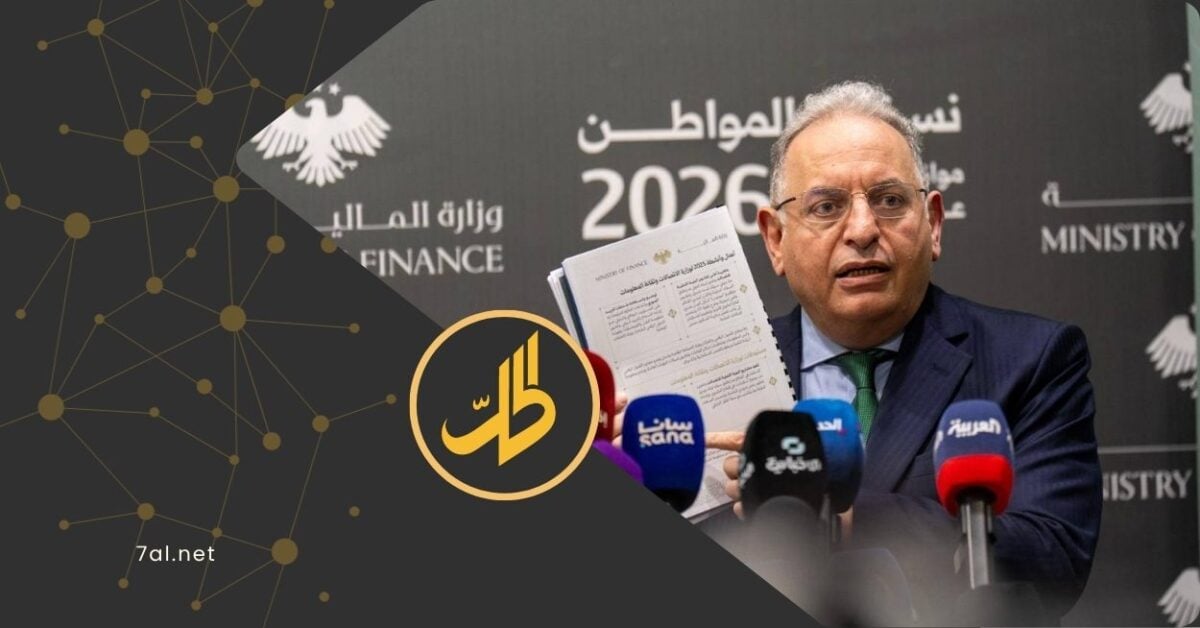
The Syrian Ministry of Finance in the transitional government has announced the draft 2026 budget in a new format called the “Citizen’s Version,” aimed at strengthening fiscal transparency and helping citizens understand its provisions. The ministry also published the budget on its official Facebook account in a 52-page file.The budget file, as presented, raises a basic question: Is the government merely explaining the figures in simpler terms, or is it offering real tools that allow people to understand and measure whether these policies are working? The budget comes at a time of severe economic deterioration, while the government continues to speak of major, promised and expected improvements without sufficient explanation, at a time when many factors remain unstable, making those expectations questionable.Syrian Finance Minister Mohammed Yusr Barnieh presented the main provisions of the 2026 general budget at a press conference on Thursday, April 9, under the title “Citizen’s Version,” saying it was intended to explain the figures and terms in simple language and clarify spending, revenues and their implications, while highlighting available opportunities. He said this format was being presented “for the first time in Syria’s history,” according to the local newspaper Enab Baladi.Despite this seemingly useful simplification, neither the document nor the ministerial presentation included clear indicators or measurement tools that would show whether the plan would succeed or fail. The explanation of the figures was not accompanied by any clarification of how results would later be measured, making it more of a presentation tool than a genuine instrument of fiscal transparency, despite its nearly 50-page length.According to the minister, the draft budget was due to be presented to the People’s Assembly for discussion before approval, with the possibility of issuing supplementary budgets during the year. That flexibility allowed for adjustments to changing conditions, but it also meant the current figures were subject to revision, raising questions about how stable or accurate they were from the outset. The minister also said work had begun on the 2027 budget, to be completed during September and October, without explaining how discrepancies arising from the current estimates would be addressed.The minister presented a “Citizen’s Budget” document that explained the economic assumptions on which the 2026 budget was built and outlined government programs, projects and initiatives, with dedicated pages for each ministry. He said it would serve as a reference for citizens, businesspeople and other interested parties.However, the presentation of these assumptions was not accompanied by sufficient clarification of how realistic they were. The minister expressed optimism about the economy’s performance from the start of 2026, expecting growth and improvement in overall indicators, supported by factors such as the return of the Syrian Jazira region, the resumption of oil and gas production, and improved security and political stability.These factors, while important, were outside the direct control of fiscal policy, making the forecasts tied to them vulnerable to fluctuations that would be difficult to manage. In simpler terms, the plan depended in part on conditions that may or may not materialize.The budget also assumed a greater return of Syrians from abroad, including investors and technical experts, as well as improved energy availability and expected foreign investment inflows. But these indicators were presented without any detailed data on the size or timing of those inflows, and without explaining how they would translate into actual growth. That made them superficial estimates and broad generalities, difficult to assess in terms of their real impact on the economy and surprising to hear from the Ministry of Finance.2026 revenues were estimated at about 959 billion Syrian pounds ($8.7 billion), against expenditures of 1,056.7 billion pounds ($10.5 billion), leaving a deficit of nearly $1.8 billion, or about 5% of gross domestic product, meaning the state would spend more than it collected.The minister said the deficit would be financed through the issuance of bonds and sukuk, in addition to returns from the sovereign wealth fund. But relying on borrowing raised practical questions about who would provide the financing and at what cost, especially in a limited and unstable financial market, making deficit coverage more likely to be difficult or expensive.Revenues were divided between 50% from taxes and fees, 28% from oil and gas, and 22% from other sources. In this context, the minister announced broad exemptions and tax cuts, including no taxes for those earning less than 50 million old pounds, lower deductions for employees, exemptions for some professions, and a tax ceiling of no more than 15%.This approach highlighted a clear contradiction: if taxes are a key source of income, how can they be reduced without affecting revenues? The minister did not explain how the shortfall would be offset, opening the possibility of a larger deficit rather than a smaller one. These questions also return the budget to the ambiguity it was meant to dispel.According to the minister’s presentation, spending was allocated 41% to health, education and social protection, 33% to defense and security, and 26% to other services, while investment spending rose to 27% from 7% the previous year. This distribution reflected a mix of social and security priorities, but the larger share for defense reduced the resources available for sectors with a direct impact on living standards and development.On salaries, the minister said 2027 increases would be linked to the cost of living, inflation and the price index, with two annual raises, one general and one tied to performance evaluation. He also spoke of major increases already achieved, saying the minimum wage had risen 350% in pounds and 460% in dollars, and that some salaries had increased by as much as 2,000%.While the minister cited inflation as one reason for salary increases, these “major” raises were not presented in any clear context of current inflation rates, and it was not explained whether they had actually improved living standards or whether prices had also risen, reducing the value of the increases. Linking salaries to inflation, without clear tools to curb it, may also be part of what has kept prices rising rather than restrained them, making the situation look more like a closed loop in which citizens keep turning with no way out.The minister also did not address the fact that large numbers of citizens, impossible to fully count, have not received their salaries in several Syrian provinces for many months, a problem he has repeatedly promised to solve without any tangible result.According to Barnieh, the budget was based on strengthening transparency and fiscal discipline, improving governance, stimulating growth and supporting production, expanding partnership with the private sector, advancing digital transformation, ending financial overlaps, launching an anti-poverty strategy and rolling out programs to support affected areas.But these themes were presented in broad terms, not only at the conference but also in the file published by the ministry, which, like the minister’s remarks, contained no clear implementation mechanisms or specific performance indicators, making later evaluation difficult. The talk of transparency also did not explain how data would be made available or how the public would access it, nor did it include implementation timelines, making assessment of the budget more a matter of estimation than measurement.On partnership with the private sector, the minister said its representatives would be included in committees, including the tax authority, without clarifying how much influence this participation would have on decision-making.The minister also acknowledged risks including geopolitical tensions, a return of inflation, delays in reforms and the effects of the global economy, factors that directly intersected with the assumptions behind the optimistic forecasts, reflecting a gap between what was expected and what might actually happen.As for the 2025 budget, data showed the surplus falling from more than half a billion dollars in the first ten months to about $46 million by year-end, attributed to delayed obligations that were not specified. This sharp change in the figures, without detailed explanation, raised questions about the accuracy of earlier estimates and the fiscal measurement mechanisms.That surplus amounted to about 0.15% of GDP ($30.6 billion), compared with a 2.7% deficit in 2024, while spending reached 379.2 billion pounds ($3.447 billion), up 45.7%, of which 41% was allocated to wages. A “twelve-month” budget for 2025 was also adopted on the basis of the 2024 budget, indicating difficulties in fiscal planning during that period.In the end, the budget presentation by the finance minister raises several questions: Was the problem Syrians faced really the “difficulty of understanding the figures,” or the ministry’s own plans? Is presenting the budget in simpler language enough to know whether these figures are realistic and implementable? And for the citizen the minister’s presentation is aimed at, is the demand explanation or delivery? Most importantly, if fiscal policies fail, who other than the citizen will “pay the price”?

0 Comments
أقدم