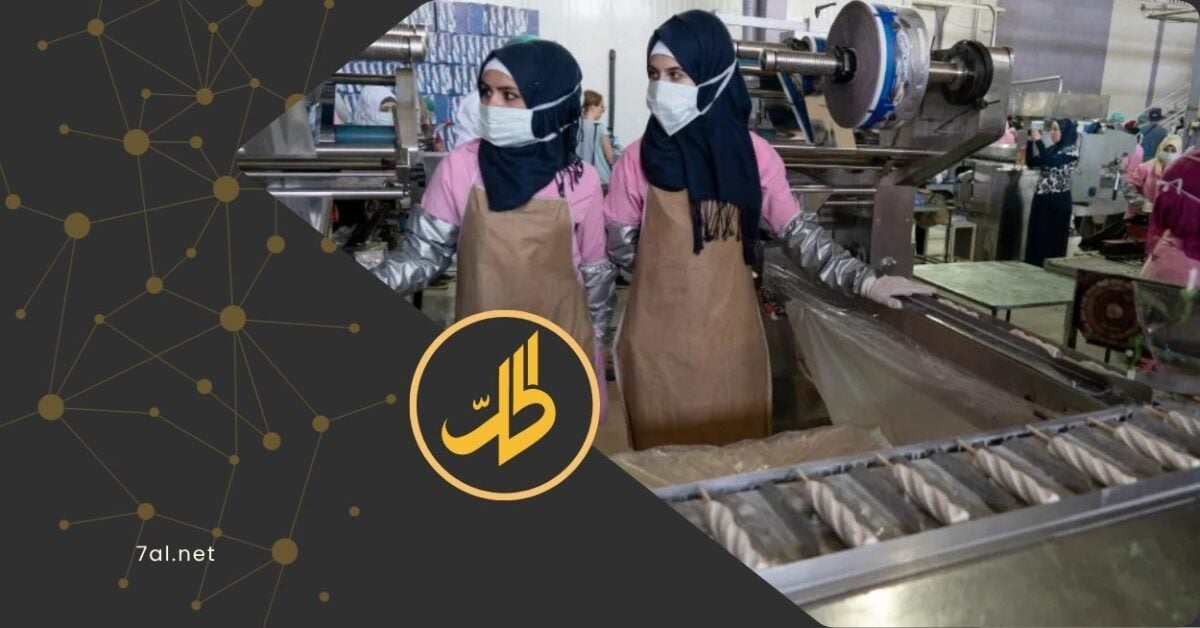
The Syrian industrial sector is undergoing a rapid deterioration that can no longer be ignored, with well-known factories shutting down and sectors that once formed a cornerstone of the economy steadily eroding. This decline is not the result of temporary conditions, but reflects a clear trajectory driven by policies that combine rising production costs with the opening of markets to low-tariff imports. The direct result is a loss of competitiveness, disrupted production chains and thousands of jobs gone, while trade and traders prosper.
Statements from industrialists and market data point to the same reality: the current environment does not support production; it is killing it. If this approach continues, the decline of industry will move from crisis to collapse.
Ceramic factories shut down
Despite the long history and strong reputation of Syria’s ceramic industry, major factories such as “Belqis,” “Zenobia” and “Ishbilia” have stopped operating, the direct result of deep structural imbalances affecting the sector. According to Abdul Rahman Orfali, general manager of “Belqis,” the sector has production capacity of 52.873 million square meters a year, while actual output does not exceed 7.426 million square meters, revealing a sharp gap between available capacity and real investment.
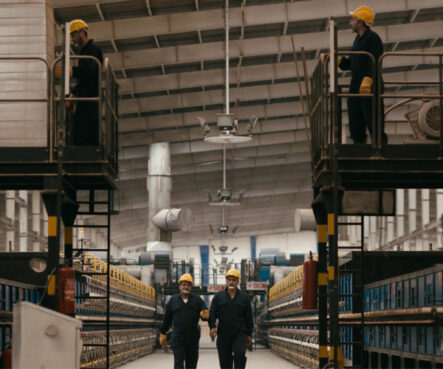
The decline has also been accompanied by a steep drop in employment. The sector once employed between 5,000 and 6,000 direct workers, in addition to 5,000 indirect workers dependent on cardboard, nylon, turning and maintenance workshops, leading to the shutdown of entire production chains linked to it.
Syria has nine ceramic factories, most notably “Al-Sham,” “Belqis,” “Taj Belqis,” “Zenobia,” “Ishbilia” and “Sisco,” in addition to “Granada,” “Al-Rif” and “Al-Wataniya,” which need rehabilitation. After a decision allowing ceramic imports at low customs duties, “Taj Belqis,” “Ishbilia,” “Al-Sham,” “Sisco” and several production lines at “Zenobia” partially or fully stopped, according to Orfali.
This import liberalization has flooded the market with foreign products, some of which do not meet Syrian standards and are not subject to proper inspection at border crossings, according to Al-Thawra newspaper. At the same time, the cost of energy inputs such as diesel, gas, fuel oil and electricity has risen; these account for about 45% of ceramic production costs, with imported liquefied gas being used instead of locally available natural gas, in addition to fuel prices higher than global levels. These factors place Syrian producers directly out of competition and underscore a clear flaw in economic policy that combines high production costs with broad import openness.
Orfali says that if this situation continues, most factories will be forced to shut down, with wide economic and social repercussions. In an effort to limit the decline, the sector proposes temporarily raising customs tariffs, allowing factories to import petroleum products or buy them at global market prices, and tightening inspections of imported goods to exclude substandard products. But these measures remain limited in the absence of a fundamental solution.
Trailer manufacturing
The car trailer industry faces a distorted regulatory environment that directly affects its ability to survive, according to Naif Al-Khatib Sons for Industry and Trade, which restarted its factory after it was destroyed in al-Rastan in rural Homs.
The main problem is the spread of workshops operating outside the legal framework, often as metalworking shops on streets and roads, drawing electricity illegally and without real production costs, and buying invoices from licensed workshops to register agricultural trailers with transport directorates, bypassing laws and official instructions. This undermines competition and weakens the formal industry.
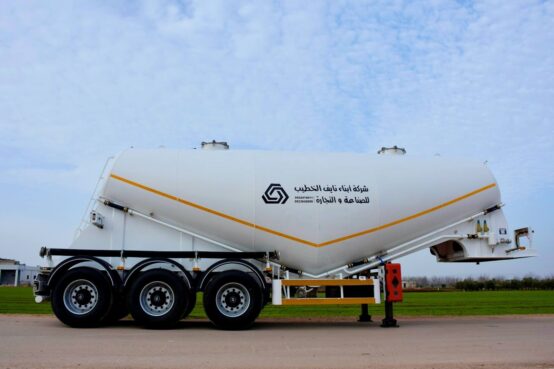
The company submitted a comprehensive proposal to the Ministry of Economy and Industry that includes reactivating circulars regulating the registration of locally manufactured trailers, adopting a 17-digit barcode system for each “trailer,” reclassifying trailers and distinguishing them from agricultural ones, and amending the regulations to ensure clear requirements for each type. It also called for scrutiny of production capacities and the number of workers registered with social insurance, verification that engineers are employed in line with requirements, lower customs duties on raw materials, and a ban on importing used trailers that have exceeded their service life.
It also stressed the need to encourage illegal workshops to turn into licensed factories, while revisiting the regulations governing the industry to reflect the differences between trailer types and their production requirements. These findings point to an ongoing regulatory failure that has allowed violations to spread and left licensed factories at a disadvantage despite their compliance with the law.
Electronics
The electronics industry is suffering a rapid decline. Engineer Radwan Hassan of the “Jaymatex” factory says opening imports “wide open” has turned the industry into a commercial activity and pushed it out of competition. The decline is linked to rising production costs, weak expertise and falling consumer confidence in local products, which directly affects production efficiency and the ability to innovate, according to the same source.

Hassan says the overlap between trade and industry has created an unbalanced environment, calling for “separating trade from industry” as a “strategic necessity,” given the difference between the two in terms of quick profit and long-term planning. He also stressed the need for industrial expertise in decision-making centers, warning against making fateful decisions by bodies that “lack deep knowledge of the production process.”
The impact of this reality is clear in his own experience: when his factory, which employed “120 workers,” shut down, he moved into trading with just one worker while making “the same profit,” reflecting a direct distortion in economic incentives. The absence of any effective policies to support innovation or restore consumer confidence is also accelerating the sector’s decline.
Paints
In the paints sector, customs distortions stand out as a decisive factor weakening the industry, according to industrialist Fathi Al-Barghli. In the alkyds industry, customs duties on the main raw material, RBD vegetable oil, amount to about $300 per ton, while duties on the imported finished product do not exceed $75, making local production directly more expensive.

This gap has driven consumers away from local products and made exports impossible, even though the industry once generated millions of dollars in revenue. Al-Barghli also said studies had been submitted to the Ministry of Economy and Industry more than a year ago without any response, leading to the complete shutdown of alkyd factories, according to Al-Thawra newspaper.
In the same context, the sectors that are thriving are consumer industries tied to the local market, such as food and detergents, while strategic export-oriented industries are declining, reflecting a clear shift in the structure of the economy.
Killing Syrian industry
By contrast, Mazen Dirwan, head of the Federation of Syrian Chambers of Industry, warns against a return to isolationist policies and calls for support for an industry capable of competing globally by abolishing duties on production inputs, lowering energy costs and improving transport conditions. He downplays the scale of the crisis, saying talk of factory shutdowns is “exaggerated,” a position that directly contradicts field realities and industrialists’ testimony, and exposes a clear gap between the official narrative and what is happening inside the sector.
While the Federation of Chambers of Industry is calling for simpler company formation procedures, the removal of duties on production inputs, lower energy prices and better transport as essential conditions for supporting local industry, the facts point to a clear and unambiguous trajectory: rising production costs, expanding low-tariff imports and persistent regulatory distortions are all pushing local industry into decline.
This decline is not limited to lower output or factory closures; it is also hollowing out the industrial sector itself, as those involved shift to more profitable and less risky commercial activity. While official rhetoric continues to speak of supporting industry, the policies actually being implemented are producing the opposite result. What is happening now is no longer unclear, nor is what lies ahead: new rounds of a policy that is killing Syrian industry in favor of imports.
- How the Houthis Are Choking Yemen’s Peace Efforts with a Broad Escalation on the Ground
- Economy in the Wind: How Yemenis Are Paying the Price of Disrupted Shipping Routes
- Houthi Summer Centers: Factories for Indoctrination and Raising a “Scream” Generation
- The “Coalition of Necessity”: What Costa Rica’s Terrorism Designation of the Houthis Signifies
- Mojtaba Khamenei Runs Iran from His Bed as Photos Vanish and the Supreme Leader Makes a “Voice-Only” Appearance