
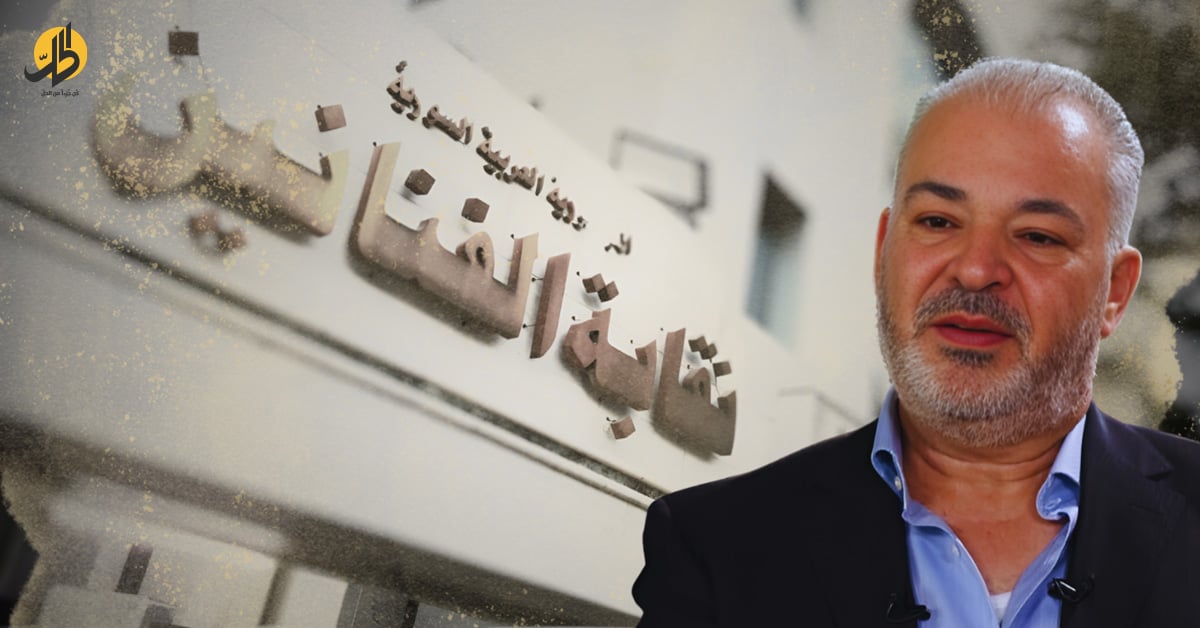
In a new decision, the Damascus branch of the Syrian Artists Syndicate announced that it had struck off additional artists from the syndicate’s membership list. Who are they, and why was this decision made?
Removal of Tawfiq Iskandar and Ribal Al-Hadi
Regarding the syndicate’s latest decision, the removals, according to the Syrian newspaper Al-Watan, included the two Syrian actors Tawfiq Iskandar and Aktham Al-Hayek, who is known as “Ribal Al-Hadi.”
The decision was signed by Mazen Al-Natour, head of the Syrian Artists Syndicate, who justified the move by saying the members had “deviated from the syndicate’s goals,” without disclosing further details about the reasons behind the decision.
The new decision is part of a series of removals the syndicate carries out periodically, most notably in April 2025, when it struck Syrian actress Sulaf Fawakherji from its rolls because of her opposing stance and her denial of the crimes of the former Syrian regime, sparking major controversy among the Syrian public at the time.
Mazen Al-Natour in “Spring Sonata”.. the story of the play and its performance dates
On the other hand, Mazen Al-Natour, head of the Syrian Artists Syndicate, is returning to the stage in Damascus after a long absence by presenting the monodrama “Spring Sonata” at the Damascus Opera House, more than 10 years after its first performance outside Syria.
Al-Natour said in remarks to the entertainment website Fuchsia that presenting the work to Syrian audiences had been a long-delayed dream, noting that circumstances have now become suitable for taking this step.
The Syrian Artists Syndicate chief stressed that every experience has its own timing, and that meeting the Damascus audience carries a distinct emotional value unlike any previous performance.
The play “Spring Sonata” is a monodrama starring Mazen Al-Natour, directed by Maher Salibi, and written by Jamal Adam. It is a theatrical experience built around intellectual and human dimensions, reaffirming the role of theater as a space for reflection and questioning.
The play tells the story of a Syrian doctor and university history professor who studied in France before returning to his country to teach at the university, only to find himself facing mounting psychological and human pressures, as an honorable individual living within a highly complex reality.
The work focuses, according to Syria TV, on the character’s internal conflict and suffering under harsh circumstances through a tightly constructed drama based on a solo performance, giving both language and physical presence central space to express the existential and human questions raised by the text.
Finally, performances of “Spring Sonata” are scheduled for January 8, 9, and 10, at 8 p.m. Damascus time, on the stage of the Damascus Opera House, amid anticipation among theater audiences for this production.