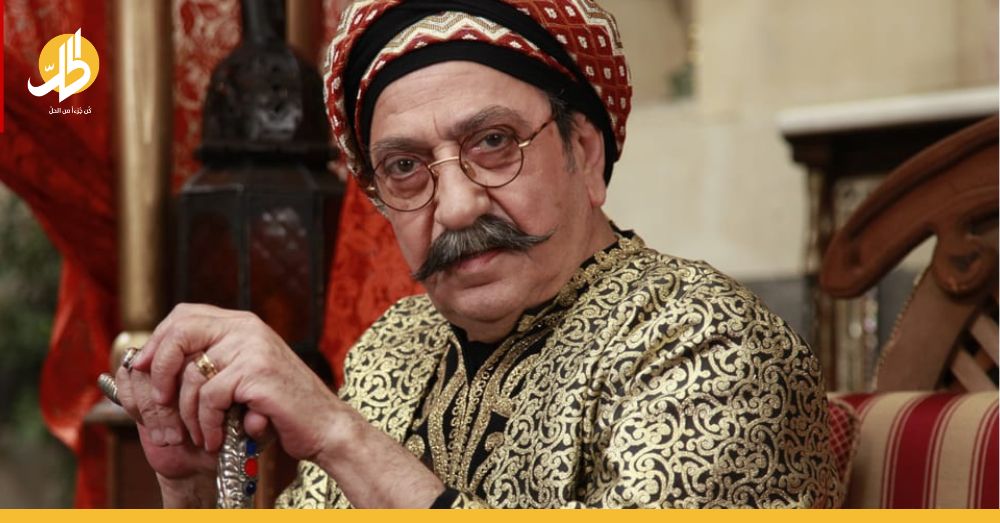
With every Ramadan season, the debate over so-called “Damascene environment” dramas returns: between those who criticize what these works present about Damascus society, those who see them as a kind of entertaining “fantasy,” and those who believe Syrian viewers have grown tired of this type of production.
Syrian actor Duraid Lahham leveled scathing criticism at the production companies behind Syrian drama series in this genre, accusing them of pursuing nothing but money and fame.
Lahham said in an interview with the “AM News” platform: “Damascene environment series create new writers, and the large number of production companies has given many talented people the chance to showcase their talent.”
Lahham accused the makers of these works of “wronging Damascus” in order to attract more viewers, expressing astonishment at the scene of a woman washing her husband’s feet in a basin while he beats her and she tells him, “As you command, my master.”
Lahham said the current Ramadan drama season “has been notable for the success of Syrian drama in all its diversity, from tragedy to comedy to lighter works,” noting that “Syrian drama has begun to regain its vitality and its place in the Arab world.”
You may also be interested in: Indian films in the series “Kasr Azm”.. what’s the story?
Damascene environment dramas spark controversy every year among Ramadan drama audiences, and this year the series “Jawqat Aziza” was one of the productions that came under widespread attack from a broad segment of viewers.
Criticism from the very beginning
Since the first episode aired, neither the series nor its cast escaped criticism. Scenes that some described as “bold” were at the center of the backlash, especially as writer Khaldoun Qatlan tried through “Jawqat Aziza” to shed light on the world of the so-called “awalim.”
However, many viewers felt that attempt had failed, given the series’ lack of many dramatic elements, most importantly suspense, in addition to the many questions raised about the actors’ performances.
Writer Rabie Faran said of “Jawqat Aziza”: “Perhaps director Tamer Ishaq was the only one who tried to rescue the series’ scenes from the actors’ affectation through long shots, allowing him to move the actors in a way that could compensate for the script and story, or add dimensions that might make them more successful.”
The criticism did not spare some of the veteran actors taking part in the series, most notably Salloum Haddad, who faced widespread criticism because of the role he plays in the show: percussionist Hamdi Hmayha alongside the dancer Khawkha.
Finally, it is worth noting that “Jawqat Aziza” managed to secure a place on Rotana Drama and the Shahid streaming platform, but Damascene environment dramas were absent from all major broadcasters and platforms — namely MBC, Abu Dhabi TV, and other widely available Arab outlets — while the global network Starz Play chose “Bab al-Hara 12” as part of its Ramadan lineup in the Middle East.
The debate over “Damascene environment” dramas thus remains an open-ended dispute between the camp that says “This is not Damascus” and its rival that insists “This is what the audience wants,” with no real indication that these works are still in demand, at least among Syrian viewers.