Israeli military operations against Lebanon’s Iran-aligned “Hezbollah” have been escalating since the group decided to enter the American-Israeli war against Iran, after targeting Israeli sites with a rocket barrage on March 2.
This comes as Israeli officials view “Hezbollah” as Iran’s main proxy in the region, considering its involvement in the confrontation a “grave mistake” that will have repercussions for the group and Lebanon as a whole.
Destruction of bridges
The Israeli army said in a statement on Sunday that it had destroyed a crossing over the Litani River that it described as “central,” which was used by “Hezbollah” members and commanders to move from north of the Litani to the south in Lebanon.
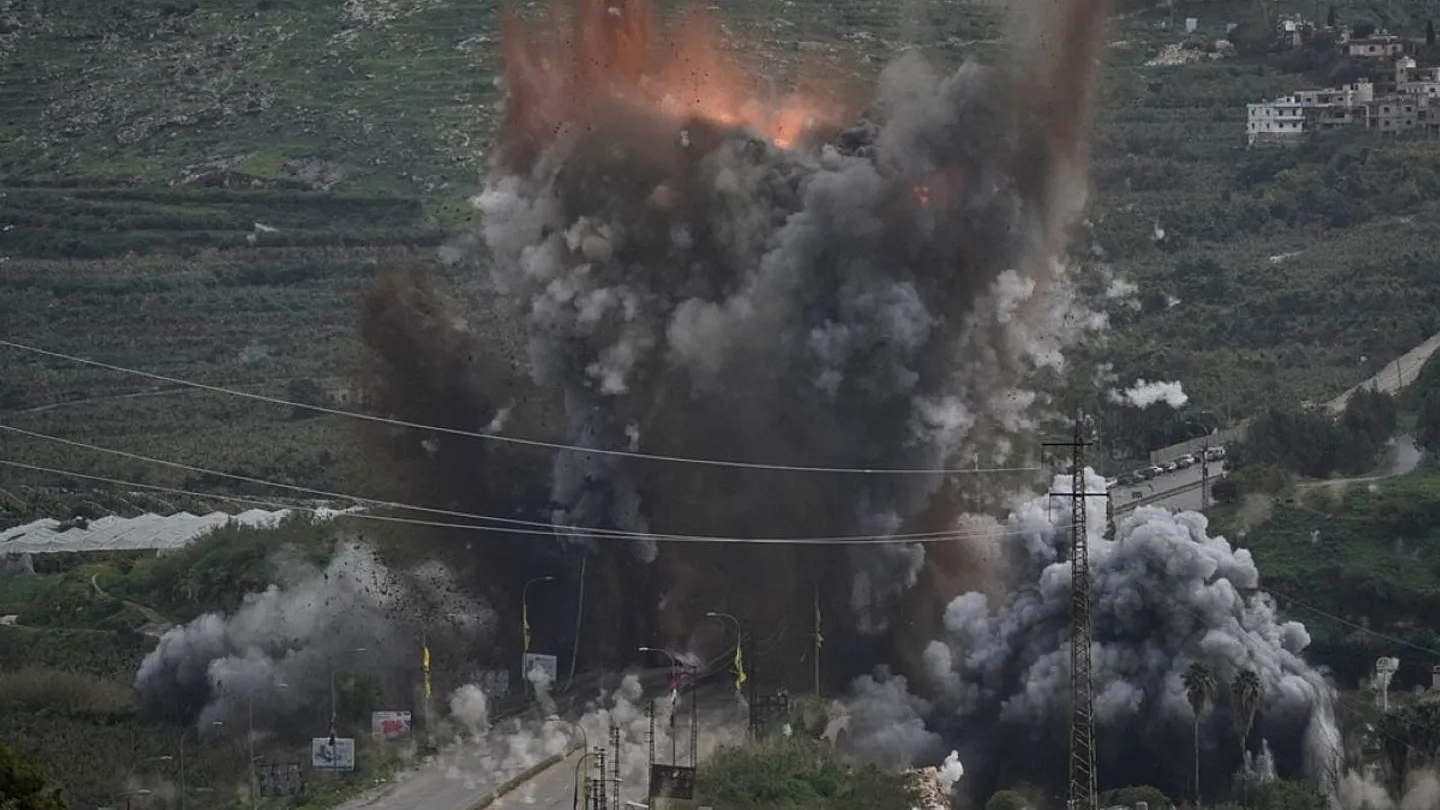
The statement said that “Hezbollah” uses this crossing to transport thousands of weapons, rockets, and rocket launchers, which it uses to carry out terrorist attacks from the area south of the Litani against Israeli army forces and Israeli civilians.
The army called on local residents to continue moving to areas north of the Zahrani River and to refrain from any movement southward. It added that it would continue allowing the evacuation of residents of southern Lebanon northward toward the Litani River from the combat zones.
Meanwhile, Reuters said the Israeli army bombed a main bridge linking southern Lebanon to the rest of the country. The agency noted that “Israel ordered its army to destroy all bridges over the Litani River in Lebanon and accelerate the pace of demolishing Lebanese homes near the southern border.”
The agency added that the destruction of bridges and homes constitutes a dangerous escalation in the Israeli military campaign in Lebanon, which has been drawn into the regional war.
Israeli Defense Minister Israel Katz had earlier warned that Lebanon could suffer “damage to infrastructure and lose territory” unless the government disarms “Hezbollah.”
Katz said the army had received orders to destroy all bridges over the Litani River that he said are used in “terrorist activities,” adding that this is intended to prevent “Hezbollah” fighters from reaching the south with their weapons.
Katz described this approach as similar to the model used by the Israeli army in Beit Hanoun and Rafah in the Gaza Strip, where it established buffer zones by removing and demolishing buildings near the border.
Is the situation heading toward a buffer zone?
For his part, Lebanese President Joseph Aoun condemned the Israeli bombardment that targeted bridges in southern Lebanon, considering the targeting of infrastructure to be “a prelude to a ground invasion.”
Aoun said the strike on the Qasmiya Bridge over the Litani River was “a dangerous escalation and a flagrant violation of Lebanon’s sovereignty, and is considered a prelude to a ground invasion that Lebanon has long warned, through diplomatic channels, against being dragged into,” describing the attack as “collective punishment against civilians.”
Aoun pointed out that targeting this bridge is an attempt to sever the geographic connection between the area south of the Litani and the rest of Lebanese territory, adding that these acts fall within suspicious plans to establish a buffer zone, entrench the reality of occupation, and pursue Israeli expansion into Lebanese territory.
Local sources say the Israeli army destroyed a number of bridges over the Litani River in southern Lebanon, including the Qasmiya Bridge, in addition to bridges in Al-Qaqaiya in Nabatieh District, the Khardali Bridge linking Nabatieh and Marjeyoun, and the Tayr Falsayh Bridge connecting the districts of Tyre and Zahrani.
Analysts see the Israeli escalation as a first step toward cutting supply lines and disrupting movement between front lines and “Hezbollah” headquarters.
Earlier last week, the Israeli Public Broadcasting Corporation said it is expected that “the government will be asked to approve a broad mobilization of reserve forces for the war, as part of preparations for the possibility of carrying out a ground operation in Lebanon.”
According to what was published by the Hebrew-language channel Kan News, the request will be submitted “to mobilize up to 450,000 reserve soldiers, as part of preparations for the possibility of carrying out a ground operation in Lebanon.”
Earlier, Sky News Arabia quoted an Israeli security source as saying that the attacks on southern Lebanon “will continue until the summer if necessary,” threatening to target anyone in the area, saying that “anyone in southern Lebanon is not innocent.”
The source explained that “the goal of the Israeli forces advancing into southern Lebanon is to create a buffer zone that distances the threat from residents of northern Israel,” adding: “There is no fixed definition of the buffer zone in southern Lebanon. If it requires advancing 8 kilometers, we will advance. It proceeds according to defensive need.”
- How the Houthis Are Choking Yemen’s Peace Efforts with a Broad Escalation on the Ground
- Economy in the Wind: How Yemenis Are Paying the Price of Disrupted Shipping Routes
- Houthi Summer Centers: Factories for Indoctrination and Raising a “Scream” Generation
- The “Coalition of Necessity”: What Costa Rica’s Terrorism Designation of the Houthis Signifies
- Mojtaba Khamenei Runs Iran from His Bed as Photos Vanish and the Supreme Leader Makes a “Voice-Only” Appearance