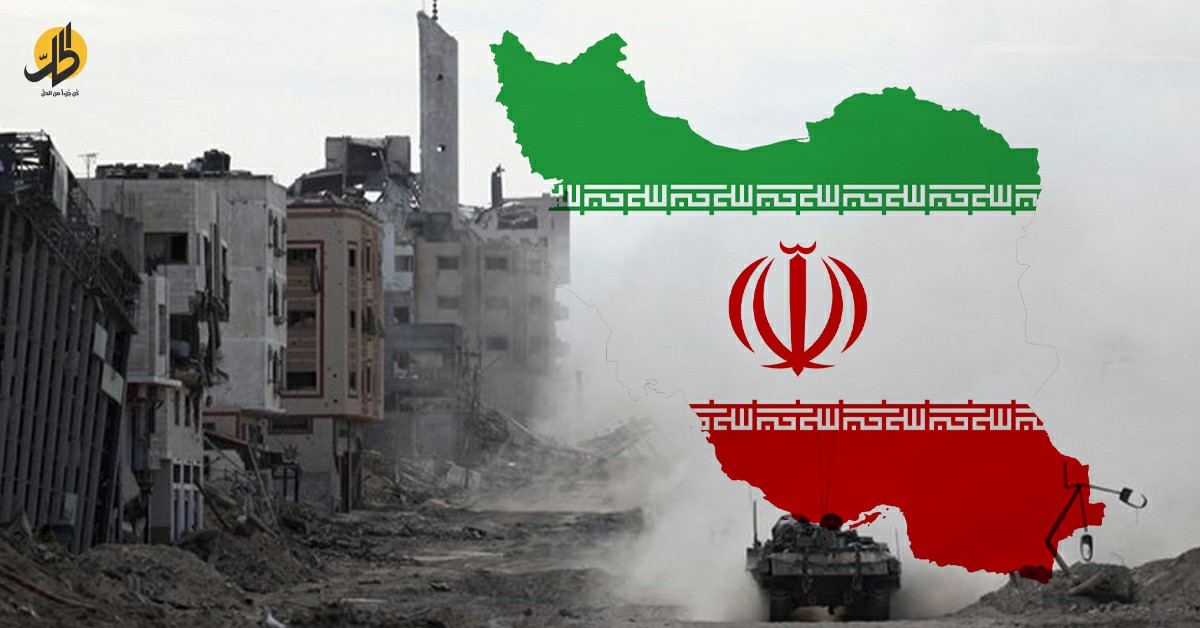
It appears that the ceasefire agreement in Lebanon has encouraged Hamas to seek an end to the war in the Gaza Strip, where it is gradually and almost definitively losing its military strength without achieving any of its goals. It is also seeking a share in administering the Strip, especially after realizing that its patron, Iran, wants to achieve its strategic objectives at Hamas’s expense after ending the war in Lebanon, in order to preserve its most important proxy in the region, Hezbollah, without exhausting or completely destroying it at Israel’s hands, as is happening to Hamas. For this reason, Hamas quickly announced its readiness to reach a truce with Israel to end the war in Gaza.
Agence France-Presse quoted a senior Hamas official as saying that the movement intends to reach an agreement leading to an end to the war, as happened in Lebanon between Hezbollah and Israel. The official told AFP: “We informed the mediators in Egypt, Qatar, and Turkey that Hamas is ready for a ceasefire agreement and serious prisoner-exchange deals.”
However, the terms of a ceasefire agreement and any broader settlement remain unknown, and neither the source nor anyone else within Hamas clarified the details. There are many initiatives, but they are squandered or stalled because of conditions rejected by both sides to the conflict.
Hamas Is Ready to End the War!
Meanwhile, Palestinian President Mahmoud Abbas affirmed “Palestine’s full support for Lebanon’s stability and security, and for ensuring the reconstruction of what the war destroyed,” noting his hope that “the ceasefire in Lebanon will help stop the violence and instability the region is suffering from as a result of Israeli policies that are driving the region toward a comprehensive explosion.”
There are relentless, frenzied Iranian attempts aimed at undermining the Palestinian Authority and dragging it into security and political crises, particularly amid Hamas’s fueling of polarization and intra-Palestinian conflict.
The Palestinian presidency’s statement at the end of the week also stressed “the need to expedite implementation of United Nations Security Council Resolution 2735 on a ceasefire in the Gaza Strip, the entry of humanitarian aid, the complete Israeli withdrawal from the Gaza Strip, preventing the displacement of our people from the Strip, and enabling the State of Palestine to fully assume its responsibilities there.”
Between Mahmoud Abbas’s calls for an agreement similar to the ceasefire in Lebanon and the prospects of escalation in Palestine, whether stemming from Hamas and the conflict with Israel, not to mention the suspicious role Tehran continues to play by strengthening the influence of its factions and smuggling weapons to them, this brinkmanship—or rather the scorched-earth policy—is undermining the chances of a political settlement.
Israel still announces from time to time that it is tracking and pursuing weapons-smuggling operations along several routes, while these routes or fronts receive support from Iran and its affiliated factions.
The announcement regarding the interception of a large quantity of weapons, which an official statement issued by the army and the Shin Bet (General Security Service) described as “advanced,” coincided with the continued targeting of weapons smuggling from Syria and through tunnels and border crossings into Lebanon.
Iran Smuggles Weapons to the West Bank
However, the “advanced” weapons that Israeli forces said they had intercepted were on their way to the West Bank. The operation was handled by the special operations unit of the Quds Force of Iran’s Islamic Revolutionary Guard Corps, Unit 4000, led by Javad Ghaffari, with the aim of delivering them to “armed cells” in the Jenin area. According to the joint statement, the weapons included around 20 mortar shells, three 107 mm rockets, Hunter sniper rifles and M16 rifles, in addition to 37 pistols.
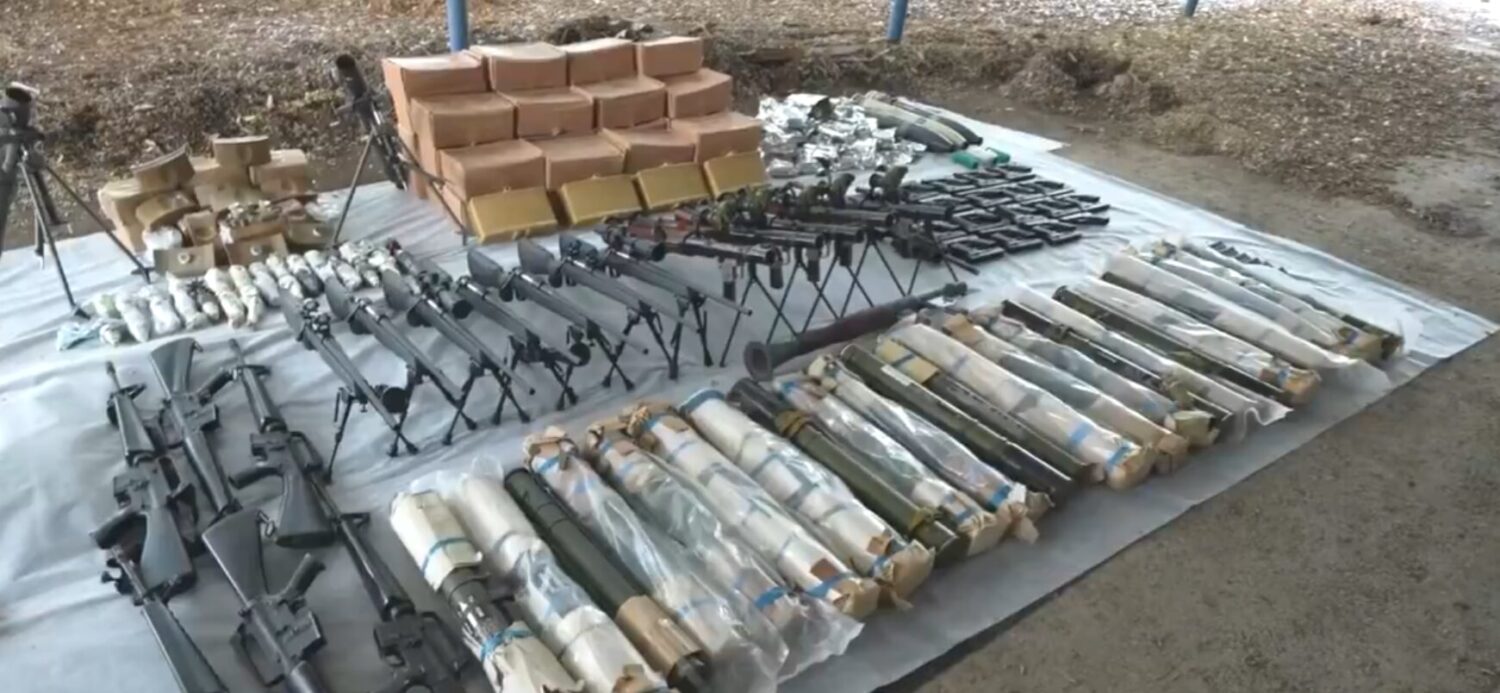
Also found were explosive devices and highly powerful Claymore-type explosives with wireless detonation systems. The statement said a similar quantity of weapons and explosives was found hidden away, capable of “upsetting the military balance in the region.”
It appears there are covert Iranian moves to continue supporting elements and factions with weapons and military equipment despite the announcement of a ceasefire in Lebanon. But inflaming the situation in the West Bank only worsens the political and security situation on the ground, not only with Israel; it is also an escalation against the Palestinian Authority, which sought to distance itself from Hamas’s military adventure on October 7 of last year, an adventure that brought the region to the brink of a full-scale regional war, according to Egyptian political science researcher Dr. Abdel Salam al-Qassas.
The political researcher told Al-Hal Net that there are relentless, frenzied Iranian attempts aimed at undermining the Palestinian Authority and dragging it into security and political crises, particularly amid Hamas’s fueling of polarization and intra-Palestinian conflict.
In the day after the war, international and regional powers will be looking for the forces capable of handling Gaza’s security administration. The Palestinian Authority in the West Bank insists that it should have the upper hand in that and that it is the sole legitimate representative of the Palestinian cause, with no other party disputing that role. Hamas rejects this, however, and sees the Gaza Strip as its own domain, over which it maintains its grip and imposes its sovereignty, according to political researcher Abdel Salam al-Qassas.
For this reason, the operations carried out by Tehran, which reveal latent factional and militia forces working through sleeper cells in the West Bank, remain part of a broader scheme connected to the larger conflict in Palestine and the search for influence, al-Qassas estimates.
The Implications of Iranian Moves
Iranian activity in the West Bank at this time is significant both in terms of timing and in its political and regional context, especially given the smuggling of this large, heavy, strategic quantity of “advanced” weapons capable of “upsetting the military balance in the region.” What is striking here is the involvement of members of Iran’s Islamic Revolutionary Guard Corps and units specialized in smuggling weapons from Tehran to Palestine via Syria, under the leadership of Asghar Bagheri, the official in charge of Unit 840, which manages this smuggling within this regional network.
Accordingly, Iran’s accelerated moves along its various axes appear to indicate the possibility of sudden escalation despite the de-escalation, and they reveal attempts to restore the influence of its proxies—or rather to ensure they are not excluded from the calculations of the coming phase, politically and in security terms—leaving all scenarios open to different possibilities, since even a ceasefire does not mean a final settlement, in the words of political researcher Abdel Salam al-Qassas.

This is confirmed by statements from security agencies in Tel Aviv, which said that operations by the Islamic Revolutionary Guard Corps to smuggle advanced weapons into the West Bank had doubled over the past few months, along with increased activity by armed cells.
The joint statement by the Israeli security forces and army said that the smuggling of weapons, military equipment, and ammunition is “part of an ongoing Iranian strategy” to threaten security stability in the region, noting that arming cells in the West Bank contributes to destabilization and aims to facilitate attacks against civilians and army forces.
Thus, Iran’s assumption of multiple roles running counter to de-escalation and toward continued escalation—or rather arming and supplying factions with weapons, as is the case in the West Bank in Palestine—confirms Tehran’s desire to remain at the center of the crisis and to ensure that the circles of conflict and their militia linkages do not close before it secures a place in the regional equation and remains part of future calculations. This comes after it has accumulated bitter losses on its various fronts that it claimed were fronts of “support,” as happened in Lebanon. Meanwhile, Iran’s Islamic Revolutionary Guard Corps is seeking to rebuild security and military capabilities and inject whatever resources it can into active and covert cells in new areas such as the West Bank, especially as it is aware of the return of a new “maximum pressure” policy under US President-elect Donald Trump.
For this reason, the Palestinian Authority feels deep concern and tension over what is happening in the Palestinian arena, whether in Gaza or in Authority-controlled areas of the West Bank, and it has insisted on the necessity and importance of a ceasefire in the Strip similar to the agreement reached in Lebanon. But Israel insists that the “current objective” is to free the hostages held by Hamas. In return, following the ceasefire agreement in Lebanon, the movement sent messages indicating its determination to “get the same done in the Strip as well.” Yet the agreed formula, the specific framework, and the mechanisms for implementation remain unresolved.
The Need to Neutralize Iran in the Gaza War
But the possibility remains of neutralizing the Iranian side through the success of mediators in easing the crisis of Israeli detainees and hostages, which remains an urgent matter for Tel Aviv. Israeli Defense Minister Israel Katz confirmed that “the most prominent goal after the ceasefire in Lebanon is a deal to release the hostages being held,” saying: “The most important objective is to return all the abductees to their homes safely and quickly. The results of the campaign in the north are creating additional pressure on Hamas, and we intend to do everything in our power.” He added: “The effort being made to create the conditions for a new deal and return everyone to their homes… this is the most important moral objective we are facing now; this is the ultimate goal.”
In the same context, Yedioth Ahronoth reported that there are numerous moves alongside Egyptian-Qatari mediation to resolve the detainees’ crisis, even referring to what it described as a “secret” visit by Shin Bet chief Ronen Bar to Ankara. The visit does not involve mediation, but rather is aimed at drawing Ankara into a role that would pressure Hamas, especially those who moved from Doha to Istanbul.
Accordingly, Tehran’s weapons-smuggling operations into the West Bank point to precise operational attempts aimed at building leverage and strengthening influence amid the disintegration of what is known as the “unity of the arenas,” and at obtaining new power footholds to compensate for the failures and setbacks Tehran has suffered.
So, Washington is pressing to end the war in Gaza, while the mediation states, Egypt and Qatar, continue working in the same direction. US President Joe Biden, in a post on X/Twitter, referred to the scale of the efforts being made to secure a ceasefire, free the hostages, and end the war “without Hamas in power.” For this reason, Egyptian efforts with Israel are accelerating to reach a political settlement. Reuters quoted two security sources in Cairo as saying that an Egyptian security delegation arrived in Israel at the end of the week to discuss an agreement on a ceasefire in Gaza.
Cairo is trying to capitalize on the timing of the successful ceasefire process between Hezbollah in Lebanon and Israel, and to launch a similar agreement after Hamas’s statement, which said: “We express our commitment to cooperating with any efforts for a ceasefire in Gaza, and we are committed to stopping the aggression against our people, within the parameters for stopping the aggression against Gaza that we agreed upon nationally; namely a ceasefire, the withdrawal of occupation forces, the return of displaced persons, and the completion of a genuine and comprehensive prisoner-exchange deal. We call on our sister Arab and Islamic countries and the forces of the free world to undertake serious and pressing action on Washington and the Zionist occupation to stop its brutal aggression against our Palestinian people and end the ongoing war of extermination in the Gaza Strip.”
In sum, the Iranian role—which outwardly tends toward welcoming de-escalation and the ceasefire in Lebanon, then returns to speaking of retaining its “right to respond” to Israeli strikes—remains the subject of major questions and doubts about what may happen next, and about the flashpoint that could erupt through Iranian action and once again threaten regional security, and whether there are cells in various areas capable of unleashing acute security and military crises. Tehran’s influence has shrunk over the past year, which witnessed escalation against the backdrop of the Gaza war, and it is no longer what it once was. Indeed, its main force in southern Lebanon is suffering pressure and dispersal, and the latest outcome is the agreement stipulating Hezbollah’s full withdrawal to the north of the Litani River.
In contrast, the Lebanese army will deploy in that area, and the Iran-backed armed group has been pushed back about 30 kilometers from the border with Israel after its elite forces, known as al-Hajj Radwan, had been entrenched nearby south of the Litani River.
Accordingly, Tehran’s weapons-smuggling operations into the West Bank point to precise operational attempts aimed at building leverage and strengthening influence amid the disintegration of what is known as the “unity of the arenas,” and at obtaining new power footholds to compensate for the failures and setbacks Tehran has suffered. What Tehran is facing today is not merely ending the war or reaching a settlement on a ceasefire, but rather the dismantling of the “unity of the arenas,” the undermining of the axis of resistance, as well as the network of proxies, beneficiaries, militia elements, and loyalist forces, and preventing the possibility that it could once again become a force threatening regional security.
- How the Houthis Are Choking Yemen’s Peace Efforts with a Broad Escalation on the Ground
- Economy in the Wind: How Yemenis Are Paying the Price of Disrupted Shipping Routes
- Houthi Summer Centers: Factories for Indoctrination and Raising a “Scream” Generation
- The “Coalition of Necessity”: What Costa Rica’s Terrorism Designation of the Houthis Signifies
- Mojtaba Khamenei Runs Iran from His Bed as Photos Vanish and the Supreme Leader Makes a “Voice-Only” Appearance