A valuable political opportunity stands before Syria’s transitional authority, especially after the West’s conditional opening toward it—particularly by France—as well as Saudi mediation, which succeeded in easing the sanctions issue and culminated in US President Donald Trump’s announcement that the sanctions would be lifted.
This opportunity lies in confronting the obstacles that stand in the way of stability while undermining the country’s political and social structures. With the threat posed by ISIS escalating, there is an urgent need for transitional President Ahmed al-Sharaa and his government to pivot toward laying new and sound foundations for governance and for political and security administration in the country. This includes a number of key considerations, among them broadening participation in government and political representation in a way that ensures all components are included.
Foundations for Confronting ISIS
If political justice is achieved during the transitional phase, retaliatory, vengeful, and sectarian practices by rogue actors wielding illicit weapons are eliminated, and militia rule as a security and political condition is brought to an end, it will become possible to continue a political and social dialogue among Syria’s various constituencies. The aim would be to reach consensus, agree on a form of political settlement, and shape a vision for a new Syria—one that does not allow policies of exclusion, extremism, and violence to create pockets and incubators for terrorist organizations such as ISIS.
It is essential to open up and coordinate with other Syrian forces, especially those capable of lining up against the dangers posed by this organization, its cells, and its incubators—such as the Syrian Democratic Forces—in order to confront the shared threat and integrate them into the framework of the new state.
These foundations would provide a solid basis for standing firm against ISIS forces that have been entrenched in the Syrian desert for quite some time, with the aim of restoring the group’s capabilities, reorganizing its ranks, strengthening its structures, and drawing up plans in preparation for carrying them out.
Without a comprehensive strategy that takes political and security considerations into account alongside developmental and social ones—including their sectarian dimensions and the management of diversity in Syria on a basis other than sectarian quota-sharing—there will be no real ability to eliminate the ISIS threat. ISIS is not merely a collection of individuals, but an ideology with its own dynamics, capable of going underground, lying dormant, then re-emerging and spreading through the readiness of its support base and its “lone wolves.” Naturally, it is simply waiting for favorable conditions to emerge openly, pursue its goals, and confront its enemies.
Accordingly, the political environment must free itself from the legacy of the Baath and from all attempts to turn back the clock, reproduce a new version of the past, or restore a similar chapter—where the alternative to dictatorship in its nationalist form becomes ideologized and politicized religious rule with a hardline sectarian character. This is what Bashar al-Assad did when he released jihadist elements from prison and helped turn the “Syrian revolution” into something associated with ISIS, thereby creating a pretext for his crimes against the peaceful civil movement and its liberal and secular slogans, while also frightening segments of society, especially minorities.
Ending this pattern of rule would necessarily undercut the sources of legitimacy on which extremist and armed groups such as ISIS feed. The transitional authority therefore needs to open up the public sphere to freedom, launch a democratic process, and break with decades of repression and militarized security policies under one-party rule.
A Recent Security Operation Against ISIS
For that reason, it was not surprising that a confrontation soon erupted between Syrian General Security forces and an ISIS terrorist cell, just days after Washington and Western governments urged transitional President Ahmed al-Sharaa to engage with the international coalition to eliminate ISIS. The clash broke out in the al-Jazmati neighborhood in the Jabal al-Haidariya area, east of Aleppo in northern Syria, after the militants opened fire on a General Security headquarters.
But despite the Syrian Interior Ministry’s announcement last Saturday that it had foiled an ISIS cell in Aleppo and that one security officer was killed in the clash, such operations remain only a partial response to a broader threat that requires deeper treatment than localized raids alone.
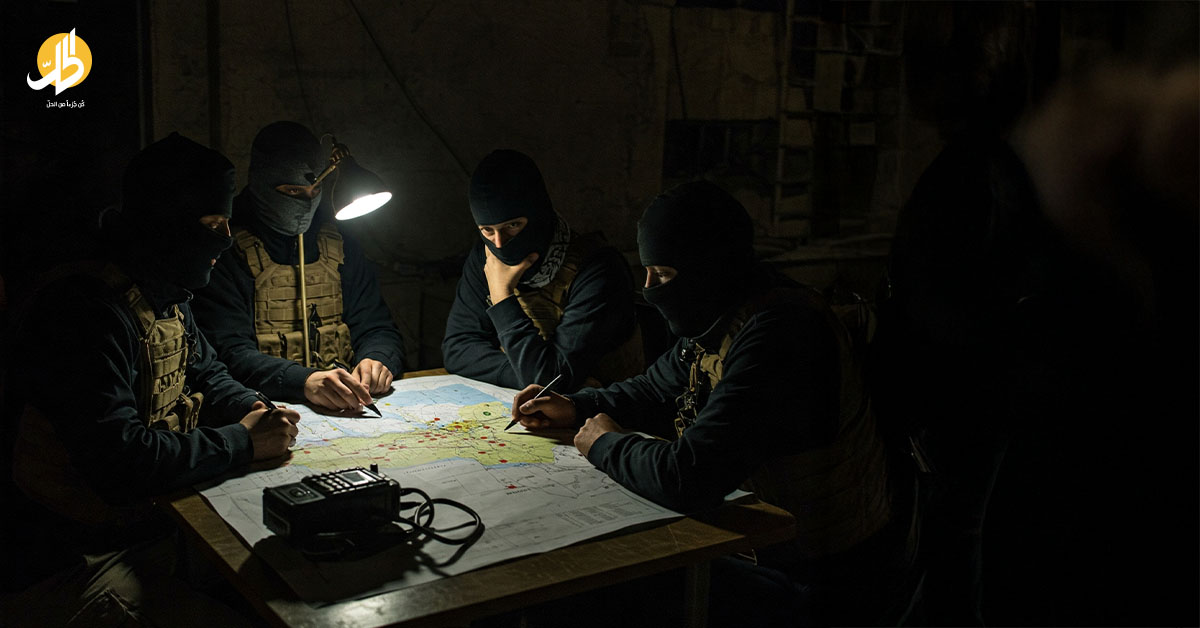
The security operation, which led to three ISIS members being killed or otherwise taken out of action, the arrest of four others, and the seizure of explosive devices and explosive vests, confirms that the group is still present and retains the ability to plan and conceal itself inside major cities.
Accordingly, these destabilizing conditions that the terrorist organization is deliberately creating at this moment underscore the importance of dismantling the various factors that give it the opportunity to exist, spread, and impose a fait accompli through intimidation.
Alongside broad plans and strategies, there is also a need to halt the prevailing security fluidity and chaos, including bloody sectarian revenge attacks such as those carried out against the Druze, and before them the Alawites. The proliferation of uncontrolled weapons, the presence of militia elements, and the state’s retreat from its responsibility in all this would amount to an invitation for ISIS to expand its influence, strengthen its role, and penetrate society.
The Security Vacuum: Fertile Ground for ISIS’s Return
With the fall of Bashar al-Assad’s regime late last year, Syria underwent profound changes that not only created a political vacuum but also worsened the security situation. A host of challenges emerged, most notably in recent months ISIS’s return and growing activity on the ground, confirming that it is waiting for an opportunity to reorganize its ranks and re-enter the scene.
What Syria is going through may not be exceptional or entirely new. Similar patterns can be found in earlier historical periods marked by major and radical “revolutionary” transformations, when security vacuums emerge and pockets form through which extremist organizations can infiltrate.
The central lesson emphasized by all such experiences is that ISIS, like other hardline ideological organizations, was not defeated ideologically. Rather, its defeat consisted of its contraction, partial weakening, and the temporary paralysis of its operational and organizational capabilities—as happened with the collapse of the so-called caliphate that ruled vast parts of Syria and Iraq, culminating in the destruction of its last territorial stronghold in Baghouz at the hands of the Syrian Democratic Forces (SDF).

Yet the reality on the ground reveals the expansion of ISIS influence in other parts of the world, especially in Asia and Africa, in addition to its continued dormancy in the Syrian desert.
Officials at the United Nations and in the United States warned last April that the group had shown renewed activity in Syria, recruiting new fighters and increasing the pace of its attacks in an attempt to exploit the post-Assad phase to free prisoners and regain the ability to plan and carry out attacks.
Detention Camps as a Dormant Manpower Reserve for ISIS
Among the most serious dangers facing Syria today is the possibility that ISIS may launch new attempts to free thousands of its seasoned fighters held in prisons in the country’s north and east, which are overseen by the SDF with support from the US-led international coalition.
A report by the New York Times indicated that the group may focus its efforts on targeting these prisons while local and international actors are preoccupied with the political transition, threatening to inject fresh manpower into the organization.
The dangerous return of ISIS would also undermine what appeared to be a rare opportunity in Syria to overcome a “brutal dictatorship.” The repercussions could spread more widely, fueling instability across the Middle East. ISIS had previously used Syria as a base to plan attacks against neighboring countries and even in Europe.
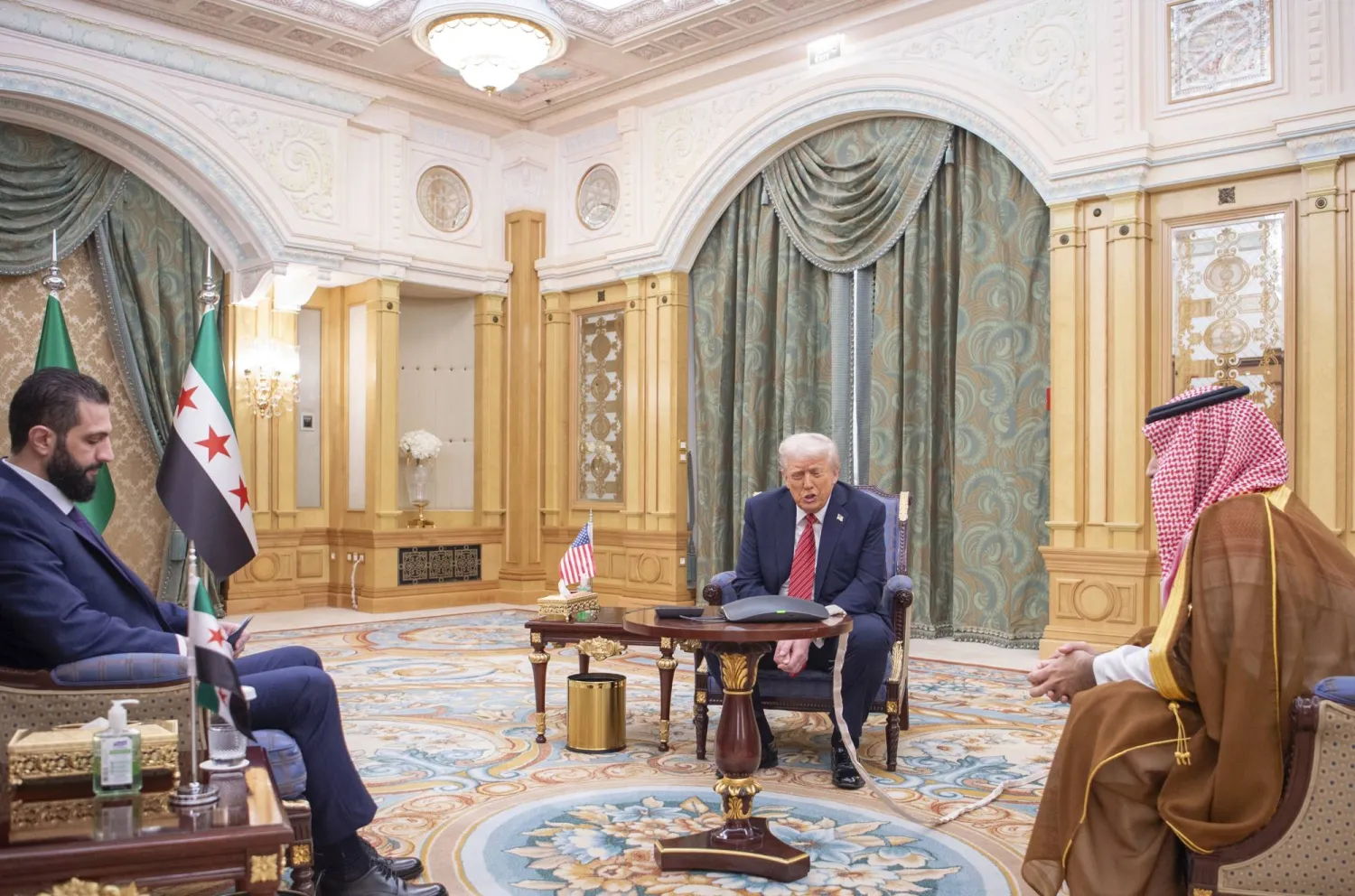
The new political landscape carries both opportunities and challenges. In a sudden shift, US President Donald Trump announced from Riyadh that sanctions on Syria would be lifted, and called on President al-Sharaa to take bold steps, including cooperating with Washington to prevent ISIS’s return and assuming responsibility for detention centers holding its fighters.
In this context, US and Syrian officials have been working since the fall of the Assad regime to confront the group, with efforts focused on areas outside the northeast, which is controlled by the Kurdish-led SDF. A recent report by The Washington Institute for Near East Policy says that in the future the two sides should discuss the most effective ways to integrate the SDF and its civilian bodies into the framework of the new government, in a way that reassures the Kurds about their role and place in a future Syria.
Washington is also expected to stress the need to avoid any monopoly on power by al-Sharaa and to ensure that local communities participate in managing their own security and administrative affairs within the framework of a unified Syrian state.
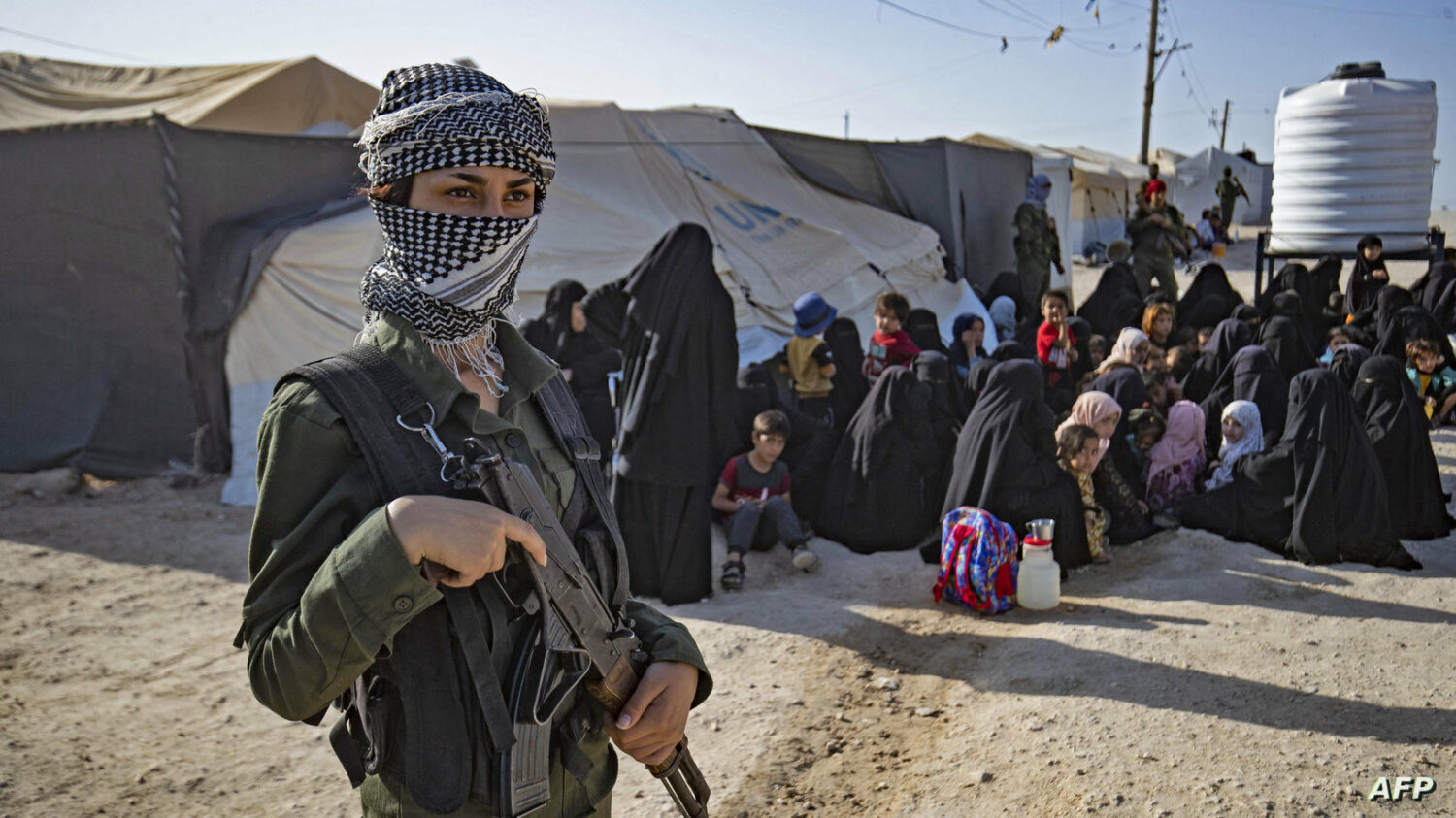
It is also necessary to establish a clear timetable for Damascus to assume responsibility for facilities holding ISIS members and their families, while placing funding and training issues at the center of discussions in coordination with European partners in the international coalition against the group.
What Is Required of the Damascus Authority
The new authority in Damascus, led by Ahmed al-Sharaa, faces enormous responsibilities that require an integrated approach—not merely a security one, but a comprehensive national counterterrorism plan that includes pursuing sleeper cells, especially in the Syrian desert, which has long served as a safe haven for the group.
It is also essential to open up and coordinate with other Syrian forces, especially those capable of lining up against the dangers posed by this organization, its cells, and its incubators—such as the Syrian Democratic Forces—in order to confront the shared threat and integrate them into the framework of the new state. Intelligence cooperation with neighboring countries should also be strengthened, especially with Iraq, which has accumulated field experience in pursuing the group and monitoring its cross-border movements.
Naturally, achieving internal political consensus would fortify the country against chaos and prevent any vacuum that could be exploited by ISIS to reconstitute itself. It would also help thwart any external attempts to use the organization to destabilize Syria’s political and security landscape, especially after ISIS issued a statement against Ahmed al-Sharaa titled “On Trump’s Threshold,” which reflected the depth of the group’s ideological resentment toward the political transformation underway in Syria, particularly after al-Sharaa’s meeting with President Trump. The statement also shows that ISIS remains active in mobilization and incitement, continuing to portray any political project other than its own as a grave betrayal of Islam. In the lead editorial of its newspaper al-Naba, it urged “foreign jihadists” to repent and return to join the “detachments spread across the countryside and outskirts,” in a clear indication of possible movement on the ground.
In sum, ISIS’s return to the Syrian scene is not a far-fetched hypothesis but a real danger that grows with every day that the establishment of a coherent and robust security and political order in the new Syria is delayed. Amid domestic challenges and international stakes, the ability of the Damascus authority under al-Sharaa’s leadership to prevent the return of ISIS may prove to be one of the most complex and dangerous tests shaping the country’s future.
- How the Houthis Are Choking Yemen’s Peace Efforts with a Broad Escalation on the Ground
- Economy in the Wind: How Yemenis Are Paying the Price of Disrupted Shipping Routes
- Houthi Summer Centers: Factories for Indoctrination and Raising a “Scream” Generation
- The “Coalition of Necessity”: What Costa Rica’s Terrorism Designation of the Houthis Signifies
- Mojtaba Khamenei Runs Iran from His Bed as Photos Vanish and the Supreme Leader Makes a “Voice-Only” Appearance