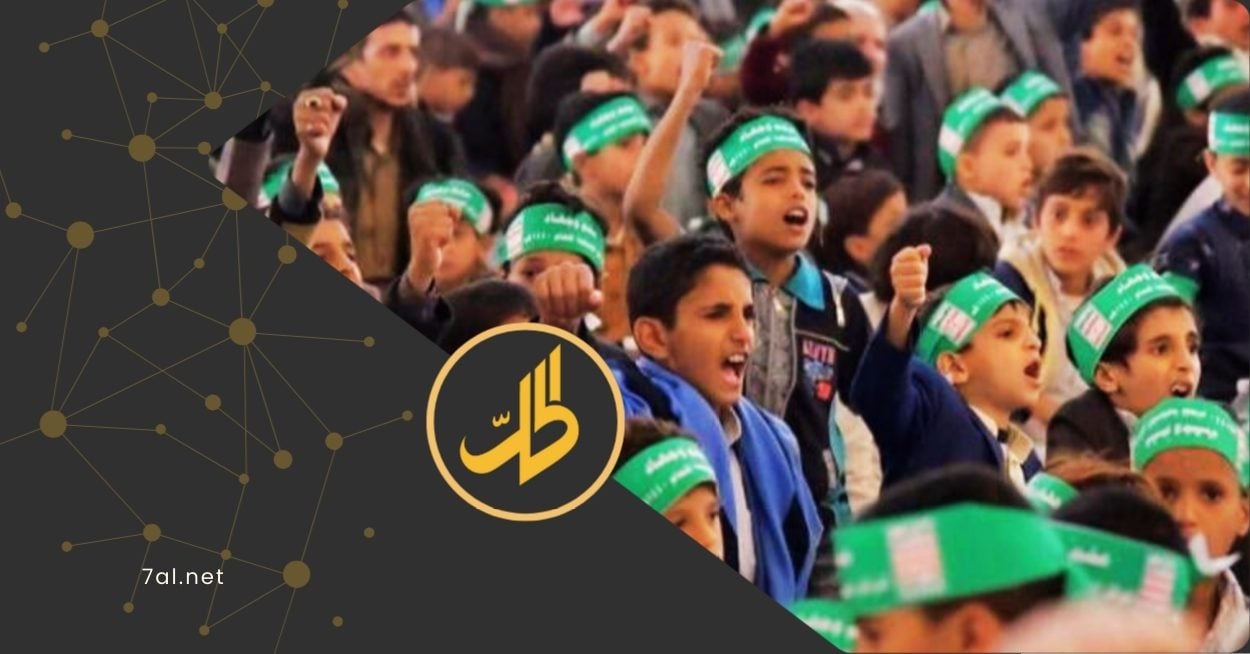
An investigation published by Asharq Al-Awsat has revealed sweeping changes in the education sector in areas controlled by the Houthi group in Yemen, with the emergence of a parallel education system aimed at reshaping students’ minds within a closed ideological framework.
Since seizing the capital, Sanaa, in 2014, the Iran-backed group has moved to introduce sweeping changes to the education process, including curricula, school names and extracurricular activities, as well as the creation of alternative institutions that differ in structure and purpose from official education.
Parallel system
“Shahid Al-Quran” schools have emerged as one of the most prominent features of this shift. They are a network of boarding schools that began in 2022 with a single school in Sanaa before rapidly expanding to several provinces.
These schools follow a closed model, in which students live on site, with accommodation and meals provided, in return for full-time participation in an intensive study program that combines academic subjects with daily ideological and religious sessions.
The matter is not limited to opening new schools. It also includes seizing existing educational buildings and renaming them, as well as using mosques and religious facilities as educational premises bearing the same name.
Absence of oversight in a closed daily program
These schools are not subject to any known educational oversight, and their curricula are not officially published, leaving the nature of the content taught inside them unclear.
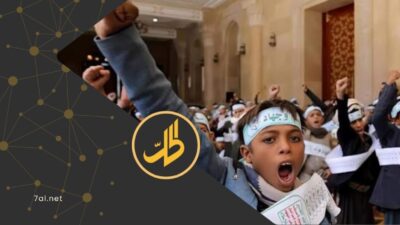
While the Houthi group raises slogans such as “Death to America” and “Curse the Jews” on school walls and public billboards in the streets, it is driving thousands of children in Yemen toward the slaughterhouse of death, either by persuading them through religious indoctrination or by intimidating families in areas under its control into sending them into its war against the Yemeni people.
These institutions are run through cultural and educational offices affiliated with the Houthi group, amid a lack of precise information about the organizing body or the mechanisms of supervision.
Details in the investigation show a daily routine that begins at dawn and continues until evening, and includes religious activities and ideological lectures alongside classes.
The activities also include visits to sites linked to Houthi leaders, staged reenactments of combat scenes, and practical training, as part of a program focused on building a specific ideological identity among students.
Broad recruitment
These schools target secondary school students under conditions that include tests and interviews, in addition to commitment to a strict boarding program.
The advantages offered, such as free accommodation and the provision of necessities, are a major factor in attracting students, especially amid the difficult economic conditions Yemen is facing.
Some teachers are also turning to work in these schools after their salaries in the public sector were cut off, in return for undergoing training programs aligned with the Houthi group’s agenda.
Rising concerns
In this context, Ahmed Al-Qurashi, head of the Sijaj child protection organization, warned against the continued targeting of children through systematic ideological mobilization programs.
Children’s Day, marked every year on Nov. 20, serves as a reminder of the tragedy of Yemen’s children, who are living through one of the world’s worst humanitarian crises.
Al-Qurashi said these activities work to instill extremist ideas that affect children’s future and the social fabric.
With no accurate data on the size and spread of these schools, the information documented by the investigation points to a clear transformation in the structure of education in areas controlled by the Houthi group, from an open education system to a closed environment with a distinct ideological and organizational character.
In this reality, education stands out as one of the most prominent arenas of the undeclared conflict, where the minds of future generations are being shaped inside an extremist system that goes beyond the bounds of traditional education.