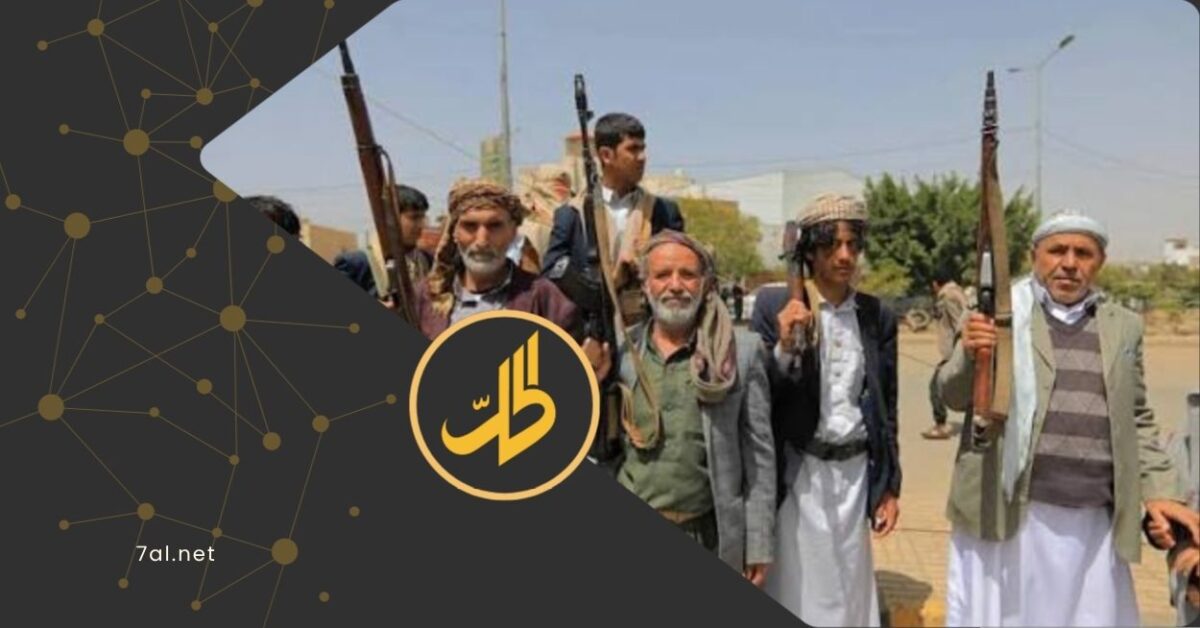
The Iran-backed Houthi group announced on Saturday that it had carried out a missile and air attack targeting Tel Aviv airport and military sites in Israel, in the fifth operation it has claimed since its direct entry into the regional conflict at the end of March.
The group’s military spokesman said the operation was carried out using a ballistic missile and drones, in coordination with Iran and the Iran-backed Lebanese Hezbollah, while Israeli media reported that the missile fell in open areas without causing damage.
Escalation beyond borders
This operation is part of a series of attacks launched by the Houthi group since March 28, the date it set for the start of its military involvement, under the banner of “solidarity” with Iran, amid rising tensions in the region.

Through these operations, the Houthi group is seeking to cement its presence in a rapidly expanding regional landscape, as international warnings grow over the implications for Red Sea shipping security and regional stability.
The announcement of coordination with regional parties also raises questions about the nature of the Houthi group’s military decision-making and the extent to which it is tied to external tracks beyond the Yemeni context.
Preparations at home
In parallel with the Houthi escalation, circulated documents showed instructions to raise the state of emergency in hospitals and health facilities in areas under the group’s control, requiring them to operate around the clock and prepare emergency departments.
The measures also included boosting the readiness of ambulances and medical staff, in anticipation of any developments that could place additional pressure on the health sector.
These steps coincided with other measures, including regularly changing the locations of Houthi leaders and using civilian facilities as shelters, raising concerns about the safety of residents in the event of a military response.
Cost calculations
Meanwhile, the internationally recognized government has begun taking precautionary steps to address any potential economic fallout, with the crisis management committee holding a meeting in the temporary capital, Aden, to discuss securing fuel and essential goods.

The discussions focused on maintaining supply stability and preventing market disruptions, amid concerns over the impact on maritime shipping and rising import costs.
These moves come at a time when Yemen’s economy is under sustained pressure, with oil exports halted and the country heavily dependent on imports.
With the Houthi escalation moving beyond Yemen’s borders and the fragile domestic situation, Yemenis are facing a complex reality and a potential cost they may have to bear because of the recklessness of the militia hiding in mountain caves in the far north of Yemen.
- How the Houthis Are Choking Yemen’s Peace Efforts with a Broad Escalation on the Ground
- Economy in the Wind: How Yemenis Are Paying the Price of Disrupted Shipping Routes
- Houthi Summer Centers: Factories for Indoctrination and Raising a “Scream” Generation
- The “Coalition of Necessity”: What Costa Rica’s Terrorism Designation of the Houthis Signifies
- Mojtaba Khamenei Runs Iran from His Bed as Photos Vanish and the Supreme Leader Makes a “Voice-Only” Appearance