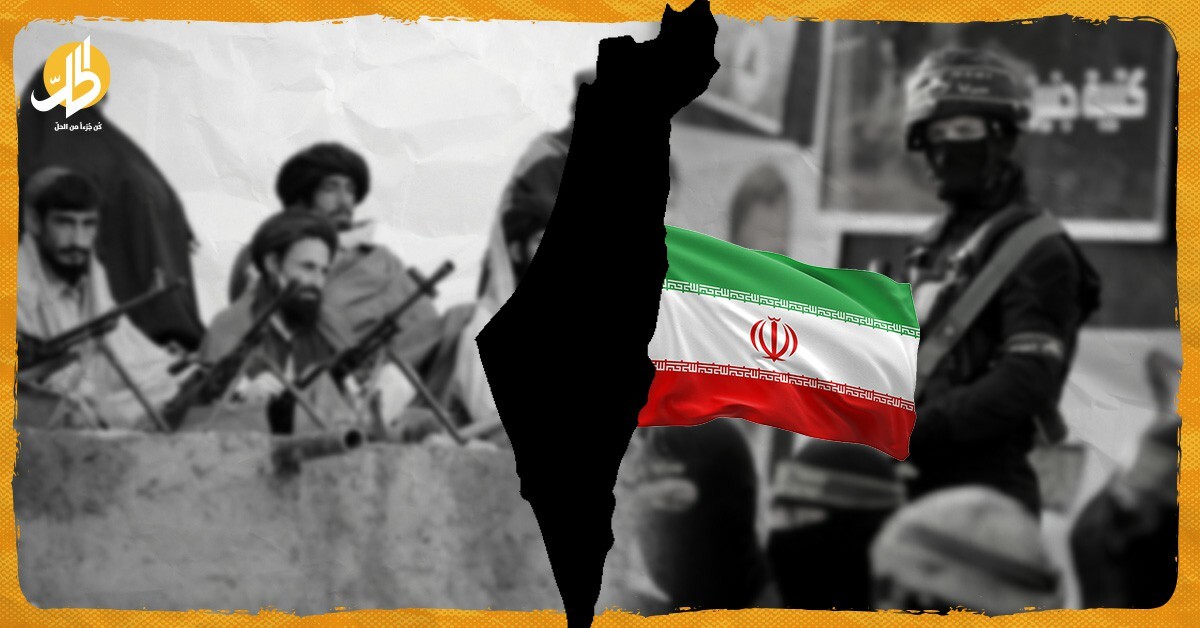
The relationship between the terrorist-designated organization “Al-Qaeda” and Iran has gone through many phases and turning points. What has remained constant, however, is that it was never confrontational despite the apparent doctrinal differences. On the one hand, the regime in Tehran has historically maintained close ties to Sunni political Islam, represented by the “Muslim Brotherhood,” then “Al-Qaeda,” and even the terrorist organization “داعش” (ISIS), which resembles the former in its armed Sunni extremism.
The temporary conflict with the “Taliban” also involved geopolitical calculations and sectarian-ethnic concerns related to the Shiite “Hazara” minority in Afghanistan, as well as Sunni blocs in the Balochistan region and armed Baloch on the Iranian-Afghan border. Moreover, the Iranian regime managed to exploit the Afghan refugees on its territory by forming militia factions of children, as in the case of the “Fatemiyoun Brigade,” through inducements involving the regularization of their legal status, the granting of citizenship, and other privileges. Afghans have been present there since the 1980s, dating back to the war with the “Soviet Union.”
Iran, then, plays a pragmatic role in managing conflict on the basis of practical calculations. In its relations with “Al-Qaeda,” it provided safe havens after 2011, especially for the first-tier leadership and Osama bin Laden’s family. This sometimes served as a bargaining chip and at other times as a means of blackmail and pressure against the United States, through which it secured a range of interests. Documents, including correspondence between the organization’s leaders and bin Laden, reveal that the mullahs were involved in handing some over and eliminating others after leaking information to Washington.
There was also reciprocal coordination between “Al-Qaeda” and Iran on shared issues, as “Al-Qaeda” is currently regarded as an instrumental tool for the mullahs amid various forms of maneuvering that may take place with the “Taliban,” which threatens Tehran’s eastern borders, in addition to a desire to prevent any one jihadist actor from dominating this extremist space.
“Al-Qaeda’s” opportunistic stance
First, “Al-Qaeda’s” position toward the events in the Gaza Strip and its support for the “Al-Qassam Brigades,” the military wing of “Hamas,” in its propaganda rhetoric reveals the positioning of political Islam in the political space as Iran seeks to engineer it. This political and organizational alignment between armed hardline Sunni and Shiite Islamist forces, as in the case of “Al-Qaeda” and Iran, is no different from a similar alignment led by the “Islamic Revolutionary Guard Corps” between “Hamas,” “the Islamic Group,” its military wing represented by the “Fajr Forces,” as well as “Hezbollah” and Shiite factions.
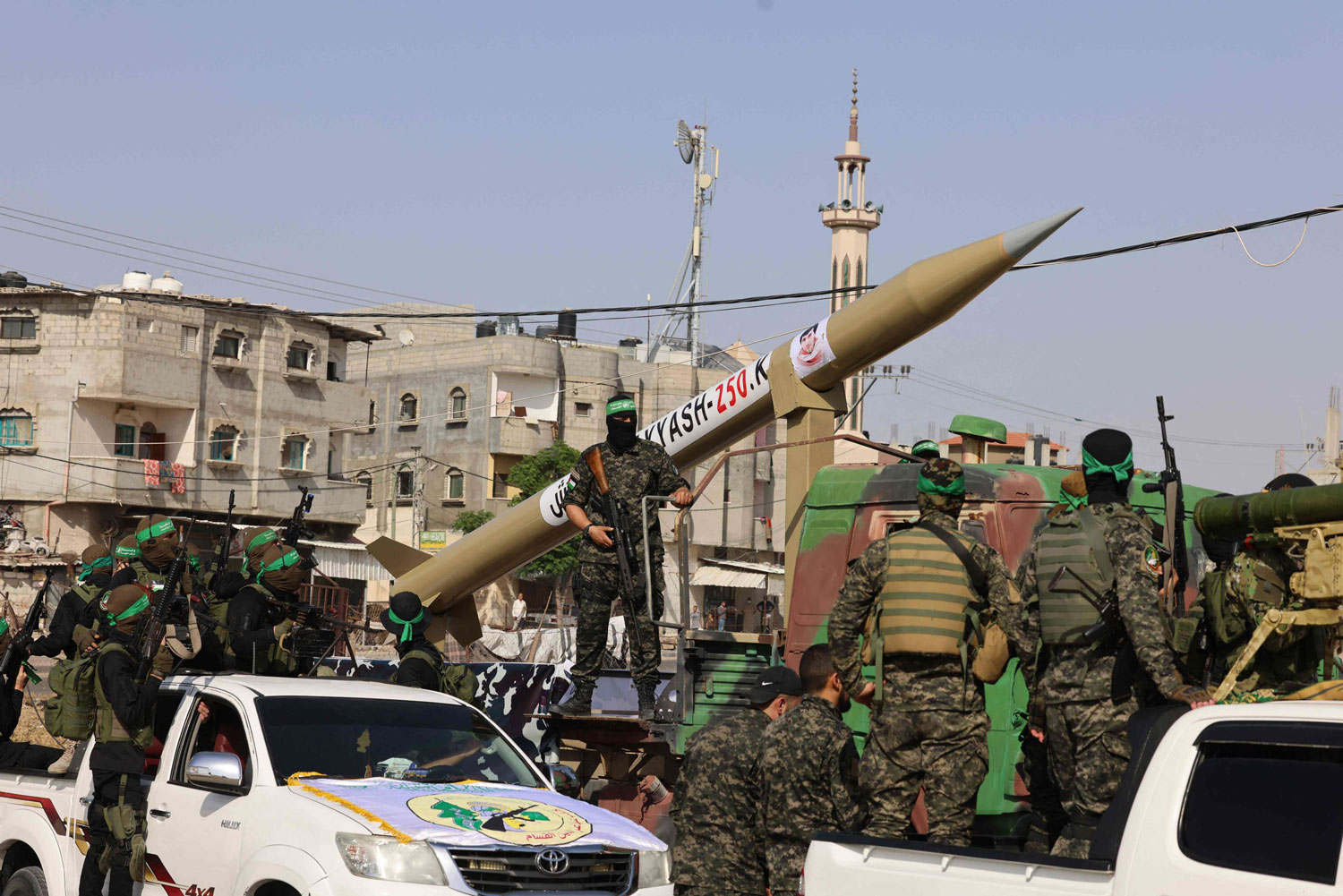
The statement by “Al-Qaeda’s” general command came under the title, “Is God’s victory not near?” In it, the group praised the role of the “mujahideen in Palestine in the Battle of Al-Aqsa Flood,” asserting that “the coming flood from the heroes of Islam will make the Zionist-Crusaders forget the horrors of September.” It said that “the operation directly exposed the scale of Israeli strategic failure,” called on “the Islamic nation to provide moral and material support to the heroes in Palestine,” and urged the targeting of everything “Crusader, Zionist, and Israeli in an open war.”
In addition, branches of the “Al-Qaeda” organization in many regions of the world issued statements, including the branch in the Indian subcontinent, the organization’s branch in Yemen, the “Guardians of Religion” organization, “Al-Qaeda’s” branch in Syria, the “Somali al-Shabaab” movement, “Al-Qaeda in the Islamic Maghreb,” and the “Group for the Support of Islam and Muslims.” All of these statements by branches affiliated with the terrorist organization centered on praising “Hamas’s” attack on Israel, portraying it as the war of the entire Islamic nation, and then inciting and calling on all Islamists and sympathizers to wage a comprehensive war against “Jews and foreigners” and everyone who supports Israel—an open call for all Islamist groups to engage in wars and attacks against the West—while also stressing that “the only way to liberate the Islamic nation from the claws of infidel regimes is jihad for the sake of God.”
The “Hamas” movement does not differ ideologically, in its methods, or in its affiliation from the approach and thinking of those jihadist organizations. Therefore, “Al-Qaeda’s” position and the unified statements of all its branches around the world cannot be overlooked. This is a striking angle that can be interpreted as showing that the extremist organization, like other jihadist groups, exploits crises to attract supporters by promoting inciting rhetoric. This is not the first time that “Al-Qaeda” has employed the Palestinian cause in its propaganda and opportunistic discourse in an attempt to present itself as the principal defender of the Islamic nation, with Palestine at the forefront.
Iran’s engineering of the political space
What is notable here is that “Al-Qaeda” is not the only group threatening to target American bases. Iranian militias in the region are issuing the same threat. Tehran’s proxies have already carried out several drone attacks on American bases in Iraq and Syria over the past few days.
At the beginning of this year, several conflicting hypotheses circulated regarding the fate of Ayman al-Zawahiri and his successor, Mohammed Salah al-Din Zidan, known by the nom de guerre “Saif al-Adel.” Since the United States announced last year the operation that it said led to the killing of “Al-Qaeda” leader al-Zawahiri, the organization has not acknowledged the loss of Osama bin Laden’s successor. Accordingly, the new leader of the organization has still not been officially announced.
Speculation then spread that the organization’s new leader was Saif al-Adel, but he was not officially announced because of “Al-Qaeda’s” sensitivity to the Afghan “Taliban’s” concerns over the failure to acknowledge al-Zawahiri’s death in Kabul and the reality of Saif al-Adel’s presence in Iran, according to special United Nations reports.
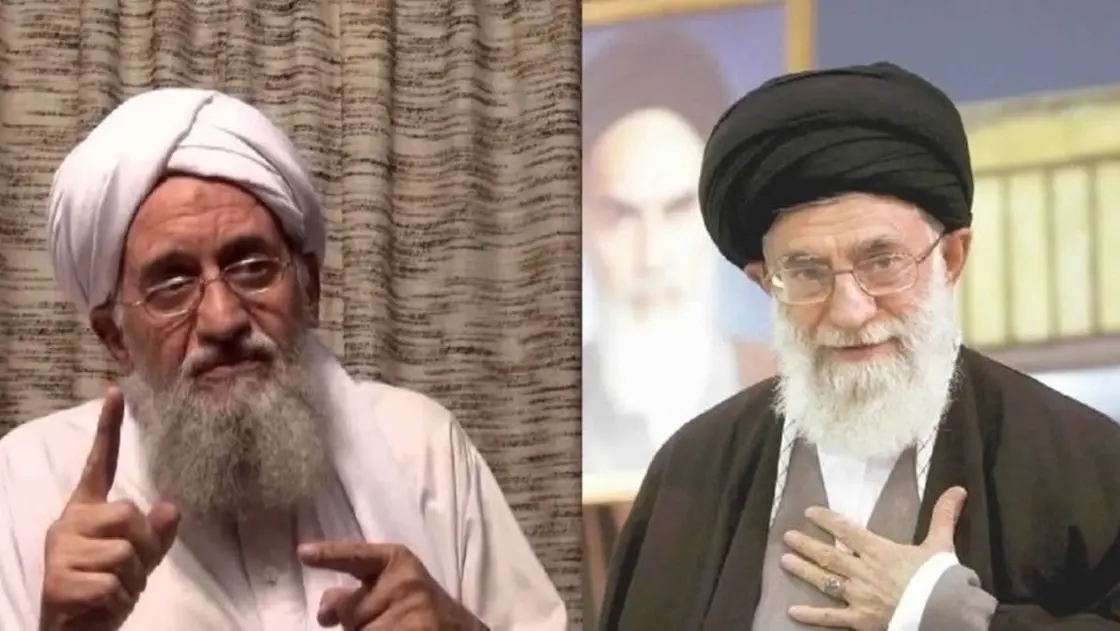
The UN report indicated that Saif al-Adel is hiding in Iran, something the “U.S. State Department” confirmed many months ago, stating that Saif al-Adel resides in Iran and became the leader of “Al-Qaeda” after al-Zawahiri’s death. This means that Tehran has become the residence of the new leader, which is evidence of a close relationship between the two, especially since many of their aims and objectives overlap, perhaps foremost among them their mutual hostility toward Washington.
Many studies also confirm that Saif al-Adel moved between Afghanistan and Iran in the late 1990s, which enabled him to strengthen his relations with senior security officials in Iran, though at the same time he remains under house arrest for several reasons and considerations.
The relationship between “Al-Qaeda” and Iran is not new. Washington had previously announced the existence of two “Al-Qaeda” stations inside Tehran and the city of Mashhad in the country’s northeast near the Afghan border, in order to facilitate the travel of its members to and from Afghanistan.
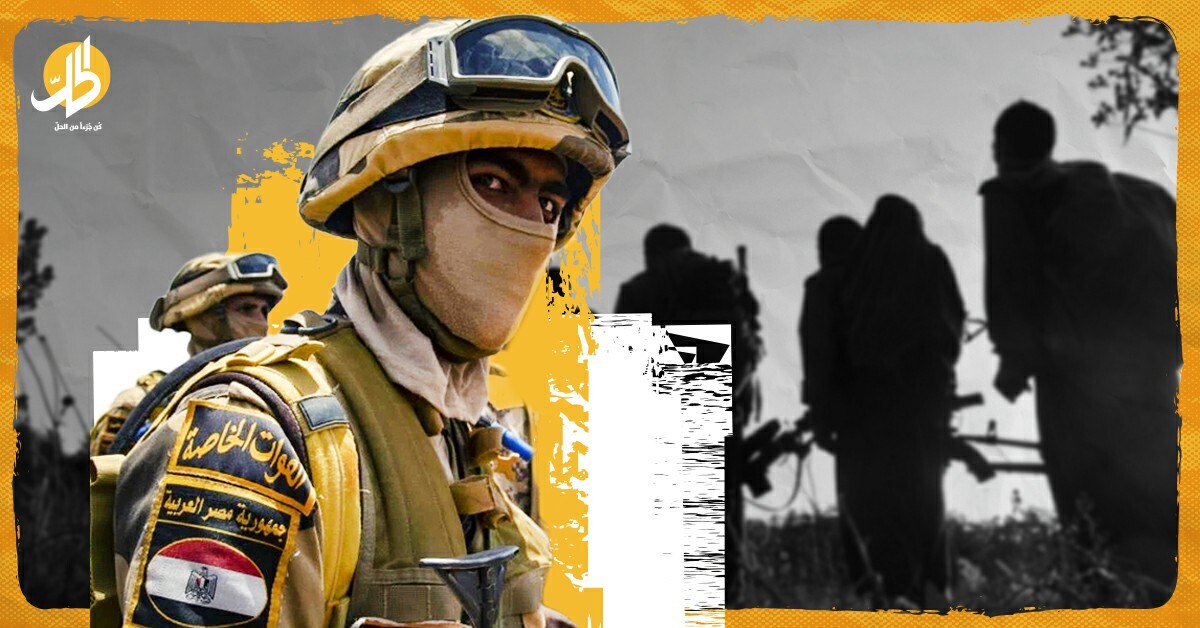
Saif al-Adel, who is believed to be about 62 years old, is a former officer in the Egyptian special forces and a prominent figure in “Al-Qaeda’s” old guard. He helped build the organization’s operational capabilities and trained some of the hijackers who took part in the September 11 attacks in the United States, according to the American organization “Counter Extremism Project.”
In the context of the current events in Gaza, “Al-Qaeda’s” alleged support for “Hamas,” and the inciting calls it broadcasts against the West, Abdel Salam al-Qassas, a researcher and analyst specializing in Islamist groups, says that these statements and mobilizing calls issued by “Al-Qaeda” and its branches appear to be carefully calibrated. There are several tactics behind this, especially since these groups have not provided real support on the ground to “Hamas,” the Palestinians, or even carried out any major retaliatory strikes in Western countries or in front of their embassies anywhere in the world, but have instead confined themselves to promoting extremist rhetoric.
There are several tactics behind “Al-Qaeda’s” propaganda rhetoric in support of “Hamas,” especially since this extremist organization has not provided real support on the ground to the movement or even to the Palestinians, nor carried out any major retaliatory strikes in Western countries.
Researcher on jihadist groups Abdel Salam al-Qassas, speaking to Al-Hal Net
The researcher on Islamist groups added to Al-Hal Net that this propaganda rhetoric by the organization clearly comes within the framework of exploiting the circumstances of what is happening in Gaza, especially by focusing on scenes of civilians being killed, including children and women, and on the scale of destruction. This ultimately helps spread its extremist ideas and mobilize opinion in the Islamic and Arab worlds on the one hand, while attracting the largest possible number of angry Arabs to join extremist groups on the other—something that serves Iran’s interests in all cases.
This tactic was used by “Al-Qaeda” during the events of July 2006 in Lebanon, when conflict broke out between Israel and “Hezbollah,” and Ayman al-Zawahiri was broadcasting inciting speeches similar to the current ones. There was a great deal of hypocrisy in portraying the Islamist organization as the “hero” defending the Islamic nation, even though all branches of the extremist organization, along with Iran’s proxies, have carried out many bloody operations and attacks against Muslims around the world. In other words, this organization has nothing at its disposal except exploiting the media to stir hatred and incite violence, which fully aligns with Iran’s goals, as it benefits in one way or another from any chaos that occurs in the region, according to the researcher on jihadist groups.
Tactical goals for Iran
Accordingly, it can be concluded that there is clear coordination between Tehran and the “Al-Qaeda” organization around limiting support for “Hamas” and the Palestinians to propaganda rhetoric, something that will further inflame the current complex situation in Gaza. So far, no Iranian ally or proxy has entered the war against Israel, which means that Tehran does not want to widen the conflict and exhaust the strength of its militias and allies. Rather, it seeks to engineer and arrange new regional conditions, according to the analysis of the researcher on jihadist groups.
That is, Iran’s hidden role in the events in Gaza and Israel does not go beyond the issue of the “unity of arenas,” which appears to be merely political publicity and propaganda for its allies and proxies, beginning with “Al-Qaeda” and ending with “Hezbollah”—in other words, not opening new fronts with Israel and Washington, and limiting matters to skirmishes and tactical clashes without any escalation. This is indeed what is happening now, whether on the Israeli-Lebanese border or inside Syria and Iraq.
Therefore, it can be said that Iran, in its involvement with “Hamas’s” October 7 attack on Israel, was pursuing a set of interests. First, it sought to avoid expanding the conflict, allowing Israel to destroy large parts of the Gaza Strip and significantly weaken “Hamas.” In this way, Tehran would achieve its objective: weakening the Sunni jihadist threat and redirecting it against the West, in line with its geopolitical calculations and sectarian-ethnic concerns—that is, exploiting Palestinian refugees from the Gaza war and supporters of what is known as the “resistance” in order to form new militia factions, as it did in Syria, Iraq, and Afghanistan, through various inducements.
Especially since Iran never ceases to use all available cards to pressure the United States, particularly in light of developments and changes in the region, perhaps most notably the approaching conclusion of a peace agreement between Israel and Saudi Arabia. Accordingly, the researcher on fundamentalist groups believes it is likely to use all tools at its disposal and employ “Al-Qaeda” and Sunni and Shiite groups loyal to it in general as a card against Washington.
Iran never ceases to use all available cards (including Islamist groups) to pressure the United States.
This leads us, in the end, to one conclusion: that all extremist groups claiming to be “supporters of the Islamic nation” or considering themselves part of the “axis of resistance,” and the conflicts they wage against the West, such as the September attacks and the recent “Al-Aqsa Flood” operation, are conflicts that yield nothing. Rather, they serve only Iran’s agendas, which uses them for its geopolitical and strategic calculations, all at the expense of the peoples of the region.
- How the Houthis Are Choking Yemen’s Peace Efforts with a Broad Escalation on the Ground
- Economy in the Wind: How Yemenis Are Paying the Price of Disrupted Shipping Routes
- Houthi Summer Centers: Factories for Indoctrination and Raising a “Scream” Generation
- The “Coalition of Necessity”: What Costa Rica’s Terrorism Designation of the Houthis Signifies
- Mojtaba Khamenei Runs Iran from His Bed as Photos Vanish and the Supreme Leader Makes a “Voice-Only” Appearance