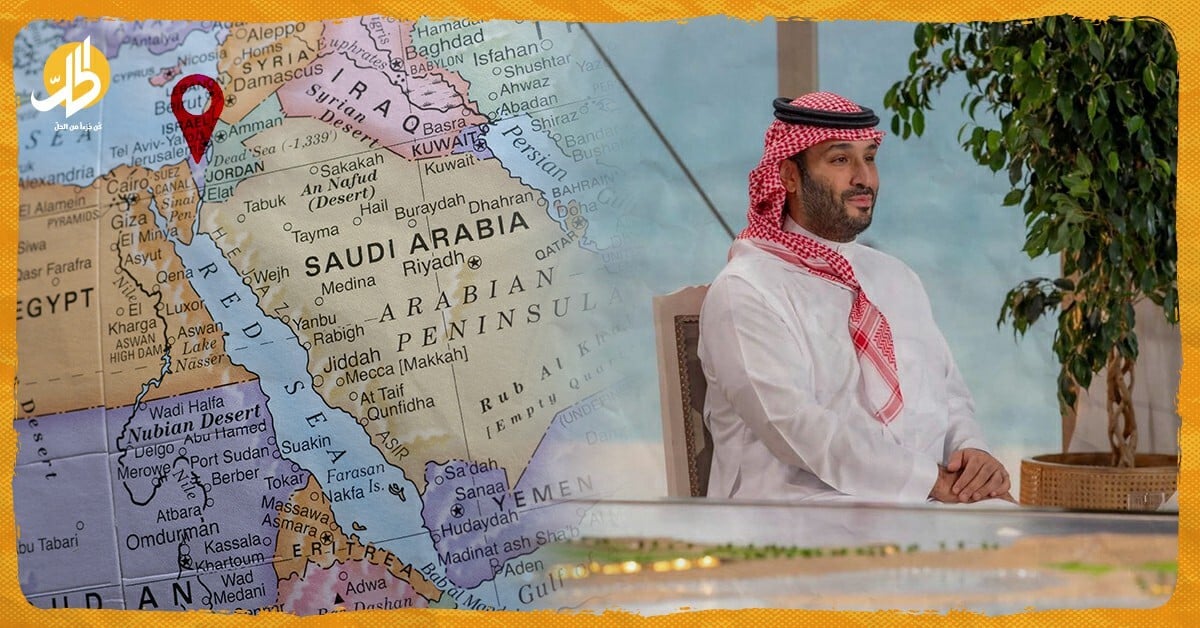
Amid mounting reports of progress in talks between the United States and Saudi Arabia on establishing peace ties with Israel in order to boost stability in the region, recent television remarks by Saudi Crown Prince Mohammed bin Salman suggest that such an agreement between Riyadh and Tel Aviv may be imminent.
At the same time, bin Salman stressed the centrality of the Palestinian cause and the need to improve Palestinians’ lives. Notably, his remarks indicated that Saudi officials are seeking benefits or concessions from the United States before moving ahead with such ties with Tel Aviv.
The crown prince’s remarks make it clear that Saudi Arabia and Israel are close to announcing peace ties. This raises important questions about the implications for the Middle East as a whole and for the influence of the Chinese-Russian-Iranian axis, especially since one condition in the Saudi-US negotiations over ties with Israel was for Riyadh to scale back its relationship with China. That would mean curbing Chinese, Russian, and Iranian plans and ambitions in the region and dealing them a painful blow.
Peace Ties Between Saudi Arabia and Israel
In an interview with the US network Fox News, the Saudi crown prince said his country is moving closer to “normalizing” relations with Israel, adding: “There is support from US President Joe Biden’s administration to reach that point, and for us the Palestinian issue is very important. We need to resolve that part, and we have ongoing negotiations so far. We have to see where it goes. We hope it reaches a point where life is made easier for Palestinians and Israel is integrated into the Middle East.”
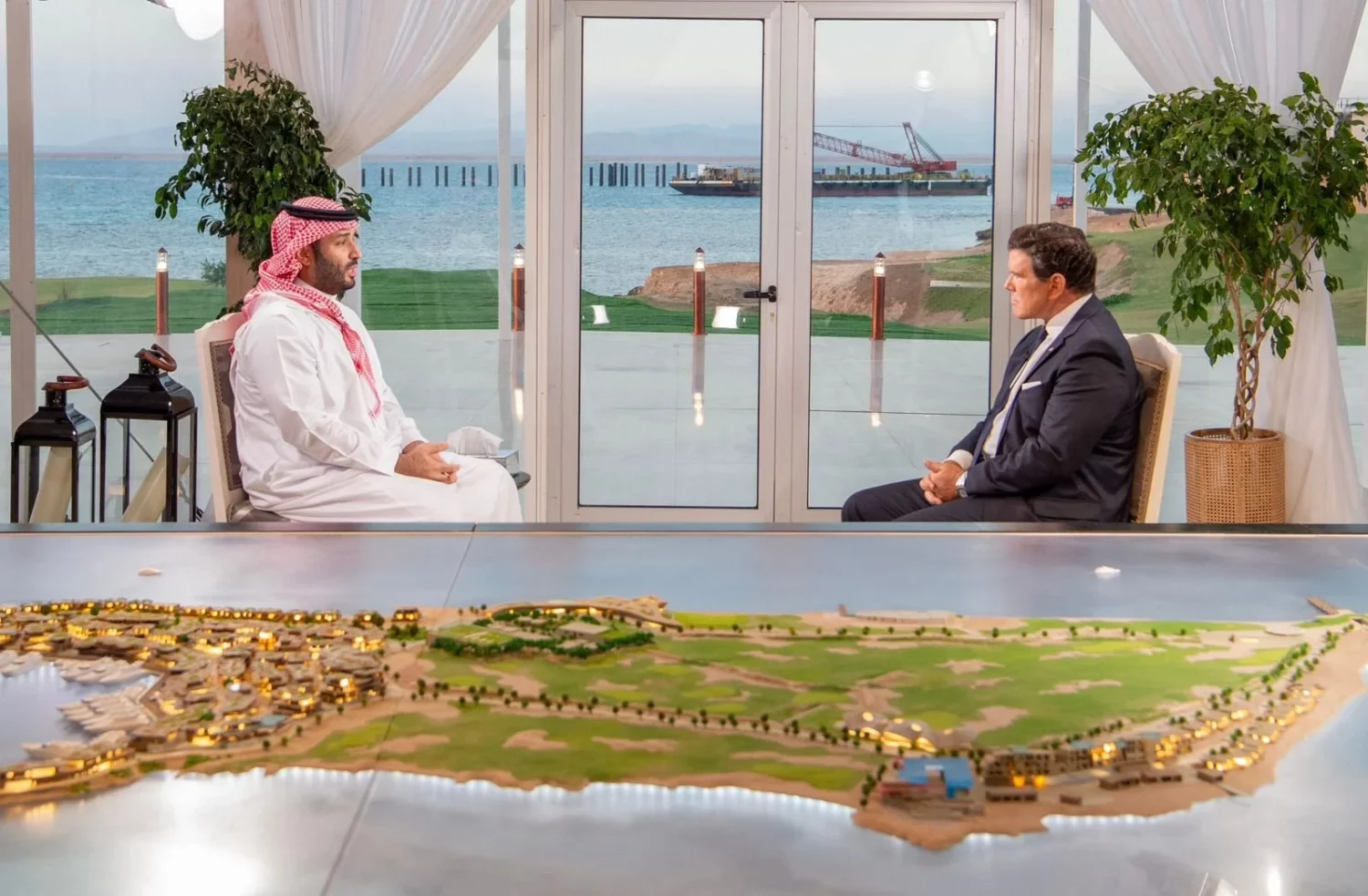
Asked whether he was ready to conclude an agreement with Israel under Benjamin Netanyahu’s government, the Saudi crown prince said, “We do not interfere in internal affairs.” He stressed that if the Biden administration succeeds in negotiations on establishing relations between Saudi Arabia and Israel, it would be the most important agreement since the end of the Cold War, adding that any agreement must meet Palestinian demands and make the region calmer.
The Saudi crown prince also indicated that if there is a breakthrough in negotiations aimed at normalization with Israel, he is prepared to work with whoever leads Israel, a clear sign that Riyadh is seeking peace and stability for the Middle East as a whole.
Political analyst and regional and strategic affairs specialist Zaid al-Ayoubi said Saudi Arabia remains committed to the Arab Peace Initiative, which stipulates that there will be no normalization with Tel Aviv before the Palestinian issue is resolved and the Palestinians establish an independent state with Jerusalem as its capital.
He told Al-Hal Net that the Saudi leadership has unequivocally informed the US administration that entering into normal relations with Israel is conditional on resolving the Palestinian issue in accordance with international legitimacy resolutions.
Conditions and Security Guarantees
Al-Ayoubi believes that without meeting the condition of establishing a Palestinian state, there will be no Saudi normalization with Israel. He said this position was conveyed to the Palestinian leadership through official channels during the latest meeting with a high-level Palestinian delegation that included Hussein al-Sheikh, Secretary of the Executive Committee of the Palestine Liberation Organization, Majed Faraj, head of the General Intelligence Service, and Majdi al-Khalidi, special adviser to Palestinian President Mahmoud Abbas.
As for the Saudi crown prince’s remarks to Fox News on the Palestinian issue and relations with Tel Aviv, they indicate Saudi Arabia’s commitment to a just solution to the Palestinian issue, including a complete halt to settlement activity and no infringement on Islamic holy sites, especially Al-Aqsa Mosque. Israelis must seize this opportunity if they truly seek stability in the region, according to al-Ayoubi.
Riyadh also conditions the establishment of diplomatic relations with Tel Aviv on signing a joint defense treaty with Washington, obtaining approval for a civilian nuclear program, securing advanced arms deals, and being allowed to purchase the latest US military technologies.
The New York Times reported this week that the Biden administration intends to strengthen defense cooperation with Saudi Arabia through a joint defense agreement similar to those concluded with Japan and South Korea. Bloomberg News also reported on Thursday, citing several informed sources, that the White House is considering two formal defense agreements with Saudi Arabia and Israel as part of its plan to establish relations between two of Washington’s closest allies in the Middle East.
Accordingly, Washington may provide Saudi Arabia with security guarantees if Riyadh concludes an agreement with Israel, especially since the crown prince said in his television interview that relations between Riyadh and Washington go back eight decades and that a possible security agreement between the two countries would strengthen military and economic cooperation, without giving further details.
Implications for the Middle East
These political and diplomatic efforts, championed by Saudi Arabia’s young leadership headed by Mohammed bin Salman, are consistent with his earlier remarks in an interview with The Atlantic that Israel is not viewed as an enemy but as a potential ally. His latest comments to Fox News reinforce that approach of openness toward Israel and of finding a basis for cooperation aimed at pushing the region toward stability and calm.
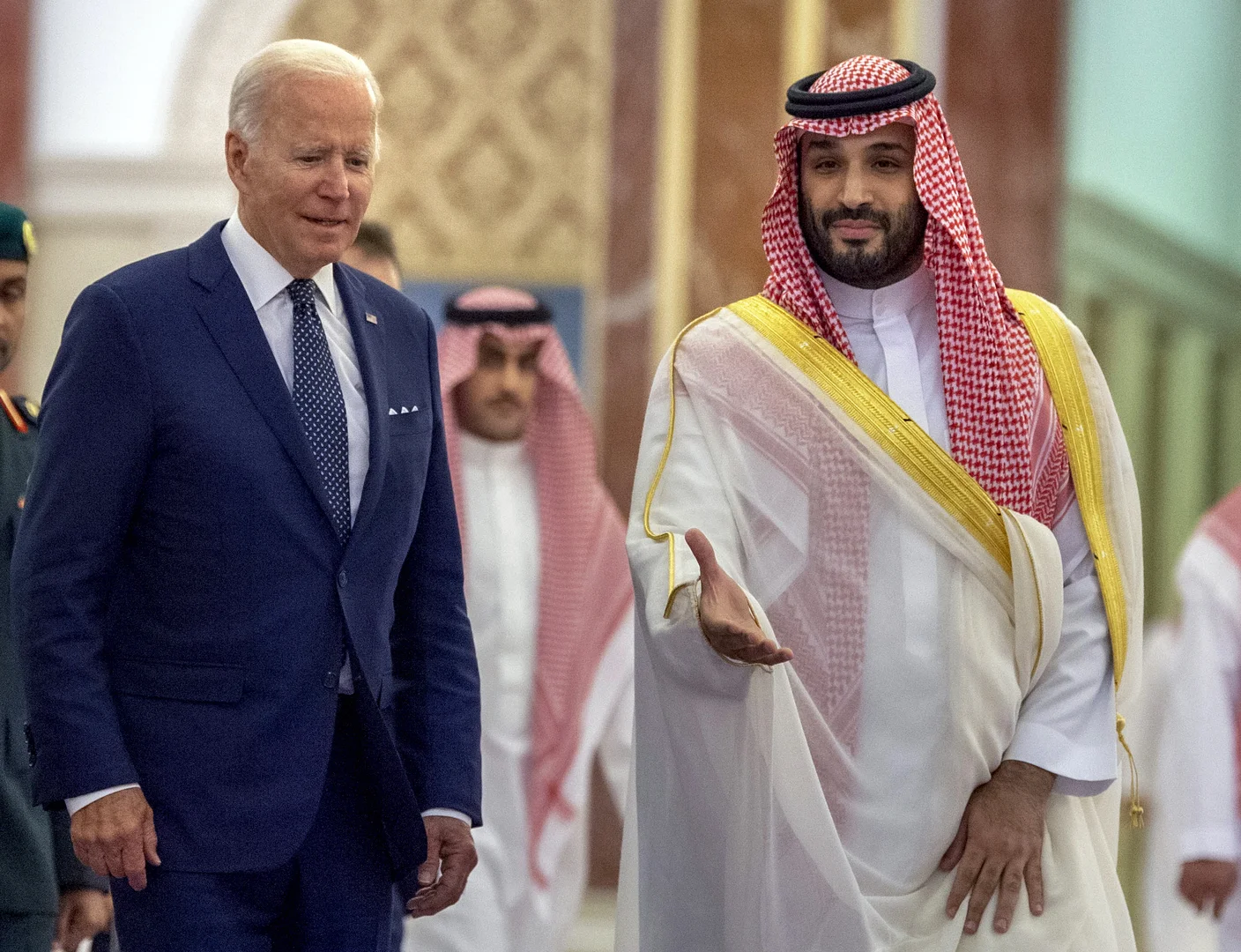
This is not only about regional stability, but also about expanding economic, security, and military cooperation in light of shared terrorism risks and the need to roll back hostile forces, from Iran-backed militias to Hamas and other armed factions, as well as threats in Asia from the extremist Taliban movement and the growing influence of ISIS and al-Qaeda, in addition to expanding Chinese influence aligned with Russia in the region.
For Israel, establishing peace ties with the largest Arab and Islamic country in the region would open the door to the Arab and Islamic worlds more broadly. If such an agreement is signed, it would also ease internal pressure on the Israeli prime minister and create opportunities for economic and perhaps later social openness, especially after the announcement of the transcontinental “green corridors” project aimed at linking India with the Middle East and Europe during the recent G20 summit.
Al-Ayoubi also noted that Israelis must understand that Prince Mohammed bin Salman is not offering free gifts. If they truly want acceptance in the region, they cannot bypass the Palestinian issue. Rather, they must comply with Saudi requirements in this regard; otherwise, talk of normalization with Riyadh will remain nothing more than an illusion and a distant dream.
It appears that the Kingdom does not view delaying relations with Israel as a matter of political embarrassment so much as a matter of settling certain files with the United States, especially Yemen and defense agreements. Observers say Saudi Arabia views normalization through the lens of how it serves Saudi interests and will handle it as it has handled its regional interests: by creating a climate conducive to the success of major Saudi projects within Vision 2030, led by the crown prince, without overreacting.
Establishing peace ties between Saudi Arabia and Israel under Washington’s sponsorship would deal a decisive blow to Chinese ambitions and Iranian expansion in the region, especially since Tehran has for years exploited the Palestinian cause through loud nationalist slogans. The latest example was Iranian President Ebrahim Raisi’s warning that any normalization with Israel would be a “stab in the back” for the Palestinians, though in reality it would be a blow to the expansion of Iran-backed militias.
Raisi made the warning during a press conference in New York on the sidelines of the UN General Assembly, where he said in response to a question about the current Saudi-Israeli rapprochement, “We have not heard anything of the sort.” He added, “Nevertheless, the start of a relationship between Tel Aviv and any country in the region, if its aim is to achieve security for the former, will certainly not achieve that,” according to press reports.
Establishing peace ties between Saudi Arabia and Israel under Washington’s sponsorship would deal a decisive blow to Chinese ambitions and Iranian expansion in the region.
As Riyadh appears determined to provide a large aid package to Palestinians in the West Bank, and given that Washington wants Saudi Arabia to resolve the Yemen file and place limits on the growing Saudi-Chinese relationship, including reducing dealings with giant Chinese companies such as Huawei, establishing peace ties between the Kingdom and Israel would enhance regional stability and economic growth and curb the ambitions of Chinese and Iranian influence, as well as that of their ally Russia.
- How the Houthis Are Choking Yemen’s Peace Efforts with a Broad Escalation on the Ground
- Economy in the Wind: How Yemenis Are Paying the Price of Disrupted Shipping Routes
- Houthi Summer Centers: Factories for Indoctrination and Raising a “Scream” Generation
- The “Coalition of Necessity”: What Costa Rica’s Terrorism Designation of the Houthis Signifies
- Mojtaba Khamenei Runs Iran from His Bed as Photos Vanish and the Supreme Leader Makes a “Voice-Only” Appearance