
Four weeks after the expansion of Israeli-American military operations against Iran, the confrontation has entered a more dangerous phase, shifting from an exchange of strikes on military and nuclear sites to a direct threat to energy infrastructure and maritime corridors on which a large part of the global economy depends.
Within a matter of hours, the Strait of Hormuz became the center of the crisis after US President Donald Trump gave Tehran a 48-hour deadline to fully reopen it, threatening to target Iranian energy facilities if it failed to comply, while Tehran responded with counterthreats against American and Israeli energy facilities in the Gulf.
Hormuz… the world’s threatened lifeline
This is not merely a new round of mutual deterrence, but a harsh test of the limits of escalation in a region where military geography intersects with the security of global supplies.
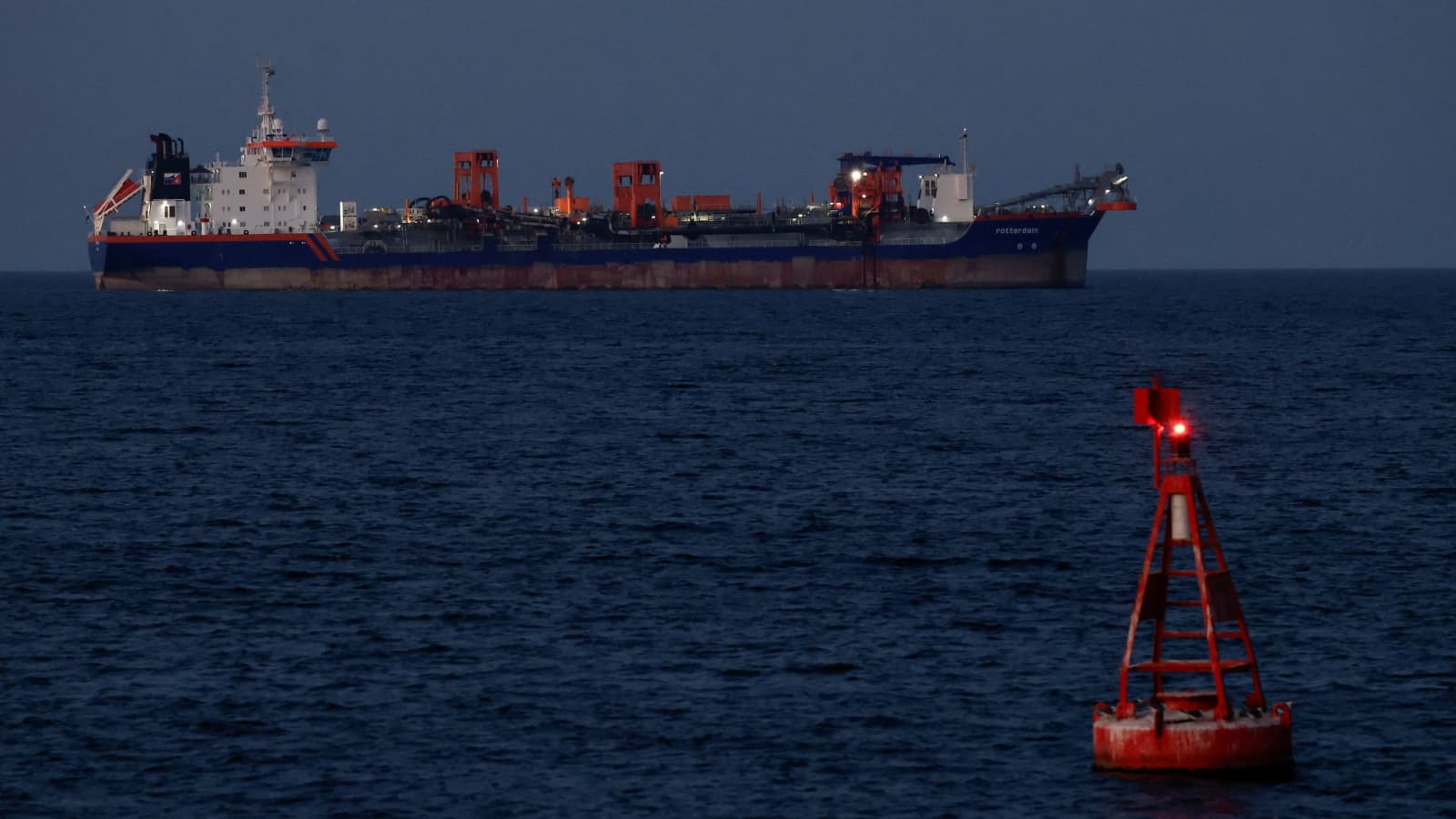
The gravity of the situation lies in the fact that the Strait of Hormuz is not a symbolic passageway in an open war, but one of the world’s most important energy lifelines. According to the US Energy Information Administration, around 20 million barrels of oil per day passed through it in 2024, equivalent to about 20 percent of global petroleum liquids consumption, while the International Energy Agency estimated that around 20 million barrels per day of oil and petroleum products crossed the strait in 2025, nearly a quarter of seaborne oil trade.
Both agencies confirm that alternatives to bypass the strait are extremely limited, meaning that any long-term disruption, even if only partial, would be enough to trigger a shock in prices, marine insurance, transport, and supply chains, at a time when the global economy remains fragile in the face of any new wave of inflation.
A strategy of widening the conflict
In this context, Tehran’s moves do not appear to be governed solely by the logic of responding to strikes, but rather reflect a calculated approach aimed at broadening the scope of the conflict and raising its cost to the highest possible level, so that the confrontation does not remain confined to Iran and its direct adversaries.
Iran realizes that moving the battle into a wider regional arena, by threatening vital maritime corridors and targeting energy infrastructure—or even signaling that possibility—would confront Gulf states and international powers with a more complex equation, in which the war shifts from a bilateral conflict into a comprehensive regional crisis with global economic repercussions.
In this sense, Tehran is seeking to drag the region—especially the states most closely tied to energy markets and maritime trade—into the heart of the conflict, multiplying its political and economic costs for all and forcing parties that were not directly involved to confront its consequences, if not become involved in one form or another.
Energy in the line of fire
Energy appears to have become the most sensitive arena in this war. Days ago, the giant South Pars gas field was hit in an Israeli strike that Reuters described as the biggest escalation so far, especially since the field accounts for about 70 to 75 percent of Iran’s gas production and also supplies the domestic market with electricity, heating, and petrochemicals.
The attack forced Tehran to redirect gas from its exports to Iraq toward domestic consumption, while other reports said gas facilities in Qatar temporarily halted operations, putting pressure on the liquefied natural gas market and raising additional concern over a decline in global supply. At a moment like this, every strike on energy infrastructure becomes more than just a military response; it is an attempt to impose a direct economic cost on both the adversary and the international market at the same time.
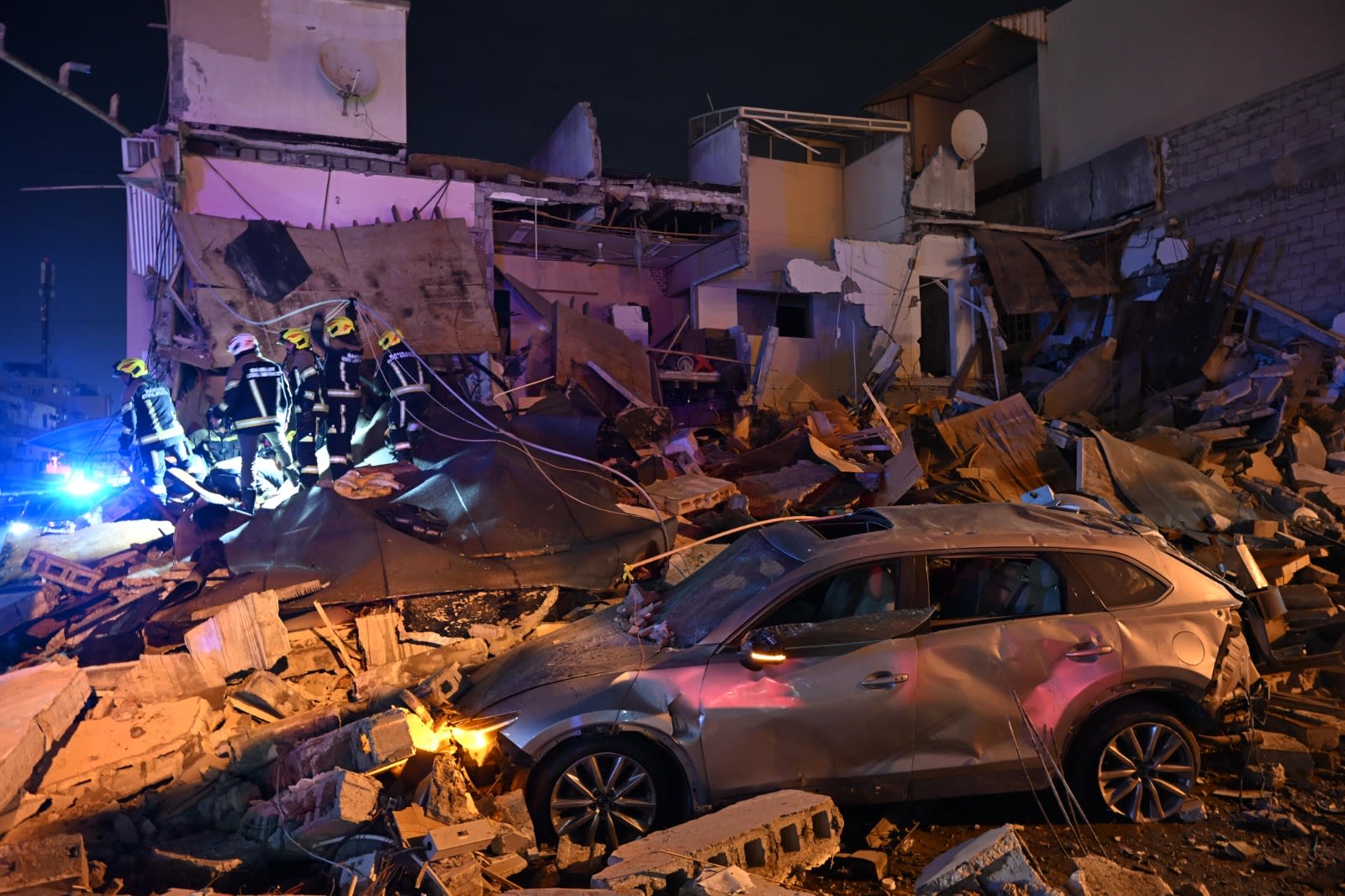
The impact of the war has not remained confined to the Gulf. In southern Israel, Israeli officials announced that Iranian missiles struck the areas of Dimona and Arad, causing extensive damage to buildings and injuries, while some attacks were described as having penetrated air defense systems for the first time in the area surrounding sensitive sites.
According to news reports, Israeli measures included canceling in-person schooling and keeping the home front on heightened alert. These developments take on added significance because they mean the conflict is no longer only about long-range deterrent messages, but about the ability to protect the civilian and economic heartland inside Israel itself, at a time when southern cities have become part of the theater of confrontation rather than its periphery.
The US strategy
In Washington, the strategy does not appear any more coherent. Alongside public threats to strike Iranian energy facilities, reports spoke of studying military options including imposing a naval blockade or seeking tighter control over routes leading to the Gulf, while the US administration sent contradictory signals between talking about ending military involvement and continuing to reinforce its military deployment in the region.
This duality places the White House before a dilemma: escalation may impose a painful cost on Iran, but it may also push it toward broader responses targeting American and allied interests in the Gulf. Retreat, meanwhile, carries its own domestic political cost and raises questions about US deterrence at a moment when capitals are racing to gauge the limits of American power.
Regionally, the Gulf states are no longer merely anxious observers, but states whose economic foundations are directly threatened. After the strikes on energy facilities in Iran, Tehran issued warnings to evacuate certain sites in Saudi Arabia, the UAE, Qatar, and Bahrain, reflecting a clear desire to widen the circle of pressure to states whose oil and gas infrastructure constitutes a major part of the world’s surplus energy capacity.
By contrast, these states stress that any prolonged disruption to navigation through Hormuz or Bab al-Mandab would directly hit their exports, future contracts, and investor confidence in the region’s stability. Therefore, the Gulf is pressing toward de-escalation, not out of abstract love of calm, but because every additional day of war multiplies the cost of insuring tankers, raises risk premiums, and threatens expansion, production, and export plans.
Rapid international action
As the international dimension also widens, the foreign ministers of the G7 announced their readiness to take measures to protect global energy supplies and support navigation security in the Strait of Hormuz. The European Union also called for halting strikes targeting energy and water infrastructure in the Middle East, and the International Maritime Organization stressed that the safety of ships and seafarers must remain a top priority.
Even Japan, which depends heavily on Gulf oil, said it may consider mine-clearing operations in Hormuz if a ceasefire is reached. These positions reflect not only diplomatic concern, but a practical acknowledgment that the war is no longer a purely Middle Eastern affair, but a direct threat to global economic security.
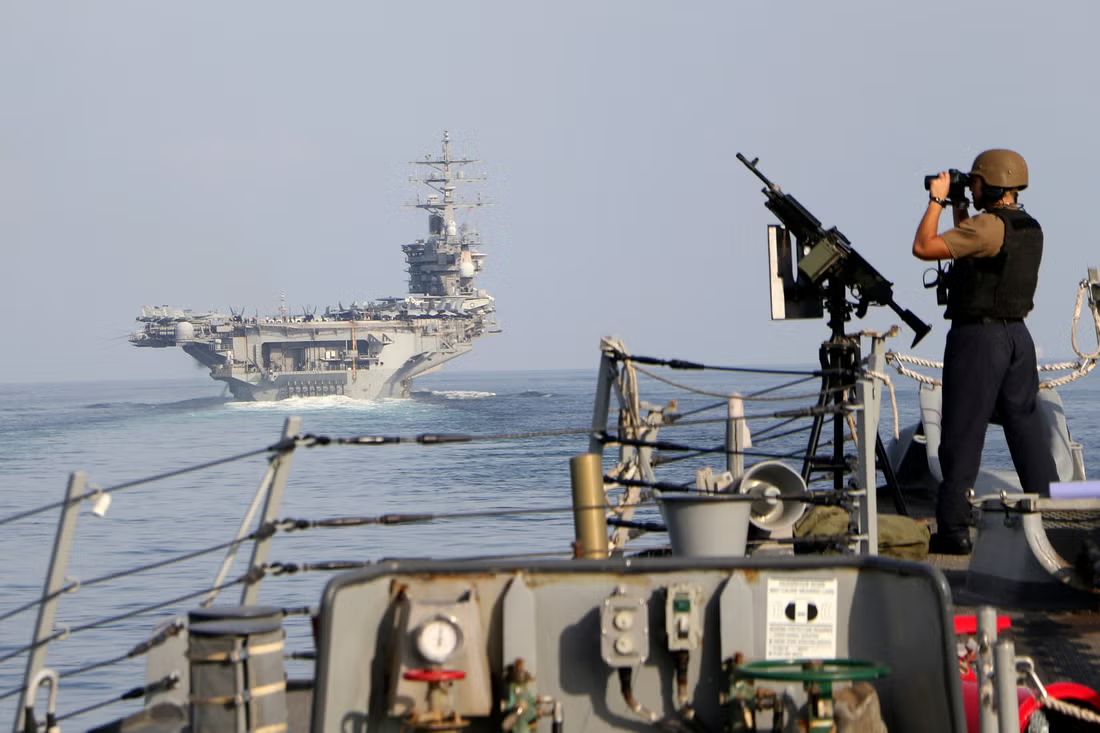
In a joint statement issued on Saturday in a firm tone and signed by twenty-two countries including the UAE, Bahrain, the United Kingdom, France, Germany, Italy, the Netherlands, Japan, Canada, South Korea, New Zealand, and other European states, the signatories condemned in the strongest terms the recent Iranian attacks on unarmed commercial vessels in the Gulf, the attacks on civilian infrastructure including oil and gas facilities, and the effective closure of the Strait of Hormuz by Iranian forces.
The statement also called on Tehran to immediately cease its threats, mine-laying, drone and missile attacks, and all other attempts aimed at obstructing commercial navigation through the strait, and to comply with Security Council Resolution 2817. This unified international position reflects a shift in the way the crisis is being handled, as major powers now see Tehran’s actions as a direct threat to global maritime security, not merely a passing regional dispute.
Warnings of grim scenarios
Amid this explosive scene, analytical voices emerged warning of grim scenarios that could reshape the entire region.
Iranian researcher Trita Parsi, of the Quincy Institute, said the latest escalation points to a dangerous slide toward open confrontation, ruling out Tehran’s compliance with American threats on the grounds that they are unrealistic.
Any potential American strike will be met with a wide-ranging Iranian response targeting energy facilities in the Gulf region, and may extend to include targets inside Israel, within a strategy of mutual deterrence that goes beyond conventional calculations.
Iranian researcher Trita Parsi via X
In his assessment, ignoring this scenario reflects political naivety at a time when global markets are becoming increasingly fragile, as any escalation is expected to lead to a sharp rise in oil and gas prices, with direct repercussions on living costs and food prices even inside the United States, in addition to complicating supply chains and closing more vital trade routes.
He also described the current logic of escalation as leading everyone into a losing equation, arguing that the realistic way out lies in serious efforts to find an off-ramp that allows both sides to save face, away from the logic of imposing defeat or humiliation.
Escalation beyond geography
From a different angle, military analyst Patricia Marins warned that Tehran may not be heading toward de-escalation, but rather engaging in a broad escalatory course that goes beyond the limits of conventional confrontation.
Writing on X, she ruled out the possibility that Iranian responses would remain confined to a narrow geographic scope, suggesting that Tehran may resort to targeting vital infrastructure in the region, including electricity networks, attempting to disrupt undersea internet cables, and threatening navigation in the Bab al-Mandab Strait.
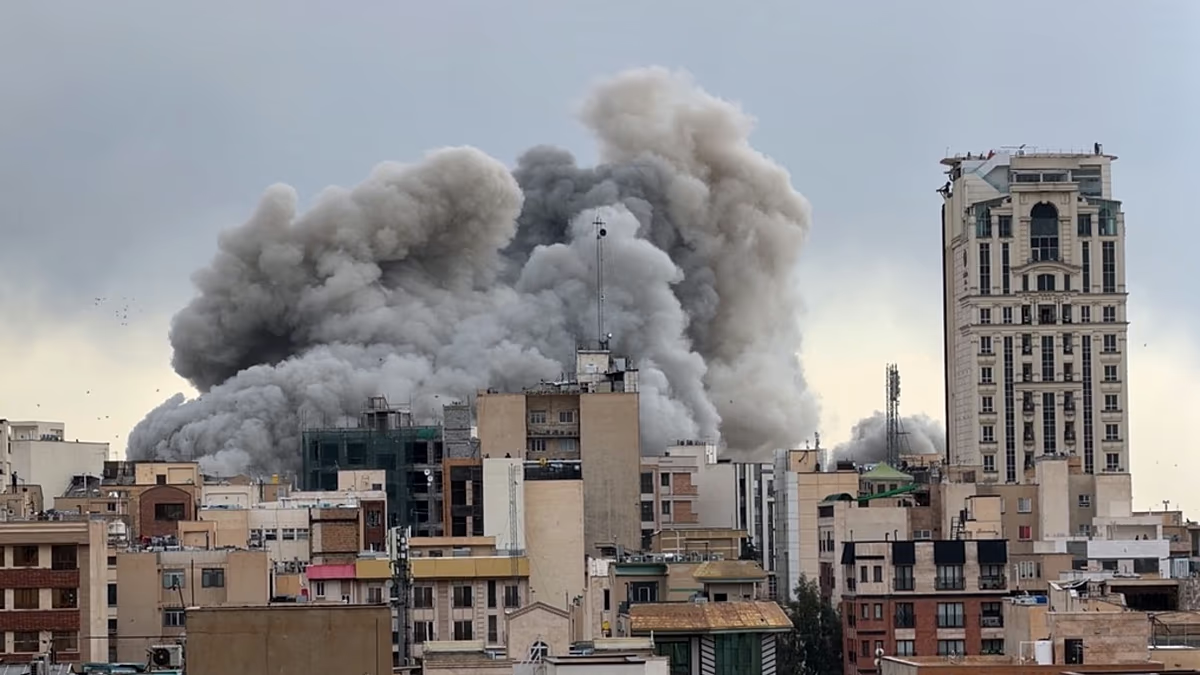
Such steps, according to Marins, would disrupt global supply chains and raise regional tensions to unprecedented levels, reflecting irresponsible behavior aimed at expanding the conflict and forcing the Gulf states to become involved in it rather than containing it.
This approach, according to the analyst, carries grave strategic risks not only for the region’s security but for the stability of the global economy as a whole, given the acute interconnection between energy security and freedom of maritime navigation.
A dangerous crossroads
As for Israeli expert on Iranian affairs Danny Citrinowicz, he went further, considering that field and political indicators point toward an extremely dangerous escalation scenario. He stressed that reopening the Strait of Hormuz under current conditions appears unlikely, and that Tehran is moving to escalate its threats by signaling that it may ignite a Gulf front, especially if the United States proceeds to target vital infrastructure inside Iran.
In a post on X, Citrinowicz warned that any strike of this kind would not remain contained, but would accelerate the involvement of other regional parties in the confrontation, foremost among them the Houthis, who would find it difficult to remain outside the circle of conflict given the interconnection of the fronts.
He also pointed to a clear contradiction in American rhetoric between affirming support for the Iranian people on the one hand and threatening to destroy infrastructure on the other, considering that this approach based on verbal deterrence will not achieve its aims, but may instead push Washington to a decisive crossroads: either proceed with escalation, with all the risks of sliding into a broad regional war, or retreat in a way that may be interpreted as weakening the credibility of American deterrence.
The Iranian leadership will seek during any warning period to send operational messages through limited targeting of infrastructure in one of the Gulf states, in a step aimed at proving readiness and the ability to widen the scope of engagement, at a time when the Gulf states are moving at an accelerated pace to contain the escalation in the realization that they will be on the front line of the direct repercussions.
Israeli expert on Iranian affairs Danny Citrinowicz via X
The region appears to be facing a decisive moment in which traditional deterrence or the language of mere threats is no longer sufficient to contain the crisis. The scenarios on the table range from a long war of attrition extending to vital infrastructure, into which Iran may draw the Gulf states, leading to an open regional confrontation that could involve multiple parties, all the way to a stage in which international powers may be forced to intervene directly to protect maritime navigation.
- How the Houthis Are Choking Yemen’s Peace Efforts with a Broad Escalation on the Ground
- Economy in the Wind: How Yemenis Are Paying the Price of Disrupted Shipping Routes
- Houthi Summer Centers: Factories for Indoctrination and Raising a “Scream” Generation
- The “Coalition of Necessity”: What Costa Rica’s Terrorism Designation of the Houthis Signifies
- Mojtaba Khamenei Runs Iran from His Bed as Photos Vanish and the Supreme Leader Makes a “Voice-Only” Appearance