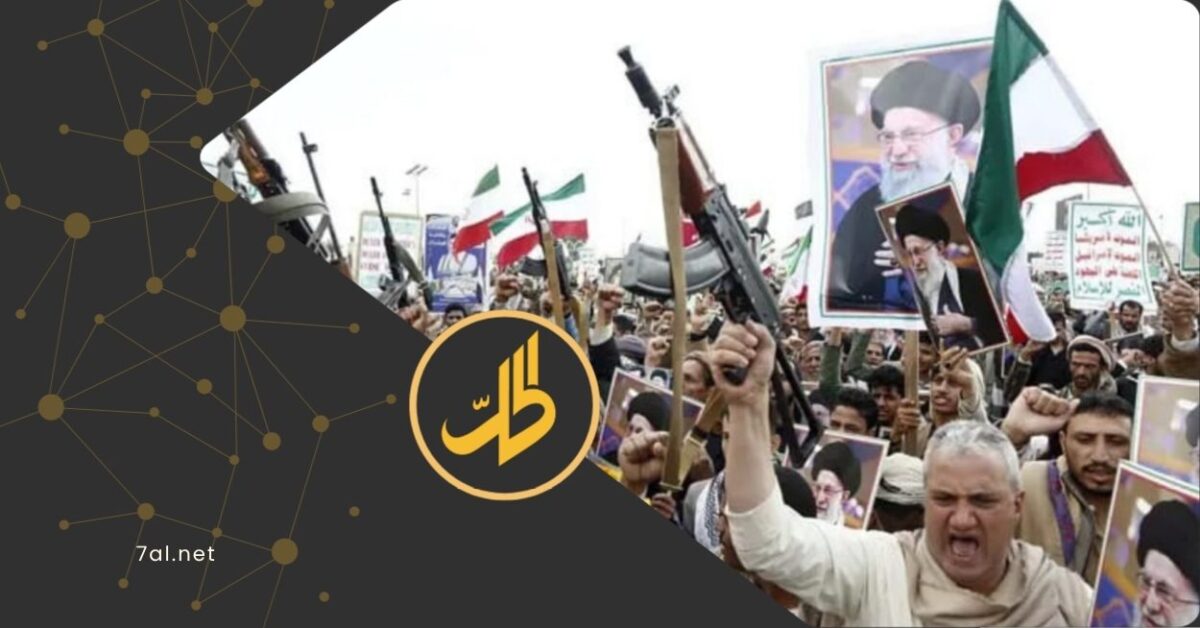
The Iran-aligned Houthi group announced late Saturday that it had carried out a new military attack targeting what it described as “vital and military targets” in southern Israel, marking the second such escalation within hours, after the first strike the group had announced since the outbreak of the war in the region.
The group’s military spokesperson said the attack was carried out “with a salvo of cruise missiles and drones,” as part of what it describes as “military support” for allied fronts, stressing that the operations “will continue in the coming days” unless what it calls the “aggression” against Iran and its allies stops.
Meanwhile, Israeli media reported that a drone launched from Yemen toward the city of Eilat had been intercepted, in addition to a second missile that was also intercepted without any losses being recorded. Reports also quoted military officials as saying that the response is “coming” and that Tel Aviv is weighing its timing and form in light of the widening scope of the confrontation.
The repeated Houthi attacks over a short period confirm a practical shift from the rhetoric of “readiness” to actual implementation, consolidating the group’s place in the course of regional escalation, after weeks of merely hinting at intervention.
Calculated escalation or battlefield impulsiveness?
Despite the escalatory tone, the succession of operations raises questions about the nature of this involvement and its limits. The second attack, which came after direct warnings of “military intervention,” appears closer to an attempt to cement the Houthi group’s position within the response equation than to a headlong rush toward confrontation.

By contrast, Israeli assessments downplay the direct military impact of these attacks, with some sources describing them as a “distraction factor,” indicating that priority remains focused on Iran, while acknowledging that opening a front from Yemen adds further complexity to the situation.
Divergence within the Houthi group
Mohammed al-Bukhaiti, a member of the Houthi group’s political bureau, said in a television interview that “the military side rushed the decision,” an unusual statement that points to internal debate over the timing and nature of the escalation.
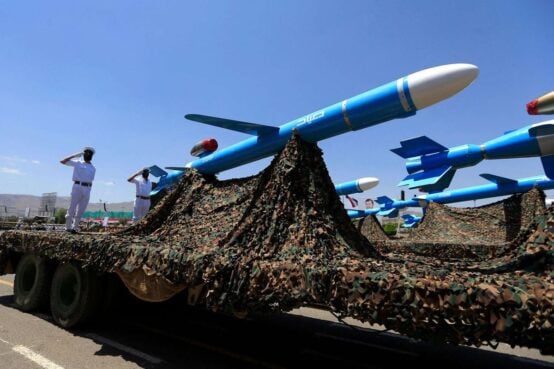
This comes at a time when the Houthi group had tied its military intervention to a set of conditions, including an expansion of the war or the use of the Red Sea in operations against Iran.
However, carrying out the attacks despite those conditions not being met, according to what was announced, reinforces the hypothesis that there is a divergence in assessments between one wing pushing toward direct involvement and another that appears more cautious in its calculations.
This Houthi escalation intersects with official Yemeni accusations linking the group’s moves to Iranian policies, arguing that the timing of the operations confirms a persistent effort to ease pressure on Tehran by expanding the scope of the confrontation.
By contrast, the Houthi group is keen to present its operations as an independent decision, in rhetoric repeated alongside the expansion of its field movements, leaving room for interpretation between the local and regional dimensions of the decision to escalate.
Open risks
With the repeated strikes, the chances of a response are increasing, which could open the door to targeting sites inside Yemen, in a scenario that carries a direct cost for the situation inside Yemen.

Researchers expect that any Israeli response against the Houthi group, if it happens, will be very precise this time, given Israel’s preoccupation with other fronts and its limited capacity to respond.