In response to the shelling of the Syrian Golan Heights with a volley of rockets launched from the western countryside of Daraa, with no reports of casualties, Israel targeted the Abidin military barracks on Tuesday evening with more than seven missiles. The site lies between the villages of Abidin and Jamla in the Yarmouk Basin area in the western countryside of Daraa province, and is one of the Syrian army’s military positions near the Syrian Golan.
The death toll from the Israeli raids on the radar battalion near the town of Qarfa and the 12th Brigade in the Izraa area in the northern countryside of Daraa, which struck missile and weapons depots as well as an air-defense radar, rose to 11 Syrian military personnel, including four officers, while at least 10 others were wounded.
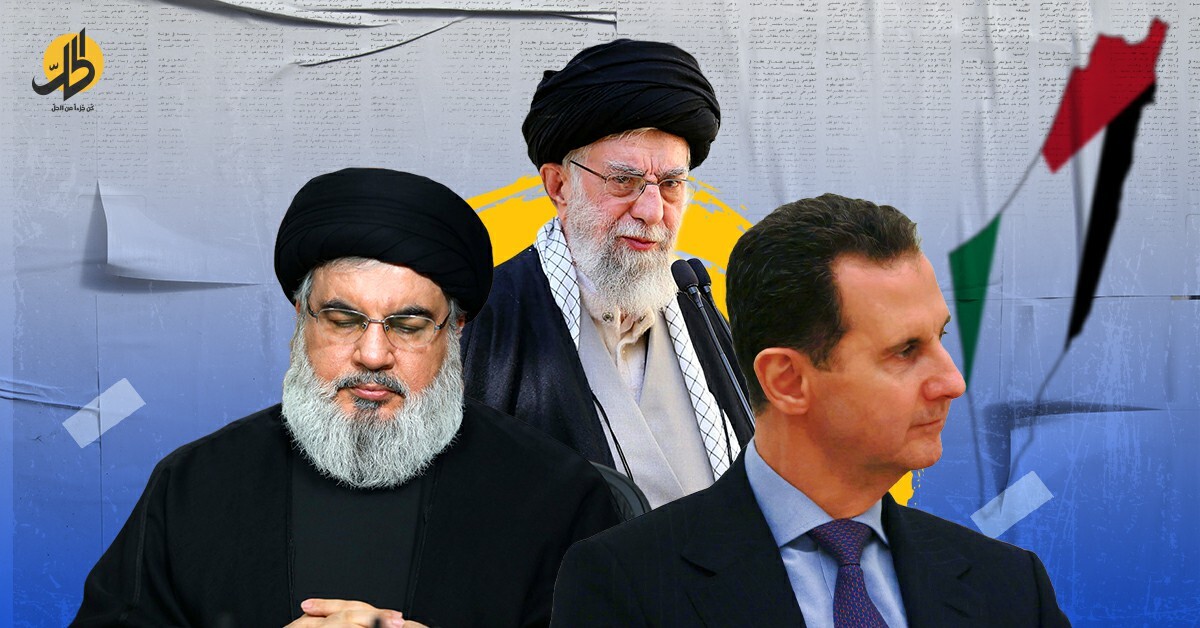
Today, we find ourselves at the center of a heated scene, as the secretary-general of Lebanon’s “Hezbollah,” Hassan Nasrallah, known as “the Sayyed,” and Iran’s Supreme Leader Ali Khamenei present a highly unusual picture of internal conflicts threatening the “Axis of Resistance.” As is well known, this axis includes many parties, from Iran and “Hezbollah” to “Hamas” and the government in Damascus, all of them playing roles in this complex story.
The future of the Iraqi-Syrian-Lebanese axis tied to Iran in current regional developments resembles dancing on a knife’s edge, especially as Iran is pressuring Palestinian factions in the West Bank and Bashar al-Assad in Syria to wage the war instead of Lebanon’s “Hezbollah.” This indicates that there is a real dispute within the “Axis of Resistance” over who will start the war and bear its cost. The inevitable result is that an internal explosion is imminent, and its repercussions and dangers will be greater than the Beirut port explosion.
The “Axis of Resistance” Is in Danger of Splitting
The positions, plans, and proposals currently under discussion are certainly confined to the rooms of the leaders of the so-called “Axis of Resistance,” while the rank and file on whom this axis rests are far removed from what is being planned. They are nothing more than instruments for carrying out whatever crosses the mind of the Iranian “Supreme Leader,” whatever matches the wishes of the Lebanese “Sayyed,” and whatever fulfills the aims and desires of the Syrian president.
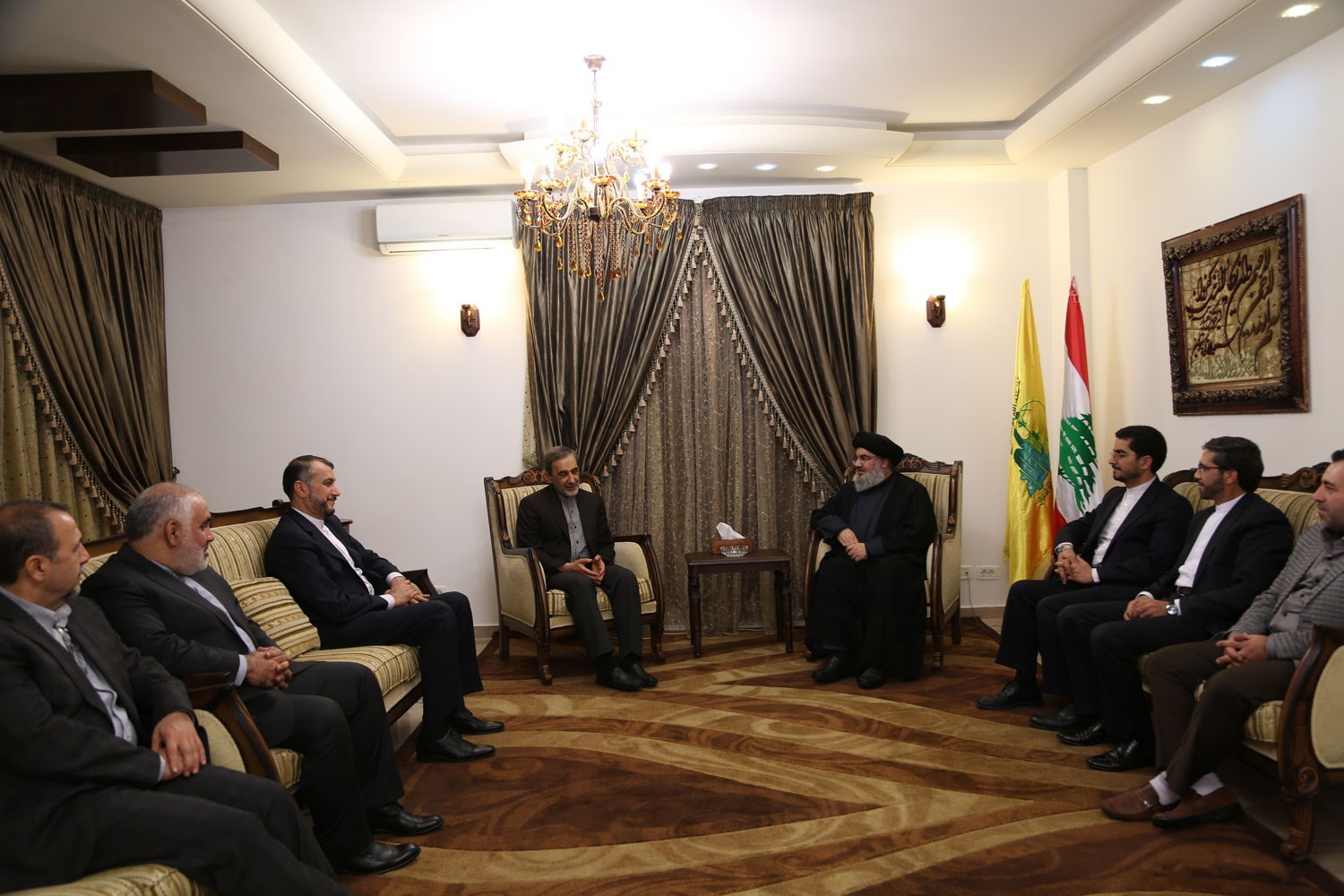
Kuwait’s Al-Jarida newspaper quoted a source in Khamenei’s office as saying that the latter received a report from Esmail Qaani, commander of the Quds Force of the Islamic Revolutionary Guard Corps, who runs the operations room of the Iranian axis in the war between Israel and the “Hamas” movement, on the field situation in the confrontation against Tel Aviv, the fronts in Iraq, Syria, Lebanon, and Yemen, and preparations for the possibility of a broader war with Israel and the United States.
As long as Tel Aviv is preparing all its strength against “Hezbollah,” then, according to Qaani’s directives, efforts must be made to open unexpected fronts instead of moving in the direction Israel wants. This would be done by activating the front in the West Bank and sending a message to Syrian President Bashar al-Assad about the need to open the Golan front if necessary, and that forces loyal to Iran in Syria and Iraq are ready to take over that front without the intervention of the Syrian army.
On October 15, Iran issued a sharp public warning to Israel when its foreign minister said: Stop your attack on Gaza or we will be forced to take action. But only hours later, Tehran’s mission to the United Nations softened its hardline tone and reassured the world that its armed forces would not intervene in the conflict unless Israel attacked Iran’s interests or citizens.
By contrast, Damascus appears to have taken the French warnings seriously. Despite the bombing of Aleppo and Damascus airports four consecutive times and putting them out of service in less than 10 days, there was no violent response; rather, it remained silent, indicating that it does not want to get involved in this war, and that what is happening on the Golan border is beyond its control and is being carried out by groups loyal to Tehran acting on their own initiative.
Reuters reported, citing Iranian officials with direct knowledge of the thinking inside the ruling clerical establishment, that Iran finds itself facing a dilemma as it tries to manage the escalating crisis, and that standing by as a spectator during any broad Israeli ground invasion of the Gaza Strip would seriously undermine the strategy Iran has pursued for more than four decades to expand and strengthen its regional influence.
Accordingly, the skirmishes taking place in southern Lebanon, which have led to the killing of 37 Hezbollah fighters, suggest that Nasrallah has already decided not to be dragged into an open war with Israel, for a number of reasons, foremost among them preserving what the party has achieved politically and economically over the past 17 years. It is now closer than anyone else to ruling Lebanon, in addition to the economic and social reasons that prevent it from entering a battle that is none of its business.
Will the Axis Explode from Within?
According to what is being circulated in the corridors of the Iranian government, the studies that reached the “Supreme Leader” reviewed the various military, diplomatic, and domestic priorities that Tehran is trying to balance, as any major attack against Israel, backed by the United States, would inflict heavy losses on Iran and stir popular anger against the ruling clerical establishment in a country already suffering from an economic crisis.
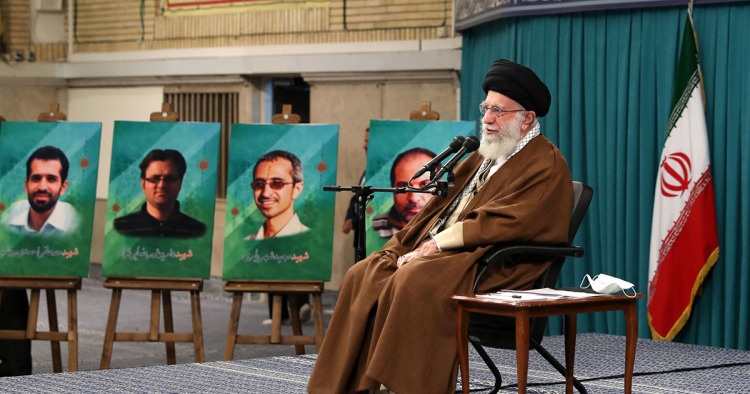
According to Reuters, a consensus has currently been reached among senior decision-makers in Iran to give their blessing to the limited cross-border strikes carried out by Lebanon’s “Hezbollah” against Israeli military targets more than 200 kilometers from Gaza, as well as limited attacks by other allied groups in the region against American targets, while avoiding any major escalation that would drag Iran itself into the conflict.
In the same context, and this is what Iranian officials did not tell Khamenei, there is an impasse in implementing Tehran’s orders among its allies in general. Here the talk is about Assad, Nasrallah, and Iraqi Prime Minister Mohammed Shia’ al-Sudani, while the Revolutionary Guard, for all its might, no longer has its orders carried out except by local groups whose main concern is simply to keep receiving money.
Accordingly, the one truth plainly visible is that “Hamas” was left alone in this situation into which Tehran pushed it. The “Unity of the Arenas” agreement evaporated and disappeared, not only because it was nothing more than a slogan used to emotionally mobilize the public and steer Tehran’s projects from behind the scenes, but because Iran’s religious leadership discovered that the allies on whom it spent billions said no to its face.
The three noes that came out of Damascus, Baghdad, and Beirut were driven by fear of a real confrontation with America and Israel. Thus, Khamenei and the Revolutionary Guard behind him were left with only some local groups and the Houthi group, which is 2,300 km from the nearest Israeli military point.
The “Axis of Resistance” Turns Against Itself
Iran is believed to be seeking to preserve the rising momentum of the Palestinian armed factions and place Israel under increasing pressure. Accordingly, the Iranian leadership in Tehran, acting out of necessity rather than choice and seeking to avoid a split in the axis it sought to dominate through funding, arming, and training proxies in the region, will agree to two possible scenarios: the first is already underway, while the second is still awaiting occurrence.
The first scenario involves carrying out strong strikes from the northern Lebanese front, while the second, which is expected to happen, consists of mobilizing all of Iran’s arms on the northern front in addition to forces loyal to it, but without crossing the limits of guerrilla warfare, with the aim of preventing the “Axis of Resistance” from turning against itself.
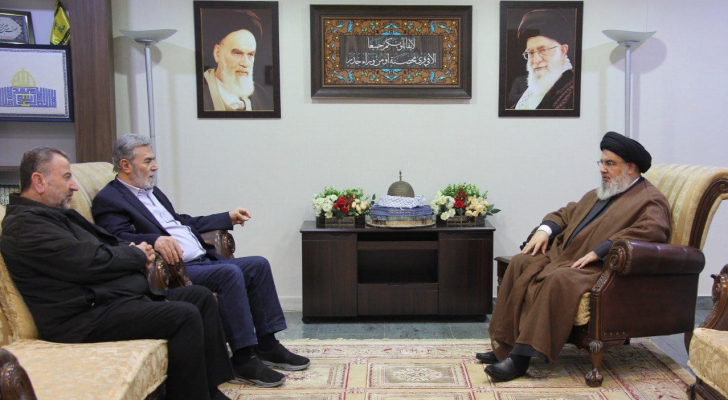
Although he has not appeared in the media or delivered any speech since the launch of Operation “Al-Aqsa Flood” in Gaza, the image of the meeting that brought together Nasrallah, the secretary-general of the Islamic Jihad movement, Ziad al-Nakhalah, and the deputy head of the political bureau of the “Hamas” movement, Saleh al-Arouri, explains the reality of the situation.
The image broadcast by the party’s channels was described by followers of “Hamas” and “Islamic Jihad” as resembling a superior with subordinates, while followers of the Lebanese “party” said it was a session of the “Sayyed,” modeled on the Iranian “Supreme Leader,” in which he issues orders to those considered loyal to him.
Here it seems that Nasrallah briefed al-Arouri and al-Nakhalah on the party’s position regarding the war with Israel. For that reason, Hezbollah’s channels did not present any important information about the meeting, and merely stated that the one known as the “Sayyed” discussed the recent events in the Gaza Strip, the developments that followed on every level, and the continuation of coordination and constant follow-up of developments—a journalistic cliché repeated in every meeting.
Iranian inaction on the ground can be seen as a sign of weakness on the part of the so-called “Axis of Resistance”—and what is meant here specifically is the leaders of this axis, not its supporters from the class that carries out its agendas, which has represented Tehran’s main instrument of influence in the region for decades. This will certainly affect Iran’s standing, as it has long promoted itself as defending the Palestinian cause, refusing to recognize Israel, and considering it a “despicable occupier.”
- How the Houthis Are Choking Yemen’s Peace Efforts with a Broad Escalation on the Ground
- Economy in the Wind: How Yemenis Are Paying the Price of Disrupted Shipping Routes
- Houthi Summer Centers: Factories for Indoctrination and Raising a “Scream” Generation
- The “Coalition of Necessity”: What Costa Rica’s Terrorism Designation of the Houthis Signifies
- Mojtaba Khamenei Runs Iran from His Bed as Photos Vanish and the Supreme Leader Makes a “Voice-Only” Appearance