

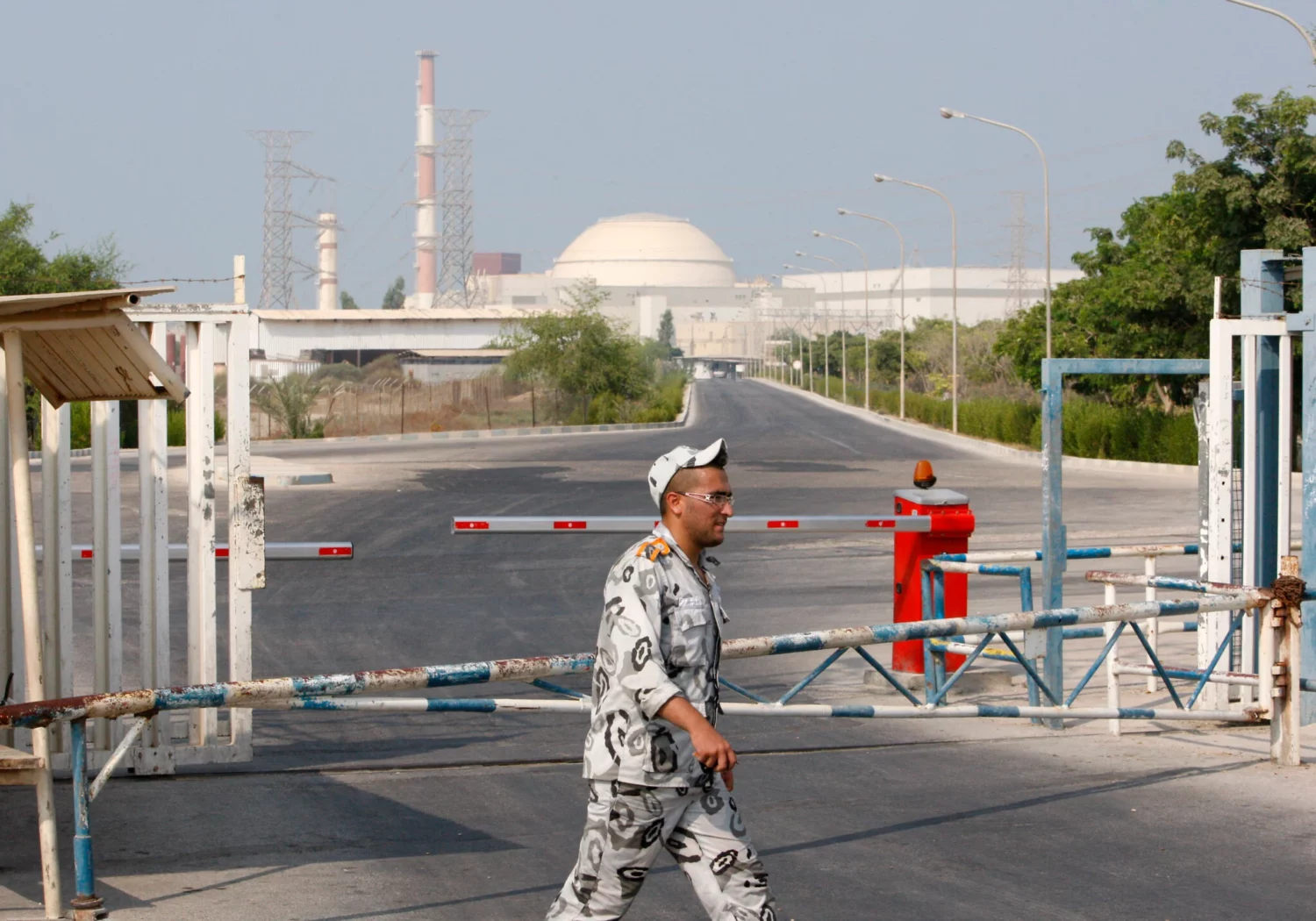
In a notable development that places nuclear facilities at the heart of the ongoing military confrontation, the International Atomic Energy Agency (IAEA) announced today, Wednesday, that it had received an official report from the Iranian authorities stating that the Bushehr nuclear power plant site was directly struck by a projectile on Tuesday evening.
While Tehran confirmed that the damage affected the area surrounding the plant, located on the coast of the Gulf, with no injuries or radioactive leak, the incident has triggered a wave of warnings and questions over whether Iran is signaling the use of the “nuclear catastrophe card” as a strategic pressure tool in the intensifying regional conflict, especially after recent developments and the reported killing by the Israeli military of Ali Larijani, identified in the source as the secretary of Iran’s Supreme National Security Council.
Projectile Ambiguity and International Warnings
The IAEA said in a brief statement that the Iranian side had informed it that a projectile struck an area adjacent to the plant, without providing precise details about the nature of the projectile or the party responsible.
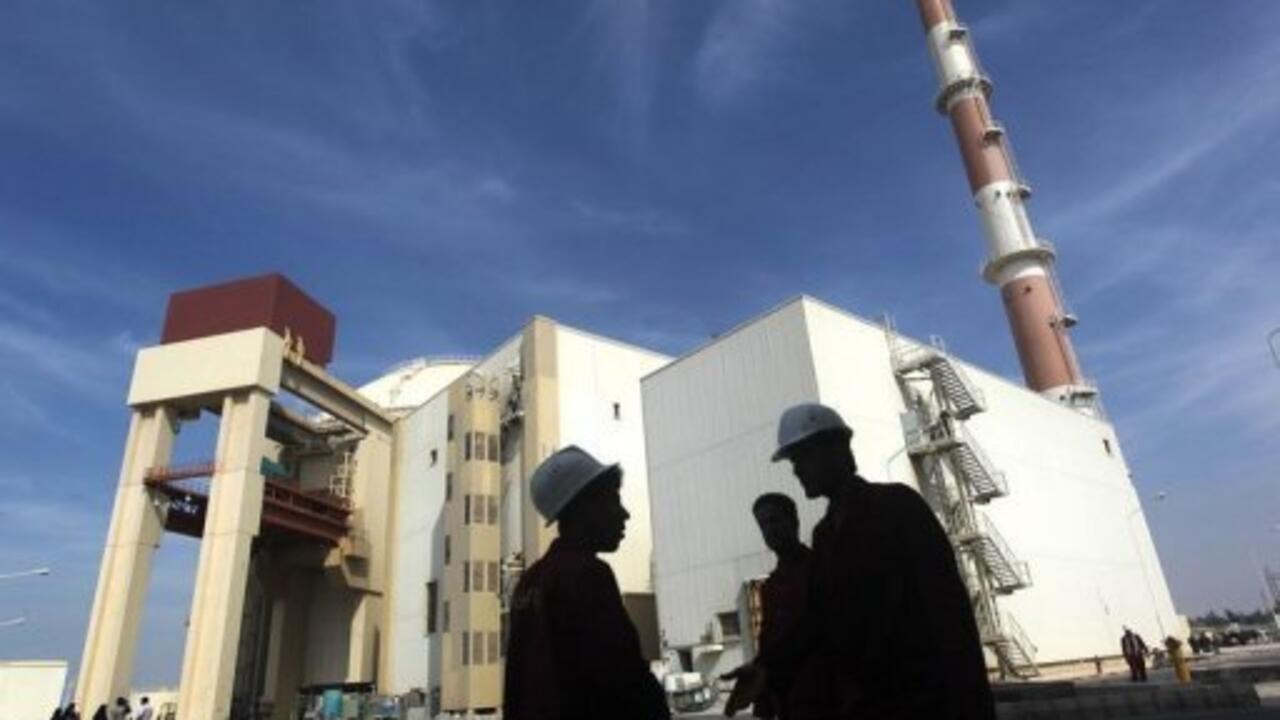
Immediately, the agency’s director general, Rafael Grossi, renewed his call for all parties to exercise the utmost restraint, warning of the danger of targeting nuclear facilities and of a possible radiological catastrophe affecting the entire region.
In a related development, Russia’s state-owned Rosatom, which is responsible for operating and building the plant’s units, strongly condemned the attack, describing it as a dangerous escalation that threatens the safety of the facility and its personnel. Rosatom chief Alexey Likhachev said radiation levels remain normal, but revealed that Russian experts are still being evacuated from the site because of the deteriorating security situation, after Moscow had warned of a possible Israeli strike on the area surrounding the plant where its experts are present.
Deterrence Messages Beyond the Incident
In this context, Yemeni activist Rashid Maarouf offered an analysis of the incident, arguing that the IAEA announcement about Iran’s notification—without clarifying the nature of the projectile, the extent of the damage, or the party responsible—carries implications that go beyond the technical dimension and amount to strategic deterrence messages directed at the United States and neighboring countries.
Maarouf wrote in a post on X that this announcement, in its brief and open-ended wording, may be understood as an indirect signal that Tehran is prepared to use what he called the “nuclear danger card” if its vital interests—especially Kharg Island—come under any direct military threat.
According to this assessment, Iran’s signaling that a nuclear facility could be exposed to a strike or a major incident falls within a deterrence strategy based on raising the cost of escalation to catastrophic levels. He noted that the potential risks of any serious incident in Bushehr cannot be underestimated, invoking the precedent of the Chernobyl disaster, which caused widespread radioactive contamination extending for hundreds of kilometers and led to the evacuation of vast areas that remained uninhabitable for decades.
In this context, he pointed to the sensitive geographic location of the Bushehr plant on the Gulf coast, relatively close to vital energy routes and the shores of several countries, meaning that any potential radioactive leak could spread beyond Iran’s borders and affect the Gulf environment as a whole.
Catastrophic Scenarios
Maarouf added that the worst-case scenarios could include disruption to shipping in the Strait of Hormuz, one of the world’s most important energy arteries, as well as severe damage to marine resources, and the possibility that neighboring countries could be forced to undertake large-scale evacuations of coastal areas, especially states with limited territory and high population density.
He concluded by stressing that this type of message reflects a shift in the rules of engagement: pressure tools are no longer limited to direct military action, but now also include signaling cross-border catastrophic scenarios, placing the international community before a complex test in how to contain the escalation and prevent the region from sliding into a confrontation with consequences that cannot be contained.
It appears that the war involving Iran has begun to move from merely threatening the use of direct military force to leveraging geography and existential and environmental risks as tools of pressure on the American-Israeli side as well as the Gulf states. Bushehr plant is no longer merely a power-generation facility; it has become a central element in Iran’s deterrence equation, through which Tehran seeks to raise the cost of any military adventure against it to levels whose consequences the international community cannot bear.
- How the Houthis Are Choking Yemen’s Peace Efforts with a Broad Escalation on the Ground
- Economy in the Wind: How Yemenis Are Paying the Price of Disrupted Shipping Routes
- Houthi Summer Centers: Factories for Indoctrination and Raising a “Scream” Generation
- The “Coalition of Necessity”: What Costa Rica’s Terrorism Designation of the Houthis Signifies
- Mojtaba Khamenei Runs Iran from His Bed as Photos Vanish and the Supreme Leader Makes a “Voice-Only” Appearance