

Magical practices are among the earliest social practices known to humankind throughout history. They are a social and cultural phenomenon present in every human society, spreading “especially during periods of transition and rapid social change—that is, when relations of conflict and personal disputes become more important than traditional relations and periods of stability.”
This phenomenon has received sustained attention from sociologists and anthropologists, such as Malinowski, who argued in his studies that magic arose from primitive man’s inability to harness and understand nature, leading him to resort to magic because he lacked a rational, logical sensibility. It is what he described as reducing pressure and adopting magic as a compensatory response to what proved impossible to understand; consequently, one may say that magic begins where technology ends. Malinowski also يرى that magical beliefs are, in essence, a supportive mechanism that helps the individual confront the difficulties he faces while trying to satisfy his needs. This becomes rooted in people’s culture and forms an important part of their representations and beliefs, which are acquired from two sources: first, education, and second, customs and traditions passed down within the framework of the collective conscience.
Magic is associated with verbal and practical rituals through which individuals release the anxiety arising from a sense of possible danger and threat. Among these magical practices is “tasfih,” a phenomenon practiced by the peoples of the Maghreb, including Tunisia. We discussed this phenomenon in our previous article, related to “the social representations of the female body in public space.” For those who did not read that article, we pointed out how a girl’s virginity is regarded as representing “social honor,” and how the importance of her body lies in preserving that virginity, which constitutes symbolic capital first for the family, then for the clan, the tribe, and society as a whole. This is what we observe in all patriarchal societies.
We also highlighted how women’s entry into the public sphere, seen as an essentially male space, has been viewed as a threat to male authority and dominance, as well as to the prevailing system of values and norms that regards women as the source of all forms of deviance, especially sexual deviance. For this reason, the phenomenon of “tasfih” is one of the most important ritual practices used to ease the fear of losing social capital, embodied in the symbolism of virginity and honor. It is a practice that affects both males and females, though it is directed mostly at females.
Tasfih in Social Representations
Here we begin with popular proverbs that embody social representations of women in Tunisian society. Despite changing views of women and their role in society, unfortunately these proverbs remain deeply rooted in many Tunisian families as sacred truths beyond dispute or debate. Among them is: “Girls are oleander,” with oleander being a bitter plant good for nothing. We also find: “A boy is the family’s support, and a girl is a loss,” meaning that the boy represents the family’s extension and continuity, while the girl is seen as a burden on her family.
In another popular saying, we find: “Girls bring ruin, while the boy is blameless until the shroud,” meaning that girls are seen as a source of misfortune, whereas males are treated as beyond reproach until death. As for honor, there is the saying: “If she does not bring shame, she brings the enemy to the doorstep,” meaning that a girl either brings disgrace to her family or invites danger to it. In another proverb we find: “Whoever has a girl in the house has a burning oven,” meaning that having a girl at home is like living with a constant source of danger.
Through these popular examples, we can discern women’s inferior status compared with men: they are seen as a source of threat to their family and its social capital. Therefore, “tasfih,” despite being religiously forbidden, is considered the only means of protecting this capital. It is a process intended to fortify a woman’s body so that she does not engage in sexual relations outside the legitimate religious and social framework. Through this process, a close bond is formed, represented by a “jinn” that protects and guards the female body until the moment of her wedding. It is a folk custom aimed at preventing any man from having intercourse with a “sealed” woman.
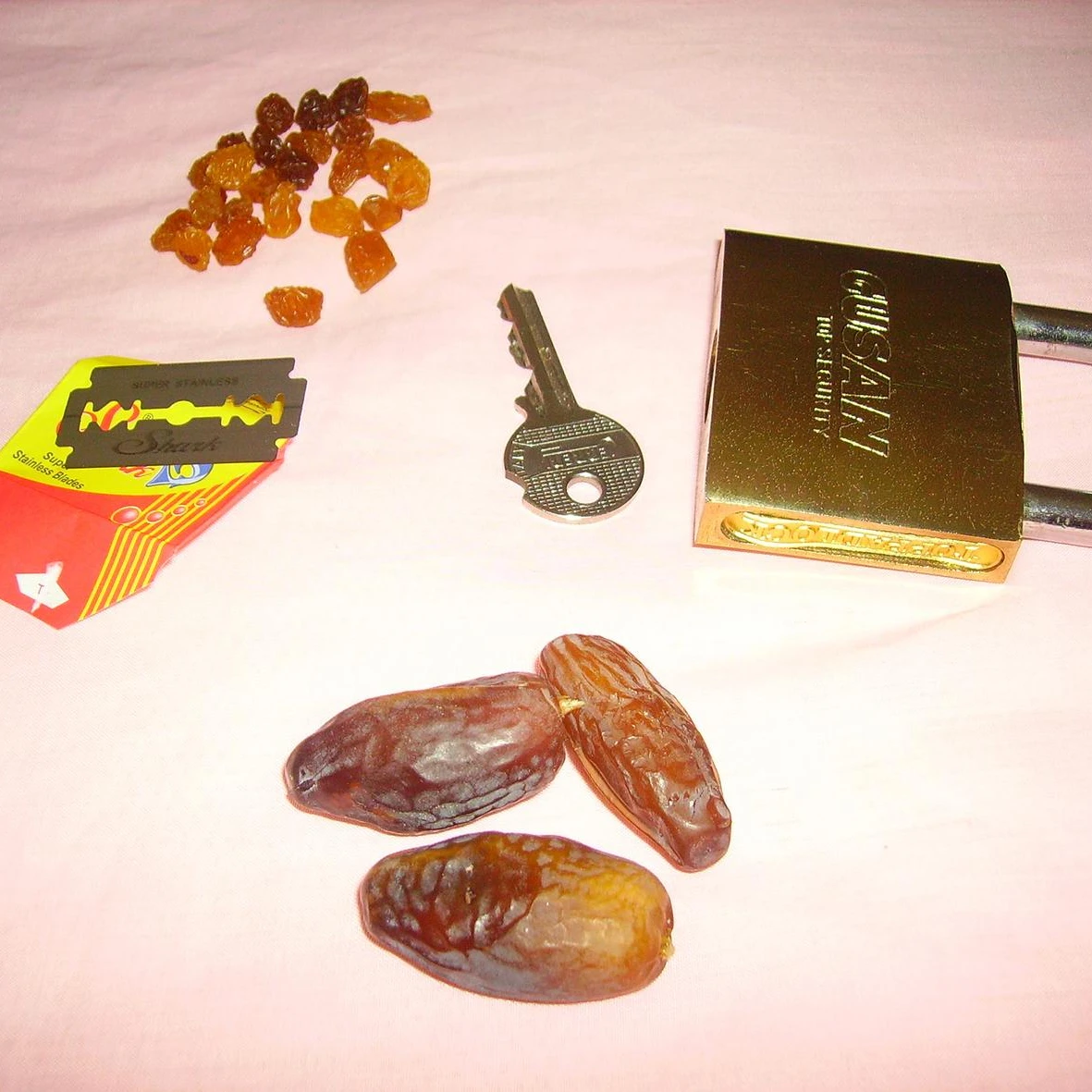
In the previously mentioned article, we detailed the “tasfih process,” whose tools differ from one region to another, though the common elements are the blood of the “sealed” girl and the spoken formula uttered during the ritual: “I am a wall and other people’s son is a thread,” a formula that is reversed when the binding is undone on the wedding night.
Likewise, “sugar and raisins, dates, the spindle, and the loom” are all means used in carrying out the “tasfih process.” Here we can see that the female body is the body of “them,” not the body of “her”; in other words, we are speaking of a collective body, with no place for an individual body. This is what the social and moral norms governing the “social body,” as Auguste Comte called it, prescribe. Males, too, are not entirely removed from such practices, though of course not in the same way as girls. This practice is usually performed by some conservative and religious families to protect their sons from illicit sexual relations, in order to avoid falling into what is religiously forbidden, and also to protect them from sexually transmitted diseases, especially in light of the rising number of people infected with AIDS. Tasfih for boys is not performed in the same way as for girls: the element of blood is absent, though the symbolism of the number seven—whose details we mentioned in the previous article—is preserved. The main object used in the ritual is a lock, called in Tunisian colloquial dialect “shrouliya.” The mother places it between her son’s legs and turns it seven times, repeating each time: “I locked you with the shrouliya against every woman and girl,” meaning: I have locked you with this padlock so that you do not have sex with any woman or girl. But the reader may well ask how effective or credible this practice really is.
The Psychological Effects of the “Tasfih” Phenomenon
Psychology specialists argue that the phenomenon of “tasfih” has no material effect on a girl’s body; rather, its actual effect is fundamentally psychological, and the bodily and physiological reactions of girls or young men are the result of self-suggestion absorbed from their surroundings. This is what Jodelet confirmed, considering suggestion to be an idea that we formulate and adopt, which then affects perception, then memory, and finally behavior. Usually this idea is directive, whether verbal or practical, and its aim is to influence the other person. This indeed applies to both the “sealed” male and female: when the rituals of tasfih become entrenched in memory, they are reflected in one way or another in bodily reactions.
As a result, many girls often suffer from vaginismus, meaning involuntary contractions of the vaginal muscles, which causes closure and an inability to expand sufficiently to complete intercourse. This reflects the dread and fear of intercourse, especially on the wedding night, also because of the preconceived ideas girls receive about the first night and the pain associated with it. This condition may accompany women for long periods, causing them psychological and physical distress with their partner. Worse still, they attribute this to the lingering effects and domination of the jinn, and they turn to charlatans instead of specialists.
As for males, they are usually eager to prove their virility on the wedding night, which leaves them anxious and tense and causes the body to secrete the hormone cortisol, affecting their sexual performance.
The tension and nervous pressure accompanying them on that night also lead to a drop in the male hormone testosterone, which affects their sexual performance and thus causes erectile dysfunction and penile flaccidity, meaning the sexual relationship fails. Like women, men also turn to charlatans instead of specialists, and many who live with this condition for years end up in divorce.
- How the Houthis Are Choking Yemen’s Peace Efforts with a Broad Escalation on the Ground
- Economy in the Wind: How Yemenis Are Paying the Price of Disrupted Shipping Routes
- Houthi Summer Centers: Factories for Indoctrination and Raising a “Scream” Generation
- The “Coalition of Necessity”: What Costa Rica’s Terrorism Designation of the Houthis Signifies
- Mojtaba Khamenei Runs Iran from His Bed as Photos Vanish and the Supreme Leader Makes a “Voice-Only” Appearance