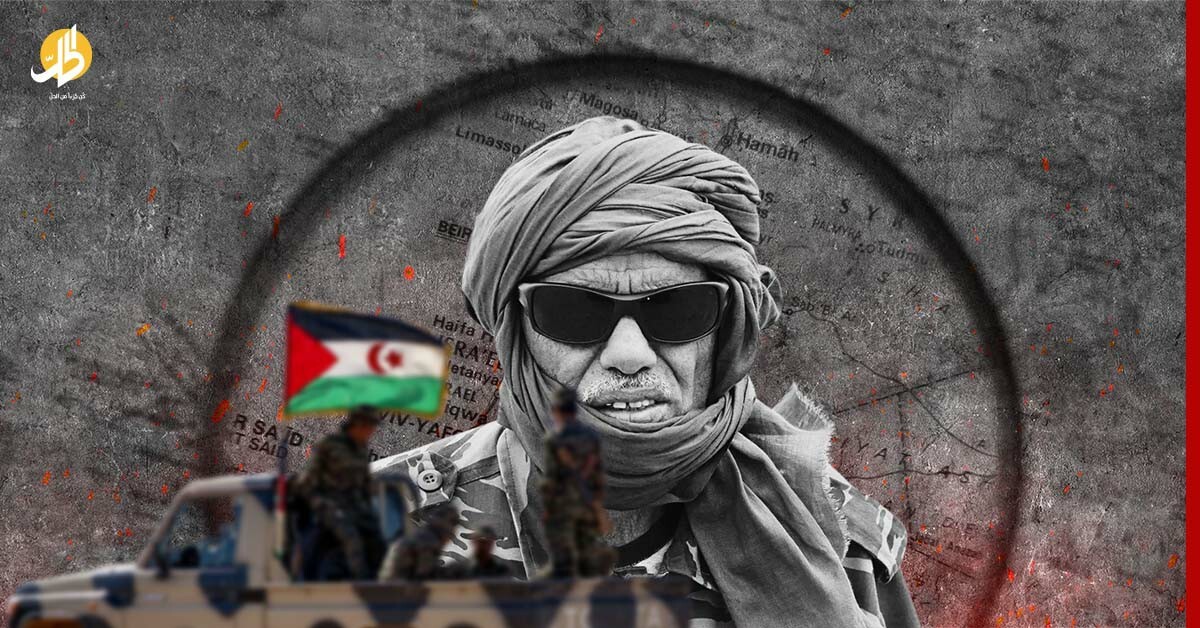
In a world witnessing escalating tensions and strategic shifts, Iran’s recent moves toward the “Polisario” Front appear striking and noteworthy. Tehran’s growing threat to Israel is now taking on a new form, with the “Polisario” joining Iran’s militia network.
The target is clear: Israel, and the base is ready in Syria. But will this emerging link mark a new stage in rising regional tensions, or is it part of a broader strategy being planned by top leaders in Tehran?
The Iranian regime, known for supporting hardline organizations in the region, has begun to move beyond its previous geographic limits. It is no longer content with backing hardline Shiite and Sunni groups in Israel’s immediate vicinity; its influence has extended to areas that were not on Israel’s security radar. The “Polisario,” which shares no direct geographic connection with Iran, has become part of Iran’s regional plans.
Iran is using a variety of means to target Israel through its different groups, from Lebanon to Yemen, and the involvement of the “Polisario” enhances its ability to exert influence and widen the scope of pressure on Israel. With reports indicating an organized effort bringing together various militias and stretching from the Middle East to North Africa, the likely scenario is the formation of a regional alliance that includes the “Polisario” within a broader grouping targeting Israel and the regional powers allied with it.
Is the “Polisario” taking part in the war on Israel?
Reports by Western intelligence services indicate that Tehran has been working to expand its network for several years, and that it sees the “Polisario” as a new pressure point in its strategy. The Iranian presence in areas with no history of conflict with Israel reinforces the idea of a growing Iranian threat and its ability to exert influence in places far from the usual theater of conflict.
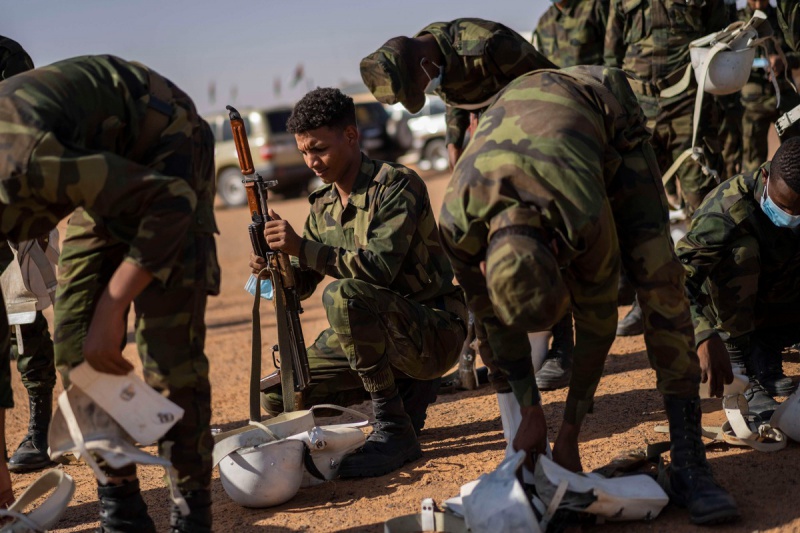
According to the German newspaper Die Welt, communications and transcripts of phone conversations it said it had intercepted confirm Morocco’s warnings about the danger posed by the support the “Polisario” receives from Iran and Lebanon’s “Hezbollah.”
A “Polisario” representative and a “Hezbollah” leader residing in Côte d’Ivoire exchanged plans in a recorded conversation dated October 23, about two weeks after Hamas’s attack on Israel. In it, the “Hezbollah” operative asked the “Polisario” liaison officer in Syria, who is responsible for the Middle East, about the situation.
According to the newspaper’s literal translation, the “Polisario” representative replied: “Praise be to God. The boys are encouraged by the victory of the resistance and the actions against the Jews and victory over them everywhere. I see the resistance flaring up everywhere. It has flared up in Gaza, and it may erupt in the Golan (…) and in the south (Lebanon) and in the Shebaa Farms,” pledging that it would also erupt in the Moroccan Sahara and that “the resistance will be united. Everyone will open fire from different places.”
Here, the London-based newspaper Al-Arab points out that it is not known whether the attack launched by the “Polisario” on the Smara area in the Moroccan Sahara at the end of the weekend before last was part of carrying out those threats.
Later in the conversation, possible attacks on Israel were discussed between representatives of “Hezbollah” and the “Polisario” envoy, and a coordinated parallel attack involving Hamas, “Hezbollah,” Algeria, and Iran was proposed.
The “Polisario” representative offered the Front’s support for future attacks, but stressed that the resources available to it were not sufficient to carry out major attacks such as targeting the Israeli embassy in Morocco. In other conversations, he requested more support from “Hezbollah” and Iran to strengthen its offensive capabilities.
The “Polisario”’s connection to what is happening in the Middle East
The “Polisario” Front, according to Encyclopaedia Britannica, is a political-military organization seeking to end Moroccan control over the formerly Spanish-administered territory of Western Sahara in northwestern Africa and to gain independence for that region.
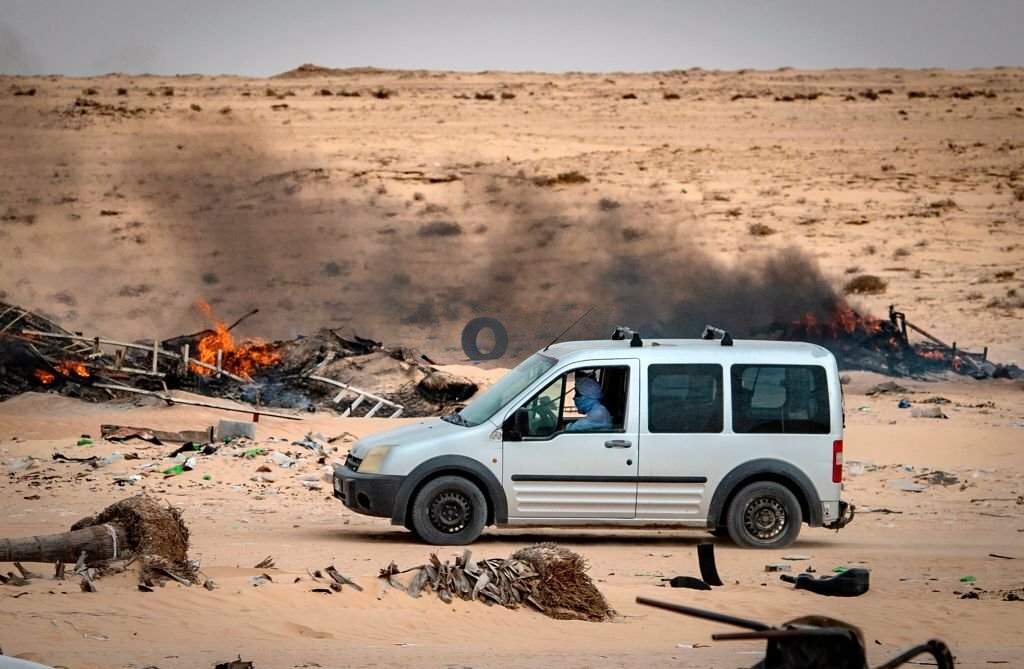
The “Polisario” Front is composed largely of the indigenous nomadic inhabitants of the Western Sahara region, namely the Sahrawis, and began as a rebel force in May 1973 in neighboring Mauritania. After Spain withdrew, Morocco and Mauritania divided Western Sahara between them in 1976, and the “Polisario” Front moved to Algeria, which has since provided the organization with bases and military assistance.
Moroccan Foreign Minister Nasser Bourita previously announced that Lebanon’s “Hezbollah” had sent military representatives to the “Polisario,” supplying it with weapons and training it in urban warfare. He also indicated that Tehran had provided support to the “Polisario” by supplying surface-to-air missiles and drones, while “Hezbollah” established camps in Algeria to train its fighters.
While leaders of the “Polisario” and “Hezbollah” denied these accusations, Morocco revealed that it possesses a massive file containing detailed reports and satellite images showing meetings between representatives of the two Iran-backed sides in Algeria. Moroccan authorities explained that Iran provided additional support by facilitating meetings between the “Polisario” and “Hezbollah” through its embassy in Algeria.
Last year, a representative of the “Polisario” confirmed that Iran was supplying them, via Algeria, with drones for use against Morocco. Reinforcing these claims, reports stated that Tehran was providing the “Polisario” with surface-to-air missiles and drones, while training camps for fighters were being set up in Algeria by “Hezbollah.”
The “Polisario” representative in the Middle East, Mustafa Mohamed Al-Amin Al-Kitab, recently adopted Hamas’s slogan, affirming in a phone call dated October 23 that this “war represents jihad and resistance against the occupation and the Zionist project,” and noting that the price of freedom would be high, and that despite the sacrifices and those killed, victory would come in the end.
Moreover, a German newspaper revealed in an earlier report a money-transfer network operating from Spain and the Tindouf camps in Algeria, maintaining close contacts between the “Polisario,” Iran, Lebanon, and “Hezbollah” as part of Iran’s ongoing support for the Front.
This network also extends to the “Polisario” Front, which is considered a prominent example of Iran’s expansionist policy, as it has come to carry greater strategic value for Tehran, especially after the signing of the Abraham Accords with Israel, which included Morocco. The separatist organization has become part of Iran’s attempts to destabilize the region.
Syria as a base for attacks
According to Moroccan researcher Dr. Mohammed Al-Touzani, the Iranian regime watches for any outlawed separatist movements and rushes to support them not only in order to champion these groups’ cause, but to serve its own agenda, for “this regime has, over decades, repeatedly shown that its main objective is to penetrate several regions in order to use them as a political card.”
According to Al-Touzani’s remarks to Al-Hal Net, the Iranian government provides support to the “Polisario” in several ways, most importantly financial, military, and political support, especially to those based in Algeria, and leads them to adopt its ideas, particularly those opposing Israel and rejecting the peace process.
This government is also pursuing the same strategy it used in Syria, Lebanon, Iraq, and Yemen by training and arming “Polisario” militants in Iran or in other countries such as Syria, Lebanon, and Algeria, where Iran enjoys influence and allies.
In this context, the Palestinian cause is used as a tool to mobilize popular support in the Islamic world and to challenge the legitimacy and influence of Israel and its allies, such as the United States, the Kingdom of Saudi Arabia, and the Kingdom of Morocco.
At present, Al-Touzani does not rule out the coordination and organization of attacks on Israel by “Polisario” elements present in Syria, in parallel with Palestinian groups and other proxies such as “Hezbollah,” in order to deter or retaliate for Israeli or American actions that threaten Iran’s interests or security, and not for the sake of the Palestinians.
It has become certain that the “Polisario” has merged into Iran’s militia network after receiving funding and arms from Tehran, benefiting from the relationship with Iran to increase its strength in Western Sahara. It cannot be ruled out that Syria may turn into a camp for the “Polisario,” serving the agendas of the Iranian regime, not only to carry out military operations against Israel, but perhaps even to strike the bases of the international coalition.
- How the Houthis Are Choking Yemen’s Peace Efforts with a Broad Escalation on the Ground
- Economy in the Wind: How Yemenis Are Paying the Price of Disrupted Shipping Routes
- Houthi Summer Centers: Factories for Indoctrination and Raising a “Scream” Generation
- The “Coalition of Necessity”: What Costa Rica’s Terrorism Designation of the Houthis Signifies
- Mojtaba Khamenei Runs Iran from His Bed as Photos Vanish and the Supreme Leader Makes a “Voice-Only” Appearance