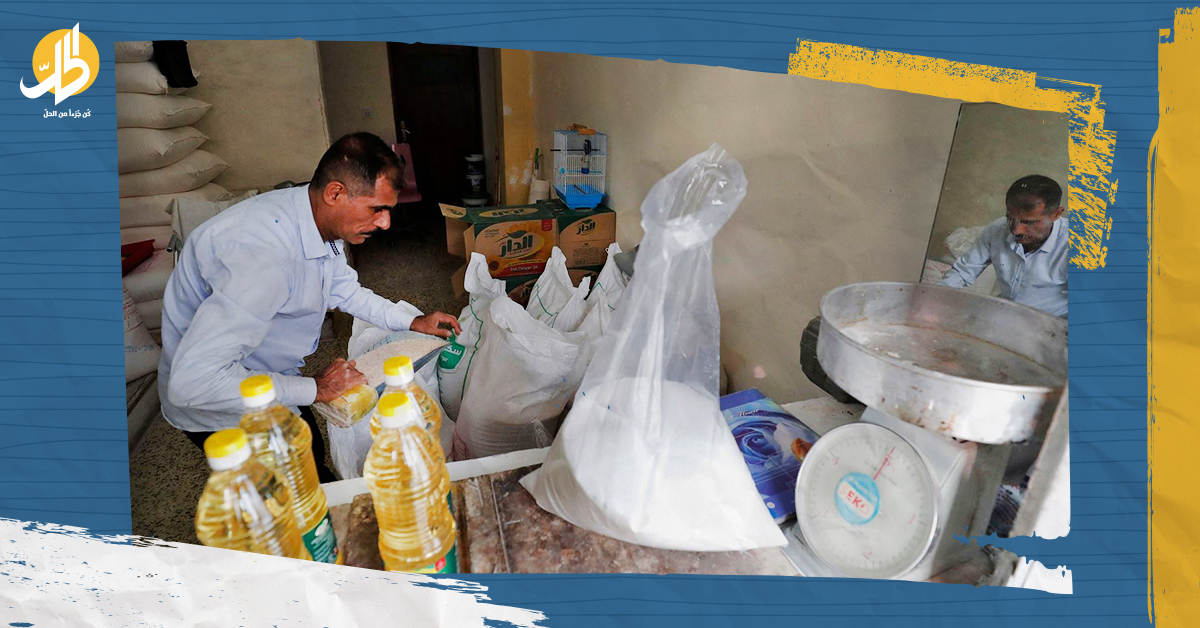
“We hear about them, but never see them.” No one believes that the ration-card items provided by the Iraqi government will offer any real help with their difficult living conditions. “We hear about it, but never see it” has become the phrase most closely associated with the story of the ration-card allotment.
“All my life, I’ve only heard that the government has increased the ration-card items, but when they reach me, there’s nothing else. Just rice, lentils, and oil. Anything beyond that is nothing but lies,” says Abbas Faisal, a resident of the Iraqi capital, Baghdad.
Faisal is 37 years old and heads a family of five: his wife, three children, and himself. “When I was living with my family 12 years ago, I remember the ration card was just rice, lentils, and cooking oil. Then I got married and had children, and the ration is still exactly the same.”
The ration allotment before 2003
The Iraqi government distributes ration-card items to Iraqi citizens every month. Every household receives its ration items each month, but people complain about how few items there are, especially amid the country’s worsening economic and living conditions.
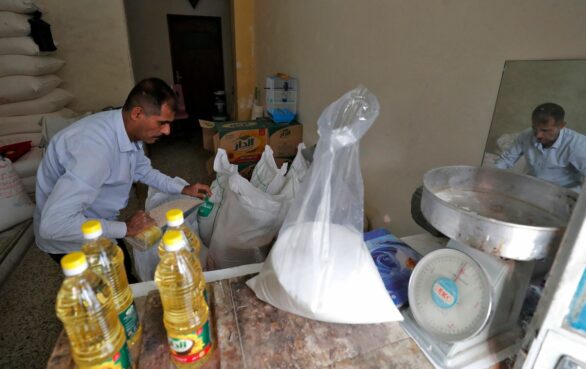
“Now, by God, my situation is manageable. I’m employed and still able to keep up with this life, and I treat the ration card as if it doesn’t exist. But what about the poor person and the laborer who works for a daily wage and isn’t a salaried employee?” Faisal told 7al Net.
In the past, before 2003, ration-card items included almost everything a citizen needed: legumes, fruit, vegetables, rice, oil, and soap. In fact, people even received cigarettes and razor blades for shaving.
“Every month we wait for relief and say, ‘God willing, maybe this month the ration-card items will increase,’ but as usual they arrive exactly the same, as if it were charity from them or something we have to plead for from the government,” says Ruqayya Abd, a resident of Salah al-Din province, north of Baghdad.
Ruqayya is a widow with four children. She lost her husband, who worked as a casual laborer, during ISIS’s attempt to seize the city of Amerli. “He joined the volunteers against the group, and he was martyred there about eight years ago.”
Effects of changing the exchange rate
The previous Iraqi government made people’s economic hardship even worse when it raised the dollar exchange rate against the dinar, making every 100 dollars equal to 145,000 Iraqi dinars, after 100 dollars had previously been worth 120,000 dinars.
The change in the exchange rate drove up market prices, especially for daily necessities, and the government at the time promised to increase the ration allotment to help families. But that government ended and a new one replaced it, and the promise was never fulfilled.
“I live on my late husband’s assistance, on relief aid from organizations, and on help from my late husband’s relatives from time to time, because you get nothing from the ration card—it’s of no real benefit at all,” Ruqayya says with a disgruntled expression and visible sadness to 7al Net.
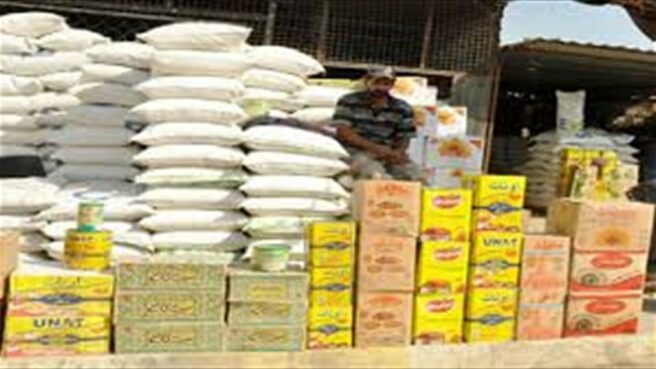
Ration-card items are primarily foodstuffs distributed by the Iraqi Ministry of Trade at a symbolic price each month. Their distribution began in September 1990 under Saddam Hussein’s former regime, to mitigate the consequences of the economic blockade imposed on Iraq at the time by the UN Security Council after Saddam’s regime invaded Kuwait.
“I have absolutely no confidence in the government. Anything it says, I don’t believe; it goes in one ear and out the other. But it’s shameful that a country full of wealth and ruled by such people cannot provide you with a ration allotment that contains anything worthwhile,” says Mohammed Karim, a resident of Muthanna province.
A pledge and a retreat
Before coming to power, the new prime minister, Mohammed Shia’ al-Sudani, had attacked the previous government’s decision to change the exchange rate. The Coordination Framework, which brought him to the premiership, had also adopted restoring the exchange rate to its previous level.
But just one week after forming his government, al-Sudani said at a press conference that the decision on the exchange rate lay with the Central Bank of Iraq and that he would not interfere, effectively reversing what he had said before becoming prime minister, while the Coordination Framework also fell silent after previously backing a return to the old rate.
At the same press conference, Mohammed Shia’ al-Sudani pledged that he would not leave citizens to suffer from the repercussions of the exchange-rate decision approved by the previous government, and that his government would work to ease that suffering by supplying citizens with substantially more food items through the ration-card allotment.
“I don’t believe this talk. We’ve been hearing it over and over for far too long. Personally, I don’t need it, but I have relatives who need it very badly, and I support them. It’s true that my situation is good, but supporting my relatives is making things a bit harder for me,” Mohammed Karim told 7al Net.
In the end, 19 years of government promises to improve ration-card items—without any previous government fulfilling those promises—has left the public with no trust in the pledges of al-Sudani’s current government, or in any future government under the current political system.
- How the Houthis Are Choking Yemen’s Peace Efforts with a Broad Escalation on the Ground
- Economy in the Wind: How Yemenis Are Paying the Price of Disrupted Shipping Routes
- Houthi Summer Centers: Factories for Indoctrination and Raising a “Scream” Generation
- The “Coalition of Necessity”: What Costa Rica’s Terrorism Designation of the Houthis Signifies
- Mojtaba Khamenei Runs Iran from His Bed as Photos Vanish and the Supreme Leader Makes a “Voice-Only” Appearance