Semafor, citing a U.S. official, reported that the United States will continue its strikes on Iran, noting that the pause in attacks applies exclusively to energy facilities.
This came after U.S. President Donald Trump announced talks he described as “constructive” with Iranian officials, without revealing their identities.
Washington’s apparent decision to avoid targeting energy facilities, while continuing to strike military targets and ballistic missiles, suggests that it wants to leave room for negotiations and reach an agreement that would end the current conflict with Tehran and spare the region and the world wide-ranging negative repercussions.
At the same time, it is seeking to weaken Iran’s military capabilities — in other words, to establish a dynamic of “negotiating under military pressure” — with the aim of pushing Tehran to back down from its intransigence and make concessions related to its nuclear program and the development of ballistic missiles, both of which are among the main reasons for the outbreak of this war and are also seen as threats to U.S. interests and regional security in general.
Accordingly, this pattern of warfare is likely to continue throughout the negotiation period, or during the five-day deadline set by Trump, until some form of understanding is reached — or the negotiating track may falter if Tehran sticks to its conditions.
Avoiding the Targeting of Energy Facilities
Trump decided on Monday to postpone a plan to bomb Iran’s energy network for five days, while Tehran later denied entering into any negotiations with Washington.
The U.S. official told Semafor: “The five-day halt in attacks applies only to energy sites,” explaining that the decision does not include military sites, naval sites, ballistic missiles, or the defense industrial base.
The U.S. official added: “The initial phases of Operation ‘Wrath Epic’ will continue,” according to Reuters.
The Semafor report also noted that Israel was not a party to the ongoing talks between Washington and Tehran.
Targeting Energy Facilities in Isfahan and Khorramshahr
In this context, Fars News Agency, which is affiliated with Iran’s Islamic Revolutionary Guard Corps, reported that U.S.-Israeli strikes targeted two energy facilities in the city of Isfahan in central Iran at dawn on Tuesday.
Agence France-Presse quoted the Iranian agency as saying: “As part of the attacks being carried out by the enemy, the gas administration building and the gas pressure reduction station on Kaveh Street in the city of Isfahan were targeted,” noting that the facility sustained partial damage.
Fars also said that another attack targeted “the gas pipeline belonging to the Khorramshahr power plant” in the country’s southwest.
The agency quoted the governor of Khorramshahr, located near the border with Iraq, as saying that “a projectile struck the vicinity of the gas pipeline processing facility,” without specifying the extent of the damage so far.
The U.S. president had earlier announced the postponement of targeting power stations and other infrastructure in Iran for five days, if Tehran did not open the Strait of Hormuz to maritime traffic.
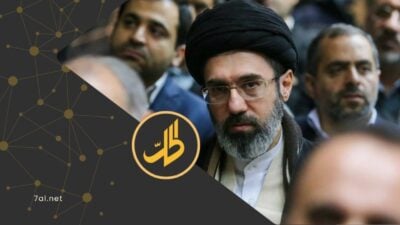
In later remarks, Trump said that Washington and Tehran had reached “major points of agreement” during talks with a senior Iranian official, stressing that the official was not Mojtaba Khamenei.
By contrast, Iranian Parliament Speaker Mohammad Bagher Ghalibaf denied that any negotiations were taking place with the United States, while the Iranian Foreign Ministry announced that it had received “messages from friendly countries” regarding a U.S. request to hold talks.
- How the Houthis Are Choking Yemen’s Peace Efforts with a Broad Escalation on the Ground
- Economy in the Wind: How Yemenis Are Paying the Price of Disrupted Shipping Routes
- Houthi Summer Centers: Factories for Indoctrination and Raising a “Scream” Generation
- The “Coalition of Necessity”: What Costa Rica’s Terrorism Designation of the Houthis Signifies
- Mojtaba Khamenei Runs Iran from His Bed as Photos Vanish and the Supreme Leader Makes a “Voice-Only” Appearance