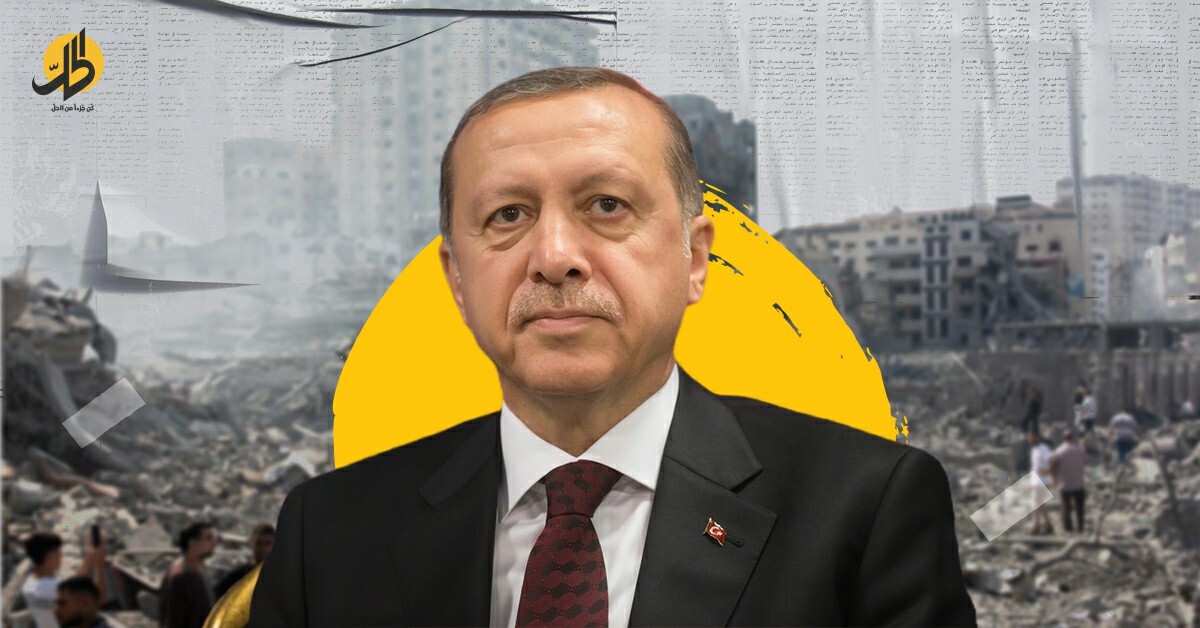
Since the outbreak of the Gaza conflict between Israel and Hamas, Turkey has been walking a very fine line, trying to strike a kind of balance between the two sides and then play the role of mediator in order to secure pragmatic political gains. Turkish President Recep Tayyip Erdoğan never misses an opportunity to exploit any circumstance or war in the region for his own interests. At the same time, he does not want to lose one side at the expense of the other, especially Israel, even as he has recently been issuing bombastic populist statements.
Although Ankara denied asking Hamas leaders to leave its territory, several indicators suggest that the movement’s relationship with Turkey has been damaged by its latest attack on Israel. Erdoğan now appears to be in a very awkward position, unable to side with one party without alienating the other. After reports circulated that his and his party members’ ties with Hamas had been shaken, he moved to show indirectly that he is not fully aligned with Tel Aviv by reverting to the kind of populist rhetoric he has used before, saying that “Hamas is not a terrorist organization, but a liberation movement fighting to defend its land,” while also announcing the cancellation of a planned visit to Israel.
What is notable, however, is that he also proposed organizing an international peace conference between the two sides, which indicates that he does not want to undermine his relationship with Israel at the same time. In other words, this man, known for his opportunistic positions, wants to benefit from his good relations and contacts with both sides in the Gaza conflict, as well as from his ties with external actors involved in the Palestinian file, in order to serve his own interests first and foremost at the expense of what is currently happening in the region. He is doing so by pursuing a purely pragmatic policy under the guise of neutrality or balance, so to speak.
Turkey changes its tone toward Israel
Erdoğan’s latest populist rhetoric regarding Hamas was met with a harsh Israeli response. Israeli Foreign Ministry spokesman Lior Haiat said that “Israel rejects with disgust the Turkish president’s harsh remarks about the terrorist organization Hamas.”
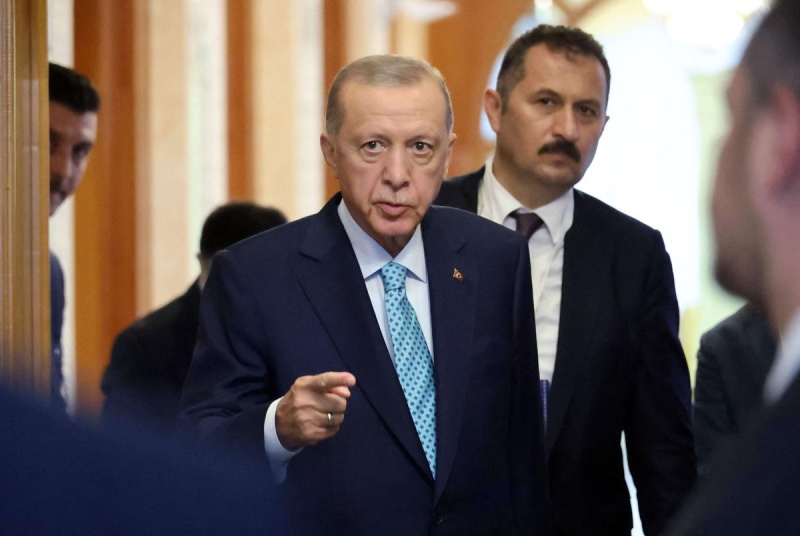
Haiat added that “Hamas is a vile terrorist organization, worse than داعش, that brutally and deliberately kills civilians and takes them hostage, in addition to using its own people as human shields,” arguing that “Erdoğan’s attempt to defend the terrorist organization and his inciting words will not change the atrocities witnessed by the whole world, or the fact that Hamas is equivalent to داعش.”
On the other hand, Erdoğan affirmed that all necessary “political, diplomatic and military means” would continue to be used, while also pointing to his country’s readiness to act as a guarantor for the Palestinian side. He said the proposed guarantor system is the most effective way to achieve stability in the short and medium term.
He also proposed organizing an international peace conference between Israel and Palestine, calling on Arab states to provide moral and financial support for such an effort, while urging the Palestinian people to “unite and act as one for the sake of a two-state solution.”
Based on Western reports and expert opinions, the Justice and Development Party government has dealt with the Gaza war from a pragmatic standpoint. While it allowed demonstrations in support of what it calls the “Palestinian resistance” in several areas, intensified its recent contacts and visits with regional leaders, and sought to play the role of mediator, it has nevertheless been unwilling to jeopardize its relationship with Israel, which has seen major progress in recent years. Turkish foreign policy officials recently told media outlets that Turkey is working hard to resolve the issue of prisoner exchanges between Israel and Hamas, while also saying it maintains open channels with both sides in order to remove obstacles and help secure a truce between them.
These statements by Erdoğan coincided with a visit on Wednesday by Turkish Foreign Minister Hakan Fidan to Qatar, where he met his Qatari counterpart, Mohammed bin Abdulrahman Al Thani, to discuss the ongoing crisis in Gaza. During a joint press conference in Doha, Fidan stressed that any ground operation in the Strip “will turn this brutality into a massacre in every sense of the word,” noting that the growing death toll and destruction are fueling stronger reactions across the region, according to Turkey’s Anadolu Agency.
Accordingly, it can be said that the statements by Erdoğan and Fidan indicate that Turkey has begun to follow a different course from the one it pursued at the start of the Gaza war. It is now issuing statements that differ from its earlier ones, while simultaneously communicating with neighboring countries, especially those with good relations with Hamas, such as Qatar, in an effort to pressure the parties to the conflict—especially Israel, which continues its assault on Hamas—to sit at the negotiating table, stop the war and the bloodshed, and recognize that more blood and destruction serve no one’s interests.
The opportunism of Erdoğan’s rhetoric
In this regard, writer and political researcher Dr. Sameh Mahdi says that Turkey has close historical relations with Israel, and that the Justice and Development Party, headed today by Recep Tayyip Erdoğan, does not gamble with those pragmatic ties and shared interests.
These relations go back decades, specifically to the free trade agreement in the 1990s. Bilateral trade has multiplied, and the fields and scope of strategic economic partnership have expanded. Turkish companies have also been involved in building infrastructure in Israel, something evident in the growing role of the Turkish company “Yilmazlar,” the political researcher told Al-Hal Net.
Political researcher Sameh Mahdi to Al-Hal Net
The political researcher also points out that “Turkish-Israeli relations began in 1949, one year after the establishment of the State of Israel,” but that Turkey’s current role toward Israel reveals new shifts and a pragmatism tied to Erdoğan’s attempt to assume a leading Islamic role on the Palestinian issue.
This is in addition to his effort to build relations with the Islamist movement Hamas in a way that serves his local and regional goals, embodied in the revival of the idea of neo-Ottomanism. Just as Erdoğan provides safe havens for leaders of Islamist groups such as the Muslim Brotherhood—classified as a terrorist organization in a number of Arab countries, with some of its leaders subject to court rulings related to violence and the assassination of government officials—some Hamas leaders are also present on Turkish soil, according to political analyst Sameh Mahdi.
It is clear that Erdoğan wants to play both sides. His contradictory statements since the outbreak of the Gaza crisis point to that. On the one hand, he does not want to lose popularity and wants to present himself as the “hero of the Islamic nation.” On the other, he does not want Turkey’s relations with Israel to be shaken, especially given the many shared interests between them, particularly in trade, where bilateral trade exceeds $9 billion annually. Turkey underscored this through its former foreign minister, Mevlüt Çavuşoğlu, last year, when he said that trade with Israel was increasing despite the coronavirus pandemic, explaining that trade between the two countries exceeded $10 billion in 2021.
He also said at the time that political and technical dialogue with Israel would increase trade, adding, “We hope to receive large numbers of Israeli tourists,” and that improving relations with Israel would help achieve peace in the region. This raises the question: How could Erdoğan so easily sacrifice what he has spent many years building with Israel, and in exchange for what? It can therefore be concluded that his statements today are little more than populist rhetoric and opportunistic behavior whenever war or crisis breaks out.
Positioning himself as leader of the “resistance” and boosting popularity
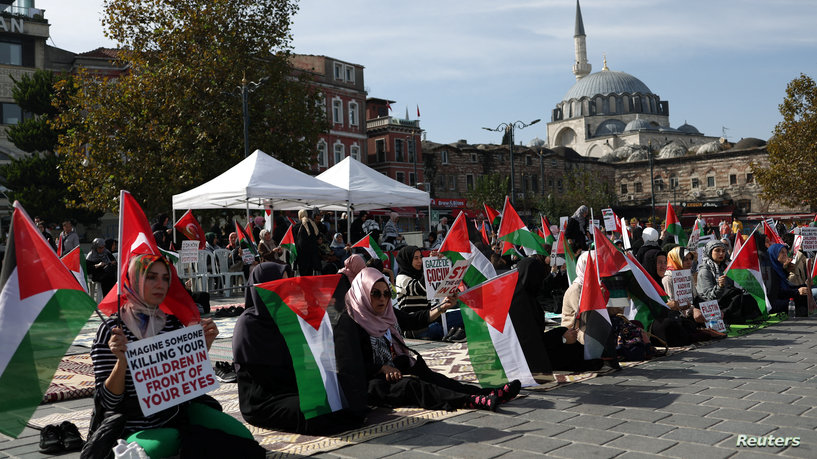
Meanwhile, Turks are awaiting the “Great Palestine March” called for two days ago by the ruling Justice and Development Party, which is to be held at Atatürk Airport Park next Saturday. On Wednesday, Erdoğan called for “the highest possible participation in the rally,” saying: “We will raise only our flag and the Palestinian flag there.” He added: “I express my deep gratitude to the politicians, athletes, artists, journalists, non-governmental organizations, and all our 85 million citizens who supported the steps we have taken for the oppressed people of Gaza.”
Returning to political researcher Sameh Mahdi, Erdoğan is playing an opportunistic role regarding the Palestinian cause by backing one specific faction and reducing the issue to its hardline, armed Islamist face, while strategic relations with Israel remain intact.
Here, it can be said that Turkey’s flexible stance toward the recent events, following the surprise attacks launched by the movement against Israel, points to Erdoğan’s pragmatic policy. From the outset, the consistent approach was to avoid condemnation and direct alignment with Hamas under the banner of “resistance,” as this camp claims, while instead seeking a mediating role, pushing for the release of hostages, and looking for a role that serves Turkey’s regional relations without putting it on a collision course with Israel or causing it to lose that relationship, according to the political researcher’s analysis.
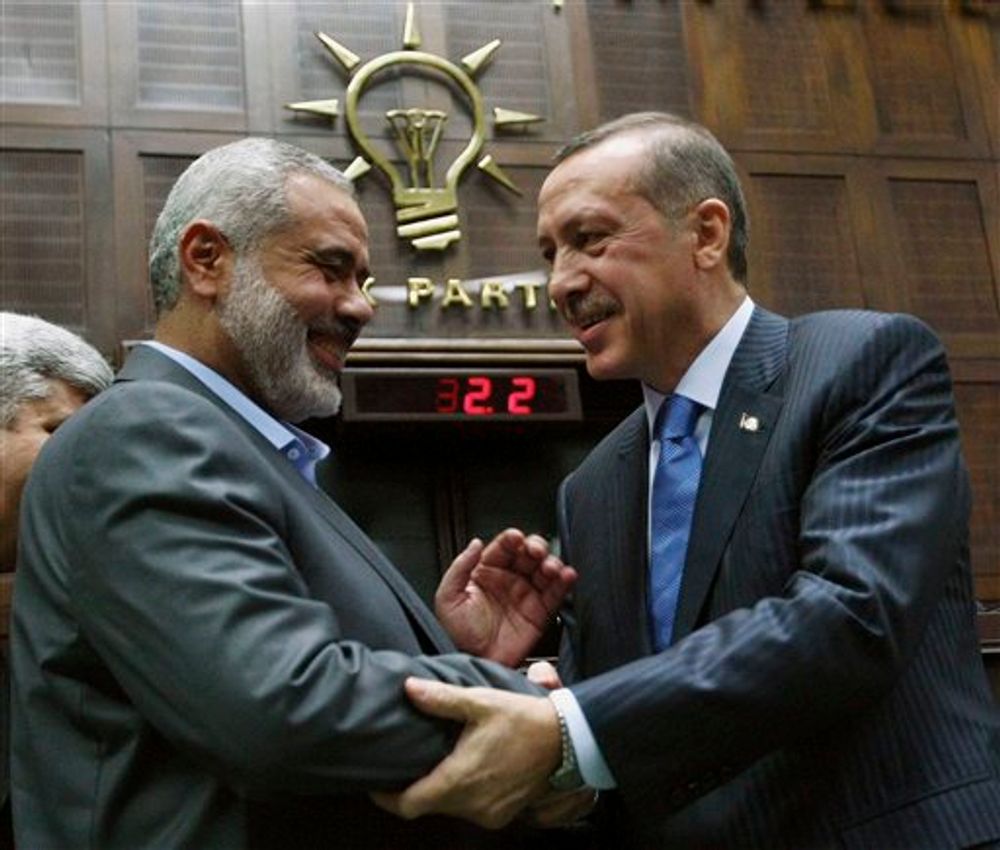
There are even hints and statements suggesting that Turkey asked Hamas leaders—foremost among them Ismail Haniyeh—to leave the country after the October 7 attacks, in order to avoid the embarrassment caused by their presence there at the start of the “Al-Aqsa Flood” operation and by footage showing the leaders prostrating on television after the attacks on Israel. Despite the official Turkish denial, what remains certain is that the leaders left Istanbul, regardless of whether that was their own decision or the result of pressure from the host country and the withdrawal of protection, Sameh Mahdi concluded.
Earlier, the American website Al-Monitor quoted a Palestinian source as saying that the Palestinian factions, including Hamas, are dissatisfied with Turkey’s position and consider its statements insufficient, to the point that “they did not summon the Israeli ambassador to the Foreign Ministry.”
Western reports also said that Ismail Haniyeh was in Istanbul when the “Al-Aqsa Flood” attack was carried out, but that the Turkish authorities politely asked him to leave Turkey after footage circulated on social media showing him and other Hamas members prostrating in thanks while watching news of the incursion on television.
However, the Anti-Disinformation Center affiliated with the Turkish presidency published a post on X stressing that “the claims that the Turkish president ordered senior Hamas officials to leave Turkey immediately are completely false.” Still, other analysts told Asharq Al-Awsat that this denial by the Turkish presidency was “published timidly” on X (formerly Twitter) and only in Arabic.
- How the Houthis Are Choking Yemen’s Peace Efforts with a Broad Escalation on the Ground
- Economy in the Wind: How Yemenis Are Paying the Price of Disrupted Shipping Routes
- Houthi Summer Centers: Factories for Indoctrination and Raising a “Scream” Generation
- The “Coalition of Necessity”: What Costa Rica’s Terrorism Designation of the Houthis Signifies
- Mojtaba Khamenei Runs Iran from His Bed as Photos Vanish and the Supreme Leader Makes a “Voice-Only” Appearance