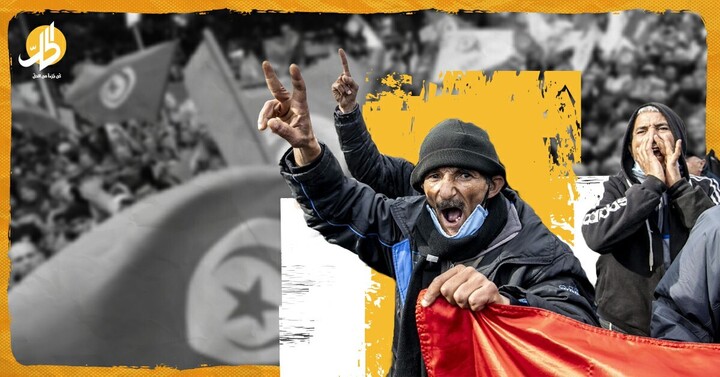
At a time when Tunisia is still suffering from a severe economic crisis, Italian Prime Minister Giorgia Meloni announced that the “European Union” will disburse the first installment of financial aid to Tunisia next week, in a development that signals an effort by Brussels and Rome to give new momentum to relations with Tunisia after the recent tension that strained ties between the two sides, especially with regard to the migrant crisis.
In recent months, Italy has led efforts to provide the necessary financial support to Tunisia, which is groaning under the weight of one of its worst economic crises, a crisis that has caused shortages of many basic goods, amid stalled talks with the International Monetary Fund. The latter is demanding a package of harsh economic reforms in exchange for support, something Tunisian President Kais Saied refuses to approve, considering it interference in his country’s internal affairs.
This comes after Tunisia recently postponed a visit by a European delegation and barred European parliamentarians from entering its territory, at the same time as a record increase in the number of irregular migrants, despite the strict security measures the country adopted to stem this wave. This sparked speculation that Tunisia was pressuring Europeans to release the financial aid agreed upon in the protocol signed on July 16 last year at the presidential Carthage Palace, estimated at around $1 billion.
Stalled International Monetary Fund Loan for Tunisia
The International Monetary Fund had initially approved granting Tunisia a $1.9 billion loan, but it has remained stalled for months, which has helped worsen the country’s financial crisis. It had been expected that Tunisia’s economic and financial situation would see some relief, and that the presidency and government would regain confidence, especially after President Kais Saied’s popularity declined in recent months because of the social problems caused by the crisis, which at times pushed citizens to protest.
The importance of the loan exceeds its financial value, as it would represent renewed confidence among economic actors around the world in Tunisia’s ability to overcome the current situation. This confidence would also encourage many of Tunisia’s partners to fulfill their promises regarding budget financing, promises that had remained pending throughout months of negotiations with the Fund. Yet all of that remained tied to the talks, leaving Tunisia eagerly awaiting “European Union” assistance.
However, it is not clear what prompted the “European Union” to move at this time to disburse financial aid to Tunisia. Former MP Majdi Karbai, who resides in Italy, suggested that his country may have responded to European requests before releasing this aid.
Commenting on this, Tunisian political economy professor Nizar Jlaidi said that anything entering Tunisia and the Tunisian treasury would help the country, especially in light of its transformation into an artificially imposed destination for the settlement of sub-Saharan Africans, as Tunisia has become one of the major transit points for migrants. He explained that the funds announced by the Italian prime minister will enter Tunisia as part of a signed agreement aimed at containing the situation in Tunisia, which has become worrying for Tunisia itself and for neighboring countries, especially Italy.
Speaking to Al-Hal Net, Jlaidi pointed out that there is an overlap of interests within the “European Union,” as well as a lack of consensus within Europe regarding irregular migration. Therefore, the release of the funds came as part of a maneuver by the Italian prime minister within the “European Union,” as she is trying to pull the rug out from under France, which rejects any agreement.
Tunisia Seeks to Expand Its Relations
Accordingly, Tunisia is trying to capitalize on the situation to diversify its partnerships, and the visit of the Tunisian foreign minister to Russia may represent a strong signal to Europe that Tunisia may shift its compass from West to East, toward new partnerships. After what the country has gone through, Tunisia cannot remain hostage to a single system, bloc, or partner. According to the Tunisian political economy professor, this policy helped secure the release of these agreed funds.
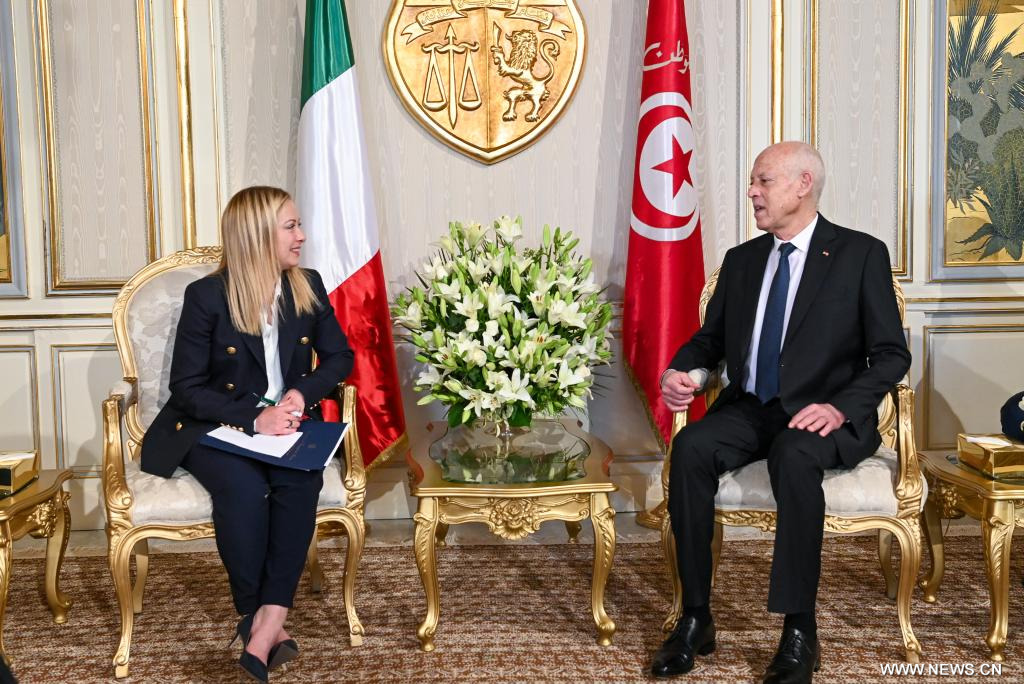
Jlaidi noted that Tunisia now occupies a highly important geostrategic position amid the geopolitical shifts currently underway in the world and the region, especially on the African continent and in the broader Mediterranean sphere. Tunisia is therefore seeking its own way out, and it has every right to do so within the framework of the “three no’s”: no to interference in Tunisian political affairs, no to interference in Tunisia’s national decision-making, and no to the idea of turning Tunisia into a border guard in exchange for money.
Amid all this, Jlaidi stressed that this aid installment reflects Europe’s role toward Tunisia, but that does not change the fact that this role comes amid Europe’s need to preserve its own peace and security, and its need for a partner like Tunisia. Therefore, these funds are not so much a grant Europe is giving Tunisia as they are driven by necessity and the logic of mutual need. He explained that Tunisia has not severed its relations with Europe; rather, Europe is the one still clinging to a political arrogance that has been laid bare in the countries of the African Sahel, which requires finding a new formula for engagement.
As for the significance of the timing of the release of these funds, Jlaidi explained that it carries a political meaning, namely Italy’s attempt to embarrass France, Germany, and the “European Union,” in addition to embarrassing the International Monetary Fund and the Americans, who still insist on punishing Tunisia. He pointed out that Italy’s message is clear: it does not want the Tunisian economy to collapse, because if it does, Italy’s security and economy will also be affected, given that Italy is Tunisia’s leading partner.
All of this coincides with rising poverty rates in Tunisia and the middle class sinking into a quagmire of need, declining purchasing power, and deteriorating income and revenues, according to the results of the national survey on expenditure, consumption, and living standards, which indicated that the poverty rate in the country widened to 16.6 percent in 2021, compared with 15.2 percent in 2015.
Tunisia Pins Great Hopes
Therefore, amid a hazy outlook shaping the scene in Tunisia, whose negotiations with the International Monetary Fund have been stalled since last October, great hopes are being pinned on the role that “European Union” funds can play in supporting the country, where debt amounts to about 80 percent of gross domestic product and which is facing a broad liquidity crisis as it confronts its many crises.
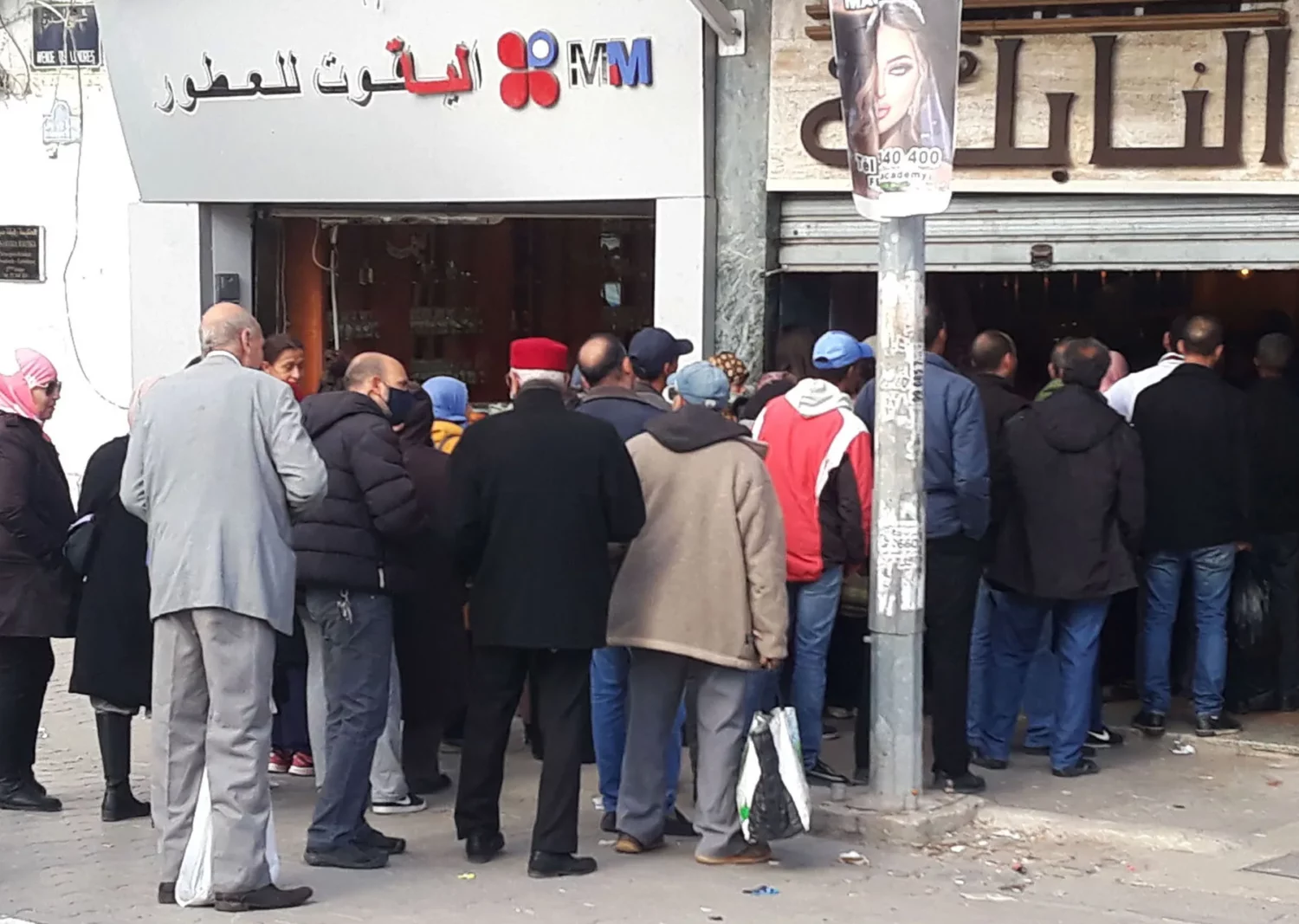
It is worth noting that the Tunisian economy has been hit by repeated blows since the 2011 uprising. Bloody attacks by gunmen in 2015 harmed the vital tourism sector, the COVID-19 pandemic in 2020 caused the economy to contract by 8.8 percent, and drought devastated agriculture, leading to a worsening trade deficit.
Meanwhile, ruling coalitions over the past decade continued to avoid making difficult decisions and, analysts say, failed to confront powerful business interests that hindered competition, while trying to address unemployment by increasing hiring in state-owned companies that had become unprofitable, which greatly worsened the situation in Tunisia.
As a result, the International Monetary Fund said in 2021 that the state’s wage bill amounts to about 18 percent of gross domestic product, among the highest rates in the world, while subsidies account for 8 percent of GDP, and the debts of loss-making state-owned companies account for 40 percent of it.
External borrowing needs for this year are expected to exceed $5 billion, while inflation in the country stood at 9.3 percent in June, a slight decline from May’s 9.6 percent, after reaching 10.1 percent in April and 10.4 percent last February.
- How the Houthis Are Choking Yemen’s Peace Efforts with a Broad Escalation on the Ground
- Economy in the Wind: How Yemenis Are Paying the Price of Disrupted Shipping Routes
- Houthi Summer Centers: Factories for Indoctrination and Raising a “Scream” Generation
- The “Coalition of Necessity”: What Costa Rica’s Terrorism Designation of the Houthis Signifies
- Mojtaba Khamenei Runs Iran from His Bed as Photos Vanish and the Supreme Leader Makes a “Voice-Only” Appearance