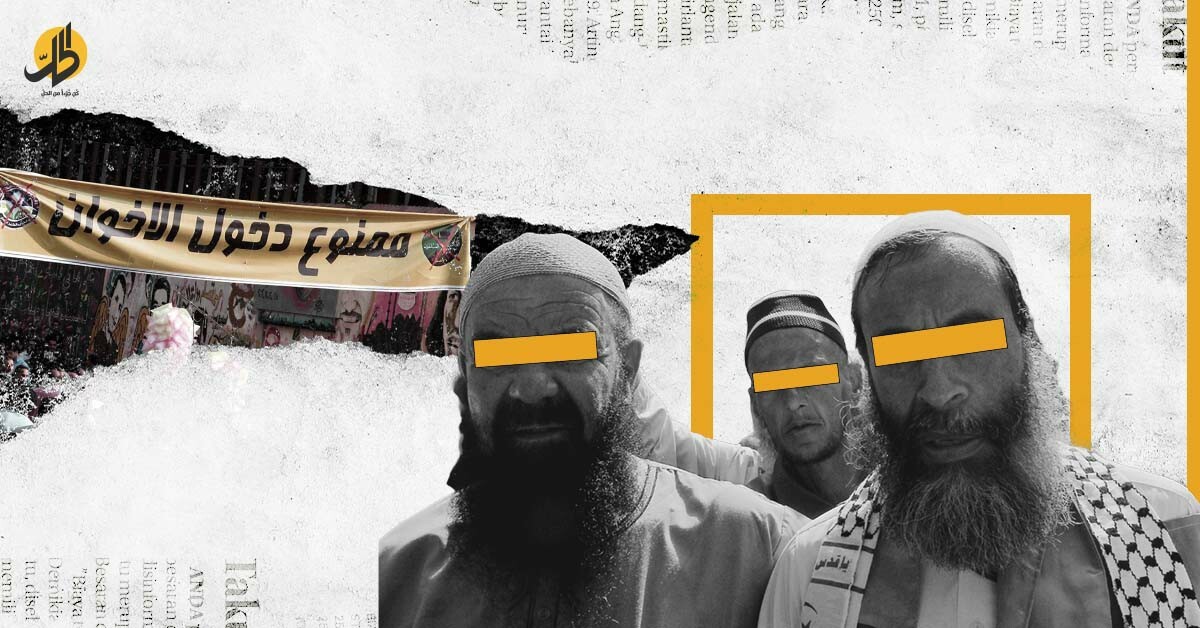
The bourgeois class, by virtue of the awareness it acquired through multiple experiences and driven by its economic aspirations, managed to dominate the public sphere in Europe in the seventeenth and eighteenth centuries. It thus steered the course of major political transformations, contributed effectively to sheltering movements opposed to the authority of both the state and the church, and, thanks to its particular structure, laid the foundations for a unique era in contemporary history.
By contrast, the nucleus of the Arab bourgeoisie was too weak to establish an influential social class within societies that failed to transition to an industrial mode of production or to achieve a civilizational breakthrough. The underlying structures of Arab societies remained locked in a hierarchical dependency, nourished by weak forms of consciousness generated by mental structures rooted in religious imagery belonging to the Middle Ages—sometimes because of opportunistic authoritarian rule, and at other times because of European colonialism. The latter worked to reproduce underdevelopment in this part of the world in order to maintain its control.
The Petty Bourgeoisie: A Cross-Class Incubator
The Arab petty bourgeoisie failed to develop any revolutionary positions toward the issues facing its societies, and even failed to attain a clear awareness of its own existence. Yet it exercised a kind of material or symbolic hegemony over the masses of peasants and the marginalized, as it was the segment most capable of exerting influence—especially after obtaining a fair amount of education that enabled it to occupy important administrative positions. This class also included small producers and property owners, and as the owner of its own means of production, it developed a particular ambition for social advancement. At the same time, because it was sometimes compelled to work with its own hands, it also possessed the consciousness of the working class. Given this dual nature, and because of its conservative social structure, it became fertile ground for receiving and sheltering political Islamist groups.
Hassan al-Banna, founder of the Muslim Brotherhood, was a son of the petty bourgeoisie, which formed a network-like social incubator that was later adapted within the Brotherhood’s hierarchical framework as an underlying structure that drove the group’s expansion and the growth of other political Islamist groups in Egypt and the Arab world.
Over many decades, the Brotherhood managed to emulate the model of the state, as the group’s social incubators interacted with a rentier economic pattern that took shape in the form of savings pools and financial channels. These, in turn, interacted with the needs of the bourgeoisie and the strata and classes beneath it through service provision, thereby reinforcing the expansion of the organization’s political project.
In the aftermath of the Arab Spring, and due to a combination of social, economic, and political factors, political Islamist movements rose to the forefront of the regional scene. The Ennahda Movement took the reins of power in Tunisia, the Muslim Brotherhood in Egypt took control of the legislative and executive branches, and Morocco’s Justice and Development Party (PJD) managed to win the legislative elections and lead the ruling coalition for a full decade. Added to that was the Brotherhood’s rise in Libya, the dominance of the group’s arms over power in Sudan, the Yemeni Islah Party’s control over the provinces of Yemen’s oil triangle, and the Brotherhood’s continued advance in Mauritania’s parliament.
Reaching power was bewildering even for the Brotherhood itself, and the organization’s parallel nature proved incapable of governing the state. The Brotherhood in Egypt fell because of its disastrous failure in managing all issues, as the group ruled with the mindset and consciousness of a secret organization and tried to impose its own premises of empowerment, domination, and exclusion of others. It thus failed the test of managing diversity in a state the size of Egypt.
Just as the rise was swift, the fall too was sudden and successive. The organization fell in Egypt through a popular uprising backed by the army; in Libya because of collusion with external agendas, while the Justice and Construction Party split internally; the experiment in Tunisia collapsed after the Ennahda Movement led the country into an unprecedented political deadlock; in Morocco came the disastrous failure in the most recent legislative elections; the long experiment in Sudan fell through a popular uprising; the prospects of the Islah Party in Yemen declined sharply; and the group’s arms in Mauritania and Algeria also receded.
The Brotherhood’s fall was followed by sharp shifts in international politics, as a result of which its organizational arms lost their external incubator, especially the Turkish incubator and its Qatari counterpart. This raises the question: has the Brotherhood’s experience ended forever?
Answering this question, Dr. Naïla Slaïni, professor of Islamic civilization at the University of Tunis, said in remarks to Al-Hal Net that “whoever believes that is deluded, because the Brotherhood’s intellectual structure is based on how to fortify its movement and protect it from disintegration and collapse. It is a policy that builds the concept of empowerment, and its mission is fundamentally centered on establishing methods that ensure ways of infiltrating and embedding itself deep within Arab society—whether Egyptian, Jordanian, Saudi, Tunisian, or Algerian…. Brotherhood principles possess a capacity for acceptance and spread that enables them to adapt even to principles that may appear contrary to their own. That is the duality in their discourse and behavior, through which their movement acquires flexibility and adaptability to circumstances, even when it clashes with them.”
The Tunisian academic likened the Brotherhood to the Danube River, which has a unique characteristic: it is a long river that cuts through Europe; at times it appears deep and overwhelms everything around it, and at other times it disappears beneath the earth’s surface, so that it seems to the observer to have stopped and dried up. But just when one feels reassured of that, its waters return in full force.
The Diversity of Incubators
It can be said that the petty bourgeoisie played the role of a bridge moving in two directions. The first was horizontal, capable of spreading the group’s ideology among university students, students at higher institutes, and trade unions. Through the outcomes of the Islamic awakening and its successive waves, those ideas reached the upper and middle bourgeoisie. The second was vertical, involving a kind of deep ideological penetration into society by providing services laden with the group’s political ideas to the lower classes. Over time, these circles accumulated a great capacity for mobilization, incitement, recruitment, and consequently political deployment.
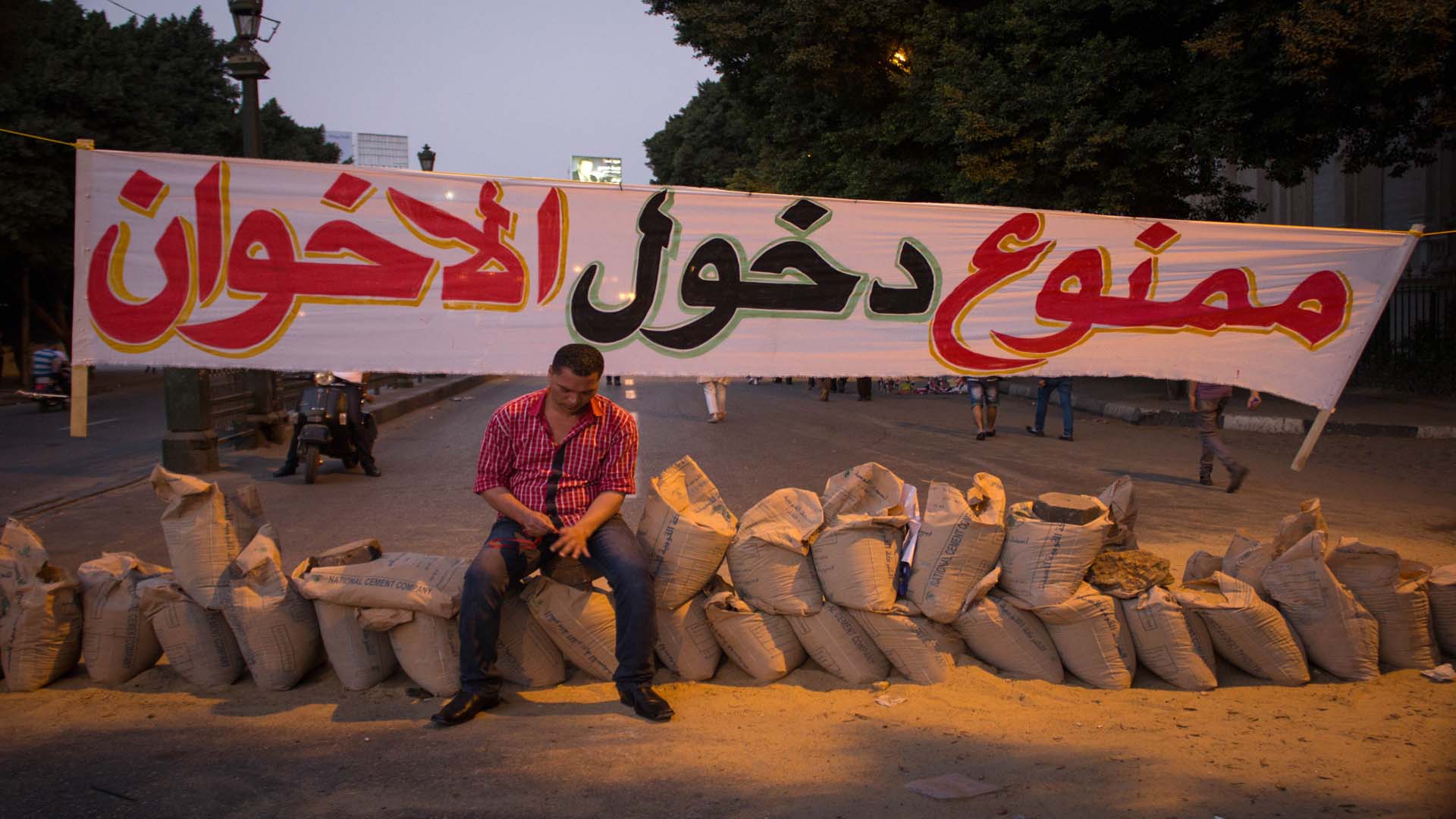
All of this succeeded in forming a set of social, economic, and religious incubators, thus creating a structure with two natures: the first is loose and capable of absorbing blows in times of hardship while preserving the organization’s existence and cohesion; the second is capable of turning into a solid bloc that emerges in times of expansion and empowerment.
The prominent Tunisian academic describes the Brotherhood’s ability to work in the dark by saying that they “seek their life in darkness, and patience is their hallmark. But beware: it is the patience of one searching for an opportunity, or a glimmer they can seize and adopt, in search of a path that brings them to the surface of public life once they have secured safety.”
As for the nature of the social incubators capable of containing the organization and its ideas during periods of decline, Naïla Slaïni believes they may not themselves be Brotherhood-affiliated; rather, they are incubators nourished by its ideas. In her view, there are many examples, perhaps the latest being their explicit appearance these days in tandem with the war in Gaza and their attempt to seize this opportunity and stamp events with the group’s agenda. The Ennahda Movement in Tunisia, for instance, was keen to publish images of Brotherhood leaders now in prison, to signal that the struggle begins in Tunisia’s prisons and extends all the way to Al-Aqsa.
Media figures have raised voices that may outwardly appear non-Brotherhood, indeed left-leaning, calling for the release of all political prisoners, including Rached Ghannouchi and his aides. Here and there, one can see mourning over the fate of the bygone Brotherhood spring, in an attempt to regain the trust of the people and then create a new revival for the group.
Dr. Naïla Slaïni, professor of Islamic civilization, speaking to Al-Hal Net
International politics also represents a fundamental support for the Brotherhood, in one way or another, so that it remains a living movement feeding on the concerns of Arab society. As long as the Palestinian cause remains in an unresolved in-between state, and with all the injustice endured by Palestinians, it will remain their refuge in every uprising. The day Palestinians have a fully sovereign state, the curtain will fall on the Brotherhood, for the prolonged ordeal of Muslim societies is the Brotherhood’s secure breeding ground, Slaïni said.
The Peripheries Feed the Brotherhood Center
On the edges of the Arab world, several important tributaries can be observed that are capable of feeding the dormant Brotherhood presence in the core states, whether by providing safe routes for financial flows, safe havens for the organization’s members and cadres, or by building a vast ideological arsenal capable of preserving the organization’s agenda and ideas. There, the Brotherhood’s reservoir of ideas takes shape and expands through intellectual variations that may differ in form but all converge in purpose.
In Pakistan and Bangladesh, Jamaat-e-Islami, the Brotherhood’s political arm, plays an important role in building a radical incubator representing the hawkish Qutbist current. In the view of Bangladesh’s Jamaat-e-Islami, the state is a secular and infidel one, and society is in a state of jahiliyya that requires the establishment of groups enjoining what is right. This is the same line followed by Sirajul Haq, the group’s emir in Pakistan, as he represents the activist wing of the Qutbist current, which is active in Lahore, Karachi, and multiple provinces, with the ability to exploit all contradictions and mobilize millions for demonstrations, sit-ins, and voting.
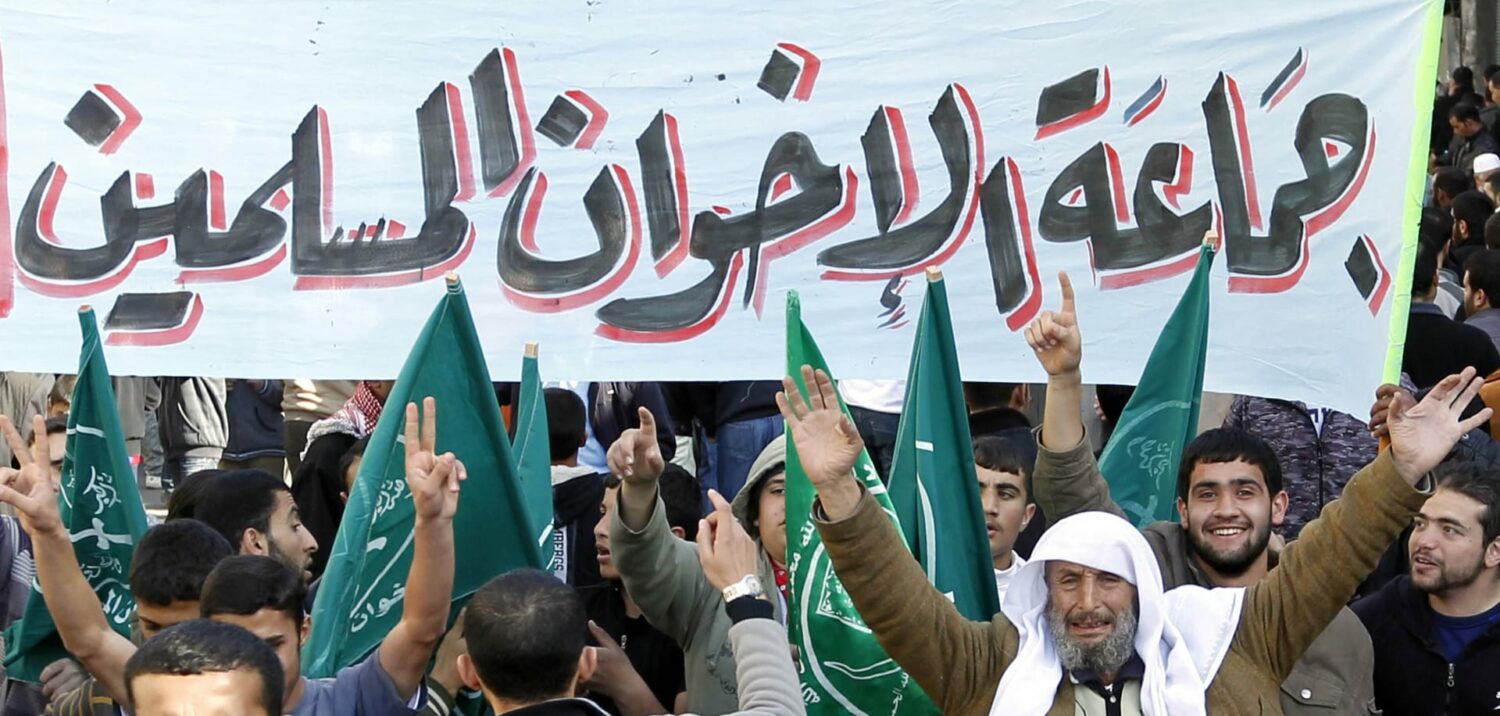
As for the centrist current within the organization, which represents the second tributary in the peripheries, it is embodied by the Malaysian Islamic Party (PAS), which governs three states—Kelantan, Terengganu, and Kedah—and participates in governing the states of Johor and Perak. It has dozens of members in legislative councils and presents itself as aligned with the country’s secular system, but its Brotherhood nature always becomes apparent in sudden social issues, such as the Islamization of Buddhist children, tourism, investment, and others. The same appears, perhaps less sharply, in Indonesia, where the Brotherhood-affiliated Prosperous Justice Party is preoccupied with constant competition for electoral seats.
These Asian incubators are matched by an African belt in the Sahel and Sahara, but due to pressure from jihadist groups, it is unable to display its capabilities, even though it provides the group in the north with an important tributary.
At the core itself, religious arms represent an important social incubator for Brotherhood organizations. The Justice and Spirituality Group in Morocco, for example, can be considered an indispensable strategic rear for the Justice and Development Party. The same role is played by Libya’s Dar al-Ifta, thanks to the dismissed mufti Sadiq al-Ghariani, who provides the same religious incubator for the Muslim Brotherhood.
- How the Houthis Are Choking Yemen’s Peace Efforts with a Broad Escalation on the Ground
- Economy in the Wind: How Yemenis Are Paying the Price of Disrupted Shipping Routes
- Houthi Summer Centers: Factories for Indoctrination and Raising a “Scream” Generation
- The “Coalition of Necessity”: What Costa Rica’s Terrorism Designation of the Houthis Signifies
- Mojtaba Khamenei Runs Iran from His Bed as Photos Vanish and the Supreme Leader Makes a “Voice-Only” Appearance