A recent statement by Mohammed al-Bukhaiti, a member of the Houthi group’s political bureau, about the “military side’s haste in deciding to launch missiles” has reopened questions about the nature of decision-making within the group, and whether it is in fact witnessing a real factional struggle over joining the war alongside Iran, or whether what is visible is merely a limited divergence in roles and rhetoric.
The statement, which came in the context of justifying the rapid shift from conditional threats to actual implementation, was notable not only because it implicitly acknowledged a gap between the political and military sides, but also because it was issued by one of the group’s most prominent media figures, reinforcing the impression that there is an internal debate over the timing and form of intervention.
From Threat to Action.. What Changed?
Until recently, the Iran-aligned Houthi group had tied its military involvement to a set of conditions, including an expansion in the scope of the war, or the use of the Red Sea in operations against Iran.
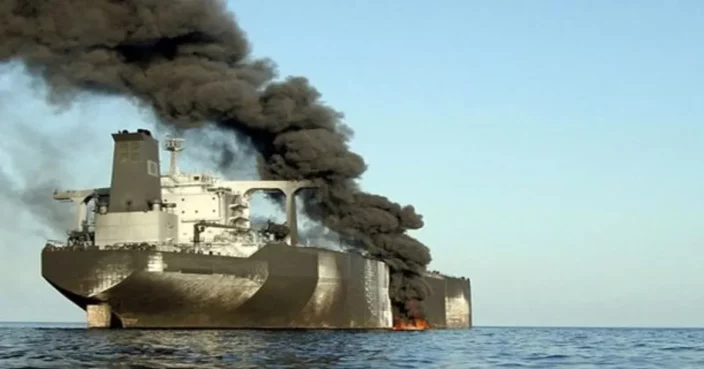
But what happened on the ground showed a rapid shift from that rhetoric to launching missiles toward Israel within a short period, without those conditions being met.
This shift has revived the hypothesis that there are two wings within the Houthi group: one pushing toward direct military involvement in support of Tehran, and another dealing cautiously with the repercussions, especially in light of the risks of regional and international responses. Even so, this hypothesis is not universally accepted among observers.
Escalation That Consolidates the Course
In the context of escalation, the Houthi group announced on Wednesday that it had carried out a new operation targeting what it described as “sensitive targets” in southern Israel, using a salvo of ballistic missiles, which it said was carried out in coordination with Iran and Hezbollah in Lebanon, in the first announcement of a joint operation since the outbreak of the war.

This was the third attack in a matter of days, following two operations announced on Saturday morning and evening, indicating a clear shift from the stage of threats to establishing a repeated operational pattern.
The group’s military spokesman, Yahya Saree, said the operation comes as part of “supporting the resistance fronts,” vowing to continue the attacks, in a sign of broadening involvement and linking it to the course of regional escalation.
A Factional Struggle or Managed Differences?
By contrast, political expert Abdul Sattar al-Shammiri, in comments to Alhal Net, downplayed describing what is happening as a factional struggle, arguing that decision-making at the highest level remains centralized and settled, and is subject to the leadership of the group’s leader, Abdul Malik al-Houthi, within a close connection to Iran.
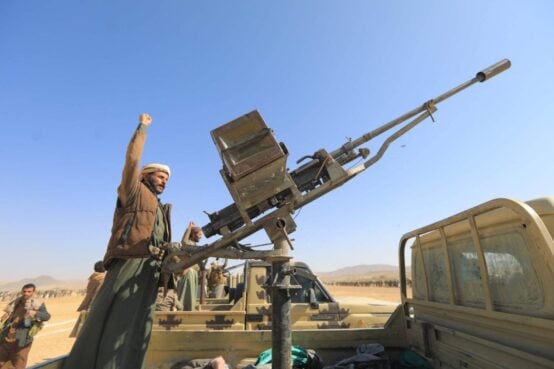
Al-Shammiri believes that the apparent divergences reveal disagreements at lower levels related to influence and resources, describing them as “horizontal disagreements” that do not affect the substance of the decision.
Al-Shammiri also places the statements of some leaders, including al-Bukhaiti’s remarks, within the framework of flexible media rhetoric that suggests divergence without indicating any actual split within decision-making circles.
On the other hand, Yemeni researcher Hamdan al-Alyi told Alhal Net that there are distinctions within the group’s structure, but they do not rise to the level of a decisive conflict.
He explained that within the Houthi group there is a current that received direct training from Iranian actors and shows a close connection to Tehran, viewing support for it as an obligation that goes beyond local calculations, as opposed to another current that adopts a more cautious approach, based on the assessment that direct involvement may not serve the group’s interests at this stage.
Even so, this divergence — according to al-Alyi — remains within limits that can be contained, without turning into an open conflict.
The Houthi Decision Between Internal and External Factors
This divergence does not negate the centrality of decision-making so much as it reveals a limited margin for disagreement within a closed structure in which major choices are ultimately settled by the top leadership.
In this context, the view of Adnan al-Jabrani, a researcher specializing in Houthi affairs, stands out. He tends to downplay the hypothesis that the Houthis make decisions independently, arguing that the group’s behavior indicates clear integration into Iran’s strategy for managing the conflict, which is based on distributing roles across multiple levels, from indigenous capabilities to regional allies.
According to al-Jabrani, the timing of involvement is tied not only to internal calculations, but also to a specific stage in Tehran’s management of the conflict, in which roles are activated gradually according to developments on the ground.
Iranian Pressure on the Houthis
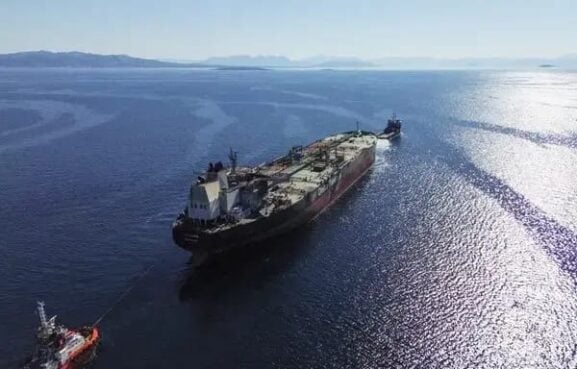
In parallel, Bloomberg, citing European officials, revealed that Iran is exerting pressure on the Houthi group to push it toward launching a new campaign targeting shipping in the Red Sea, in response to any potential escalation by the United States in the war linked to Tehran.

According to the sources, this move comes as part of Iran’s efforts to expand its tools of indirect pressure by activating the roles of its allies in vital maritime corridors, foremost among them the Red Sea and the Bab al-Mandab Strait.
Estimates indicate that there is divergence within the leadership over escalation options, between one current pushing to expand maritime attacks and another preferring to avoid a confrontation that could provoke a direct international response.
Leaders of the Houthi group are also studying scenarios for more escalatory operations, especially after the shift to targeting Israel with long-range missiles.
In this context, the likelihood of targeting commercial ships rises as the war drags on, given that the Houthi group possesses capabilities it has previously used to cause disruptions in global trade flows and raise shipping and insurance costs.
Sending Messages Abroad
The nature of the recent operations reinforces this proposition, as the Houthi group moved to target Israel directly, even though the maritime arena appears more impactful in terms of disrupting international trade.

This option carries a symbolic and political dimension, represented by declaring involvement in the battle and consolidating the Houthi group’s position within the regional response equation, without immediately escalating in the Red Sea, which could trigger a broad international response.
It also comes in the context of seeking to strike a balance between demonstrating commitment to the Iran-led axis and avoiding a slide into an open confrontation that could threaten the group’s gains inside Yemen.
What is happening inside the Houthi group does not appear to amount to a factional struggle in the sharp sense so much as a divergence in assessments within a strict central framework that keeps the final decision in the hands of the top leadership, with a clear Iranian role in shaping its course.
- How the Houthis Are Choking Yemen’s Peace Efforts with a Broad Escalation on the Ground
- Economy in the Wind: How Yemenis Are Paying the Price of Disrupted Shipping Routes
- Houthi Summer Centers: Factories for Indoctrination and Raising a “Scream” Generation
- The “Coalition of Necessity”: What Costa Rica’s Terrorism Designation of the Houthis Signifies
- Mojtaba Khamenei Runs Iran from His Bed as Photos Vanish and the Supreme Leader Makes a “Voice-Only” Appearance