
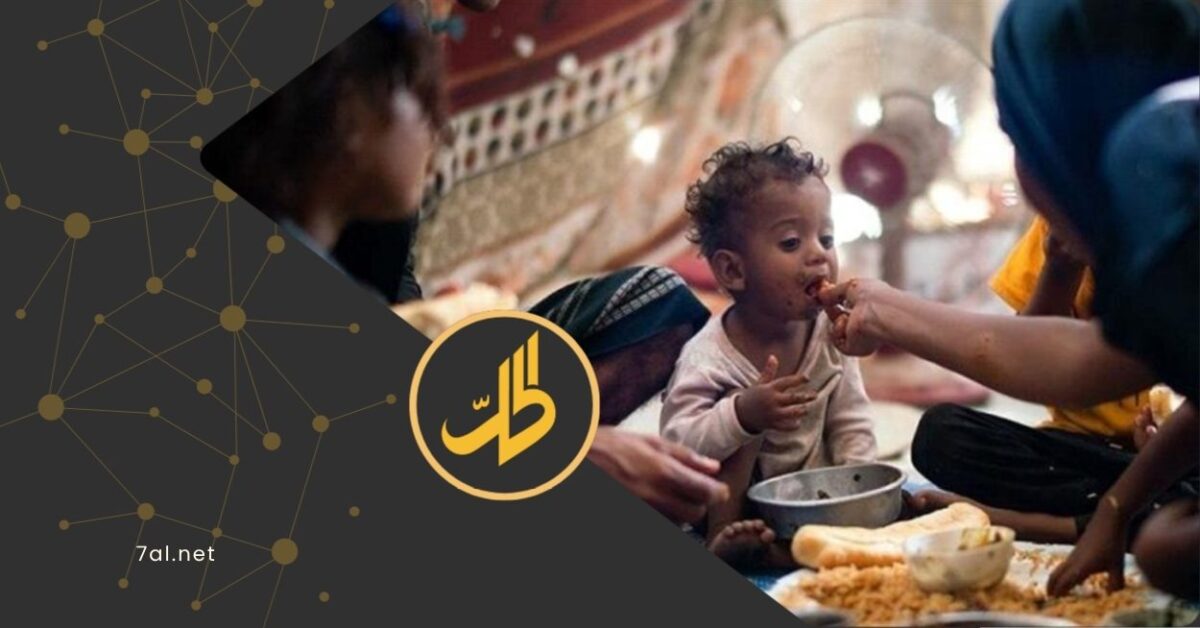
A recent international report warned that the Houthi group’s involvement in the regional conflict alongside Iran could push humanitarian conditions in Yemen to even more severe levels, in a country already suffering from one of the world’s worst food security crises.
Possible domestic repercussions
A report by the emergency relief coordination project “ACAPS” indicates that expanding the Houthi group’s role in the ongoing confrontation, whether through cross-border attacks or by targeting interests linked to Tehran’s adversaries, could provoke military counterstrikes whose cost would be borne directly inside Yemen, particularly with regard to the flow of essential goods and the movement of aid.

According to estimates, more than 22 million people in Yemen need some form of humanitarian assistance, while vast areas are already experiencing crisis-level or worse food insecurity.
The report links the prospects of escalation to their impact on ports and vital infrastructure, noting that any disruption to Red Sea ports would quickly lead to a decline in imports of food, fuel, and medical supplies, which would be reflected in local markets through shortages and rising prices.
Open scenarios and a more complex response
The report explains that escalation scenarios may overlap or develop simultaneously, depending on how the confrontation between the United States and Israel on one side and Iran on the other evolves.
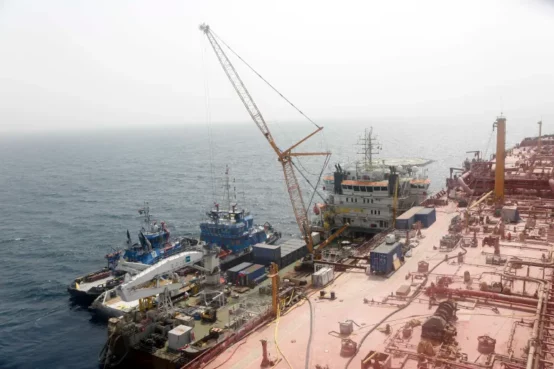
In this context, it points to the growing challenges facing organizations operating in Yemen, including access restrictions, damage to infrastructure, as well as administrative obstacles and funding shortfalls.
Estimates show that the humanitarian system is already operating at the limits of its capacity, meaning that any new shock could lead to a real reduction in the volume of aid despite growing needs.
The report also warns of rising protection risks, including restrictions on the movement of humanitarian workers and the possibility of harassment or detention, factors that could obstruct or delay the delivery of aid in some areas.
Repercussions beyond the war
These warnings come amid mounting signs that the Tehran-aligned Houthi group is expanding its involvement in the conflict, after announcing missile attacks toward Israel and linking the continuation of its military operations to developments in the regional confrontation.

This trajectory puts Yemen on the brink of a complex phase amid the fragility of the economic and humanitarian situation, threatening to widen the scope of the impact to include food, fuel, and basic services.
As the escalation continues and expands in scope, its impact will inevitably reach the lives of millions of Yemenis, who find themselves confronting a crisis that worsens with every new round of tension in the region.
- How the Houthis Are Choking Yemen’s Peace Efforts with a Broad Escalation on the Ground
- Economy in the Wind: How Yemenis Are Paying the Price of Disrupted Shipping Routes
- Houthi Summer Centers: Factories for Indoctrination and Raising a “Scream” Generation
- The “Coalition of Necessity”: What Costa Rica’s Terrorism Designation of the Houthis Signifies
- Mojtaba Khamenei Runs Iran from His Bed as Photos Vanish and the Supreme Leader Makes a “Voice-Only” Appearance