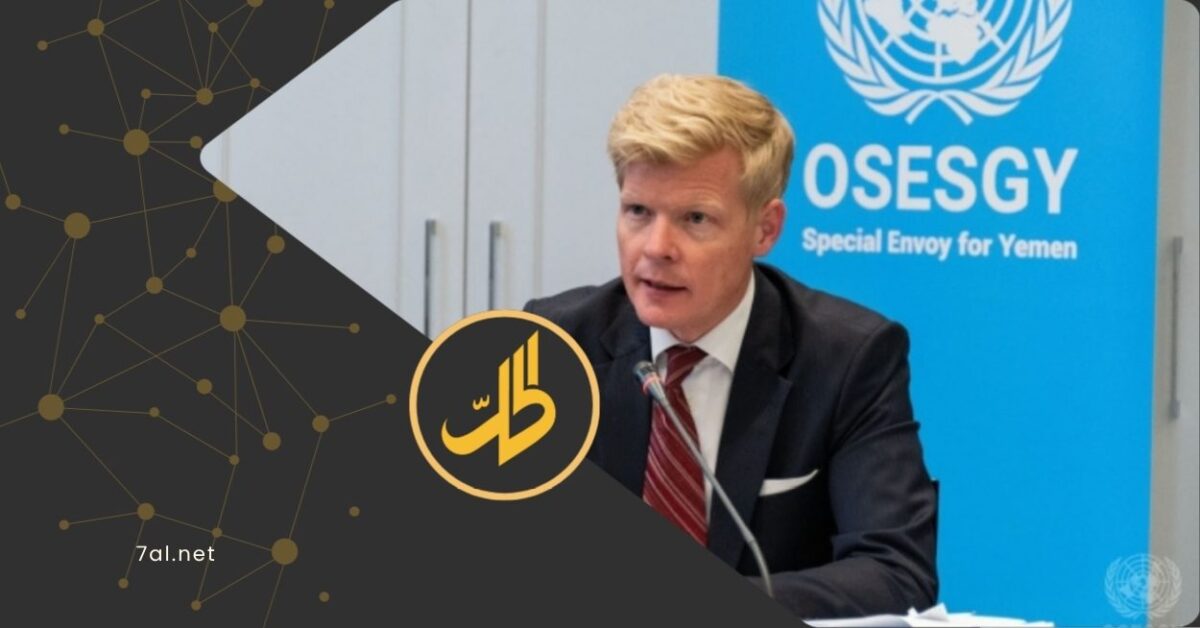
UN Special Envoy to Yemen Hans Grundberg expressed deep concern on Sunday over the involvement of the Iran-backed Houthi group in the regional escalation, after it announced that it had carried out military attacks toward Israel.
Grundberg warned of direct repercussions that could push Yemen to the forefront of the conflict and obstruct the faltering peace process in the country.
Dragging Yemen into war
In an official statement, Grundberg said this development threatens to drag Yemen into a war that would complicate UN efforts and reignite the conflict, at a time when the country is still suffering from deep economic and humanitarian fragility.

He stressed that “no party has the right” to drag Yemen into regional conflicts, calling for an immediate halt to military actions and recourse to diplomatic channels to contain the escalation.
This warning comes amid rapidly shifting developments on the ground, as the Houthi group begins carrying out actual attacks after a period of relative calm.
If this course continues, its repercussions may extend into Yemen itself, whether through possible military responses or direct effects on ports and supply lines, which would increase the cost of any escalation for civilians.
Concerns over the peace process
Observers believe the UN envoy’s position points to growing concern over the erosion of undeclared understandings that helped reduce the pace of violence over the past two years, especially in the absence of a stable political framework capable of absorbing the repercussions of the escalation.
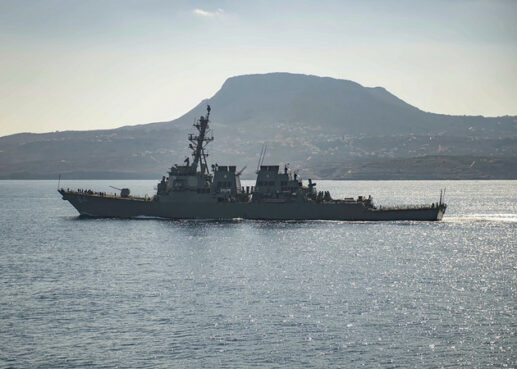
While the United Nations is trying to push toward a gradual settlement in Yemen, the Houthi group’s involvement in a regional confrontation could place the Yemeni people in harm’s way, while the group’s leaders hide in caves and mountains.
Expanding the scope of military operations, even if it remains limited at this stage, also opens the door to reactions that could reach inside Yemen, in a scenario that has occurred before and carried a high humanitarian cost.
The Yemeni government’s position
Grundberg’s warning aligns with official Yemeni positions voiced during the meeting of the Council of the League of Arab States on Sunday, where warnings were issued about the repercussions of Iranian escalation in the region, including threats to vital shipping lanes.
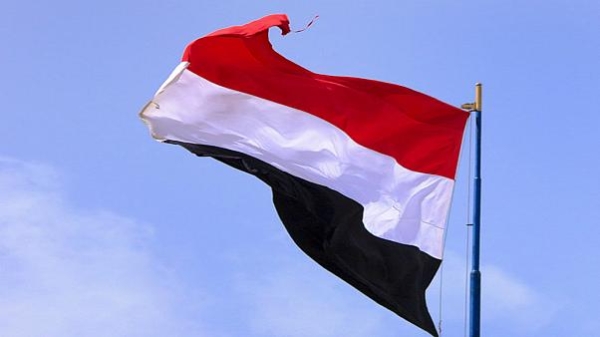
In this context, the internationally recognized Yemeni government affirmed that the Houthi group’s involvement in this confrontation confirms its allegiance to Iran, warning that continuing on this path could draw the country into an external conflict it does not need.
As UN calls for de-escalation and official warnings against a widening confrontation continue, Yemen faces a real test, where the fragile peace process intersects with military escalation beyond its borders.
In the absence of clear signs of a swift containment of the tension, any additional step could push the situation toward further complexity, with a humanitarian cost borne first and foremost by the Yemeni people.
- How the Houthis Are Choking Yemen’s Peace Efforts with a Broad Escalation on the Ground
- Economy in the Wind: How Yemenis Are Paying the Price of Disrupted Shipping Routes
- Houthi Summer Centers: Factories for Indoctrination and Raising a “Scream” Generation
- The “Coalition of Necessity”: What Costa Rica’s Terrorism Designation of the Houthis Signifies
- Mojtaba Khamenei Runs Iran from His Bed as Photos Vanish and the Supreme Leader Makes a “Voice-Only” Appearance