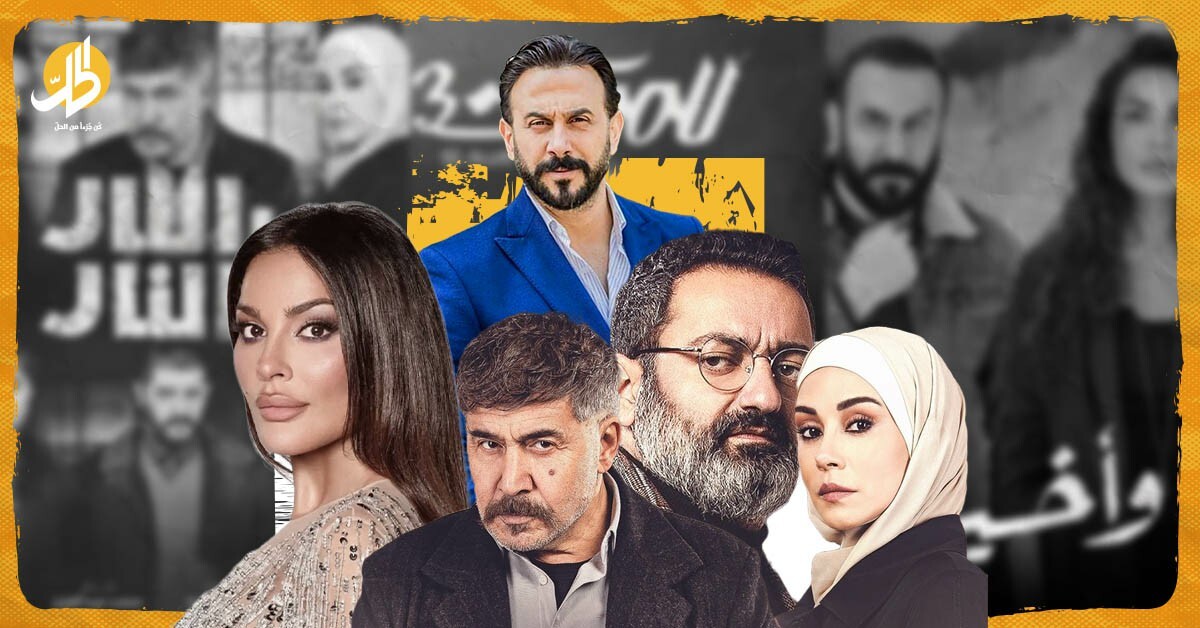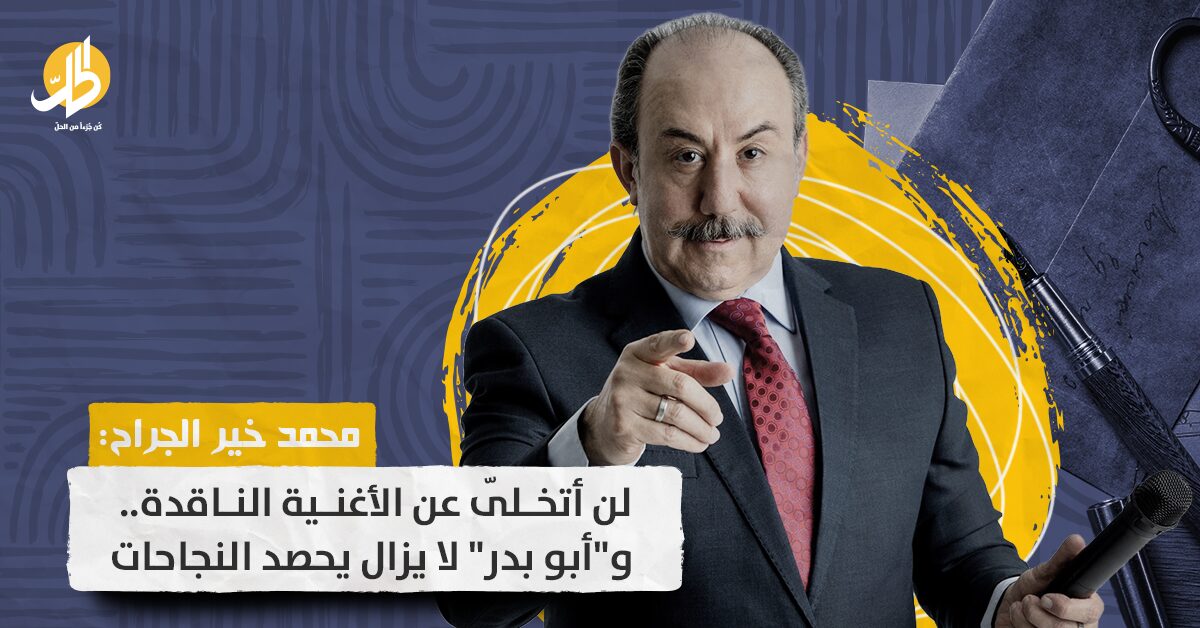
The Syrian artist Mohammad Khair al-Jarrah managed to make a strong start through the series “Days of Anger” (1996), after which he appeared in eight productions at once, including “Hayy al-Mazar,” “My Family and I,” and “The Return of Ghawar.”
These works helped establish a strong presence for him thanks to their varied subjects and diverse characters. Through them, al-Jarrah established himself as a versatile artist who did not enter the field merely on the back of the fame and success of his father, Abdel Wahab al-Jarrah, but instead nurtured his talent and sought to refine it through experience and performance.
After many years, al-Jarrah has built a substantial career, whether in acting or in singing, theater, writing, and other arts. He has left his mark and achieved major success in Syria, the UAE, and the Arab world as a whole.
Mohammad Khair al-Jarrah and next Ramadan’s drama season
This success and long career may be why Mohammad Khair al-Jarrah has not yet decided on his choices for the coming drama season. He told Al-Hal Net: “So far, nothing is clear for me regarding next Ramadan. I turned down some offers because of timing, as I am busy preparing a theatrical production, and there was no way to coordinate things. My first commitment is to the play, and I do not know whether I will take part in a television project or not.”
As for why his appearances in joint Arab productions have outweighed his Syrian work in recent years, al-Jarrah sees this as a natural result of his living outside Syria for more than five years for personal reasons. When he finds an appealing offer, he certainly likes to work in Syria. But as an actor, he is always looking for the best production and artistic opportunity.
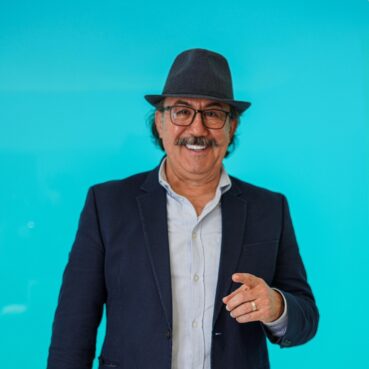
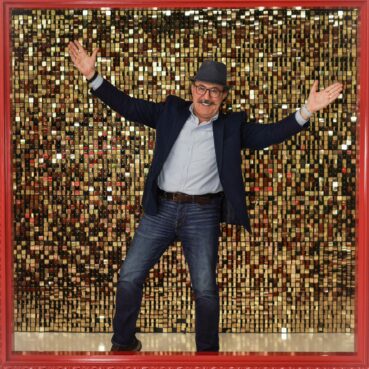
Al-Jarrah explains that the way joint productions operate, the production methods of major companies, and their professional protocols are attractive to any actor. This differs from the way work is often done in Syria, where things can depend on personal relationships and keeping people satisfied. Any actor, technician, or director prefers to work within comfortable rules and under strong management.
The Syrian artist adds that his choices have now become artistically difficult, because the responsibility is great, as is the ambition to maintain the audience’s affection and continue presenting what suits them, which he finds somewhat daunting.
Al-Jarrah said: “We make our living from this profession, and it leads us into a tunnel of confusing choices. Without a doubt, the most important condition is choosing something worthy of one’s career and respectful of the artist’s history and identity, and that any new step should carry something new and different. After that comes the financial aspect: whether it is satisfactory, supports the choice, and matches the effort involved. Then comes the character itself and what it contains. Above all, though, is respect for one’s history and career. All of this makes me very careful in my choices.”
Excelling in comedy
Mohammad Khair al-Jarrah consistently achieves great success in the comedic roles he plays, and audiences often wonder whether his real personality carries the same humor that gives him such a strong presence and broad popularity. Al-Jarrah says he enjoys funny moments in life and likes catching a good joke. This is part of his personality, though he does not see it as a prerequisite for success in comedy, even if it does help.
Speaking about the state of Syrian drama today, al-Jarrah says: “All of us in Syria—not only in drama, but in our current reality—are in a dark tunnel, searching for a glimmer of light to move toward. Despite all the noise we see around productions, these are still attempts surrounded by a great deal of hype, even if they aim to make more of an impact inside Syria than across the Arab world. Drama before 2010 already suffered from some problems, and these worsened during the war the country went through. Today, however, we cannot predict the future.”
The problems lie in the script, the production mechanism, the Artists Syndicate and its ability to protect artists, and the visions adopted by government institutions such as the ministries of culture and information. These are the things that shape our future. Support is not only financial; it also means general and logistical facilitation, and encouraging production artistically, culturally, and dramatically.
Mohammad Khair al-Jarrah
Mohammad Khair al-Jarrah stresses that the biggest problem facing Syrian drama production today, and for more than 15 years now, is that production decisions are not in the hands of the people concerned or the drama-makers themselves, but are tied to the broadcaster and what suits it. This is in addition to the absence of artistic management, leaving productions governed by production management and funding decisions. This is especially evident in Syria because of the lack of a local broadcast market.
Mohammad Khair al-Jarrah and the success of the monologue
On another artistic front, al-Jarrah has succeeded with his satirical comic monologue experiments, receiving a warm response from audiences. This has brought him added fame alongside his acting career, and audiences now look forward to his new work in this field.
Speaking about this direction, al-Jarrah said: “A witty song is one that tackles a topic, issue, or phenomenon through criticism and satire. Those who heard the songs truly loved them. But this style needs a stage and needs to be seen, especially in the format we have been thinking about and presenting recently. The song is heard and acted out, turning it into a musical-dramatic tableau that belongs on the stage.”
He continued: “Musical theater is an important and necessary experience. It has its followers in Syria and its masters across the Arab world. I will keep trying, within this angle and my own space, to speak through words and melody, continue this path, and present important songs worthy of the monologue tradition.”
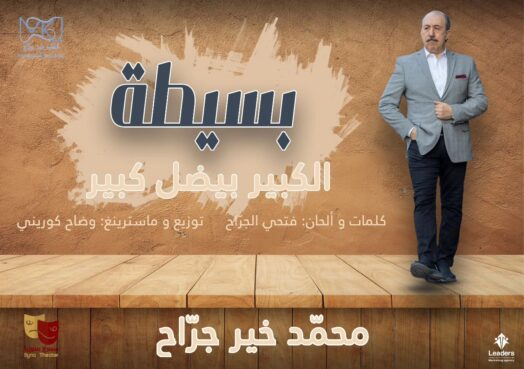
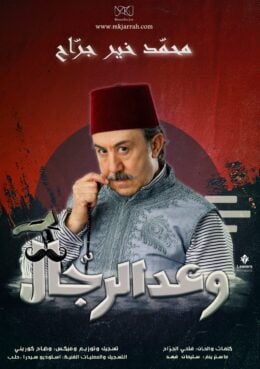
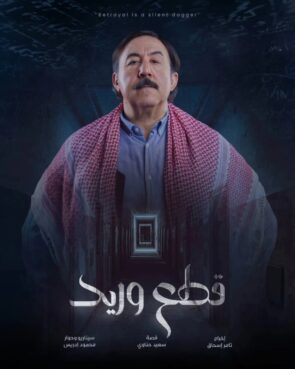
Al-Jarrah believes that with every song he presents in this field, he tries to deliver a message, whether in the form of a story or a joke. What motivates him to continue this artistic project is the density of the idea and its quick, powerful impact—something that can rival a 90-episode series in which the idea is stretched out and repeated, whereas a song can deliver the essence quickly.
He added: “There is no doubt that working in this space has given me a uniqueness that no one else has approached—not so much as a formal project at first, but as an artistic indulgence. It started that way with me, but it turned into a complete artistic project and gave me a space of freedom through which I can express what is on my mind, far from the producer’s control and from the financier’s thinking. The experiences I have presented also encourage me because of the positive reactions I have received.”
Regarding upcoming productions, al-Jarrah said: “There are new songs being prepared, and I prefer to take my time before presenting them to the audience, so that the idea is fully formed and accompanied by a video, making it ready to circulate via social media, which we have become bound by. At the moment, I have two songs: ‘The Tree’ and ‘Joukh.'”
“Abu Badr” and “Bab al-Hara”
Despite the many characters and varied roles Mohammad Khair al-Jarrah has played, his character “Abu Badr” in the famous series “Bab al-Hara” still accounts for the greatest share of his success, public acceptance, and the strong impact he made through his performance, mastery of his craft, and understanding of the character’s nuances. But what effect did this success have on him, and how did it change his career?
Al-Jarrah replied by affirming that “Abu Badr” is one of the finest characters he has played, and one he loves dearly. Director Bassam al-Mulla also opened the door for him to wider Arab recognition through it. “The series is still being shown to this day, and it continues to attract new, younger audiences while also retaining its older viewers.”
Despite the many characters I have played, such as “Jawhar Bou Malha” in “al-Khirba” (2011), “Qadri” in “Sabaya” (2013), and “Laymoun” in “Haremlik” (2019), along with many other audience favorites, “Abu Badr” still holds a special place for me.
At the end of his interview, the Syrian star Mohammad Khair al-Jarrah expressed his wish to create the kind of theater he longs for: popular theater that is close to the audience, to people’s daily lives, and to the hearts, concerns, laughter, and pain of his followers. He also wants to experience a direct relationship with the audience, away from financial return, because direct communication with audiences holds great value for him.
On the personal level and in terms of broader human concerns, al-Jarrah said: “I am saddened by the condition of Syrians in all their different backgrounds, spectrums, and colors. Anyone who knows the Syrian makeup up close is astonished by the outcome we have reached—our estrangement from ourselves, our identity, our colors, our culture, our art, our authenticity, our depth, and Syria’s deeply rooted history. I remain hopeful that the coming days will bring us all peace, safety, and a dignified life worthy of the great Syrian identity.”