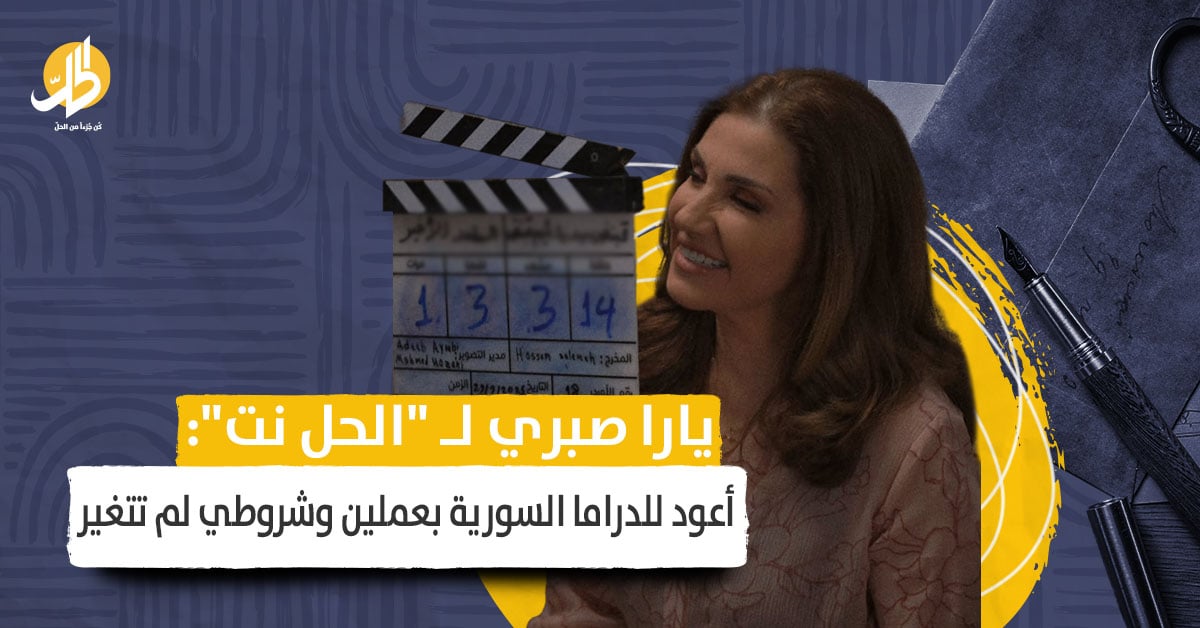
Being born into an artistic family was not merely a matter of lineage for Syrian actress Yara Sabri; it meant an accumulation of experience and the refinement of a talent that was already there. For her, the family formed both a theoretical and practical artistic academy: her father is the veteran actor Salim Sabri, and her late mother is Thanaa Debsi.
Although she studied tourism sciences and music at the Arab Institute of Music, her talent for acting ultimately shaped her path. Beginning in 1989, she excelled in a wide range of roles and characters. She appeared in “Shajarat al-Naranj” as “Buthayna,” after which many roles and productions followed. She played “Suzan” in “Abnaa wa Ummahat,” and also appeared in “Al-Shaqiqat,” “Khan al-Harir,” “Ayyam al-Ghadab,” and “Al-Thurayya.”
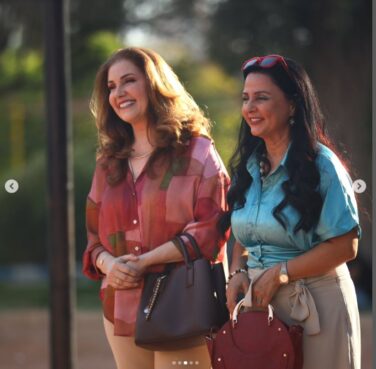
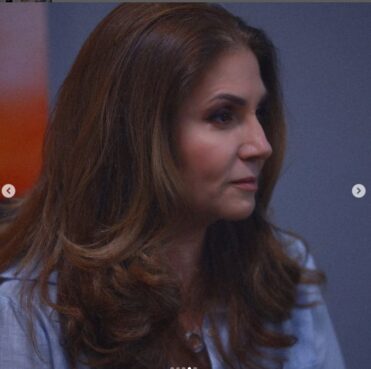
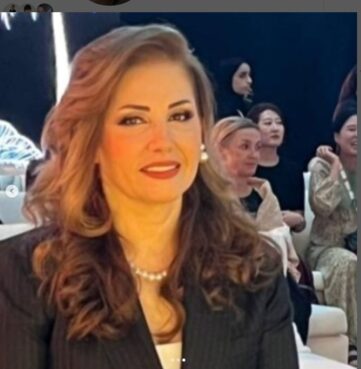
In addition, Yara Sabri appeared in the first, second, fourth, and fifth installments of “Spotlight” (“Buq’at Daw’”). The work that has remained truly unforgettable in viewers’ memories, however, is “The Four Seasons” (“Al-Fusul al-Arba’a”), through her famous character “Nadia,” whom audiences still remember for her memorable moments, her style, and the impact she had on them. The Damascene environment also featured in Sabri’s choices, and we cannot forget her participation in “Ahl al-Raya” and “Awlad al-Qaymariyya,” among many others.
The Syrian star has also left her mark on major dramatic works, such as “The Palestinian Exile” (“Al-Taghriba al-Filastiniyya”), for which she won Best Actress at the Adonia Drama Festival. This is in addition to works such as “Bukra Ahla,” “Ala Hafat al-Hawiya,” “Al-Husrum al-Shami,” and “Jalsat Nisa’iyya,” as well as “Takht Sharqi,” for which she also won an Adonia Award in the same year.
Working on home soil
Sabri is known for her warmth, and the comic streak in her personality is plain to see. That spontaneity comes through clearly, and her success is especially evident in characters that require humor without affectation. This is what made those roles settle in the minds and memories of audiences, prompting her admirers and fans to ask for more of them.
Although the Syrian star knew the consequences of opposing the former Syrian regime and calling for a free and dignified life for the Syrian people, and although she was aware that her artistic career would be affected, she chose to stand by her humanity and by what her conscience and sense of duty dictated. That led her to leave Syria for many years in search of a better life for herself and her children.
During her years abroad, Sabri took part in several productions outside Syria, including “Wujuh wa Amakin,” “Samarkand,” and “Orkidia.” She returned to her homeland, Syria, after the fall of the regime last December, and Syrians welcomed her warmly with a Damascene celebratory procession known as an “arada,” expressing their hope that she would resume filming in Syria after this long absence.
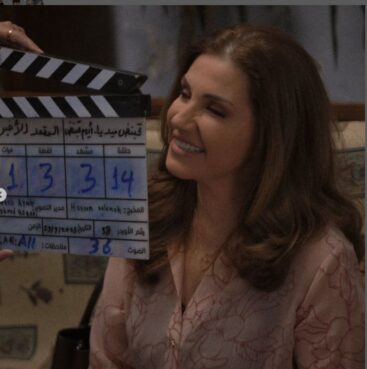
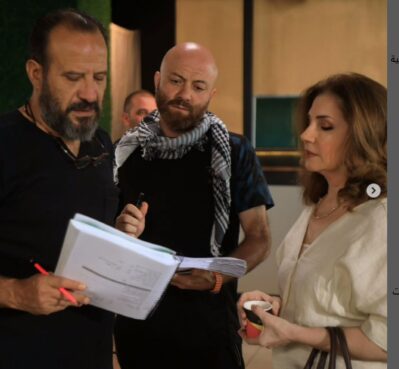
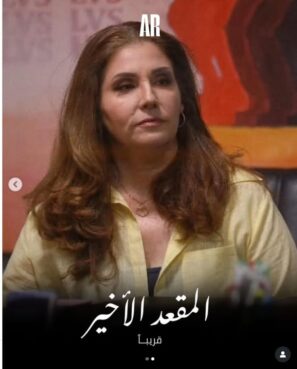
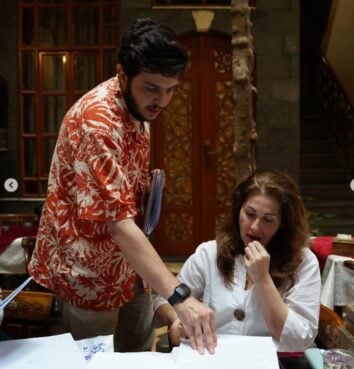
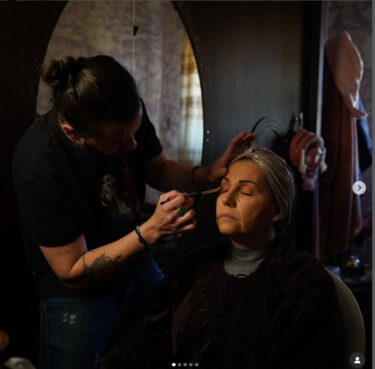
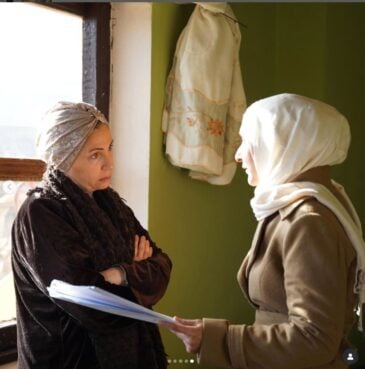
That return to filming has indeed happened. In remarks to Al-Hal Net, Yara Sabri said that she had taken part in filming two short works, the first titled “Yom wa Shway,” which marked her first return to working on Syrian soil.
She added: “Yom wa Shway” deals with the final day before the fall of the former regime in Syria, and in it I play the role of the mother. The second work is titled “The Last Seat” (“Al-Maq’ad al-Akhir”), and it consists of 15 episodes. In it, I play the director of a private school, where the students come from different backgrounds and hold different ideas, and the director must deal with the problems that arise inside the school with love and wisdom.
Asked whether her conditions for accepting a role have changed now compared with the past, after this absence, Sabri confirmed to Al-Hal Net that her conditions and ideas regarding her professional approach have not changed. As she put it, they are not many; the most important is that the role be suitable within the dramatic genre being presented.
Adapted drama
Many followed Yara Sabri’s success in the role of “Mayada” in the adapted series “Al-Amil” (“The Agent”), where she achieved remarkable success and moved audiences through her scenes, her style, and her performance as a grief-stricken mother suffering because of one son who was lost many years ago and another whose behavior is shrouded in mystery, especially after he grows close to a gang leader. Her sense of loss, and her performance, came across as singular and deeply human, showing strength at times and vulnerability at others.
Regarding this experience, its success, and her happiness with the response the work received overall, she explained that she does not mind repeating the experience in Turkey despite all the difficulties it causes, but she considers it a distinctive experience within this dramatic genre.
Sabri continued: “Adapted drama in general is a very old phenomenon, and it is not exclusive to us as Arabs. What I mean is that there are Korean works that have been adapted into Turkish, and there are Italian and Mexican works that are remade in other languages. All dramatic forms exist and each has its audience, and I cannot place them all under a single judgment; some are good and some are weak.”
Sabri believes that, after the spread of adapted and joint productions, it has become necessary to create a safe environment and a new artistic climate for the return of local Syrian production—one that opens the door to many actors, including academy graduates and other talented performers, and gives them the opportunity to succeed, just as happened previously with today’s stars, who achieved their first successes in local drama. That local drama formed the cornerstone for moving on to wider horizons, and this is what contributes to the success and strength of Syrian drama.
Yara Sabri: a career and cultural contributions
Actress Yara Sabri has always been interested in taking part in cultural, humanitarian, and social events. Since returning to Syria, she has also participated in many public-oriented activities, and she is always keen to be present in support of any humanitarian, intellectual, artistic, or social cause.
Recently, she had a prominent presence at the tribute to the late novelist Khaled Khalifa and the launch in Damascus of an award bearing his name in celebration of his cultural legacy. Here, Sabri told Al-Hal Net that Khaled Khalifa represents, for many Syrians, the novelist, the human being, the brother, the friend, and the true national moral compass—and that this is how she sees him as well.
She added: “My relationship with literature and reading began as my awareness was taking shape, thanks to the insistence of my beautiful mother, the late Thanaa Debsi, who pushed me to read until it became a natural part of my daily life. Now I make sure to read distinguished novels recommended to me by friends, and I also love and enjoy short stories.”
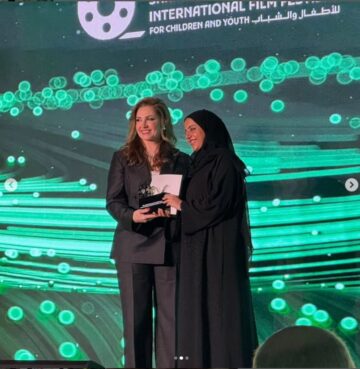
On the other hand, Yara Sabri expressed her happiness at participating on the jury of the Sharjah International Film Festival for Children and Youth, whose activities concluded a few days ago. She said this participation gave her the opportunity to watch a group of short films that introduced her to talented filmmakers, and that the discussion session with them after the judging was also fruitful and important.
Regarding the mechanism for choosing the winning film, Sabri said: Choosing the winning film requires us to identify the greatest possible number of elements of artistic distinction together, and on that basis the final preference is made.
After a long artistic career—and before that, her life journey alongside her two veteran artist parents, Salim Sabri and Thanaa Debsi—Sabri says she always feels a desire for artistic renewal, believing that art contains worlds most of which we have yet to discover. She would also like to repeat her experience in film acting, because of its magic, continuity, memory, and soul.
Finally, regarding the most important things she took from her parents, Sabri said: “They say I am a mixture of my father’s cheerfulness and dynamism, and my mother’s tenderness and perseverance. She was always my first teacher, and she deserves the credit for shaping me artistically, professionally, and morally. She taught me commitment, respect for time, and respect for people’s dignity.”