
Ah, you great balloon called homeland, I will prick you with a needle
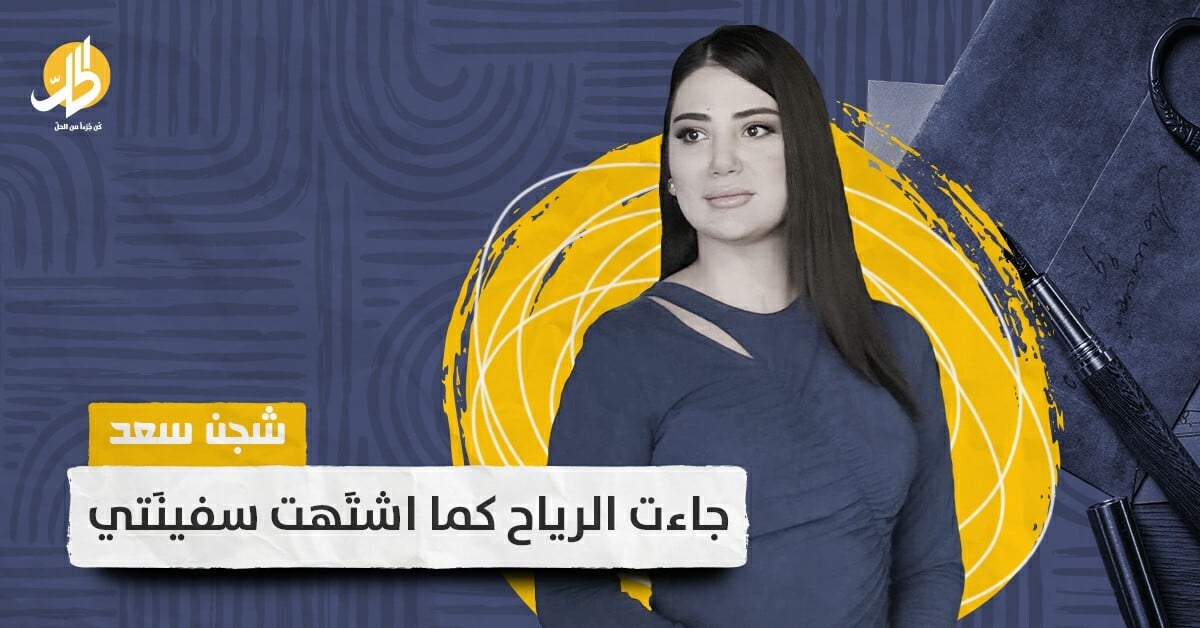
Jumana Mumtaz
In Iraq, where threads of light and hope always seem to dance, Jumana Mumtaz emerged as a distinctive presence. Her name has echoed across television screens and the pages of novels, carrying with it the vibrant spirit of Baghdad, the authentic fragrance of Nineveh, and a passion for life that shines through in every word and deed.
Her journey, which began amid the bustle of the capital, Baghdad, and passed through the old streets of Mosul, was not merely a geographic move or a life split between two places. Rather, it was a crucible that forged within her a deeper understanding of Iraq’s diversity, making her a daughter of both cities, each completing the other within her.
Today, writer and media professional Jumana Mumtaz stands at the heart of Iraq’s media and cultural scene, enriched by the depth of her human experience. She is both witness and storyteller, weaving strong threads between fieldwork, the glow of the screen, and the magic of the written word.
In this exploration of her life, we delve into the depths of her experience, tracing the marks of roots and belonging, her passion for media as a reflection of the public pulse, the world of fiction that embraces the stories of the country and its people, her analytical outlook on international relations and politics, and the many milestones that shaped her singular personality.
Jumana Mumtaz.. Roots Pulsing with Life
Jumana was born on November 3, 1988, in Baghdad’s Karrada district, the bustling city that witnessed her early years and the awakening of her consciousness. She also spent parts of her childhood and adolescence in Mosul, the ancient city that still preserves in her memory images of youth: the Tigris flowing gently and the alleys of the old city whispering buried stories. Jumana recalls playing with her cousin on the hill near the Al-Arabi neighborhood or close to the monastery; those moments helped shape her inner world.
“Mosul means family, the extended family, and childhood,” Jumana says. “I remember when I started primary school in Baghdad, in first grade, my accent was Mosuli. The other children laughed at it because it sounded unfamiliar to them, which pushed me to adapt to the Baghdadi dialect.” She sees this movement between the two cities as “a blessing and a constant opportunity to change places and find another embrace and other people.”
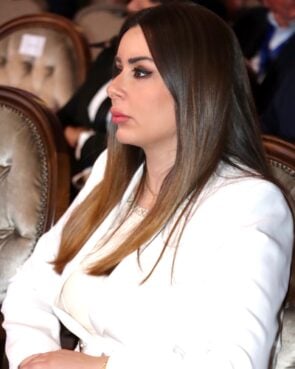
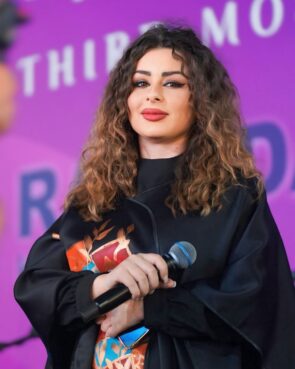
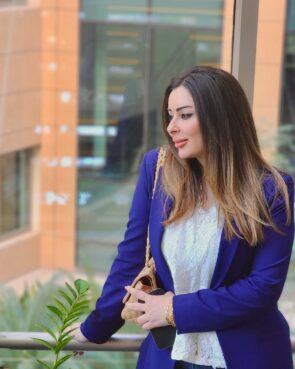
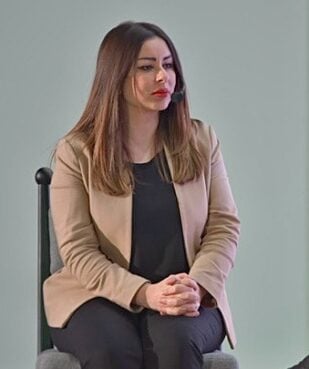
From Mosul, known as Umm al-Rabiain, Jumana Mumtaz drew a sense of commitment and discipline rooted in every detail of Mosuli life, from orderliness to punctuality. From Baghdad, meanwhile, she gained openness and flexibility. She describes Baghdad as a city “full of giving, love, and tenderness. I love Baghdad very much because it is my life and an authentic part of my identity, where I was raised and grew up. I took from it the crowds, but in my mind they became a crowdedness of thought, and most importantly I took from it this overflowing tenderness.”
In the capital, she found greater freedom, which gave her room to create, while in Mosul life revolved around family and serious, orderly academic competition. At times she is torn: “Sometimes I feel I am the daughter of Mosul, expected to be disciplined in everything, but at other times I feel I am the daughter of Baghdad, who cannot rein in her emotions.”
Between Screen and Words: A Journey That Touches Reality
Jumana Mumtaz did not enter the world of media by chance, but through persistent effort and determination. She began as a civil activist involved in media-related work and trained in journalism for two years before taking her first professional steps. “In this profession, luck did not do the work for me; everything came through striving, hard work, and diligence,” she says. She worked as an editor, correspondent, and presenter, covering sensitive and exhausting issues across most Iraqi provinces.
Over the course of her career, which included work with channels such as Al-Mada, Al-Fallujah, Al-Sharqiya, Dijlah, Huna Baghdad, and Al-Oula, Jumana sees herself as “a graduate of the Al-Mada school of media, culture, and arts,” which was closest to her thinking and cultural outlook. Mumtaz believes Iraqi media needs a stronger voice and deeper attention, especially amid current challenges. “I feel we need to understand our tools in this modern world… the tools of Iraqi soft power, so we can define our place on the international map; otherwise, the world will swallow us. The international system shows mercy to no one.”
At Al-Sharqiya, her program “Forbidden Files” stood out for its bold investigative character, though it was not without ethical and professional difficulties. “The first was the ability to reach victims, and more importantly to make sure they were real victims,” Jumana says, stressing the importance of not exploiting people’s suffering. “Sometimes I would cancel certain guests if I believed appearing in the media would expose them to problems. These are the ethics of the profession, and this is the kind of media I was in love with.”
Last Ramadan, Jumana presented the program “Khan al-Haki,” which hosted influential figures from Mosul. The choice of Mosul came at management’s direction, and Jumana discovered something remarkable: “It is the strength of a mature social fabric that will save cities emerging from war.” She saw how the people of Mosul rebuilt their city with their own hands, from clearing rubble to restoring life to shops, in an extraordinary social movement that included all segments of society.
Jumana currently presents the program “The Sixth Ocean,” which represents the culmination of her deep interest in international affairs after earning a master’s degree in international relations from the University of Leicester. She believes her academic studies gave her “a deep understanding of international issues, away from emotion and grounded instead in a critical, purposeful, constructive mind that seeks logical answers.” This different perspective, even if not easy for everyone to grasp, deepens her analysis of events.
Jumana Mumtaz and the Soul’s Tales on the Pages of Novels
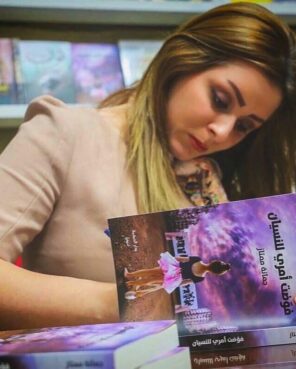
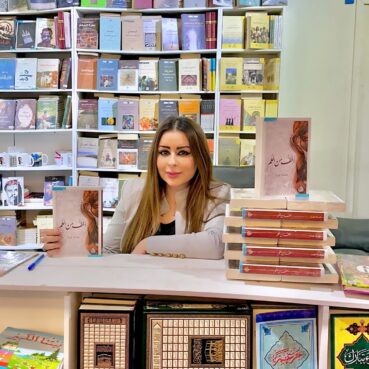
Beyond the lights and television screens, Jumana has another world that reveals itself in her writing. She has published two novels: “I Entrusted My Affair to Forgetfulness” and “Lighter Than a Dream.” Jumana Mumtaz considers writing “a form of emotional release.” These need not be her own personal experiences; rather, she is moved by real people. “I feel them; I feel they are the heroes of my novels. They live with me… until I write them and release my feelings and theirs.” What matters most to her is that the reader senses the sincerity of her emotions in her concentrated sentences that emerge from the depths of her heart.
In the novel “Lighter Than a Dream,” Jumana delved into a painful issue: women’s suicide, prompted by an earlier investigation she conducted into violence against Iraqi women. “I cried for them a great deal in private and wished it were possible to help, or that the state would care more about lifting this pain from vulnerable women who find no safe door and no warm embrace to turn to, leaving them with nothing but suicide as a refuge,” she says, expressing the depth of her sorrow.
Jumana finds both pleasure and challenge in the two worlds: the screen and the novel. While the screen imposes constraints, such as adherence to formal language and the presence of guests who may offer superficial opinions, the world of fiction grants her “wide latitude. I live my freedom to the fullest there.” And there is a bridge between the two: “What I hear through media sometimes becomes images in my novels.” Through these experiences, Jumana has deepened her understanding of human nature. “The human being remains the greatest mystery; it is the Creator’s secret within us… a being of immense complexity and precision, with enormous capacities and two harmonious yet intersecting paths: the mind and the heart.”
Life’s Tests and Her Hidden Passion.. Cooking and Plants
Life, as the Iraqi writer says, “has always placed me in tests greater than myself.” But from these challenges she learned profound lessons: “I learned that tomorrow is always a promising opportunity, and that a person has enormous capacities if they can discover them. It is enough that one can endure, and that is the greatest lesson, so a person should never diminish their own worth… persistence in itself is enough to win the challenge.”
Mumtaz believes in higher human values, foremost among them commitment, which she learned from her father and passed on to her son. “Because by nature a person always tends toward ease, but they must train themselves to be committed, otherwise they will lose everything.” This commitment includes family, friends, work, values, principles, and honesty.
Away from the spotlight and words, Jumana finds personal spaces in which to restore her energy: writing, reading, plants, and cooking. The kitchen, for her, is “a way of expressing love.” She loves gathering her family and friends around a table she has prepared, offering them what she made with love and devotion. “Because they deserve to enjoy themselves, to be happy, and to be pampered by me… I cook for them out of love.”
Jumana loves planting trees and flowers, which reflects a deep appreciation for nature. “These plants are magic, the magic of nature; the greatness of the Creator is revealed in this green creation full of beauty,” she says, enchanted by the colors of flowers and the way divine artistry appears in them. Mumtaz sees a similarity between caring for a small plant until it blooms and nurturing an idea until it becomes a novel or a successful program: both require care and tenderness to bear the finest fruit.
Iraq Through an International Lens
Jumana Mumtaz believes that Iraq possesses enormous human potential, but that it is “scattered and fragmented, and does not come together to produce the international image Iraq deserves.” She adds: “What we need is an intellectual revolution, and we have the minds for it. The goal of this revolution is to say to the international community: this is Iraq, not just any passing country.” She calls for supporting the tools of Iraqi soft power through organized collective work in culture, media, cinema, the arts, and antiquities.
At the end of the journey, the Iraqi writer and media professional offers her advice to those aspiring to enter the world of media or writing: “Read, so that you do not let anyone make you doubt your abilities or try to push you aside.” In short, it is a call for knowledge and empowerment, one that Jumana sends to the sons and daughters of this generation.
- How the Houthis Are Choking Yemen’s Peace Efforts with a Broad Escalation on the Ground
- Economy in the Wind: How Yemenis Are Paying the Price of Disrupted Shipping Routes
- Houthi Summer Centers: Factories for Indoctrination and Raising a “Scream” Generation
- The “Coalition of Necessity”: What Costa Rica’s Terrorism Designation of the Houthis Signifies
- Mojtaba Khamenei Runs Iran from His Bed as Photos Vanish and the Supreme Leader Makes a “Voice-Only” Appearance