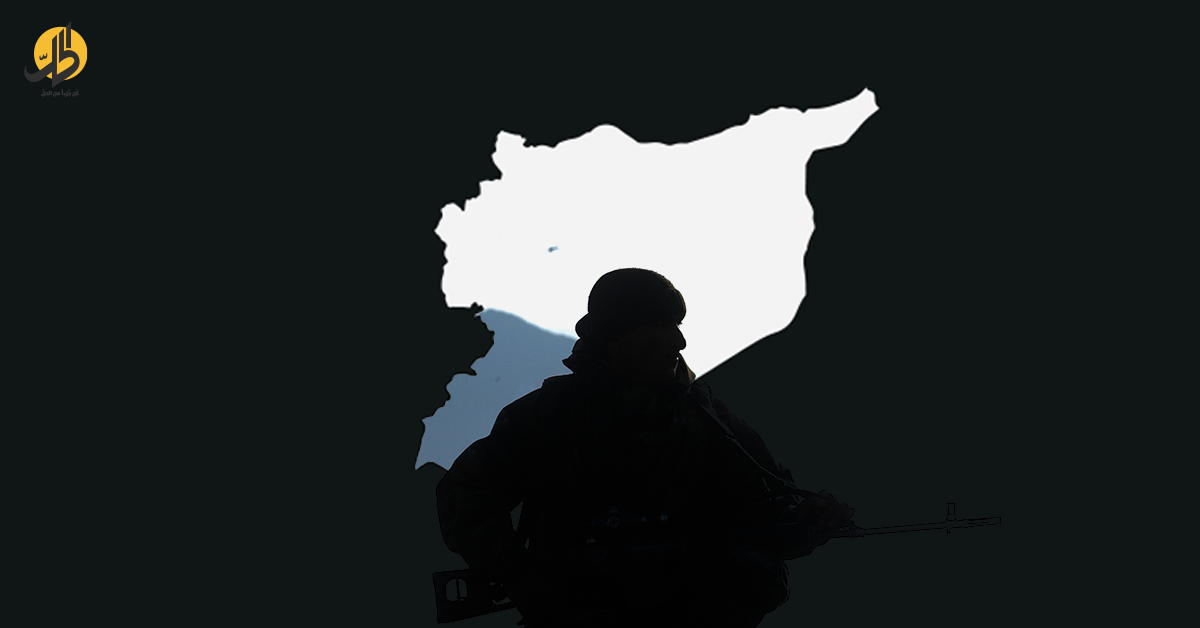
The recent operations carried out by ISIS in parts of Syria point to several possible scenarios, drawing attention to the growing خطر of a renewed wave of terrorist attacks, especially amid a range of security disturbances inside the country, as well as regional and international tensions, which could raise the level of instability in fragile areas.
These operations also point to a number of issues. Some are linked to the failure of the Syrian transitional government led by Ahmed al-Sharaa to achieve a sufficient degree of security, political, and social stability. Others are connected to the existence of an environment conducive to the rise—or rather the resurgence—of ISIS, particularly in terms of the discourse prevailing in the public sphere, with its violent, hardline, ideologically driven religious polarization, as well as declared policies and practices, all of which create a fertile environment for these developments and signal the possibility of further escalation.
In this regard, it is worth reflecting carefully on what was said last Saturday in an audio message by the group’s spokesman, Abu Hudhayfah al-Ansari, who declared: “The new Syrian regime, with its secular government and nationalist army, are unbelievers and apostates.”
Is the spokesman fully serious in this escalation as part of redefining the enemy and rearranging priorities? Or is he making a tactical move against the government in Damascus, in parallel with its rounds of negotiations with the West—especially the United States—in an effort to influence the course of those understandings or tilt the balance toward potential political gains? Or does the message reflect a disruption in the balance after responsibility for securing some of those areas was handed over to Damascus?
The Need to Prevent ISIS Activity From Turning Into an Escalating Dynamic
In this context, it is important to note what the commander of internal security in Raqqa reported: four Syrian security personnel were killed last Monday in an ISIS attack targeting a checkpoint in the city of Raqqa in northern Syria.
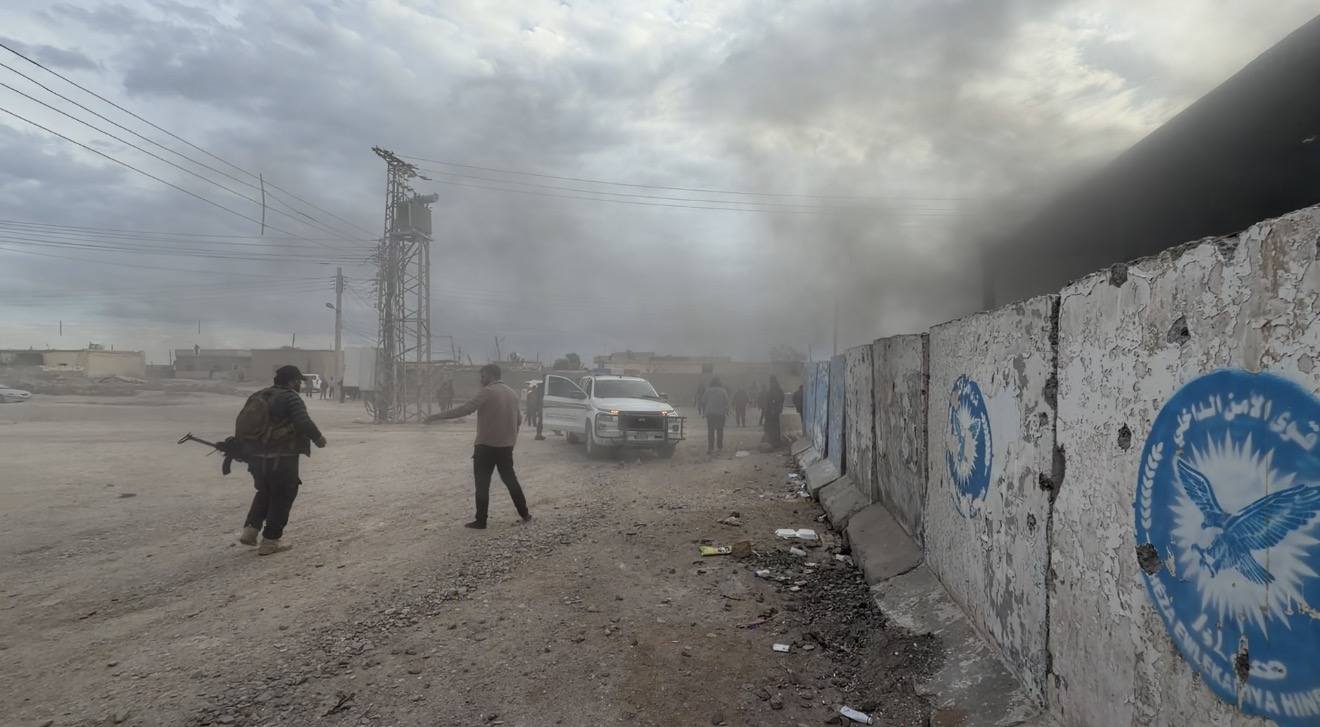
The transitional government’s “Interior Ministry” also reported the same toll, noting that it had managed “to neutralize one member of the cell, while our forces continue combing the area to eliminate the remaining members.” It added that “this was the second attack on the internal security forces in the area, after the checkpoint came under another terrorist attack last Sunday, resulting in the neutralization of one of the attacking terrorists, in an attempt to undermine stability.”
In light of this, it seems reasonable to discuss how successful the transitional government in Damascus has been in maintaining security and reducing the threat posed by these terrorist organizations, whether in the near or medium term, amid a range of local challenges—especially the need to entrench the principle of full constitutional and civil citizenship for all components of Syrian society—as well as intertwined regional and international challenges.
The legacy of classical political theory supports recognition of the state’s full right to monopolize force and use legitimate violence in the face of any threat to the unity of the state and the security of its citizens. Indeed, one of the basic measures of a state and its ruling system is the extent of their success in imposing security across the entire national territory. From this perspective, the government in Damascus appears to face a major challenge when armed activity such as ISIS attacks emerges outside its authority. Theoretically, this represents a security gap that must be addressed firmly and effectively so that it does not evolve from limited activity into a sustained pattern of attrition.
Looking at the pace of the recent attacks in Raqqa and other parts of Syria, it may be necessary to distinguish carefully between large, organized operations and a pattern of attacks aimed at sustained attrition and at placing Damascus under local, regional, and international pressure—especially under a new government moving quickly to build channels of communication with various actors. The government may seek to frame the recent attacks in this context, that is, as limited security incidents that do not rise to the level of territorial control or the establishment of a parallel administration.
Accordingly, the standard for judging the situation should not be limited to the number of operations or their type and scale, but rather to the Syrian government’s ability to contain this activity and prevent it from turning into an escalating dynamic. The real challenge, in one of its key dimensions, lies in breaking the cycle of attrition before it becomes entrenched in the state’s structures, harms civilians, or negatively affects investment opportunities and the return of economic activity.
The Social Dimension of the Return of the ISIS Threat
It is difficult to keep attention confined to the security dimension without considering the significance and force of the social and political dimension. The range of issues connected to the lives and stability of all components of Syrian society, under the principle of full citizenship, at this delicate stage in the life of the Syrian state, cannot be separated from the need to envision a safe and stable environment for all. This is also inversely related to the extent of the new government’s failure to impose its will across all Syrian territory in the face of the threat posed by the field operations of terrorist organizations.
There is a firm conviction that any permissive environment represents a direct opportunity that extremist organizations can exploit as a theater of operations. Such organizations—foremost among them ISIS—have long relied on porous terrain, feelings of marginalization and resentment, and competing sub-identities in order to exploit social turmoil, reproduce their mobilizing discourse, and expand the scope of their attritional operations.
From this perspective, entrenching the principle of equal citizenship among all components of Syrian society, within clear and unambiguous constitutional rights, is not merely a tactical political option or a functional measure adopted by an authority in the face of immediate challenges. Rather, it is a lasting strategic necessity for preserving the very concept and structure of the state.
Accordingly, strengthening positive participation among all citizens, guaranteeing rights without discrimination, and formulating an inclusive national approach that transcends divisions and disputes together form a solid wall protecting the state against any internal or external risks.
Accordingly, it seems logical to view the danger of ISIS and the return of its attacks not only through the lens of security risks and their local, regional, and international implications, but also in terms of how successful the new rulers in Damascus are in formulating a social contract that guarantees social and economic rights for all citizens and rebuilds trust between the state and society on firmer foundations.
A Test of Damascus’s Legitimacy and International Support
There is no doubt that Western countries, foremost among them the United States, view the threat of ISIS as one that goes beyond mere attacks occurring in fragile areas inside Syria, and beyond implications confined within Syria’s national borders. This issue is handled through the broader framework of regional and international security as a whole. The years of experience following the rise of the terrorist organization in 2014, and the consequences and cross-border expansion that reached Western capitals, still pose a central structural question that drives an approach allowing no half measures—one centered on containing this threat and preventing its repercussions swiftly and decisively.
Hence, signs of renewed activity by the organization, even if they have so far remained within a limited pattern of attritional attacks, attract attention and call for a high degree of caution, as they constitute a real test of the seriousness and ability of the government in Damascus: first, to repel these attacks on the ground, and second, to prevent the re-emergence of an environment conducive to the organization.
Accordingly, the sustainability of international support for the authority in Damascus—whether political, economic, or security-related—will remain tied to a tangible degree to its ability to contain and sustainably weaken this threat. For the West, it is not enough merely to contain attacks on the ground; what is required is the building of a stable social environment, effective information-sharing, and a clear determination to prevent Syria from once again becoming a magnet for extremist networks.
In this context, the issue of combating ISIS becomes one of the keys to international repositioning toward Damascus, and an influential factor in calculations of openness or caution during the coming period.
In any case, it is logical to view the early signs of renewed ISIS activity in parts of Syria as a complex and multi-layered indicator that is difficult to reduce to the security dimension alone. Syria’s public sphere today faces a sensitive challenge that requires repairing the narrative of internal stability and formulating a new social contract that guarantees full citizenship for all, in addition to recognizing the regional and international calculations that still view countering extremism as a principal gateway to any political or economic opening toward Damascus.
On this basis, confronting this challenge does not appear to be merely a security test, but rather a broader test of the Syrian state’s ability today to strike a balance between the requirements of security, political stability, and economic development, at a stage when Syria is still searching for a path that can consolidate long-term stability and protect society from the return of cycles of violence and extremism.
- How the Houthis Are Choking Yemen’s Peace Efforts with a Broad Escalation on the Ground
- Economy in the Wind: How Yemenis Are Paying the Price of Disrupted Shipping Routes
- Houthi Summer Centers: Factories for Indoctrination and Raising a “Scream” Generation
- The “Coalition of Necessity”: What Costa Rica’s Terrorism Designation of the Houthis Signifies
- Mojtaba Khamenei Runs Iran from His Bed as Photos Vanish and the Supreme Leader Makes a “Voice-Only” Appearance