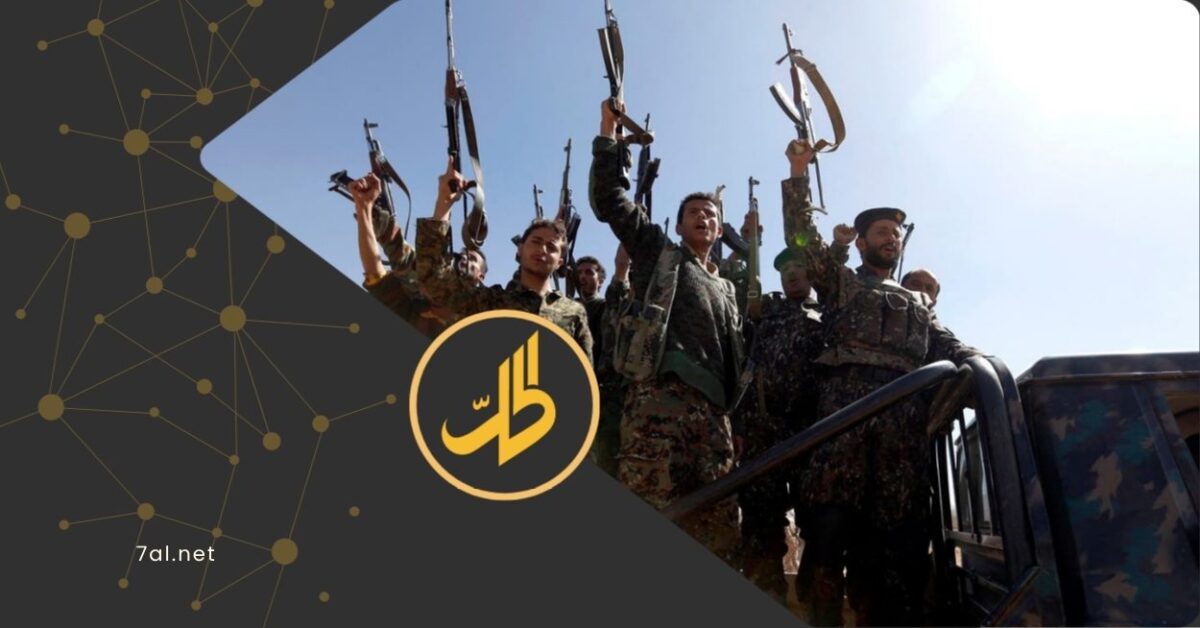
International reports, including one published by The Wall Street Journal, have revealed notable movements within the ranks of the Iran-aligned Houthi group in Yemen, with a number of its senior leaders disappearing and significantly reducing their public appearances and communications, amid fears of potential strikes targeting them.
According to informed sources cited by the newspaper, these steps came after mounting concern within Houthi circles over their leaders being targeted, similar to previous operations that hit prominent figures.
Leaders Leave Their Headquarters
The information indicates that a number of Houthi leaders have left their main headquarters and headed to remote mountainous areas in an attempt to avoid any potential targeting.

These fears were reinforced after previous airstrikes targeted Sanaa last year, resulting in the killing of prominent officials in the group’s government, including the prime minister and a number of military leaders.
The sources also spoke of the evacuation of key government offices in areas under the Houthi group’s control, as part of precautionary measures aimed at reducing losses in the event that new raids are carried out, amid rapidly unfolding regional developments.
This comes at the same time as the group’s escalating involvement in long-range attacks, including launching missiles toward Israel, as part of what it describes as support for its allies in Iran’s “Axis of Resistance.”
This involvement places its leaders in the direct line of fire as the scope of the confrontation widens.
Strict Measures
Local reports indicate that these measures began in late March, as tensions escalated, and included reducing phone communications, frequently changing places of residence, and moving to more fortified locations.

Observers believe that the Houthi group is trying to adapt to a more sensitive phase, one that requires it to strike a balance between continuing its military operations and avoiding the loss of its leaders if it comes under precision strikes.
A Different Phase
These measures coincide with rapidly developing field and political indicators that suggest the Houthi group is entering a different phase in its security approach, based on reducing visibility and intensifying precautionary movements.
During the recent period, the behavior of Houthi leaders has appeared more cautious at a time when the chances of escalation are increasing, leaving the scene open to many options in the coming period.
- How the Houthis Are Choking Yemen’s Peace Efforts with a Broad Escalation on the Ground
- Economy in the Wind: How Yemenis Are Paying the Price of Disrupted Shipping Routes
- Houthi Summer Centers: Factories for Indoctrination and Raising a “Scream” Generation
- The “Coalition of Necessity”: What Costa Rica’s Terrorism Designation of the Houthis Signifies
- Mojtaba Khamenei Runs Iran from His Bed as Photos Vanish and the Supreme Leader Makes a “Voice-Only” Appearance