
The internationally recognized Yemeni government has warned of the dangers of the country being drawn into the regional conflict, against the backdrop of the latest military escalation, which has pushed the Iran-aligned Houthi group to the forefront of the confrontation after it announced a missile attack toward Israel.
In an official statement published by the Saba Agency, the government condemned what it described as the “repeated attempts by the Iranian regime” to drag Yemen into regional wars through armed groups, considering the Houthis’ recent moves an extension of this approach and a direct threat to the country’s sovereignty, security, and stability.
It stressed that the decision of war and peace is “an exclusive sovereign right of the state,” and described any military operations carried out outside this framework as “illegitimate,” placing full responsibility on the parties carrying them out and those backing them.
It also warned of direct economic and humanitarian repercussions, including disruptions to supply chains and rising food and energy prices, in a country already suffering from one of the world’s worst humanitarian crises.
Field Escalation
At the same time, the Iran-aligned Houthi group announced that it had carried out an attack using ballistic missiles targeting what it described as “sensitive military targets” in southern Israel, in the first operation of its kind since the outbreak of the war in the region.
The group’s military spokesman said the operation comes as part of “direct military support for Iran,” while affirming that the attacks will continue “until the aggression stops,” in a clear indication of a shift from threats to action.
For its part, the Israeli army said it intercepted the missile without any reported losses, describing the attack as a notable development because it opens a new front originating from Yemen.
This escalation comes after repeated threats by the Houthi group of direct military intervention, linking that to the continuation of attacks on Iran or the use of the Red Sea in military operations.
Reading the Motives Behind the Timing
Adnan al-Jabrani, a researcher specializing in Houthi affairs, believes that the group’s choice to launch its intervention by targeting Israel carries indications that go beyond the direct military dimension.

He points out that this step may aim to provoke an Israeli response that would open the door to the group’s direct entry into the battle, while trying to reduce the cost of its association with Iran and recast itself as a party acting more independently.
According to al-Jabrani, the pattern of intervention appears gradual and linked to Tehran’s calculations in managing the battle, such that it could expand to include other targets, whether in the Red Sea or its regional surroundings, depending on developments in the confrontation.
He also links the timing of the latest attack to the Israeli escalation that targeted infrastructure inside Iran, in an indication of the Houthis’ direct interaction with the course of the war.
Fears Among Civilians
Warnings are mounting that this trajectory could drag Yemen toward a new wave of escalation that may once again bring attacks to the country’s interior and further increase the burdens on civilians.
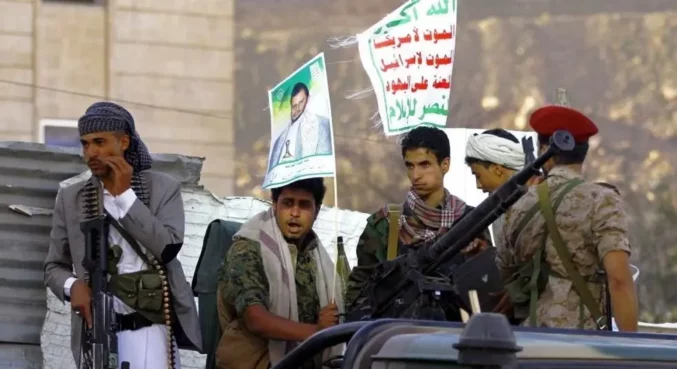
Between the government’s position aimed at sparing the country the repercussions of the war and the Houthis’ conduct, which is pushing it into the heart of the conflict, the Yemeni people alone remain the ones paying the price for these ill-considered adventures.
- How the Houthis Are Choking Yemen’s Peace Efforts with a Broad Escalation on the Ground
- Economy in the Wind: How Yemenis Are Paying the Price of Disrupted Shipping Routes
- Houthi Summer Centers: Factories for Indoctrination and Raising a “Scream” Generation
- The “Coalition of Necessity”: What Costa Rica’s Terrorism Designation of the Houthis Signifies
- Mojtaba Khamenei Runs Iran from His Bed as Photos Vanish and the Supreme Leader Makes a “Voice-Only” Appearance