Turkey, which days ago threatened to launch strikes against vital facilities and infrastructure in northern and eastern Syria on the pretext that the perpetrators of the Ankara bombing came from northern Syria, has turned its words into deeds, bombing nearly 200 sites in northeastern Syria with its aircraft and artillery from last Thursday morning until this Tuesday morning.
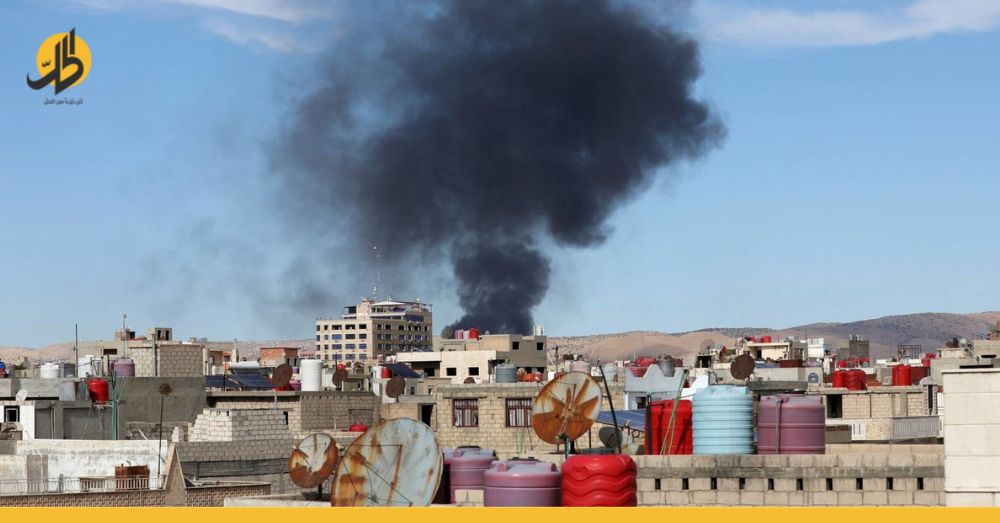
Ankara, which continues its military escalation in northern and northeastern Syria, has intensified its campaign through airstrikes by warplanes and attacks by drones, all targeting vital facilities, populated areas, and military sites and positions, causing heavy human and material losses, according to several press reports.
Turkey and the war on infrastructure
Alongside its aerial escalation, Turkish forces on Tuesday sent new military reinforcements to the Tel Abyad area north of Raqqa, while factions of the Ankara-backed “Syrian National Army” were placed on full military alert along the contact lines with the “Syrian Democratic Forces” (SDF) in Serekaniye/Ras al-Ain, Girê Spî/Tel Abyad, and Ain Issa.
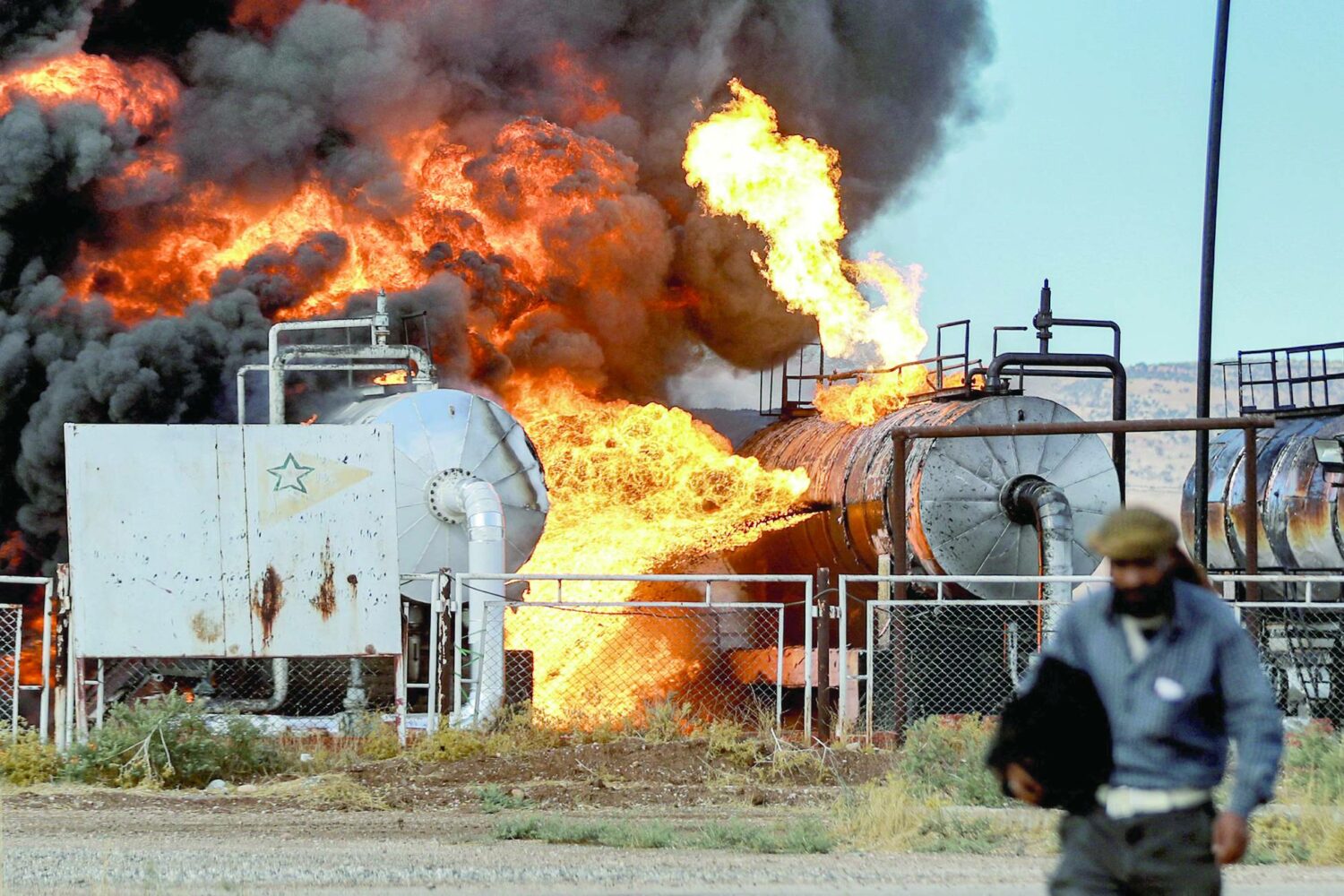
On Tuesday morning, Turkish forces and factions of the so-called Ankara-backed “Syrian National Army” targeted the village of Umm al-Khair west of Tel Tamr in al-Hasakah, according to the local Hawar News Agency. Turkish forces and their Syrian factions have also, for days, renewed their shelling of villages along the contact lines stretching from the town of Abu Rasin to Tel Tamr in northwestern al-Hasakah, firing artillery from their positions in the so-called “Peace Spring” area.
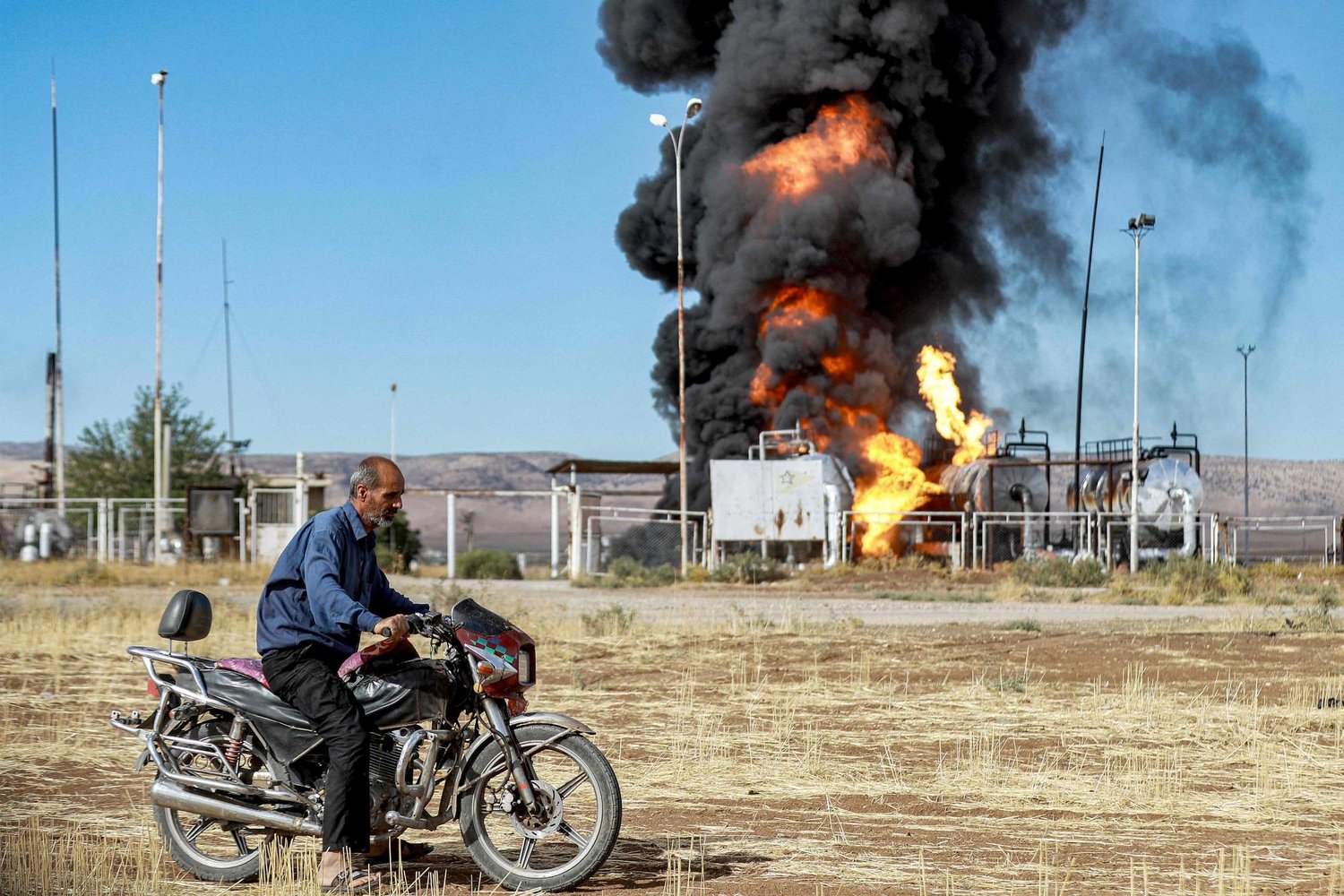
According to the local agency “North Press,” Turkey carried out a series of air raids targeting gas, water, electricity, and oil facilities at more than 200 sites in Derik/al-Malikiyah in Syria’s far east, Qamishlo/Qamishli, al-Hasakah, Kobani/Ain al-Arab, and the countryside of Aleppo in northern Syria.
The local agency documented most of the sites targeted by Turkish forces. The targeted locations included 26 infrastructure sites, 107 residential sites, 11 centers belonging to the “Internal Security Forces” (Asayish), 17 sites belonging to Syrian government forces, 6 agricultural plots, 3 industrial plants, one school, and one hospital.
According to documentation by the “Syrian Observatory for Human Rights,” the Turkish aerial escalation, specifically following the threats of Turkish Foreign Minister Hakan Fidan, caused the deaths of at least 45 people, including 30 members of the “Asayish” in a strike by a Turkish warplane on the village of Hamza Bek in the Kojrat area in the countryside of al-Hasakah.
In addition, one civilian was killed in a Turkish warplane strike on a station in Tirbespi/al-Qahtaniyah; nine people were killed in al-Hasakah, six of them from the “Asayish”; two people were targeted in a car near a military facility in al-Mushairfa; one civilian was killed in the village of Tel Habash in Amuda; and five people were killed in Kobani/Ain al-Arab.
Targeting residential areas
The sites targeted by Turkey were hit in nearly 237 strikes, including 157 by artillery and heavy weapons, 24 by warplanes, and 56 by drones. The shelling was distributed across the following cities and surrounding countryside: two sites in Qamishlo/Qamishli, 32 in al-Hasakah, 37 in the northern countryside of Aleppo, 13 in Derik/al-Malikiyah, 31 in Ain Issa, 19 in Kobani/Ain al-Arab, 7 in Manbij, and 4 in the northern countryside of Raqqa.
The “Syrian Observatory for Human Rights” confirms that the Turkish airstrikes did indeed target some military sites, but they also hit more than 50 infrastructure sites in northern and northeastern Syria.
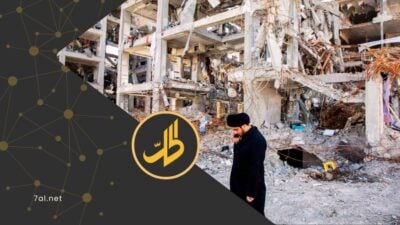
For his part, Turkish President Recep Tayyip Erdogan announced on Monday the destruction of 194 targets in Syria and Iraq. The “Syrian Observatory for Human Rights” says the Turkish airstrikes did indeed target some military sites, but they also hit more than 50 infrastructure sites in northern and northeastern Syria, some of them more than once, including two hospitals, a clinic, grain silos, an important dam in the area, textile and paint factories, water stations, power-generation stations, and a school.
In addition, dozens of inhabited villages in the countryside of al-Hasakah were subjected to aerial bombardment, meaning that Turkey’s claim of fighting “terrorism,” as it says, in no way justifies targeting infrastructure, the property of the region’s residents in Syria, and civilians as well. Five women working in cotton picking were wounded to varying degrees on Monday as a result of shelling by Turkish forces targeting a village in the countryside of al-Darbasiyah, north of al-Hasakah.
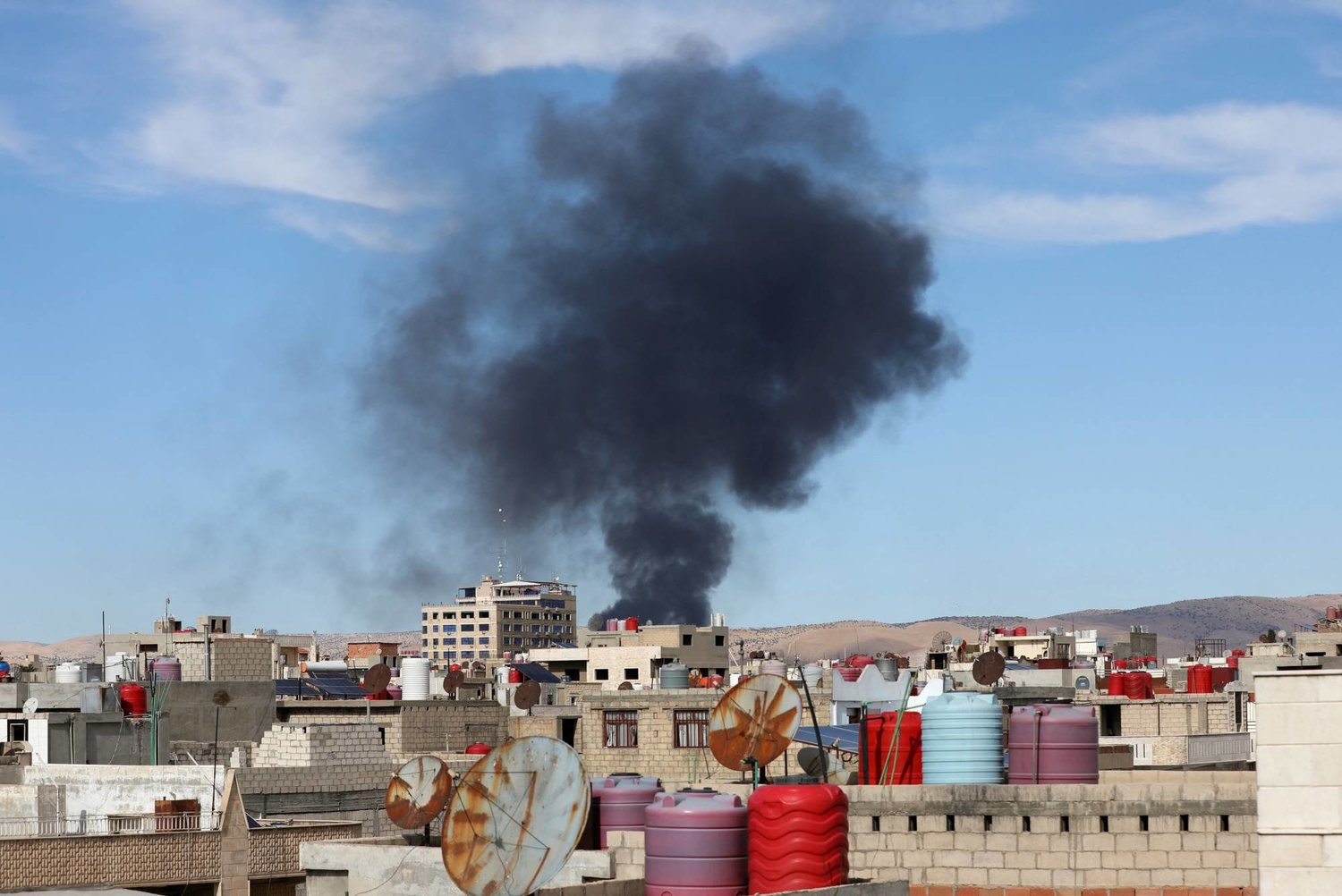
Last Wednesday night, Turkey launched a series of violent attacks targeting oil fields in the eastern countryside of Qamishli and an “Asayish” center in the Kojrat area in the countryside of Derik/al-Malikiyah. The force later announced the loss of some of its members and the injury of others in Turkish shelling, without giving further details.
Mourning in northern Syria
In a related development, the “Autonomous Administration” of North and East Syria announced three days of mourning after 29 members of the anti-narcotics forces affiliated with the “Asayish” were killed in the Turkish attack on Sunday night on the town of Derik/al-Malikiyah, while the SDF threatened to respond to Turkish attacks on vital facilities and infrastructure in its areas.
According to the newspaper “Asharq Al-Awsat,” the “Autonomous Administration,” which runs seven main cities and towns spread across four governorates in northern and northeastern Syria — Aleppo, Raqqa, Deir ez-Zor, and al-Hasakah — suspended official work in all institutions and administrative bodies affiliated with it, as well as its offices, departments, and educational complexes, while exempting service bodies including municipalities, energy offices, and the economy, health, and fuel authorities, in addition to emergency committees in local councils in those areas.
Meanwhile, Kurdish activists from the region marked the general mourning by posting a unified black profile image and mourning insignia. In a statement published on its official account on platform X on Monday night, the administration said that on October 8, Turkey targeted several points in Derik/al-Malikiyah and Rmeilan in a bloody attack, including the Anti-Narcotics Academy, which works around the clock to protect society from the repercussions of drugs. According to the statement, the attack resulted in the killing of 29 members of the anti-narcotics forces and the injury of 28 others, some of them seriously.
The administration announced in its statement three days of mourning: “In commemoration of and reverence for the souls of our martyrs, and in condemnation of this treacherous aggression, we declare a general mourning period of three days for the victims of the Turkish aggression. Our heartfelt condolences to the families and relatives of the victims.”
Commenting on the continuation of Turkish attacks on areas under its control and the stance of the international community, Badran “Jiya Kurd,” head of the administration’s Department of External Relations, told the same newspaper that “the Turkish attacks come amid international silence over the massacres committed by Turkey. This ongoing silence pushes it toward more crimes, and what is happening is a clear expression and real proof of a policy of silence and turning a blind eye,” referring to the shelling that targeted the headquarters of the security forces, the “Asayish,” and resulted in the killing of 29 fighters from the anti-drug branch.
The official in the Autonomous Administration added, “The people here contributed to protecting the entire world from the terrorist organization ISIS and its criminal schemes, and unfortunately the international community today stands as a spectator before the Turkish attack while these people face annihilation,” criticizing the international community’s silence over what is happening in the region.
For his part, SDF commander-in-chief Mazloum Abdi stressed that they would not be lenient regarding Turkish attacks on their territory and vowed to respond. In a post on platform X, he said: “Twenty-nine members of the anti-narcotics forces were killed as a result of Turkish forces targeting the Internal Security Academy in Derik. This is a savage crime that cannot be ignored, and it also constitutes a flagrant violation of human rights.”
Abdi added that the Internal Security Forces are a civilian institution that receives support from the international coalition to enhance security and stability in the region, and he vowed: “We will not be lenient in confronting the attacks and assaults of Turkish forces on our land and our people, and we will exercise our legitimate right to respond.”
In general, the Kurdistan Workers’ Party (PKK), which claimed the recent Ankara attack, has been engaged in conflict with the Turkish authorities since 1984. Experts believe that as Turkey continues bombing Kurdish areas in northern Syria and Iraq, the latest attack points to an escalation of the conflict as a reaction to ongoing and violent Turkish pressure. Ankara regularly carries out drone attacks in Syria in areas controlled by the “Autonomous Administration” of North and East Syria, and it continues to exploit any circumstance to launch military attacks against residents of those parts of Syria.
The Kurdish issue is regarded as a political and opportunistic card that Erdogan uses to achieve political interests and aims, including those related to elections, or to blackmail regional and international actors. Therefore, Turkish violence and its political rhetoric filled with hatred toward the Kurds, which diminishes their citizenship rights, in addition to militarizing and securitizing the Kurdish issue instead of pursuing a political solution, will place all parties on the brink of confrontation and clash, bringing many negative repercussions.
- How the Houthis Are Choking Yemen’s Peace Efforts with a Broad Escalation on the Ground
- Economy in the Wind: How Yemenis Are Paying the Price of Disrupted Shipping Routes
- Houthi Summer Centers: Factories for Indoctrination and Raising a “Scream” Generation
- The “Coalition of Necessity”: What Costa Rica’s Terrorism Designation of the Houthis Signifies
- Mojtaba Khamenei Runs Iran from His Bed as Photos Vanish and the Supreme Leader Makes a “Voice-Only” Appearance