Since 2011, international and regional efforts to find a political solution that would end the conflict and bring peace and stability to Syria have multiplied. One of the most prominent was the initiative of the League of Arab States, which formed a special committee to engage with the Syrian government, the opposition, and armed factions in an effort to persuade them to sit down for dialogue and negotiate a comprehensive, legitimate solution acceptable to all.
But this initiative, which began in May 2023, has so far produced no tangible results. On the contrary, the committee’s contacts with the Syrian government have been frozen, amid mutual accusations among the parties concerned of obstruction, intransigence, and continued violence and abuses.
In light of this tragic reality, it appears that the political solution in Syria has failed and that the country is heading toward an unknown and frightening future. One possible scenario is federalization, or the division of Syria into self-governing regions reflecting the ethnic, religious, and cultural diversity of the Syrian people.
This idea, circulated by some regional and international actors, is based on the notion that federalization is the best way to protect the rights of minorities and marginalized groups in Syria and to end the corruption and oppression practiced by the Syrian government and its allies. But what might the regional and international repercussions of adopting federalization be, and why do recent events suggest that it is now being considered as a way to resolve Syria’s crisis?
Why Were Contacts With Damascus Frozen?
Jordan has officially pursued a step-by-step policy in its dealings with the government in Damascus since 2018. But recent developments, along with Jordanian Foreign Minister Ayman Safadi’s public statement that drug-smuggling operations increased after dialogue with Damascus and that this threat would therefore be confronted, help explain the Jordanian king’s remarks in New York about the Syrian leadership’s inability to control what is happening in the country and Bashar al-Assad’s declining control over decision-making in Syria.
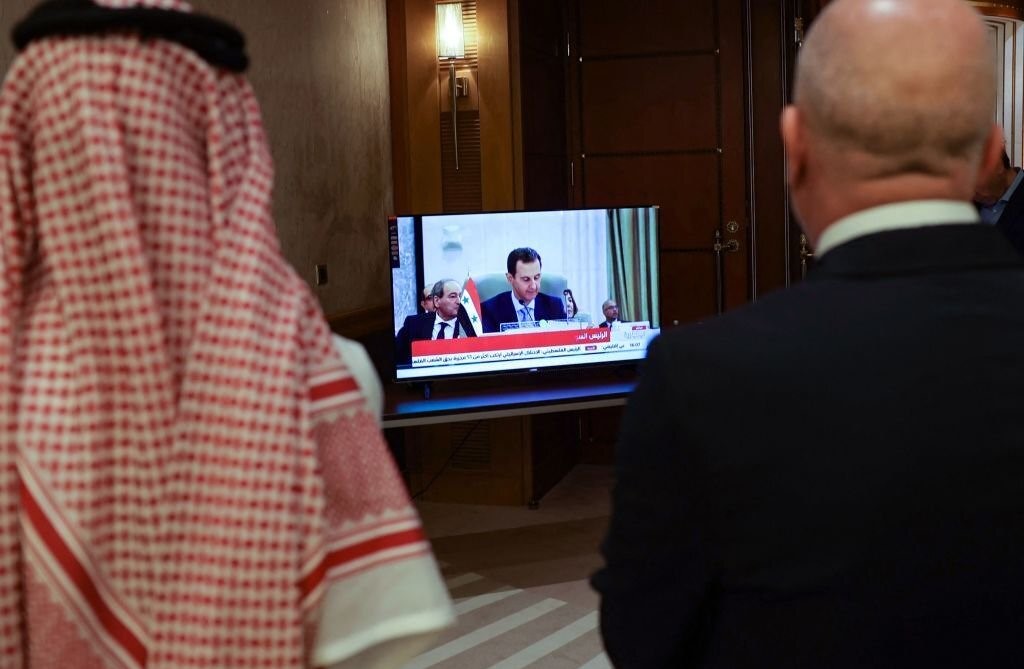
What began in Jordanian media discourse at the end of last July and then spread to political circles was echoed in Syria’s western neighbor. On Monday, the Foreign Relations Department of the Lebanese Forces Party issued a statement saying that the Lebanese people cannot wait for a political solution in Syria before beginning the return of Syrians to their country.
These statements came after leaks spoke of a halt in Arab dialogue with Damascus, something confirmed by the Russian news agency Novosti, citing sources in the Syrian government. Damascus attributes the freezing of contacts by the special League of Arab States committee to the technical, diplomatic, and political difficulties resulting from the Caesar Act and other US sanctions imposed on it.
The claims advanced by the Russian agency regarding why the committee froze its contacts reflect Damascus’s view of the Arab initiative and how it wants to steer it to suit its own preferences. But the reasons that forced the committee to suspend contacts are many, foremost among them increased drug-smuggling activity and the Damascus government’s failure to move ahead with implementing UN Security Council Resolution 2254.
Lack of Trust… Points Toward Federalization
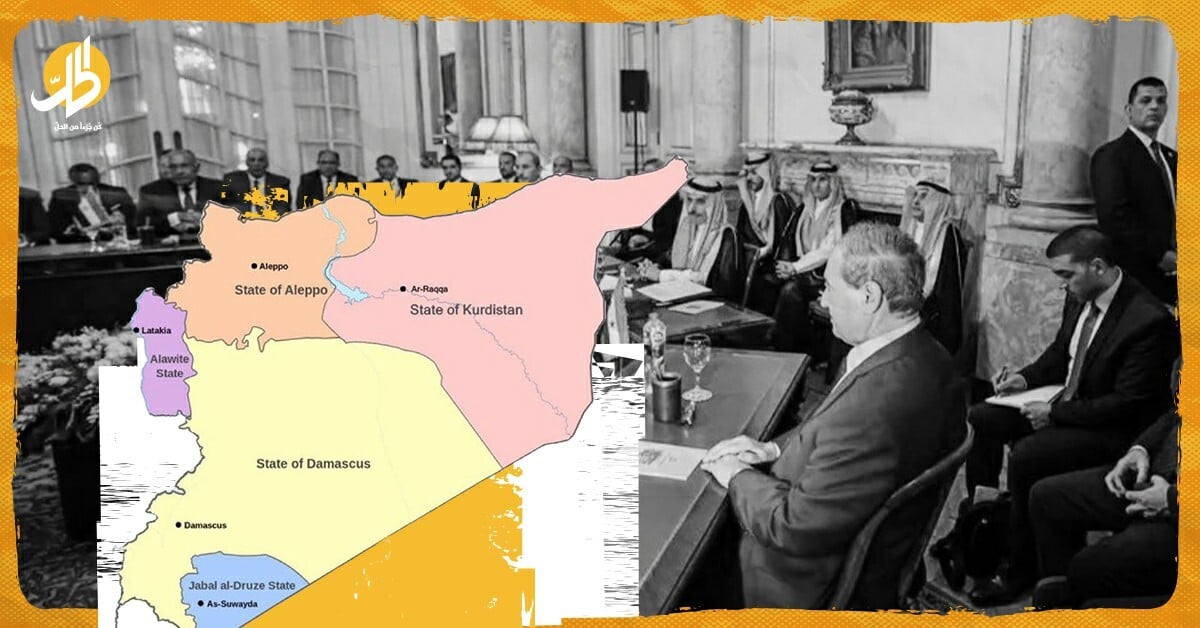
From a quick outside look at Syria — what might geopolitically be called a “hawk’s-eye view” — the country is currently divided into five regions. In the south, residents of Sweida are demanding implementation of Resolution 2245 and the opening of a crossing with Jordan, while several political bodies had previously proposed decentralization and federalism, indicating that the ground had already been prepared for such ideas.
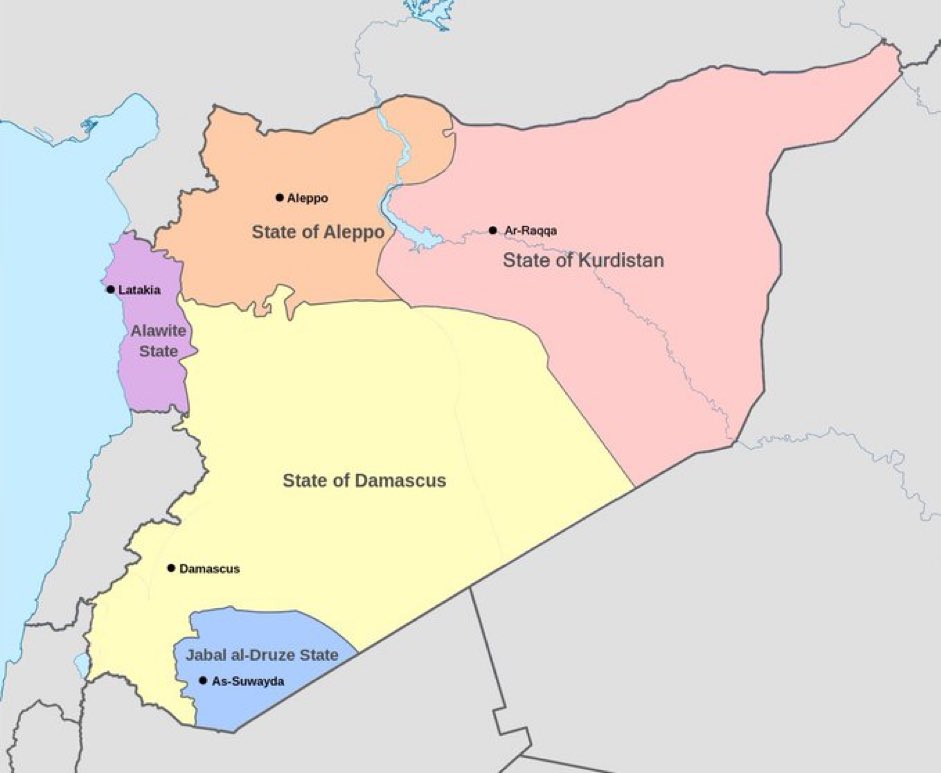
In northeastern Syria, the Kurdish Autonomous Administration has run its مناطقها with near-complete independence since 2016. In northwestern Syria, where Turkish forces are present, there are two governments: the first is wholly subordinate to Ankara under the name of the “Interim Government,” while the second controls Idlib and is considered the civilian arm of Hayat Tahrir al-Sham, formerly Jabhat al-Nusra. These areas are administratively and commercially independent of the government in Damascus.
As for the areas where the government in Damascus is present — where its power weighs most heavily only on the population — the stretch from Iraq in the east to Lebanon in the west is controlled by Iran and its militias, while the northwest overlooking the Mediterranean is under Russian control. The center and southwest, meanwhile, are considered to be under the administration of Lebanon’s Hezbollah and its ally, the Fourth Division, led by Maher al-Assad, brother of Syrian President Bashar al-Assad.
As a result of the earlier absence of an international solution and, more recently, an Arab one — and in the context of Jordanian discussion of the Syrian crisis — media outlets have begun circulating maps of a federal division of Syria into five regions. This suggests that the idea of federalization is now on the international table as a way to solve problems Damascus has been unable to resolve.
The idea of federalization in Syria is not new. Many studies and papers have previously appeared recommending the imposition of a federal system within the Syrian state. The United States was founded on such a system: a federal state made up of 50 states under the federal constitution drafted in 1787, which defines powers and responsibilities between the federal government and state governments and guarantees the rights of citizens and states. The United States is the world’s oldest federal state and is regarded as a model of democracy, pluralism, and decentralization.
Switzerland is also a federal state composed of 26 cantons, founded on the basis of the federal constitution drafted in 1848. It is one of Europe’s most important federal experiences and is considered an example of neutrality, cooperation, and direct democracy. Canada, too, is a federal state composed of 10 provinces and three territories, founded on the basis of the federal constitution drafted in 1867, and is considered the world’s second-largest federal state by area.
“Captagon Diplomacy” Has Failed
The effects of the failure of a political solution in Syria on the country’s political, economic, and social situation are catastrophic and tragic. Politically, failure means the continuation of war, violence, and abuses; deepening division and infighting among Syrian parties; increased intervention and influence by regional and international actors; the undermining of national sovereignty, unity, and independence; and a threat to regional and international security and stability.

Economically, it means worsening economic and living conditions for the Syrian people, the collapse of infrastructure, institutions, and public services, rising rates of poverty, unemployment, inflation, and corruption, a growing public deficit and debt, and continued exposure of the Syrian economy to sanctions. Socially, it means increasing numbers of refugees and internally displaced people, both inside and outside the country, and the destruction of the Syrian people’s social, cultural, and historical fabric.
Researcher and political analyst Walid Touqan believes that the freezing of contacts between the League of Arab States committee and the Syrian government reflects the failure of the League’s initiative to find a political solution to the Syrian crisis. He sees it as evidence of Damascus’s lack of seriousness, credibility, and competence in carrying out its role, as well as a result of pressure, obstacles, and conflicting interests among its allies.
According to Touqan in remarks to Al-Hal Net, the recent developments indicating that federalization has become an option for resolving Syria’s crisis include hints by some regional states that the approach toward Syria has failed and the emergence of maps showing a federal division of Syria into five regions. These developments can be understood as attempts to adapt to Syria’s changing reality, search for alternatives to the failed political solution, confront the challenges and risks facing Syria and the region, and influence the future of Syria and its people.
In Touqan’s assessment, the role of regional states such as Jordan, Iraq, and Lebanon in highlighting federalization as an alternative to a political solution is limited and not decisive, because these countries face security, economic, and political challenges of their own and do not have enough influence to shape the course of the Syrian crisis.
These states also fear the repercussions of federalization for their internal stability and national unity, especially given the presence of ethnic, religious, and sectarian minorities in some of them. Therefore, they prefer to preserve the status quo while searching for a comprehensive solution that guarantees the sovereignty and unity of the Syrian state.
A Crisis on the Table
Dividing Syria into five regions within a federal framework is one of several proposals put forward to end the conflict. The proposal is based on distributing power and resources among geographically, demographically, and culturally distinct regions: the western coastal region, the southwestern region, the northeastern region, the eastern region, and the central region.
According to Touqan, such a division could have both advantages and challenges. Among the potential advantages are ending the war, violence, and destruction that have claimed hundreds of thousands of lives and displaced millions of Syrians; giving local communities the opportunity to participate in managing their own affairs and securing their demands and rights; promoting decentralization, democracy, diversity, and tolerance in political and social life; and improving relations with neighboring, regional, and international actors on the basis of mutual respect and cooperation.
As for the challenges facing such a project, they include the difficulty of defining borders, jurisdictions, and responsibilities between the regions and the central government; the risk of secession, fragmentation, and the final partition of the Syrian state, along with the loss of its identity and sovereignty; and the complexity of the security, military, and humanitarian situation in light of the presence of armed groups, terrorist organizations, and foreign forces operating on Syrian territory.
In Syria’s case, these conditions and guarantees are either absent or available only partially and to a limited extent. The Syrian government rejects any idea of federalization or partition, considering it contrary to national sovereignty and territorial unity, and seeks to impose its control over all Syrian territory by force and violence. The Syrian opposition, meanwhile, is fragmented and divided, lacks a clear and unified vision for a political solution, and depends on support and intervention from regional and international actors with differing and conflicting interests and agendas in Syria.
For that reason, Touqan believes federalization is neither a feasible nor a desirable solution for the Damascus government at present, because in either case it would imply sidelining Assad and his family. This, he suggests, is reflected in the veiled message delivered by Syrian first lady Asma al-Assad in Beijing on Monday, in which she said, “We are fighting a war in defense of our country’s existence and the independence of its decision-making.”
The political solution rejected by the Damascus government depends on implementing international Resolution 2254, which stipulates an end to violence and abuses, the formation of a transitional government including representatives of the government, the opposition, and civil society, the holding of free and fair elections under UN supervision, and the drafting of a new constitution that respects the rights, freedoms, and aspirations of the Syrian people.
So far, there is no clear and unified international support for the idea of federalization in Syria. Positions differ according to each actor’s interests and agenda in the Syrian crisis. Some countries reject federalization outright, seeing it as a step toward partitioning Syria and a threat to regional and international security; these include Turkey, Iran, China, and the authorities in Damascus. Others adopt a neutral or cautious position and consider federalization a possible political solution, provided it has the approval of the Syrian people and remains within the framework of national unity and Syrian sovereignty; these include Russia, the United States, the United Nations, and some European countries. Still others support federalization directly or indirectly and regard it as a fair solution for Syria’s various communities.
- How the Houthis Are Choking Yemen’s Peace Efforts with a Broad Escalation on the Ground
- Economy in the Wind: How Yemenis Are Paying the Price of Disrupted Shipping Routes
- Houthi Summer Centers: Factories for Indoctrination and Raising a “Scream” Generation
- The “Coalition of Necessity”: What Costa Rica’s Terrorism Designation of the Houthis Signifies
- Mojtaba Khamenei Runs Iran from His Bed as Photos Vanish and the Supreme Leader Makes a “Voice-Only” Appearance