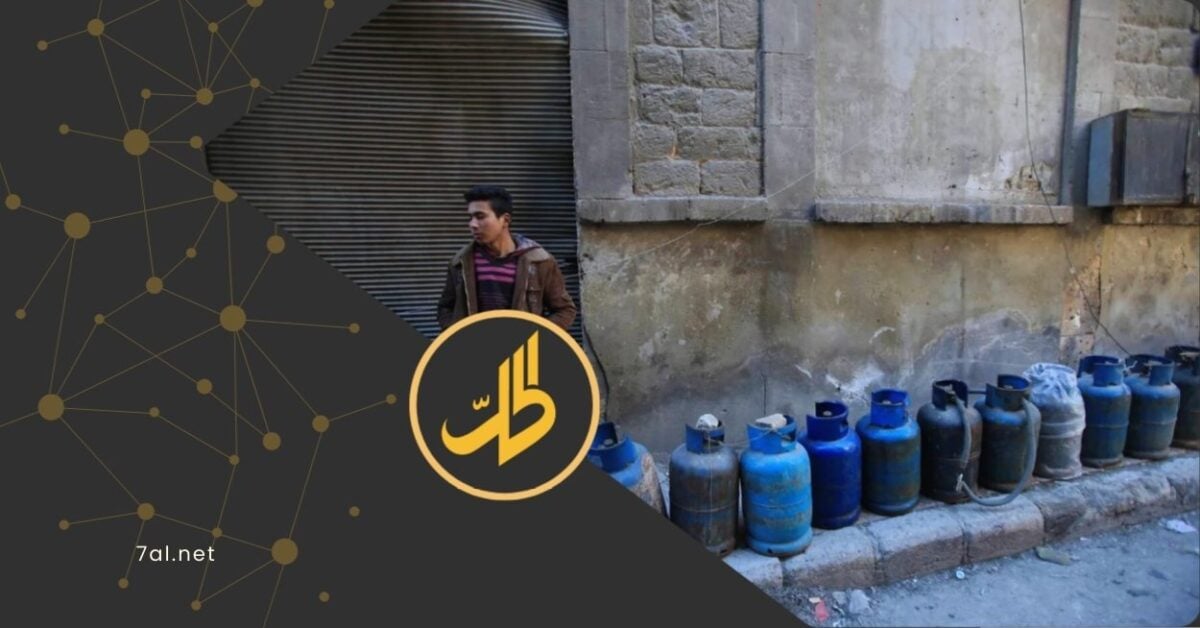
Despite the major improvement in the gas market after the fall of the former regime, with cylinders becoming available in all neighborhoods and governorates without smart cards or restrictions, and with the black market that citizens used to rely on whenever supplies were cut disappearing, the first days of Ramadan brought an unexpected shock: gas disappeared from neighborhoods across the country, and queues returned once again.
This crisis comes at a time when gas is supposed to be most readily available, as household consumption rises during the holy month, when cooking is a daily necessity that cannot be postponed, making the shortage an additional burden on families.
Gas Outage and Exhausting Alternatives
With the start of Ramadan, citizens began lining up at sales points, amid complaints that cylinders were unavailable despite hours of waiting.
Thank God, after the fall, gas became widely available and people finally got some relief. We thought we were done with the whole business of the card, the text message, and the queues. Even if we paid more, we said that was fine as long as we didn’t have to stand in line. But now there are queues, we’re paying, and it still isn’t available! That’s not normal at this time. Gas is supposed to be most available during Ramadan.
Mohammad al-Kilani, from Damascus
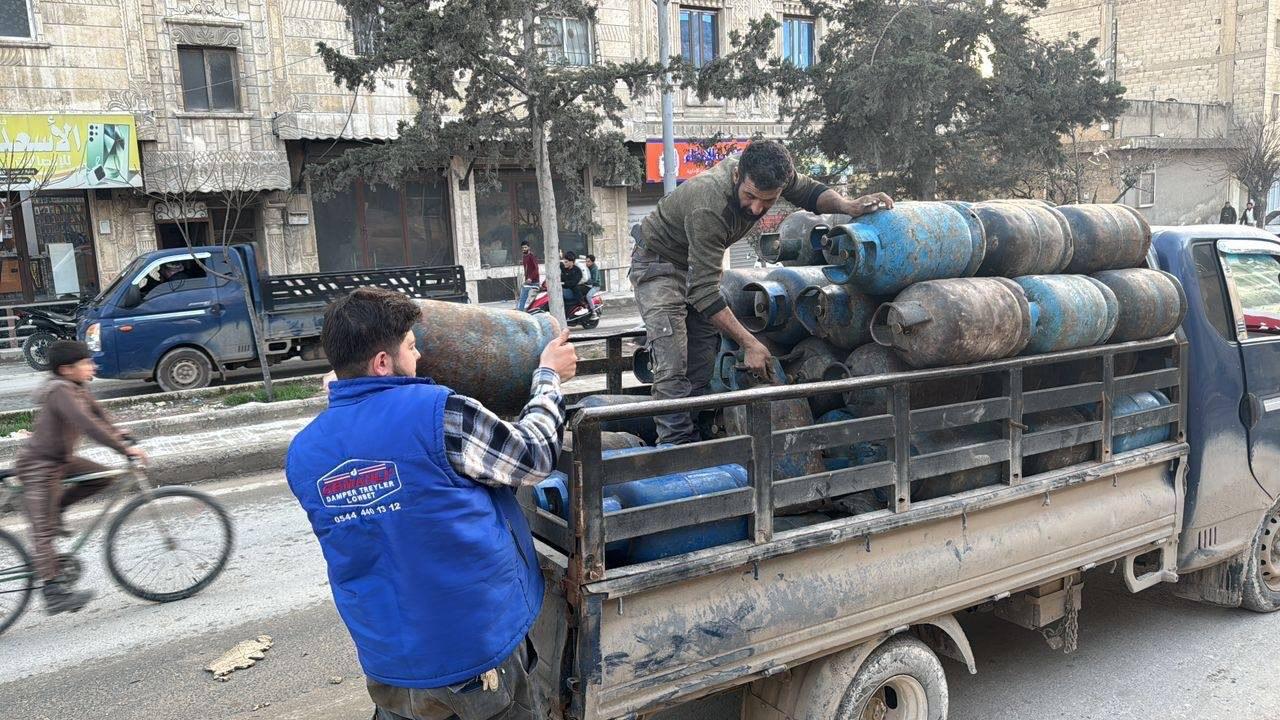
According to what citizens are reporting, the gas shortage is not limited to one neighborhood or a specific area, but affects all neighborhoods of Damascus as well as other governorates, with any quantities that reach the market quickly selling out.
We ran out on the second day of Ramadan, and we haven’t been able to find any on the market at all. We had to go back to using the primus stove. Honestly, it’s dangerous and very troublesome, but what can we do? It’s better than nothing, and in this holy month we have to cook every day.
Samar Shabika, a housewife from Damascus
As the outage continued, the use of the “primus stove” returned in many homes despite its risks, while others turned to electricity as an emergency alternative despite its unreliability.
By God, it’s been out for four days, and I’ve been using the oven and stove on electricity. The power only comes an hour before iftar. Two days ago, I had the meal prepared and was waiting for the electricity. It didn’t come until five minutes before the call to prayer, and we didn’t eat iftar until half an hour later. This is no way to live, and no one is willing to sell if they have an extra cylinder.
Souad al-Ali, from Damascus
Regulatory Statement on the Causes of the Crisis
Amid mounting complaints, Mohammad al-Masri, head of the Monitoring and Quality Department in the Damascus branch, told “Sawt al-Asima” that the rush for gas at the start of Ramadan was caused by a sudden rise in demand, which led to quantities quickly running out at a number of sales points.
Al-Masri explained that the problem is not related to a black market or price differences as was the case in the past, but rather to heavy consumer demand over a short period, stressing that inspection patrols are monitoring distribution in Damascus to ensure the availability and quality of the product.
But citizens see it very differently. Salem al-Atouq criticized the official’s statement and told “Al-Hal Net”: “This statement makes no sense! People can barely afford to eat, so how are they supposed to buy several cylinders and store them? A cylinder now costs 300,000 — a quarter of an employee’s salary. Who is going to buy and hoard gas? The situation is difficult, and everyone needs to cook every day, not stock up!”
For many Syrians, the problem today is neither the price nor the existence of a black market as in the past, but the absence of the product itself despite the urgent need for it, especially in a month associated with family gatherings and daily meals.
Amid this situation, Syrians find themselves facing mounting pressure at the start of Ramadan, caught between waiting in queues, dangerous or unreliable alternatives, and daily questions about when gas will return to the market normally, in a month that is supposed to bring peace of mind, not a daily scramble to find a cylinder.
- How the Houthis Are Choking Yemen’s Peace Efforts with a Broad Escalation on the Ground
- Economy in the Wind: How Yemenis Are Paying the Price of Disrupted Shipping Routes
- Houthi Summer Centers: Factories for Indoctrination and Raising a “Scream” Generation
- The “Coalition of Necessity”: What Costa Rica’s Terrorism Designation of the Houthis Signifies
- Mojtaba Khamenei Runs Iran from His Bed as Photos Vanish and the Supreme Leader Makes a “Voice-Only” Appearance