While there appears to be no clear prospect of a subsiding in the military escalation against Iran, despite the official announcement of the killing of Ali Khamenei along with prominent first-rank figures in the Iranian leadership, the risk of the situation sliding into more complex scenarios remains. Among these scenarios is the possibility of using radical groups in some geopolitically sensitive areas marked by security fragility—an احتمال that calls for careful unpacking and analysis, away from exaggeration or preconceived judgments.
There is no doubt that Tehran has for years been subjected to a succession of strategic pressures and a relative erosion of its regional influence in the Middle East, which may push it to consider emergency tactical steps to gain new bargaining chips. Political action remains intertwined with military action—before, during, and after it—and battlefields cannot be separated from the calculations of the diplomatic table.
In this context, the security and geopolitical shifts sweeping the region raise questions about the extent to which Iran might resort to reusing indirect pressure tools in its conflict with the United States, especially as the regional arena has become an open theater for exchanging security and political messages.
ISIS between Repositioning and Exploiting Security Fragility
On a parallel track, ISIS itself appears to be taking successive blows, yet at the same time it is searching for room to reposition and project its messages anew in its traditional areas of influence, whether in Iraq, Syria, or even parts of the Gulf where Western interests intersect.
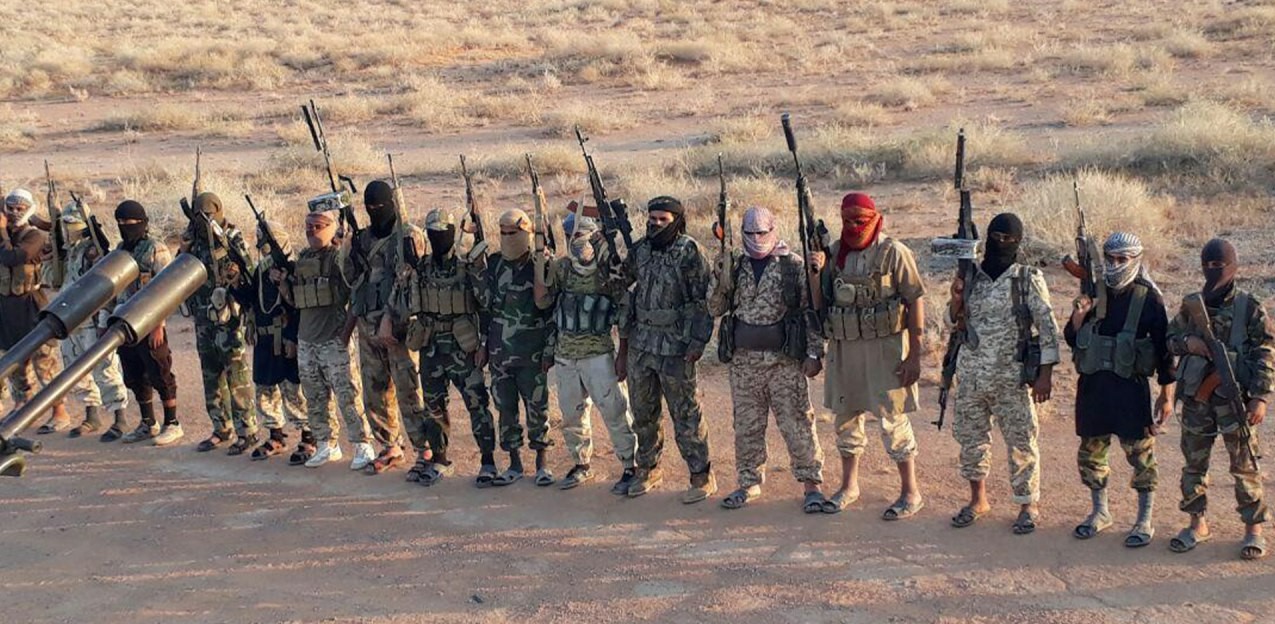
The state of security fluidity sweeping the region gives ISIS room to think about creating new geographic pockets, relying on sleeper cells and small, fast-moving operational networks. At the same time, this landscape may push some regional actors, including Tehran and its proxies, to turn a blind eye to certain limited movements if they are seen as a temporary pressure card that can be used at the negotiating table.
The issue of “field deals” between parties linked to Iran on the one hand and members of the organization on the other remains one of the most controversial questions of recent years. Some see rapid withdrawals or smooth redeployments on certain fronts as signs of undeclared tactical understandings, while others argue that this falls within the complexities of asymmetric warfare, where pragmatic calculations take precedence over ideological slogans.
From another angle, the danger posed by the terrorist organization is not limited to Syria and Iraq. Its Central Asian branch, the “Islamic State – Khorasan Province,” is seeking to expand its influence inside and beyond Afghanistan, taking advantage of the fragility of some security environments. This opens the door to cross-border threat scenarios that may affect multiple spheres of influence, including Iran’s own interior.
Alongside direct organizational activity, ISIS relies on the strategy of “lone wolves,” allowing it to target Western or Jewish targets without the need for a massive centralized military structure. In March 2024, Russia’s Federal Security Service foiled an attack targeting a Jewish synagogue in Moscow that had been planned by a cell linked to the organization. This pattern gives the group the ability to remain in the spotlight even during periods of battlefield decline.
Temporary Overlaps or Tactical Use?
Conversely, the idea of Iran using ISIS as a flexible tactical weapon, without any public declaration or direct acknowledgment, remains one of the notions that stirs broad debate, especially at moments of maximum pressure. Despite the clear doctrinal contradiction between the two sides, some readings suggest that political pragmatism may lead to short-lived, situational overlaps.
What seems more realistic, however, is that the fluid battlefield environment creates conditions from which both sides benefit, each according to its own calculations, without the need for a strategic partnership or direct management. ISIS, at its core, is an opportunistic organization that thrives in areas of security vacuum and exploits sectarian and political tensions to ensure its survival. As for Iran’s regime, which is under existential pressure after losing key leaders, it may engage in temporary tactical contradictions, but that does not necessarily mean a lasting alliance so much as an attempt to catch its breath at a moment of profound imbalance in the balance of power.
So we are facing a hypothetical scenario—perhaps even a plausible one in some of its details—linked to the “maximum pressure” hypothesis, which may lead to reliance on a gray margin based on a flexible principle that could be described as “calculated turning a blind eye.” Instead of entering into explicit alliances or direct arrangements, some security-loose spaces may be managed with a degree of tactical tolerance that allows a controlled level of threat to persist, making it usable as an undeclared card in a political tug-of-war.
Managing Chaos between Tactics and the Risk of Blowback
Through networks of influence linked to Tehran in parts of the Middle East—especially in Iraq, Syria, and shared border areas—ISIS movements may appear more dangerous, particularly through the “lone wolves” model. In fragile and open environments such as Syria, and to some extent Iraq, any limited operation can become an indirect message that the stability of certain theaters remains tied to the level of pressure being exerted on Tehran, without the need for any declared position or explicit claim of responsibility.
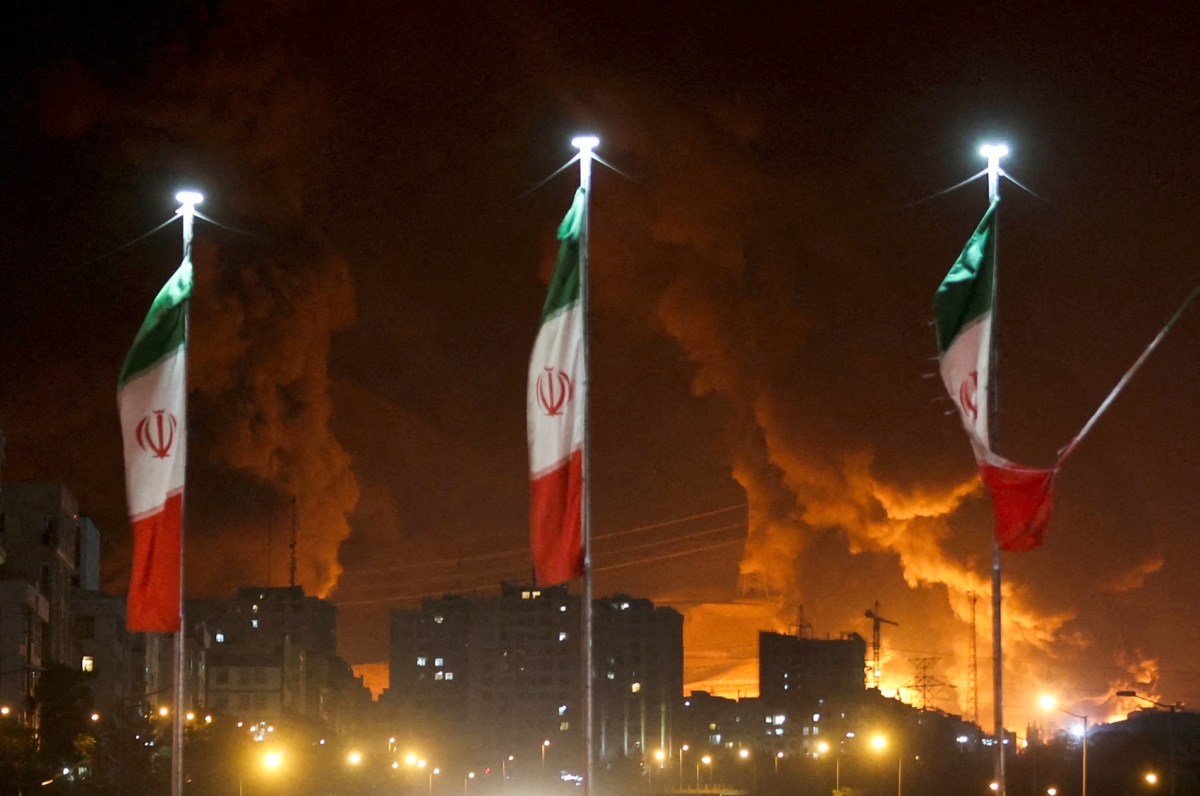
But the other side of this equation lies in the organization’s own calculations. ISIS no longer relies on the model of broad territorial control as it did in 2014; instead, it has shifted to a decentralized structure based on small cells and cross-border incitement. In this context, the use of “lone wolves” stands out as an ideal tool: low-cost operations that are difficult to trace organizationally, yet carry high symbolic and media impact.
Through mobilizing rhetoric that exploits digital media, the organization can incite individuals to target Western interests, Jewish targets linked to Israel, or religious symbols in multiple locations, without the need for an exposed leadership structure or a complex financing network. This pattern has been evident in attempted attacks abroad that were foiled by several security agencies in recent years.
Thus, the picture becomes more complex: a state that may see fragility as a temporary pressure card it can use, and an organization that sees chaos as a golden opportunity to reposition itself and assert its presence. Between “turning a blind eye” and “loss of control,” the boundaries remain thin, fragile, and liable to explode at any moment in ways that may exceed the calculations of all parties.
Accordingly, it is difficult to understand the current scene—with all its complexities, contradictions, and multiple theaters of events stretching across the geography of the Middle East in both its regional dimension and international reach—as a one-way scenario. In reality, it is a complex and intertwined network of mutual pressures and intersecting calculations. The military escalation against the regime in Iran, and the targeting of its ruling stratum and the network of actors within its core power structure, may open the door to thinking about scenarios of collapse or dismantlement. But it may also point to the emergence of emergency deals and pragmatic, functional behavior that temporarily departs from doctrinal and ideological constants.
The “Lone Wolves” Tactic
Moments of battlefield fluidity, and the major transformations that accompany them, appear to offer some states an opportunistic space to widen their margin for maneuver, even if that requires engaging in gray arrangements full of contradictions.
However, this argument starts from the recognition that betting on the management of chaos remains a high-cost gamble, making it a pressure tool that can be used in negotiating contexts based on the logic of “maximum pressure,” while at the same time remaining fraught with the possibility of blowback.
The experience of recent years, in fluid and open geographies, has shown that the use of radical groups—foremost among them ISIS—remains a repeatable scenario, even if experience has also shown that such groups cannot be controlled for long. They quickly turn into independent actors that reshape their priorities according to their own networks of interest and the logic of self-preservation.
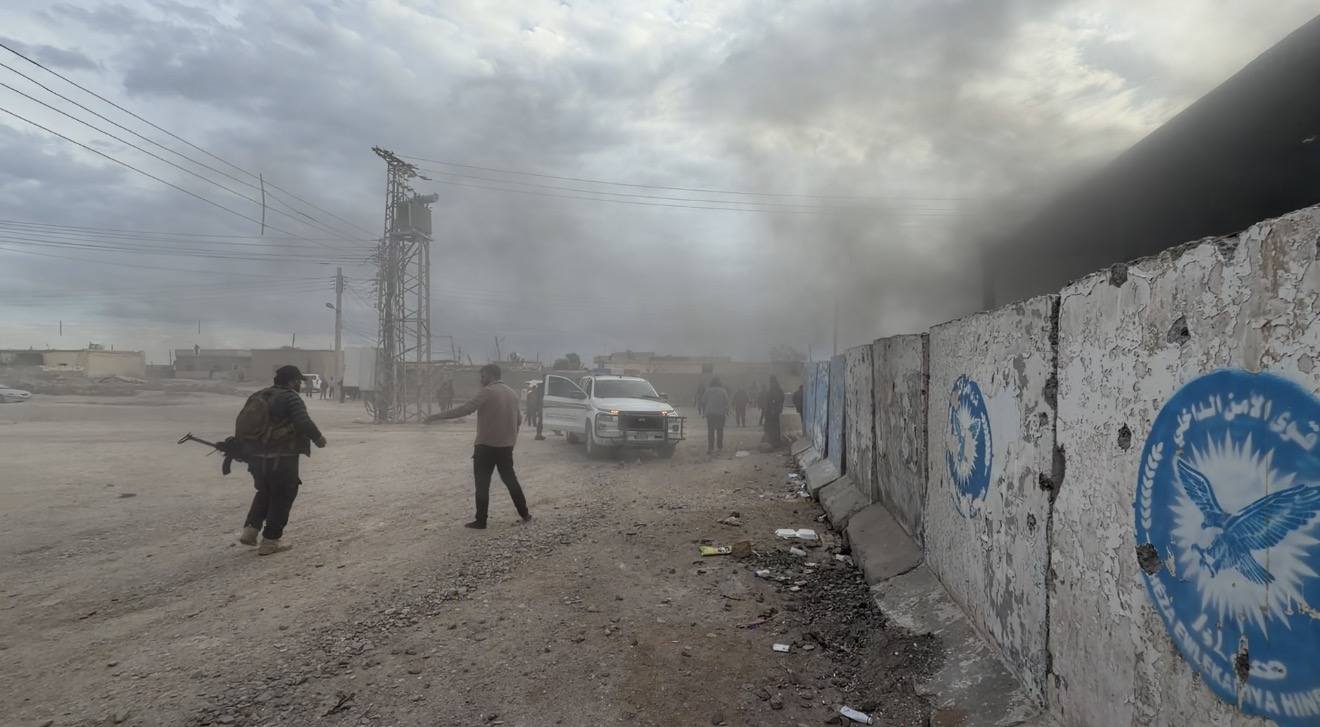
From this perspective, Tehran understands—if it were to consider a margin of tactical tolerance—that the exceptional space ISIS might exploit in the context of regional fluidity could grant the organization a functional breathing space, but one that carries latent elements of threat that could turn against the very balance of influence itself. The space opened for pressure may become a breach that is difficult to close later.
The “lone wolves” equation also adds a more complex dimension, making it difficult to draw clear lines between actors, disrupting traditional deterrence calculations, and turning any political tension into fertile ground for symbolic operations with global resonance. In this context, geography alone no longer appears to be the theater of conflict; it extends into digital space, where narratives are shaped, motives are mobilized, and crises are exploited.
Accordingly, the most realistic scenario does not necessarily lie in an explicit and direct alliance—though it cannot be ruled out entirely in moments of major imbalance—but rather in the convergence of temporary interests within a fragile environment fed by mutual pressures. Yet this convergence remains fragile by nature, liable to unravel or explode whenever the balance of calculations is upset or the tools exceed the limits of control.
- How the Houthis Are Choking Yemen’s Peace Efforts with a Broad Escalation on the Ground
- Economy in the Wind: How Yemenis Are Paying the Price of Disrupted Shipping Routes
- Houthi Summer Centers: Factories for Indoctrination and Raising a “Scream” Generation
- The “Coalition of Necessity”: What Costa Rica’s Terrorism Designation of the Houthis Signifies
- Mojtaba Khamenei Runs Iran from His Bed as Photos Vanish and the Supreme Leader Makes a “Voice-Only” Appearance