In light of the developments Syria has witnessed after Bashar al-Assad fled to Moscow following the advance of Syrian opposition factions led by Hayat Tahrir al-Sham into Aleppo, Hama, and Homs, and then the capital, Damascus, the “new Syria” has become the focus of regional and international attention. However, the shift in Syria has been linked to a series of regional developments since October 7, 2023, whose repercussions and geopolitical and strategic effects have continued to the present, in addition to the election of Donald Trump as the new president of the United States, which will have clear implications for regional policies in the Middle East.
The changes that swept away the Assad regime mirror the depth of the transformations that have struck the Middle East in recent months, placing everyone at a crossroads, especially amid the turbulence of the international order and the volatility of the regional situation. This made the scene in Damascus over the span of just a few days between the end of October and the end of the first week of December a decisive turning point for many political visions and entrenched alliances, while also raising questions about the future. In this context, the Kurdish issue in general, and the political affairs of the Autonomous Administration in northeast Syria, the status of the Syrian Democratic Forces (SDF), and the broader Syrian political sphere, all appear to reflect the same uncertainty, which calls for objective approaches and tactical adjustments on a number of unresolved political issues.
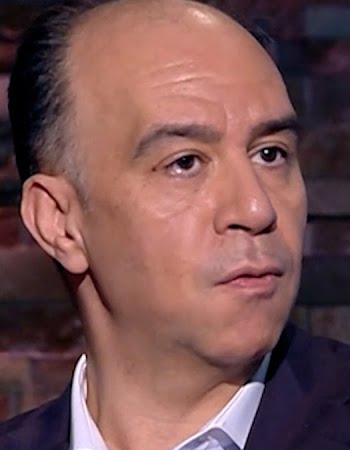
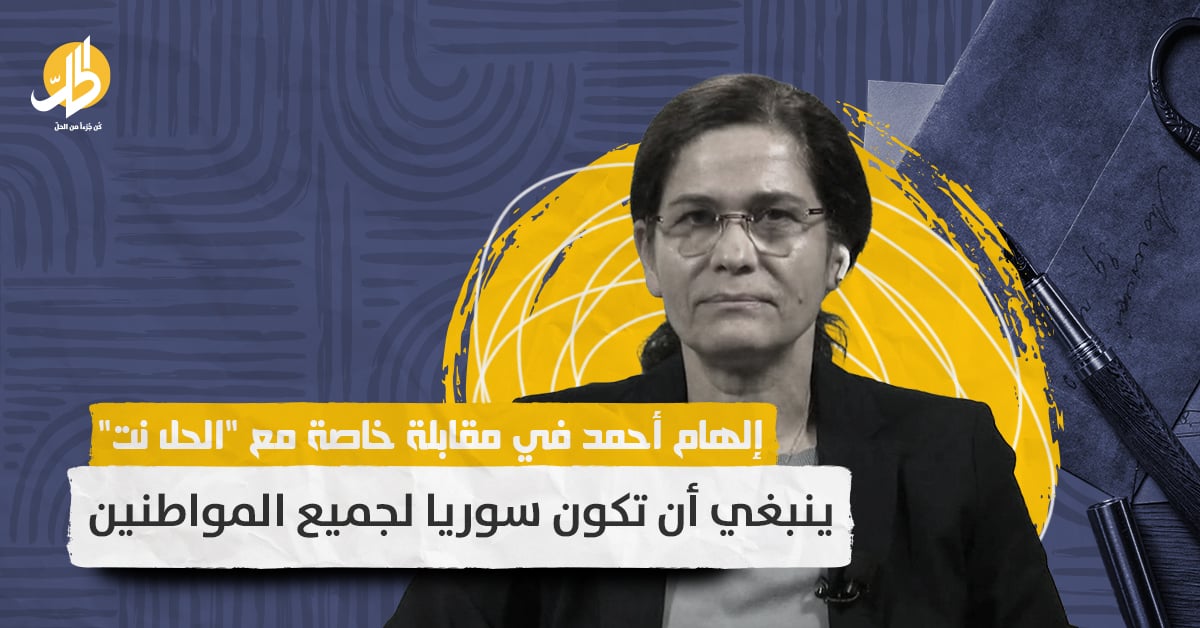
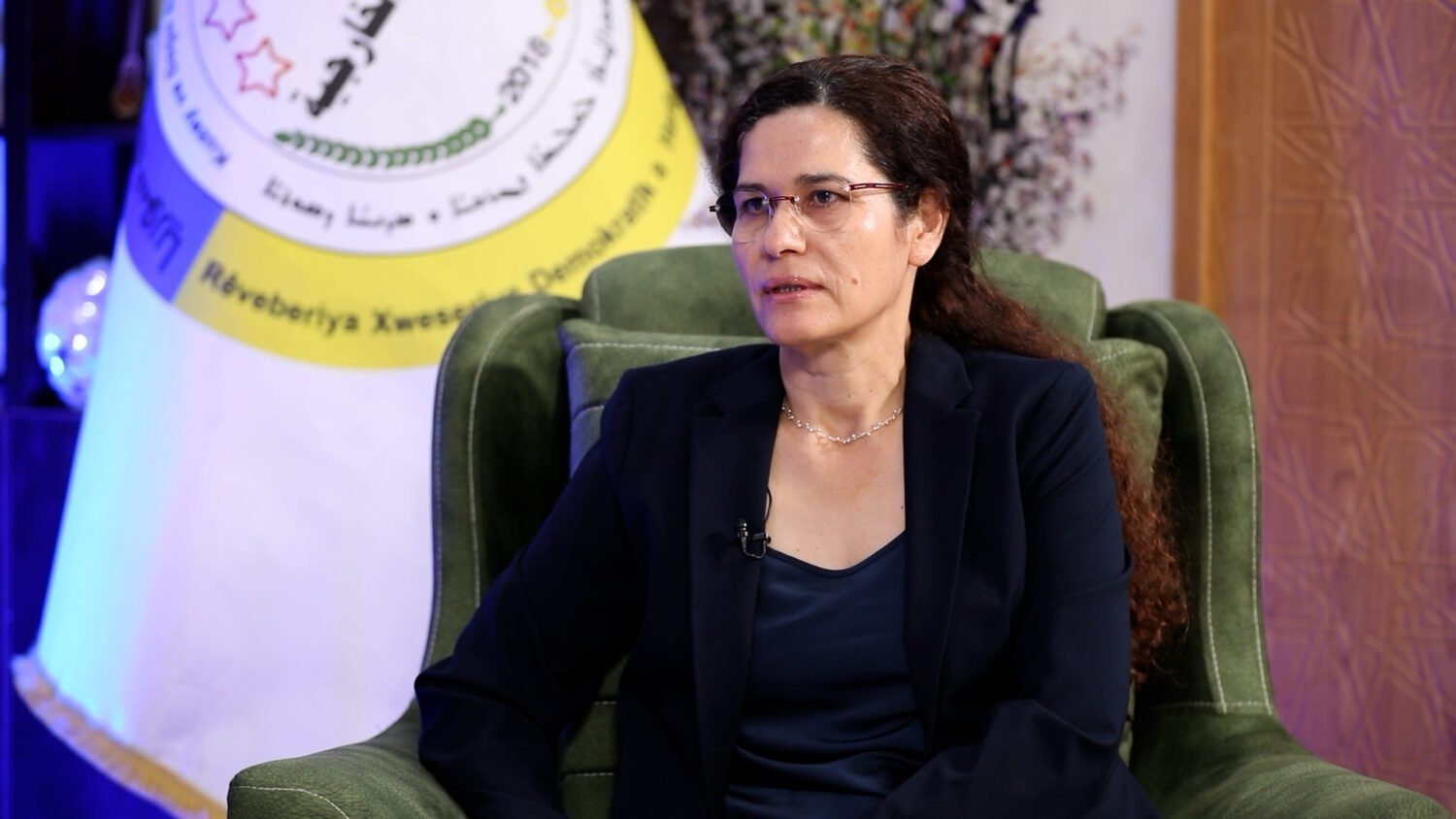
In a special interview with Al-Hal Net, Ilham Ahmed, co-chair of the Department of External Relations in the Autonomous Administration of North and East Syria, reviewed a series of recent developments, including the situation in Syria, as well as new ideas for building a political and practical approach toward the “new Syria,” something that has become both urgent and inevitable. Ahmed spoke of the political opportunities available to safely reach a civic state based on pluralism and the management of diversity. She explained that political partnership and openness to direct dialogue with Damascus rest on clear and straightforward principles, foremost among them that moving beyond the bitter Assad era necessarily means guaranteeing the rights of all citizens on the basis of a “social contract,” the terms and obligations of which are to be enshrined in the constitution and the law. She also stressed that political partnership must be built on dialogue, without mediation or external pressures.
The Kurdish leader in the Autonomous Administration said there is a need to establish a decentralized system and adopt federalism in Syria, in a way that is consistent with the country’s pluralistic social fabric, while stressing the unity of Syrian territory and its geopolitical interconnectedness. Ahmed also pointed in her interview with Al-Hal Net to political initiatives in North and East Syria that seek to strengthen capacities and opportunities for the future through solid political groundwork among all national actors. She said: “We are in direct contact with the current transitional administration ruling Syria, through direct channels and without intermediaries, and we hope to achieve positive and fruitful results and make progress through this direct contact.”
She added that constitutional provisions are of great importance in any political system, and that “we aim for it to include the rights of the Kurdish people, who have long suffered from marginalization.” Ilham Ahmed went on to say that Syria should belong to all Syrians and that Turkey must not interfere in their affairs. She also noted that “the Syrian Democratic Forces can serve as the nucleus of the new Syrian army.”
Ilham Ahmed also revealed that US forces will not withdraw from northeast Syria, as is sometimes claimed, under the administration of President-elect Donald Trump, and that this does not conflict at all with his relations with Turkey.
Below is the full text of the interview:
How far have political talks progressed toward a path of constructive dialogue with Damascus under the new authority and the arrangements for the new Syria?
Yes, there are direct talks with the new authority in Damascus, but they have not yet reached an effective stage on which we can build. However, we hope that everyone understands that Syria needs constructive dialogue among all segments of Syrian society, and that there is a proper awareness of the scale of the challenges we face as Syrians at this stage.
Our awareness of the inevitability of joint action is the strategic foundation on which we are working as political forces representing Syrian society without marginalizing any faction.
So how can this be applied to the National Forces Conference?
We should note that the hoped-for national dialogue appears to include the participation of specific individuals rather than representatives of political organizations, and this is something we strongly disagree with. We believe attention must be paid to this issue so that we can move a step forward.
What about the new constitution and Kurdish rights?
The Kurdish people have suffered greatly from marginalization and the denial of their basic rights. Therefore, we certainly hope that the new constitution will include the historical rights of the Kurdish people, but I believe this matter needs a long time and has not yet entered the scope of discussions, given its great importance.
What is your vision for the system of governance in the new Syria? And has this been discussed with the new authority?
Yes, we are presenting our vision directly in Damascus, and I can say that we have not moved from our position that federalism is the most effective solution for the situation in Syria, and that political decentralization through the framework of the Autonomous Administration in northeast Syria is our settled vision for the coming phase.
And what about the Syrian Democratic Forces?
Yes, we are fully prepared for the Syrian Democratic Forces to serve as the nucleus of the new Syrian army, given their deep experience and advanced training. But this should also come within a broader and more comprehensive political agreement with the new authority in Damascus.
Turkey seems more involved than it should be in Syrian affairs. How do you assess that?
Yes, certainly, Turkey appears to be more involved than it should be in Syrian affairs. In fact, it stands as an obstacle to the rights of our Kurdish people. It is necessary for Syria to belong to Syrians in all their components, without the interference of any external party. From this standpoint, the transitional administration in Damascus must understand Syria’s sovereignty and the independence of its decision-making.
In just a few days, President-elect Donald Trump’s administration will begin its term. To what extent do you have reassurances regarding the status and continued presence of US forces in northeast Syria?
I can say decisively that circumstances have now changed greatly compared with Trump’s previous administration, and that these circumstances will push toward new decisions and different policy approaches, despite the nature of relations with Turkey and Erdogan in the recent period.
From this, I can say that coalition forces will not leave North and East Syria during Donald Trump’s administration, and that the historic alliance between us will deepen further.
What about centralized rule and central authority? Do you believe this model has proven to be a failure given the pluralistic nature of Syrian society?
Syria is perfectly suited to a federal system, and that is our vision while maintaining our commitment to and conviction in the unity of Syrian territory. But decentralization is a principal goal and something that accords with the nature of the Syrian situation, and this is what we are adopting at the current stage.
The Autonomous Administration and the Kurdish political movement enjoy distinguished relations with Cairo, which has in turn entered a new phase of normalization with Ankara, while its foreign policy is marked by balance in its regional environment. Is there any expectation of a role for Cairo as a regional mediator with Ankara?
We fully appreciate the Arab environment surrounding Syria, and from this standpoint we believe all Arab states, especially Cairo, should engage more actively with the situation in Syria and with this development. We have a representative office in Cairo for the Syrian Democratic Council (SDC), the political wing of the SDF, which makes us look to Cairo’s important role in this regard. The influential role of moderate regional powers in Syria will also be important and will lead to more developed political dynamics that prevent regional powers from monopolizing the Syrian file, which causes stagnation and violence. Cairo, by virtue of its deep historical relations with Syria, is an important party and mediator that has no agenda other than the interests of all Syrians and the building of stability, without any regional ambitions that could obstruct a safe political path. Therefore, its active role will be a factor for stability.