Recent developments in the Gulf reflect a dual escalation combining diplomatic moves and security efforts, as Gulf Cooperation Council states announced their support for a draft resolution at the Security Council authorizing the use of “all necessary means” to ensure freedom of navigation through the Strait of Hormuz, amid growing tensions with Iran and Russian and Chinese opposition threatening to block its passage.
At the same time, security data reveal a rise in the activity of cells linked to Tehran and Hezbollah, alongside the success of Gulf states’ defenses in intercepting thousands of missiles and drones, highlighting the overlap between the military and intelligence tracks in an increasingly complex regional landscape.
Gulf escalation
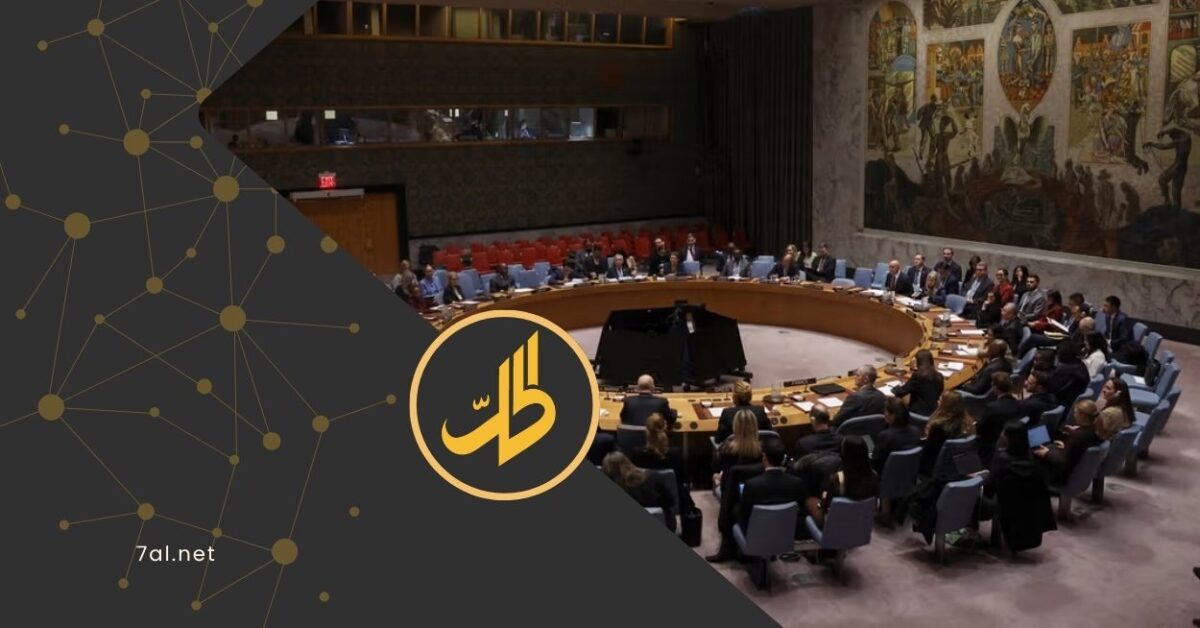
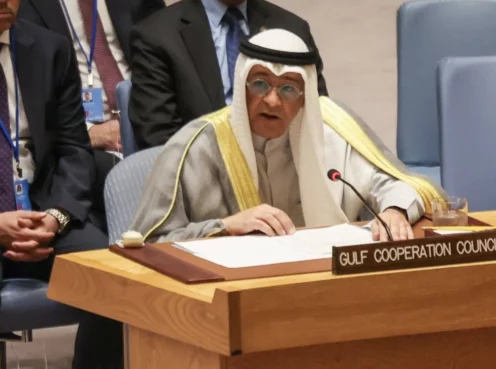
Gulf Cooperation Council Secretary-General Jassim Al-Budaiwi said during a Security Council session held on Thursday, April 2, that the Iranian regime’s attacks had “crossed every red line,” calling for a firmer international stance. He stressed the need to involve the council’s six member states in any future negotiations or arrangements with Iran in a way that guarantees the region’s security and stability.
In this context, Bahrain, which holds the rotating presidency of the Security Council, announced its intention to put the draft resolution to a vote on Friday, April 3. The text provides for allowing states to use “all necessary means” to ensure the passage of international ships through the Strait of Hormuz, Gulf waters, and the Sea of Oman. However, this course runs up against opposition from Russia and China, both of which hold veto power, making the resolution’s passage contingent on complex balances within the council.
International warnings
In parallel, British Foreign Secretary Yvette Cooper warned during a virtual meeting that included the foreign ministers of more than 40 countries of the serious repercussions of the current escalation on the global economy. She pointed out that Iranian measures had led to a sharp decline in shipping traffic through the Strait of Hormuz over the past 24 hours, with only 25 ships passing through compared with a daily average of about 150.
She considered this decline an indication of serious disruption in one of the world’s most important energy transport arteries, stressing that the strait had become “effectively closed” as a result of these developments. Cooper called for urgent international action to reopen the strait and ensure the resumption of commercial flows, given the current situation’s growing risks to energy security and global economic stability.
Dismantling 9 cells in one month
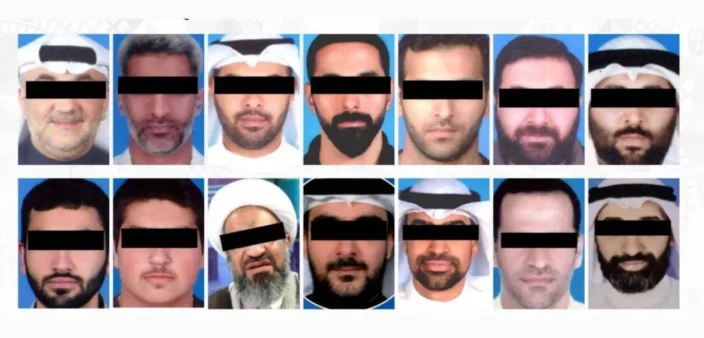
Alongside international efforts, security monitoring showed that the relevant agencies in four Gulf states — Qatar, Bahrain, Kuwait, and the UAE — managed over roughly 30 days to dismantle 9 cells linked to Iran or its allies, especially Hezbollah. The operations began on March 3 in Qatar, while the last operation was recorded on the 30th of the same month, meaning one cell was dismantled roughly every three days.
The number of detainees in these cases reached about 74 people of multiple nationalities, including Kuwaitis, Lebanese, Iranians, and Bahrainis. Official data indicate that these cells were involved in activities including espionage for foreign parties, raising funds to carry out operations, and planning assassinations targeting leading figures, in addition to attempts at economic infiltration and gathering intelligence on military and vital sites.
A recurring pattern and strategic extensions
Investigations show a clear similarity between the activities of these cells and previous operations attributed to networks linked to Iran in the region, reinforcing the hypothesis that they operate within an extended organizational pattern. In this context, specialists in Gulf security say this activity is tied to the policy of “exporting the revolution” adopted by Tehran since 1979, and the resulting construction of influence networks and sleeper cells in several countries.
The speed with which these cells were uncovered, especially since the first days of the latest military escalation, also reflects a high level of security readiness and coordination among the council’s states. According to the details, Bahrain recorded the dismantling of three cells, Kuwait three others linked to Hezbollah, while the UAE announced the arrest of a five-member network, and Qatar was the first to uncover two cells working for the Revolutionary Guard.
Iran’s “terror apparatus”
Asharq Al-Awsat newspaper quoted Gulf security specialists as saying that Tehran relies on what is known as a three-dimensional “terror apparatus” to encircle the region — an approach based on activating local cells, recruiting operatives inside Gulf states to carry out operations aimed at destabilization, in addition to building armed regional proxies such as the Houthis and Hezbollah to impose missile and drone threats.
Added to this is what is described as “nuclear blackmail,” through the use of the nuclear program as a deterrent cover that allows for expanding the margin of regional maneuver and pressuring the international community. By contrast, experts say Gulf states have shown high efficiency in dismantling this system through preemptive strikes, strengthening legal frameworks to combat terrorism financing and money laundering, as well as developing air defense systems and enhancing mechanisms for joint security coordination, which has contributed to reducing these networks’ ability to operate.
In the same context, analysts believe that Iran’s reliance on “cells and arms” is not an ad hoc approach, but rather a deeply rooted tactic in managing indirect conflict, based on undermining internal stability and creating environments of sustained disorder. They argue that this pattern relies on recruiting local elements and turning them into instruments of internal pressure, reinforcing the logic of “proxy war.”
By contrast, estimates indicate that rising public awareness in Gulf states, along with advanced security performance, has limited the effectiveness of this strategy and turned many of these cells from tools of threat into an exposed security burden, amid the success of the relevant agencies in pursuing them and thwarting their plots in parallel with confronting direct military attacks.
- How the Houthis Are Choking Yemen’s Peace Efforts with a Broad Escalation on the Ground
- Economy in the Wind: How Yemenis Are Paying the Price of Disrupted Shipping Routes
- Houthi Summer Centers: Factories for Indoctrination and Raising a “Scream” Generation
- The “Coalition of Necessity”: What Costa Rica’s Terrorism Designation of the Houthis Signifies
- Mojtaba Khamenei Runs Iran from His Bed as Photos Vanish and the Supreme Leader Makes a “Voice-Only” Appearance